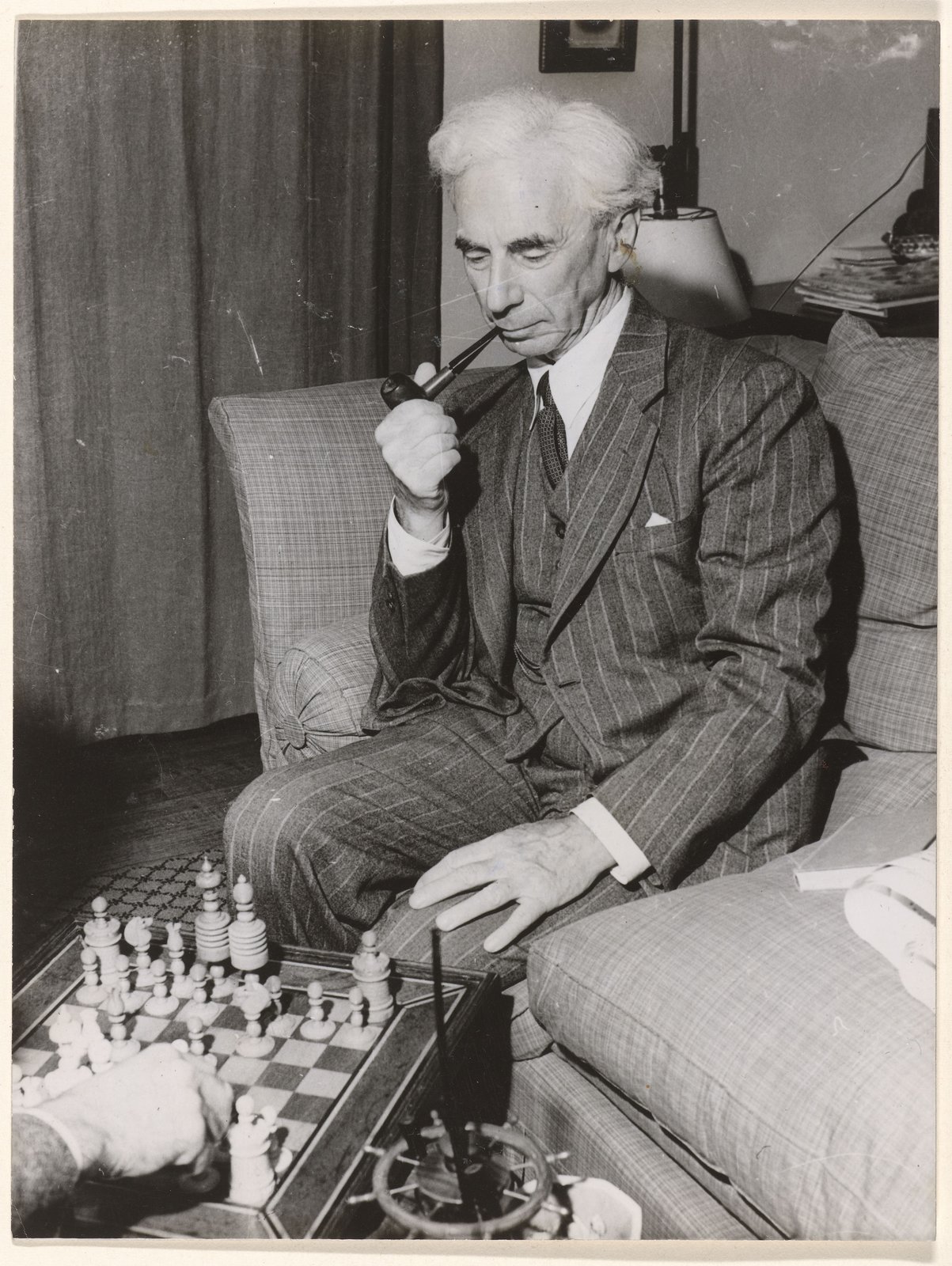
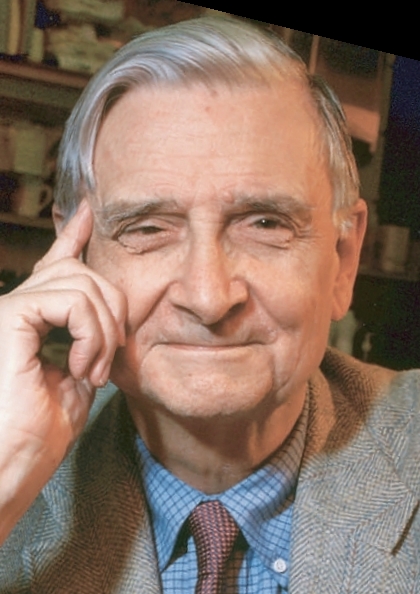

Photo: Jim Harrison / PLoS, CC BY 2.5 · Wikimedia Commons 'File:Edward O. Wilson, 2003 (cropped).jpg' (Wikidata P18), extracted from 'Plos wilson.jpg', source credited as the PLoS download plos_wilson.pdf; author Jim Harrison, dated 2003-02, licence tag cc-by-2.5, category Media from PLOS journals / Open Access File of the Day. Commons record: 420 x 594 (downloaded file confirmed 420 x 594). A wider uncropped original 'Plos wilson.jpg' exists at 1240 x 1054 but was not used (different framing, not checked further; no upscaling anywhere). The PLoS institutional page was not opened; PLoS journals publish under CC BY, consistent with the tag, and no conflicting notice was observed. · CC BY 2.5
생물학자 · 현대
에드워드 O. 윌슨
1929–2021
주요 업적 분야
아직 성격 매칭에 포함되지 않았습니다 — 기록된 근거가 성격 모델 전체를 다루기에는 충분하지 않습니다. 이 페이지의 다른 모든 내용은 자유롭게 확인하실 수 있습니다.
핵심 특성
주요 업적
윌슨은 1955년 하버드에서 개미속 라시우스(Lasius) 연구로 박사학위를 받았고 개미 분야의 선도적 권위자가 되었다. 내셔널지오그래픽과 네이처에 따르면 그는 수백 종의 새로운 개미를 기재했으며 멜라네시아와 카리브해 현장 연구를 바탕으로 분포가 넓어졌다 좁아졌다 하는 '분류군 순환'을 제안했다.
그는 로버트 맥아더와 함께 섬의 크기가 그곳에서 유지되는 종의 수와 연결된다는 내용의 《섬 생물지리학 이론》(1967)을 펴냈다. 내셔널지오그래픽은 이 아이디어가 이후 개발에 둘러싸인 육지의 보호구역에 적용되어 보전생물학의 초석이 되었다고 전한다.
1975년 저서 《사회생물학: 새로운 종합》은 여러 종에 걸친 사회적 행동의 진화를 다루었고 인간을 다룬 마지막 장으로 거센 비판을 받았다. 네이처는 《바이오필리아》와 퓰리처상을 받은 《개미》(1990) 등 이후의 책들이 생물다양성 개념을 대중에게 알렸다고 평가한다.
삶의 장면들
굴드와 르원틴 등이 1975년 서한으로 《사회생물학》을 생물학적 결정론과 연결했을 때, 윌슨은 물러서지 않고 더 도발적인 《인간 본성에 대하여》(1978)로 답했다고 네이처와 뉴욕 리뷰 오브 북스의 비판적 역사학자들은 전한다.
이 일화는 지속적인 공개 반대 속에서도 논쟁적인 입장을 유지하려는 태도와 부합하며, 비판자들은 이를 고집으로, 공동 연구자는 지적 용기로 읽는다. 독립적 사고
2010년 윌슨은 수학자들과 함께 유전적 근연도가 곤충 사회를 이끈다는 자신의 초기 연구의 핵심 전제를 철회했다. 하버드 가제트는 이것이 네이처 지상의 논쟁으로 이어졌다고 전하며, 공동 저자 베르트 횔도블러는 자신이 이 변화에 동의하지 않았다고 밝힌다.
이는 스스로 확립에 기여한 이론을 수정할 용의가 있었음과 부합하지만, 그의 연구를 잘 아는 동료들은 수정 내용 자체에는 이의를 제기했다. 입장 수정 성향
전환점
1975년 《사회생물학: 새로운 종합》의 출간으로 윌슨은 개미 전문가에서 생물학과 인간 행동을 둘러싼 논쟁의 중심에 선 공적 인물이 되었고, 이후의 저서들은 일반 독자에게까지 닿았다.
이 변화는 세밀한 전문 지식을 더 넓은 독자를 위한 통합적 설명으로 확장하려는 의지와 부합한다. 시스템적 사고
비슷한 인물
전체적인 프로필이 이 사람과 닮은 사람들이에요.
출처
- Edward O. Wilson (Q211029) -- verified live via the Wikidata API (2026-10-23): English label 'Edward O. Wilson', description 'American biologist, naturalist, and writer (1929-2021)', born 10 June 1929, died 26 December 2021, citizenship United States, Korean label with sitelink to Korean Wikipedia present, P18 image 'Edward O. Wilson, 2003 (cropped).jpg'. Orientation only; not used as support for any row.
- Harvard Gazette, memorial minute for Edward Osborne Wilson (Faculty of Arts and Sciences memorial minute by colleagues Brian Farrell, Gonzalo Giribet and Naomi Pierce), read in full: Alabama degrees, Harvard PhD 1955, Society of Fellows and a year of Melanesian ant fieldwork, character displacement with William Brown (1956), taxon cycle (1961), The Theory of Island Biogeography with Robert MacArthur (1967), The Insect Societies (1971), Sociobiology (1975) and its human chapter's reception including protesters pouring water on him at an anthropology meeting, two Pulitzer Prizes, Pheidole in the New World (818 pages, 341 new species), the Encyclopedia of Life (2007), the Half-Earth proposal, his 2010 disavowal with mathematicians of a central tenet of his earlier kin-selection work, 'gracious and often deferential' in person and 'fearless' in print, students flocking to his lectures. CANONICAL SIGNIFICANCE SOURCE (with the Nature obituary). Institutional memorial minute: admiring in register; its family sentences were not used.
- Nature, 'Edward O. Wilson (1929-2021)', obituary by long-time collaborator Bert Holldobler, vol. 601, 20 January 2022, p. 317, read in full from a PDF copy hosted by a University of Tours social-insect site (not the nature.com page): ant systematics, biogeography and chemical communication, the taxon cycle and Florida Keys tests with Daniel Simberloff, The Theory of Island Biogeography, The Insect Societies, Sociobiology as the first book to address the evolution of societies from bacteria to humans, the 1975 NYRB letter from Gould, Lewontin and others, On Human Nature, Biophilia, Consilience ('mixed response'), The Ants, Half-Earth; states Wilson 'was not a team builder', preferred to work alone, thrived on controversy, rejected inclusive fitness in recent decades and that the author opposed some of his views yet stayed a friend. CANONICAL SIGNIFICANCE SOURCE. Collaborator's obituary: close, partly admiring, but candid about disagreement.
- National Geographic obituary, E.O. Wilson, Darwin's natural heir, dies at age 92, read in full: Alabama childhood and the effect of an eye injury, Harvard doctorate 1955, fieldwork in Cuba, Mexico and the South Pacific, curator of insects at the Museum of Comparative Zoology, pheromone work with William Bossert, island biogeography with MacArthur, sociobiology and Gould's criticism and the water-dousing, quoted colleagues Peter Raven and Thomas Lovejoy, Wilson's later acknowledgement of political naivete, books, the 2011 Gorongosa bioblitz, the Half-Earth idea and E.O. Wilson Biodiversity Foundation. Journalistic obituary.
- The Harvard Crimson obituary of Edward O. Wilson, 31 December 2021, read in full: 46 years on the Harvard faculty, island biogeography with MacArthur and the Simberloff Florida Keys fumigation test, more than 430 scientific papers, two Pulitzers, and student and colleague recollections (Sulloway, Keith, Moffett, Moreau, Hrdy, Naskrecki, Ehrlich) on his lecturing, correspondence with students and willingness to take a last graduate student after emeritus status. Campus newspaper obituary, admiring; some dates conflict with other sources and were not relied upon.
- 'Against Sociobiology', letter to the editors of The New York Review of Books, vol. 22, no. 18, 13 November 1975, signed by sixteen Boston-area academics and others including Stephen Jay Gould and Richard Lewontin, read in full via a libcom.org reposting (not the NYRB original): seven numbered objections to Wilson's Sociobiology (biological-determinism history, thin link from insects to humans, circular adaptation reasoning, speculative human prehistory). Contemporary critics' own words; a position statement, so used only for the existence and content of the objection, never as trait evidence.
- The New York Review of Books, 'Ideology as Biology' by historians of science Mark Borrello and David Sepkoski, 5 February 2022, read in full: a critical reassessment drawing on Wilson's archived correspondence, summarising the sociobiology controversy, his decision to publish On Human Nature (1978) rather than retreat, and arguing that his private correspondence with psychologist J. Philippe Rushton was more supportive than his public stance. The authors' claims are theirs alone and are attributed as such; the article was not used to score any row beyond showing that his conduct was disputed.