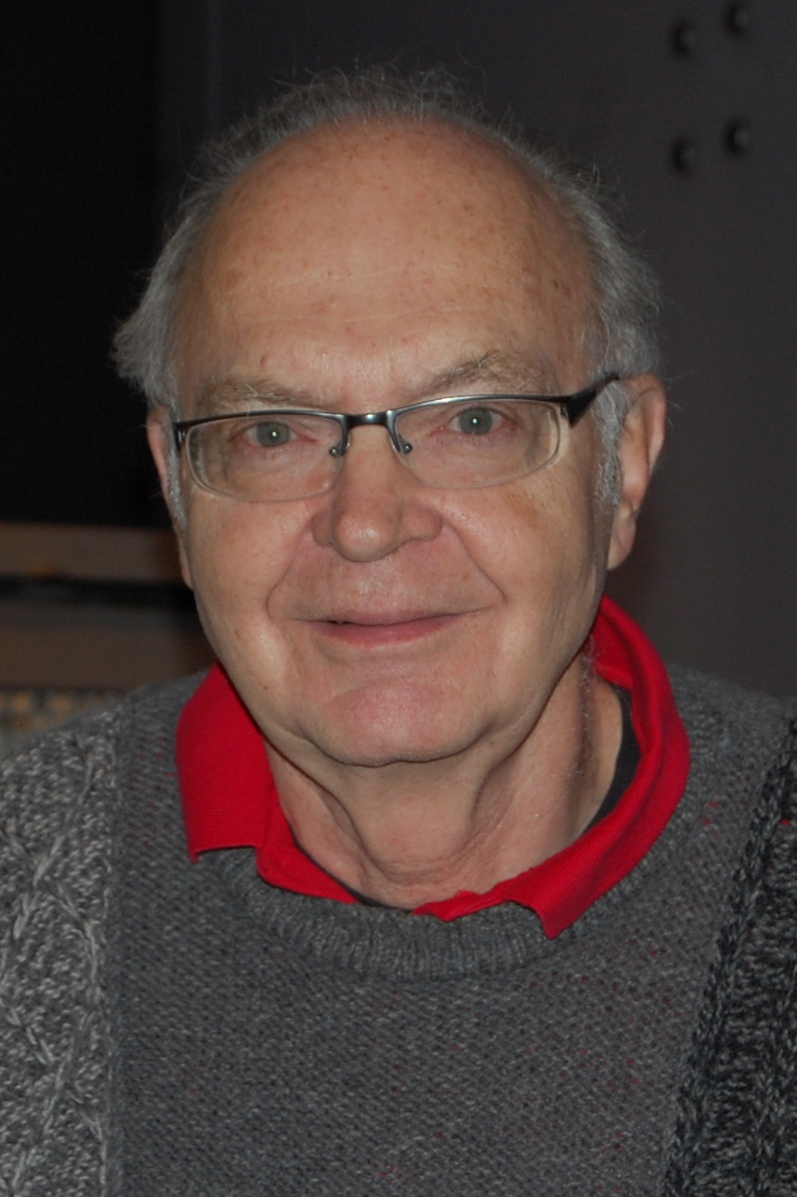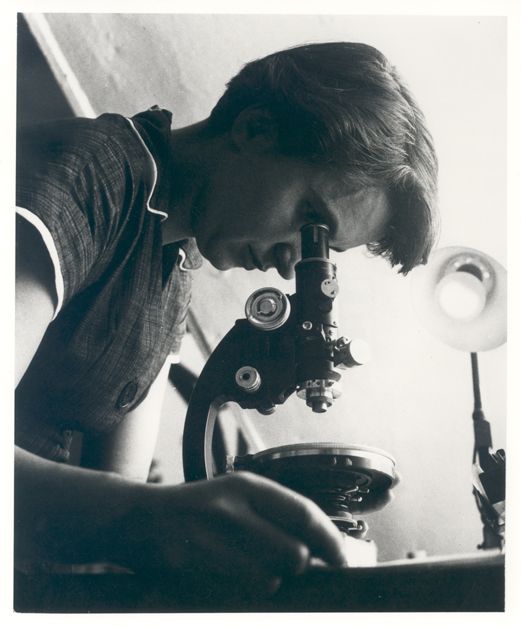

Photo: Alex Handy (Flickr: vonguard), 11 January 2011, CC BY-SA 2.0, cropped from the original · Wikimedia Commons, 'Donald Ervin Knuth (cropped).jpg' -- a Commons crop (3 December 2018) of 'Donald Ervin Knuth.jpg', photograph credited on Commons to Alex Handy (the Flickr source account is 'vonguard', and the Flickr page itself shows only that username, so the real-name credit rests on the Commons upload record) taken 11 January 2011 at the opening of the Computer History Museum's Revolution exhibition; the original was uploaded from Flickr by the Flickr upload bot on 25 January 2011 and confirmed on that date to be licensed CC BY-SA 2.0, and the Flickr page (photos/44451574@N00/5347112697) checked directly shows 'Some rights reserved', CC BY-SA 2.0; the file carries no restriction template and no embedded copyright field; Commons structured data depicts Donald Knuth. Commons crop 797 x 1197 pixels, used as is (under 1200 pixels, never upscaled). · CC BY-SA 2.0
컴퓨터 과학자 · 현대
도널드 커누스
b. 1938
주요 업적 분야
아직 성격 매칭에 포함되지 않았습니다 — 기록된 근거가 성격 모델 전체를 다루기에는 충분하지 않습니다. 이 페이지의 다른 모든 내용은 자유롭게 확인하실 수 있습니다.
핵심 특성
주요 업적
1962년 『컴퓨터 프로그래밍의 예술(The Art of Computer Programming)』을 쓰기 시작해 1968·1969·1973년에 처음 세 권을 펴냈고, 1974년 알고리즘 분석과 프로그래밍 언어 설계에 대한 공로, 특히 이 연작에 대한 공로로 튜링상을 받았다. 스탠퍼드 기록보관소는 그의 연구가 알고리즘 분석을 하나의 학문 분야로 자리 잡게 했다고 설명한다.
1977년 자신의 책 새 권에 제안된 조판 품질에 불만을 느껴 조판 시스템 TeX와 글꼴 설계 시스템 METAFONT를 개발하기 시작했고, 이 우회에는 약 10년이 걸렸다. 컴퓨터역사박물관은 TeX를 기술 출판의 세계적 표준이라 소개하며, 그는 두 프로그램을 누구나 쓸 수 있게 공개했다.
그는 프로그램을 사람이 읽는 문서로 쓰는 '문학적 프로그래밍(literate programming)'을 발전시켜 WEB 시스템을 만들고 1984년 같은 제목의 논문을 발표했다. 교토상 공적 설명은 이 착상이 정보과학 전 분야에 영향을 주었다고 평가한다.
삶의 장면들
커누스는 자신의 책에서 오류를 찾아낸 사람에게 '16진수 1달러'(2.56달러)를 준다. 살롱은 1999년 이 수표가 1만 달러를 넘었다고 전했고, 스탠퍼드 매거진은 2006년 2만 달러를 넘었으며 받은 사람 대부분이 현금으로 바꾸지 않는다고 보도했다.
이미 출간된 저작에도 계속해서 정확성의 기준을 적용하는 태도와 일치한다. 디테일 지향
1986년 존 벤틀리의 요청으로 커누스는 글에서 가장 자주 나오는 단어를 찾는 문학적 프로그램을 썼다. 해시 트라이 자료구조를 중심에 둔 정교한 WEB 프로그램이었고, 더그 매킬로이는 공개된 서평에서 그 엄격함은 높이 평가하되 지나치게 공들였다고 보면서 여섯 단계의 유닉스 파이프라인으로도 같은 문제가 풀린다는 것을 보여 주었다.
모든 부분을 극도로 공들여 만드는 장인의 기준과 일치하며, 당시 한 비평가는 그 대가를 문제 삼았다. 완벽주의
전환점
1990년 휴직한 커누스는 1993년 스탠퍼드 교수직에서 물러나 『컴퓨터 프로그래밍의 예술』 완성에 전념했다. 그는 이 일에 최소 20년의 전일 작업이 필요하다고 판단했다고 퀀타 매거진과 본인의 스탠퍼드 웹페이지는 전한다.
하나의 긴 프로젝트에 방해받지 않고 몰두하도록 작업 생활을 짜는 태도와 일치한다. 몰입
비슷한 인물
전체적인 프로필이 이 사람과 닮은 사람들이에요.
출처
- Donald Knuth (Q17457) -- verified live via the Wikidata API (2026-10-15): English label 'Donald Knuth', description 'American computer scientist and mathematician (born 1938)', born 10 January 1938, no date of death, citizenship United States, Korean label present. Orientation only; not used as support for any row.
- Computer History Museum, 'Donald Knuth', 1998 Fellow profile -- museum profile with the Fellow citation 'for his fundamental early work in the history of computing algorithms, development of the TeX typesetting language, and for major contributions to mathematics and computer science'; describes The Art of Computer Programming as the 'Bible' of computer science pedagogy, his early mastery of the IBM 650, his invention of TeX in 1977 out of frustration with the typography proposed for a new volume of the series, TeX as a worldwide standard for technical publishing, his Turing Award (1974), National Medal of Science (1979) and Kyoto Prize (1996), and quotes his remark that his work takes long hours of study and uninterruptible concentration. CANONICAL SIGNIFICANCE SOURCE (museum assessment of his primary contribution; honouring in tone, used for the achievement cards and orientation, and for one quoted remark about his working conditions; Britannica and the ACM's own pages returned HTTP 403). Read in full.
- Heidelberg Laureate Forum, 'Donald Ervin Knuth' laureate page -- gives the 1974 ACM A.M. Turing Award 'for his major contributions to the analysis of algorithms and the design of programming languages, and in particular for his contributions to the "art of computer programming" through his well-known books in a continuous series by this title'. Brief page used only to confirm the award and its citation, because the ACM's own award page returned HTTP 403. Read in full.
- Inamori Foundation, 'Donald Ervin Knuth', 1996 Kyoto Prize in Advanced Technology (Information Science) laureate page with achievement digest, citation and profile -- credits him with systematising fundamental algorithms and numerical methods compatible with machine arithmetic, compiled in The Art of Computer Programming; with the WEB system and the idea of programs legible as documents (literate programming); and with TeX and METAFONT as documentation technology now used for many languages and by the American Mathematical Society. Independent award-body assessment, honouring in tone; its profile timeline lists an emeritus title under 1977, which conflicts with every other source and was not used. Read in full.
- Stanford University School of Engineering, 'Donald Knuth' (2011 Engineering Hero page) -- short university profile: widely considered the 'father' of the analysis of algorithms, attribute grammars, empirical study of programming languages and literate programming; appointed professor at Stanford in 1968 and stayed until his retirement in 1993; introduced new courses, notably Concrete Mathematics, and mentored many doctoral students; The Art of Computer Programming started in 1963 (other sources say 1962), proposed as seven volumes. Institutional and honouring. Read in full.
- Stanford University Libraries, Department of Special Collections, finding aid for the Donald E. Knuth papers (SC0097), 1962-2018, on the Online Archive of California -- describes correspondence, notes, manuscripts, printouts, logbooks, proofs and galleys for TeX, METAFONT, Computer Modern and his books; says his work established the analysis of algorithms as an academic field, that he took time out from the series after Volume 3 to create TeX and METAFONT, and that he retired from regular research and teaching in 1992 (one year earlier than most other sources) to finish The Art of Computer Programming. Archival description, partly derived from encyclopedic text; its family details were not used. Read in full.
- Kara Platoni, 'Love at First Byte', Stanford magazine, May/June 2006 -- alumni-magazine profile with colleague and former-student quotes: his first IBM 650 and the 1958 basketball-statistics program, rigor and elegance as his watchwords (Christos Papadimitriou), drafting 3,000 handwritten pages before the series was reconceived, 'consummate perfectionist' with each page having at least 100 ways to be wrong, the 1977 pause of a planned year that took ten to create TeX and METAFONT with design lessons and typographers, release of both programs to the public domain, literate programming, paying more than $20,000 in checks for errata, no longer reading e-mail, still writing several programs a week, and a former student's report that he considers his talent to be detail. Independent and admiring in tone; its passages on family and religion were not used. Read in full.
- Mark Wallace, 'The art of Don E. Knuth', Salon, 16 September 1999 -- profile of Knuth at 61: the long wait for Volume 4 (he says he has never been a good estimator of how long things take; his publisher's editor says it is the most-asked question), his remark that he is obsessively detail-oriented and the 270-inch stack of correspondence he measured, reward checks totalling more than $10,000, thousands of improvements made to earlier volumes, a former student's account of working at several levels of abstraction, software writer Ellen Ullman calling him a godfather, and criticism that younger programmers are put off by his machine-level detail. Independent journalism with critical voices; its passages on religion and music were not used. Read in full.
- Kristina Fiore, 'Don Knuth: The Historian Of The Computer Age', Electronic Design, 19 October 2007 -- trade-press profile: the 1962 commission for a book on compilers, the 3,000 handwritten pages and 1968/1969/1973 volumes, his wish to make programming more rigorous so one can be sure of a program, writing Volume 4A out of order as the field grows, reward checks as a cultivated eccentricity, a ten-year break to create TeX and METAFONT as open-source programs, and retirement as Professor Emeritus in 1993. Independent short profile, mostly built from his own remarks. Read in full.
- Susan D'Agostino, 'The Computer Scientist Who Can't Stop Telling Stories' (Q&A with Donald Knuth), Quanta Magazine, 16 April 2020 -- science-magazine interview with the writer's framing: the series begun as a graduate student in 1962 and still incomplete, volumes published in 1968, 1969 and 1973, a leave in 1990 and retirement in 1993 to finish it, putting the series aside for nearly a decade to build TeX (made open source), literate programming, his statements that he wants to quantify how good an algorithm is, writes about five new programs a week and picks the thing he hates most on his to-do list. Independent framing but mostly his own words; the interview's passages on family, theology and music were not used. Read in full.
- Jon Bentley (with Don Knuth and Doug McIlroy), 'Programming Pearls: A Literate Program', Communications of the ACM, June 1986 -- column printing Knuth's literate WEB program for finding the most common words in a text, built around a hash-trie data structure (Bentley praises its design and lucid description), followed by Doug McIlroy's published review: he buys the discipline but not the result, calls it an intricate and refined piece of engineering over-built for the problem, and shows a six-step Unix pipeline that solves the same problem. A contemporary, partly adversarial peer assessment; read from a scanned copy, the program listing itself was not examined line by line.
- Donald E. Knuth's own Stanford web pages, 'Retirement' and 'Frequently Asked Questions' (https://cs.stanford.edu/~knuth/) -- SELF-authored: he retired early because he judged that he needed at least 20 years of full-time work to finish The Art of Computer Programming, which he calls the most important project of his life; he works in 'batch mode', concentrating on one subject at a time, and accepts no appointments or new responsibilities; he pays $2.56 (one hexadecimal dollar) for each error found in his books, with the payments going into an account at a fictional Bank of San Serriffe because he can no longer write personal checks. Used only to corroborate independent accounts and never as sole support for a row. Read in full.
- Wikimedia Commons file pages 'Donald Ervin Knuth (cropped).jpg' and its parent 'Donald Ervin Knuth.jpg', with the Flickr source page -- checked for the portrait's licence: photograph credited on Commons to Alex Handy (Flickr account 'vonguard') taken 11 January 2011 at the Computer History Museum's Revolution exhibition opening, uploaded from Flickr and confirmed under CC BY-SA 2.0; the Flickr page shows 'Some rights reserved' with a CC BY-SA 2.0 licence; the Commons crop was made on 3 December 2018. Not used for any scoring.