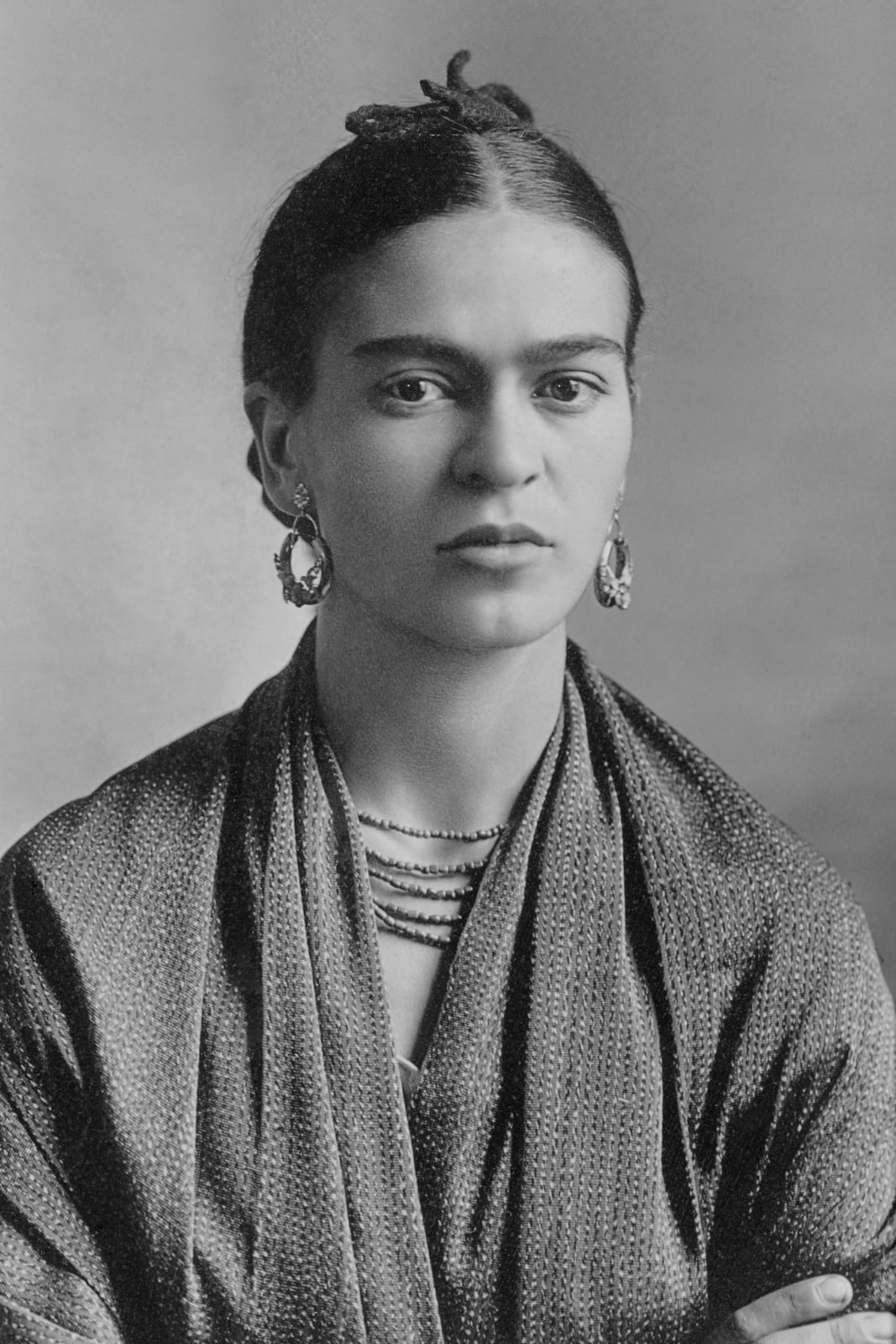
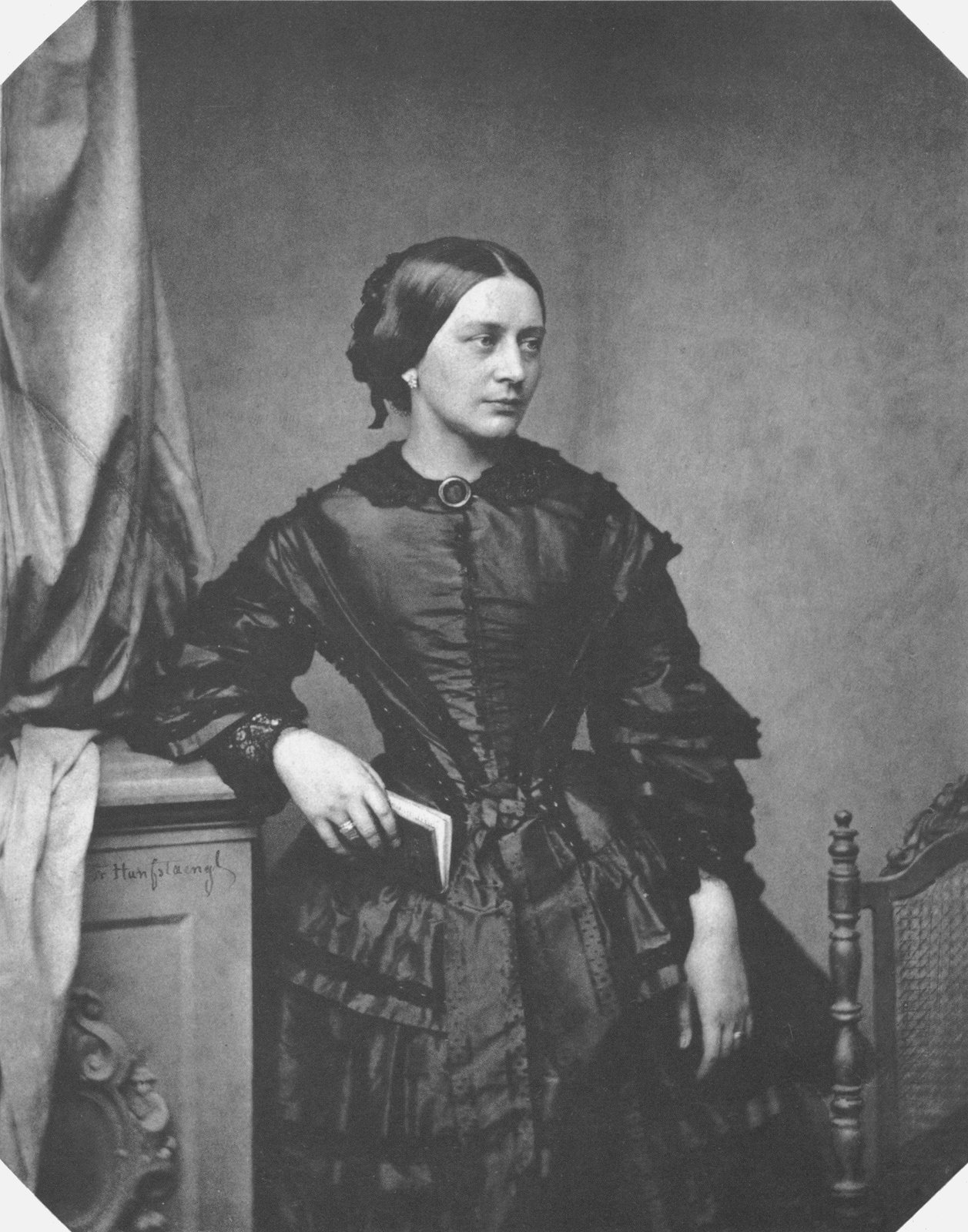

Franz Hanfstaengl, Clara Schumann (1857), public domain, via Wikimedia Commons; downscaled · Franz Hanfstaengl, photograph of Clara Schumann, Munich 1857, reproduced as an autotype (halftone) print; scan uploaded to Wikimedia Commons ('self-scanned') · Public domain
핵심 특성
주요 업적
1837년 2월과 3월 베를린 연주회에서 열일곱 살의 클라라 비크는 베토벤의 「열정」 소나타 Op. 57을 처음에는 두 악장, 다음에는 전곡으로 연주했다. 플로렌스 메이는 당시 신문들을 조사했지만 그 이전의 공개 연주 기록은 찾지 못했다. 첫 연주회에 대한 베를린의 한 평은 그녀가 프로그램 전체를 암보로 연주했다고 적었다. 1837~38년 빈에 머무는 동안 그녀는 황실 및 왕실 궁정 실내악 연주자 칭호를 받았다.
1830년 라이프치히 게반트하우스에서 독주자로 데뷔한 뒤 1891년 마지막 공개 연주회에 이르기까지, 그녀는 로베르트 슈만의 피아노 작품을 꾸준히 연주했고 플로렌스 메이는 「헨델 변주곡」 Op. 24를 비롯해 그녀가 공개 초연한 요하네스 브람스의 여러 작품을 꼽는다. 1856년부터는 영국을 열아홉 차례 방문했다.
1878년 그녀는 프랑크푸르트에 새로 문을 연 호흐 음악원의 수석 피아노 교사가 되었다. 딸 마리와 오이게니가 조교를 맡았고, 그녀는 1892년까지 그곳에서 가르쳤다. 같은 시기에 브라이트코프 운트 헤르텔에서 나온 로베르트 슈만 전집(1879~86)의 편집을 책임졌다.
삶의 장면들
학교를 마친 뒤 어머니에게 배운 딸 오이게니는 베토벤 소나타가 모든 수업의 중심이었으며, 어머니가 '아주 작은 부정확함도 그냥 넘기지 않았다'고 회고했다. 어머니는 베토벤이 다른 뜻이었다면 점 하나, 붙임줄 하나까지 굳이 적어 두었겠느냐고 물었다. 운지법과 해설을 덧붙인 악보도 좋아하지 않았다.
딸의 이 회고는 빈의 비평가 에두아르트 한슬리크가 1856년과 1858년 그녀의 연주회에서 들은 것과 일치하며, 이 프로필에 매겨진 악보에 대한 세심한 주의를 보여 주는 한 예가 된다. 디테일 지향
한슬리크는 1856년 그녀의 빈 연주회를 평하며, 베토벤의 소나타 Op. 101, 멘델스존의 「엄격 변주곡」, 슈만의 「교향적 연습곡」을 연주회에서 연주하는 것은 '전례가 없는' 일이라고 썼다. 그는 그녀가 진지한 음악만 연주한다고 적었지만, 그 연주가 깊이 느낀 것이라기보다 깊이 이해한 것으로 들린다는 아쉬움도 함께 밝혔다.
연주회 프로그램에 진지한 작품과 가벼운 기교적 소품을 섞는 일이 흔하던 시절에, 그녀의 선곡은 이 프로필에 매겨진 독립적 사고와 맞닿아 있다. 이 점수는 성인이 된 뒤의 프로그램만을 근거로 한다. 어린 시절의 레퍼토리는 아버지가 골랐기 때문이다. 독립적 사고
전환점
1839년 1월, 열아홉 살의 클라라 비크는 처음으로 아버지 없이 파리 연주 여행을 떠났다. 그녀의 편지를 바탕으로 한 플로렌스 메이의 서술에 따르면, 그녀는 파리에서 귀국하라는 지인들의 권유를 거절하고, 함께 여행한 동행인을 돌려보낸 뒤 친구 에밀리 리스트의 가족과 함께 지내기로 했다. 아버지가 법으로 필요한 결혼 동의를 거부하자 이 분쟁은 법원에서 판가름 났고, 그녀는 1840년 9월 로베르트 슈만과 결혼했다.
열아홉 살에 외국에서의 연주 시즌을 스스로 꾸려 간 일은, 1878년 프랑크푸르트 교직을 받아들이기 전에 내건 조건들과 더불어 이 프로필의 자율성 점수와 맞닿아 있다. 메이는 이 파리 여행을 장래 가정을 위한 돈을 벌려는 바람과도 연결 짓는다. 자율성 욕구
비슷한 인물
전체적인 프로필이 이 사람과 닮은 사람들이에요.
출처
- Clara Schumann (English Wikipedia) -- orientation only; not used as support for any scored row. Korean Wikipedia title '클라라 슈만' confirmed via the Wikidata sitelink.
- Clara Schumann (Q132232) -- verified live via wbgetentities (2026-09-26): en label 'Clara Schumann', description 'German musician and composer (1819–1896)', ko label '클라라 슈만', born 1819-09-13, died 1896-05-20, citizenship Q153015 (Kingdom of Saxony), P18 'Franz Hanfstaengl - Clara Schumann (1857).jpg', kowiki '클라라 슈만'. Orientation only.
- Florence May, The Girlhood of Clara Schumann (Clara Wieck and her time) (London: Edward Arnold, 1912), archive.org OCR (girlhoodofclaras00mayfuoft) -- SCHOLAR/FORMER-PUPIL perspective: May studied with Clara Schumann in 1871 and knew her personally; for the personal events of 1819-40 she relies on Litzmann vol. I (i.e. on the family diaries), but she adds her own research in concert records (Dorffel's Gewandhaus history, contemporary newspapers such as the Leipziger Tageblatt, Preussische Staatszeitung and Allgemeine Musikalische Zeitung, which she quotes). Read: Preface; ch. V end (Paris 1832, first public extemporising and playing from memory); ch. VI pp. 81-82 (Jan.-May 1833 programmes introducing Chopin and Schumann); ch. XII pp. 189-195 (Berlin concerts Feb.-Mar. 1837: programmes, the Preussische Staatszeitung reviews, the probable first concert performance of Beethoven's Op. 57); ch. XVI pp. 266-274 (autumn 1838 - Jan. 1839: her resolve to tour without her father, the Paris journey, choice of instrument, refusal to return, move to the List household); ch. XIX 'Afterwards' pp. 316-330 (May's OWN FIRSTHAND characterisation of her mature playing, repertoire, first performances of Brahms, teaching and Frankfurt appointment 1878, and a candid paragraph on her difficulty in private association).
- Florence May, The Life of Johannes Brahms, vol. I (London: Edward Arnold, 1905), Project Gutenberg #40643 -- FORMER-PUPIL EYEWITNESS perspective (non-self): May's own account of arriving at Lichtenthal (Baden-Baden) in May 1871 to study with Clara Schumann for a year, specifically to correct deficiencies in her mechanism that Clara had pointed out; Clara's daily household, her arranging lessons with Brahms during her Swiss absence, and her handing May over to Brahms for the rest of the stay. Read: ch. I opening chapter pp. 1-15 (Gutenberg lines c. 330-1110).
- Eduard Hanslick, Aus dem Concert-Saal: Kritiken und Schilderungen aus 20 Jahren des Wiener Musiklebens 1848-1868 (2nd ed., Vienna: Braumueller, 1897), archive.org Google-scan OCR (ausdemconcertsa01hansgoog), read in German from the Fraktur OCR -- CONTEMPORARY CRITIC perspective (non-self, independent of the family, admiring but openly critical). Read: the 1856 review 'Clara Schumann' (pp. 110-114: her subordination of her own subjectivity to the composer's intention as an 'inviolable law', study of each work 'in the finest detail', near-exceptionless strictness of tempo against the prevailing rubato, a metronome-like middle section in Chopin's D-flat Impromptu that he questions, her programmes of Beethoven Op. 101, Mendelssohn's Variations serieuses and Schumann's Etudes symphoniques as 'unheard of' in a modern concert, 'she plays only serious music', her successive presentation of Robert Schumann's piano works, his reservations that her playing is more deeply understood than deeply felt); and the 1858 review (pp. 179-182: 'piety' that gives nothing more or other than the composer prescribed; criticism that her tempi had become markedly faster, e.g. the first Kreisleriana piece and the second Novellette; her choice of Beethoven's Op. 27 No. 1 and of Kreisleriana despite worries about its 'impossibility' in concert; her performance of Schumann's A minor concerto, not played in Vienna by anyone since she played it there eleven years earlier).
- Eugenie Schumann, The Schumanns and Johannes Brahms: The Memoirs of Eugenie Schumann (New York: Dial Press, 1927; English translation of 'Erinnerungen', 1925), archive.org OCR (schumannsjohanne00schu) -- DAUGHTER/INSIDER EYEWITNESS perspective (non-self but family, affectionate). Read: 'Childhood' pp. 16-18 (her mother's daily practice routine in the Baden-Baden summers: scales and arpeggios, Czerny's Toccata, Bach, Schumann's Toccata and Chopin studies; practising without the music; learning Brahms's new works); 'Our Mother' pp. 96-101 (Eugenie's own lessons from her mother c. 1869-70: twice weekly kept 'with the greatest regularity', Beethoven as the nucleus of every lesson, 'she did not let the smallest inexactitude pass', her refusal of fingered and annotated editions and the argument with Brahms over Czerny's Bach edition, her lowering of her initial demands); p. 146 (comparison of her mother's and Brahms's teaching); pp. 183-184 (Frankfurt from 1878: Marie and Eugenie as her assistants, attention to pupils' welfare, a subscription fund she administered for talented students).
- Marion Brueck, 'Schumann, Clara Josephine geborene Wieck', Neue Deutsche Biographie 23 (2007), pp. 746-749, online at Deutsche Biographie (Historische Kommission bei der Bayerischen Akademie der Wissenschaften), read in German in full 2026-09-26 -- MODERN SCHOLARLY perspective, independent of the period family sources and drawing on the modern letter editions. Read: the whole biography section (training under Wieck, Weinlig and Dorn; 1837-38 Vienna and Op. 57; the 1839 Paris tour without her father as a fact; the court decision; marriage years and her organisation of household and tours; resumption of full concert activity in autumn 1854; the touring pattern and 19 visits to England; the 1878 Hoch Conservatory appointment with Marie and Eugenie teaching technique while she taught interpretation; carefully planned programme disposition shifting from mixed virtuoso programmes to demanding classical literature; her becoming a tireless advocate of Robert Schumann's works after 1856; her giving up composition in 1856; editing, proofreading for Haertel, responsibility for the Breitkopf & Haertel Collected Edition 1879-86 and the 1886 'instructive edition'; the letters' picture of her as highly self-disciplined and serious) plus the Werke/Quellen/Literatur lists.
- Letters of Clara Schumann and Johannes Brahms 1853-1896, ed. Berthold Litzmann, English ed. (London: Edward Arnold / New York: Longmans, 1927), vol. II (1872-1896), archive.org OCR (lettersofclarasc0002bert) -- MIXED: Clara's own letters are SELF; Brahms's letters and Litzmann's editorial notes are NON-SELF (friend/insider). Read: 1877 letters on the Novello and Breitkopf & Haertel offers to revise Robert Schumann's works (pp. 8-12); Brahms's letter of early 1878 on the edition (pp. 29-30); Clara's letter of 21 March 1878 listing the conditions she set for the Hoch Conservatory post (1.5 hours' teaching a day, four months' holiday, freedom to travel, lessons at her house, salary, an assistant) and on comparing Haertel's proofs with her husband's manuscripts (pp. 30-31); Brahms's 1878 letter sending her songs and duets for her criticism (p. 34); her detailed criticism of his Op. 76 piano pieces, her statement that she looks through proofs before sending them to him, and her routine of 1-2 hours' daily practice (pp. 38-40); her 1880s letter on not giving 'superficial criticism' of his manuscripts (p. 5178 region, c. 1880s); her 1881 letter asking his frank opinion on the Czerny course translation.
- Berthold Litzmann, Clara Schumann: An Artist's Life, Based on Material Found in Diaries and Letters, trans. Grace E. Hadow, vol. II (London: Macmillan / Leipzig: Breitkopf & Haertel, 1913), archive.org OCR (claraschumannart02litz) -- FAMILY-AUTHORISED INSIDER narrative built on Clara Schumann's own diaries and letters: the quoted diary and letter passages are treated as SELF, Litzmann's linking narrative as insider. Read: table of contents; p. 67 (diary, March 1854); pp. 87-88 (the departure on the concert tour of October 1854); p. 310 (diary, 30 May 1876: the Berlin Hochschule offer of six lessons a week for 1000 thaler, which she refused, agreeing instead to a winter engagement); pp. 338-339 (diary, early 1878: Raff's offer of a post at the new Hoch Conservatory, her reservations about working under Raff and his assurances that she could teach at home without central management; Brahms's advice to accept); the letter to Joachim of 26 Jan. 1858 (Stuttgart teaching offer). Vol. I (claraschumannana001384mbp) was downloaded but only used through May's citations, not read directly.