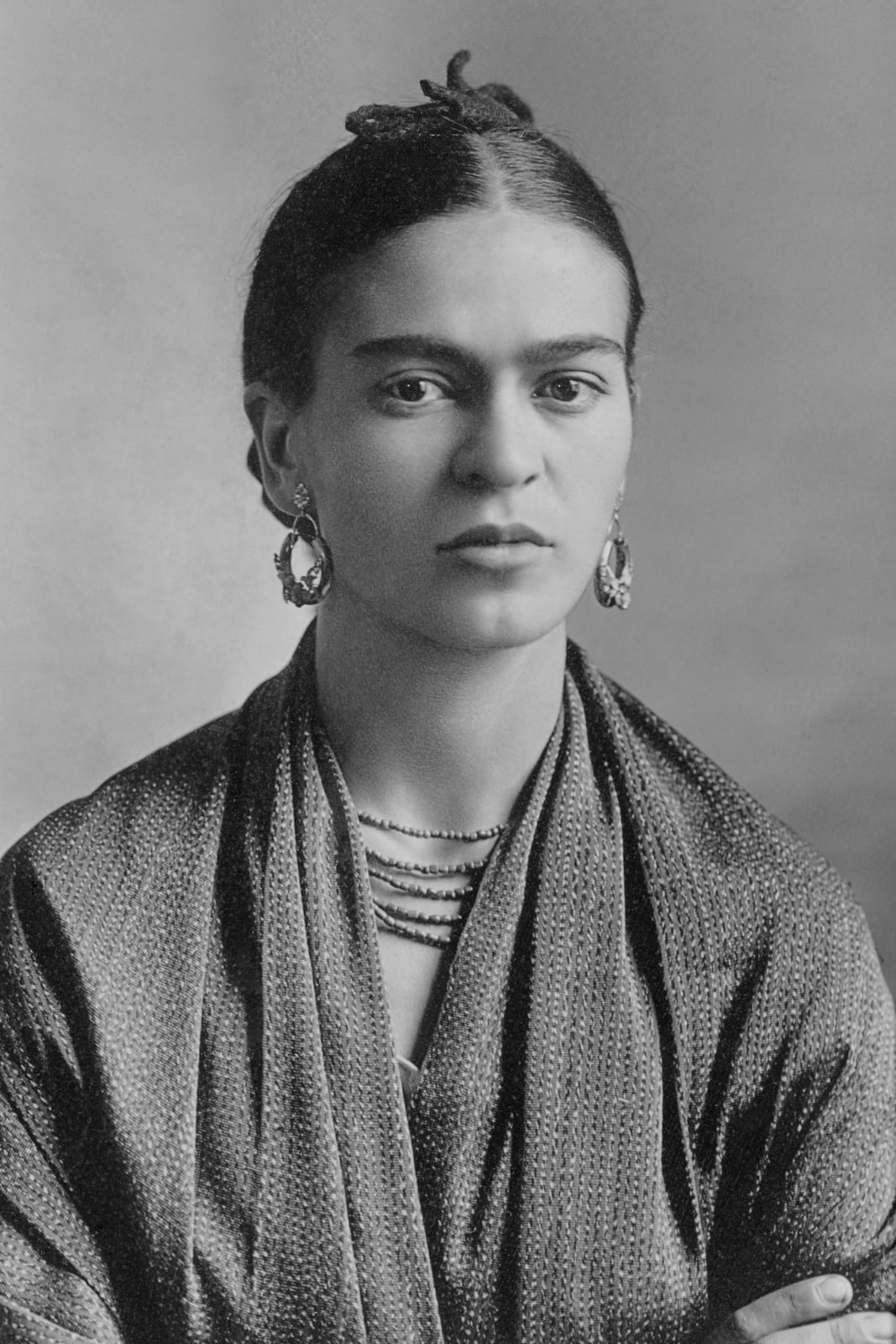
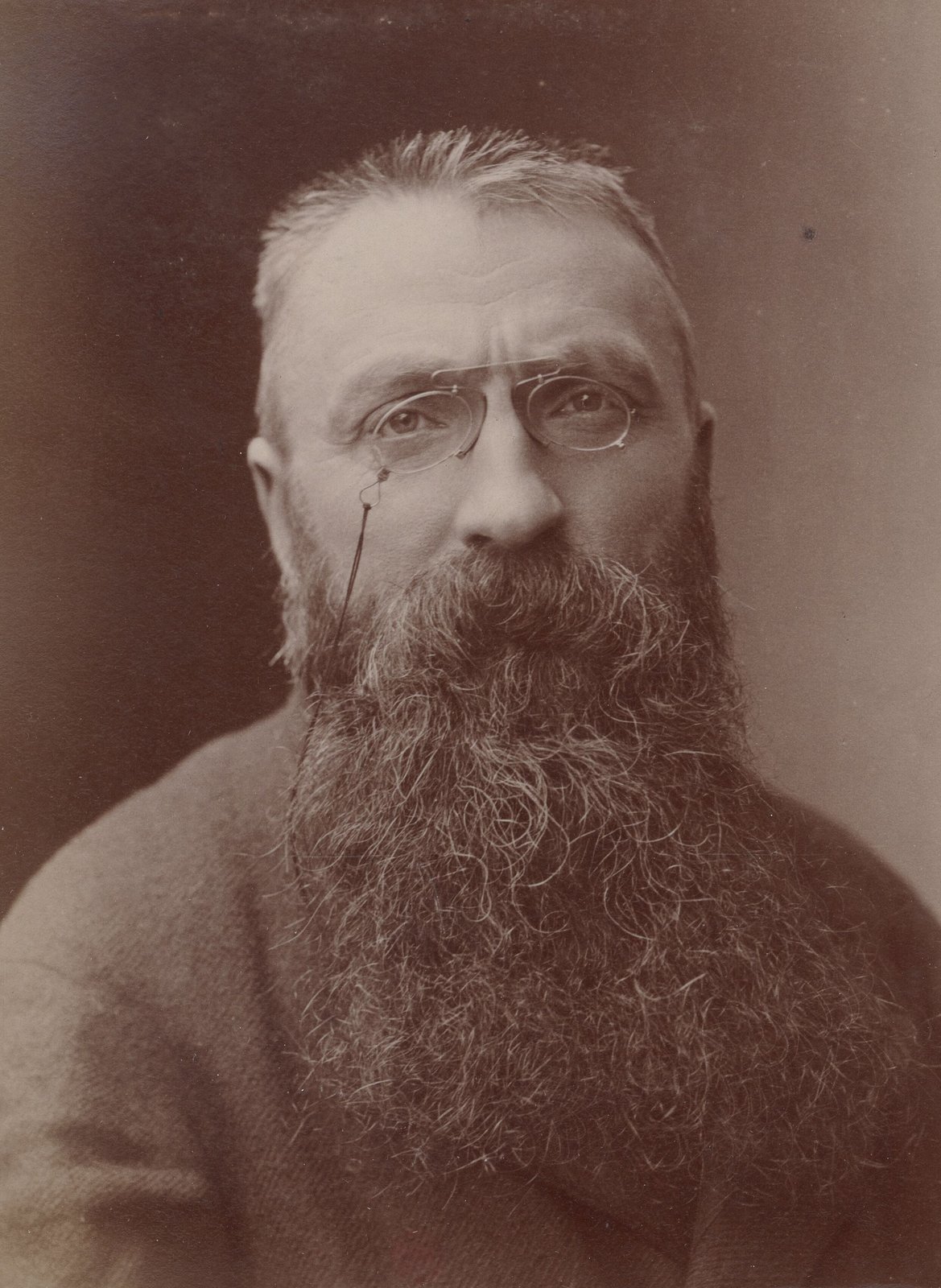

Atelier Nadar, portrait of Auguste Rodin (c. 1891; BnF dates the print 1875-1895), Bibliotheque nationale de France / Gallica; public domain; cropped to the photograph and downscaled · Atelier Nadar, 'M. Rodin', studio demonstration print no. 9115 B, albumen print, Bibliotheque nationale de France, departement Estampes et photographie, FT 4-NA-238 (25) (Gallica ark:/12148/btv1b531708194), via Wikimedia Commons · Public domain
핵심 특성
주요 업적
1885년 칼레 시가 시민 한 명의 조각상을 의뢰하자, 로댕은 같은 보수로 1347년의 인질 여섯 명 모두를 하나의 군상으로 만들겠다고 제안했다. 실물 크기 석고상은 1889년 파리에서 전시되었고, 청동 기념비는 1895년 6월 3일 칼레에서 제막되었다.
1880년 프랑스 정부는 건립 예정이던 장식미술관을 위해 로댕에게 청동 문 「지옥의 문」을 의뢰했다. 그는 여러 해 동안 이 작업을 이어 갔으며, 로댕 미술관은 이를 위해 만들어진 인물상과 군상이 200점이 넘는다고 집계한다. 그중 상당수는 이후 독립된 작품으로 발전했다.
1916년 로댕은 파리 비롱 저택에 미술관을 세우도록 자신의 작품과 소장품, 복제권을 프랑스 정부에 기증했다. 로댕 미술관은 그가 세상을 떠난 지 2년 뒤인 1919년 그곳에서 일반에 공개되었다.
삶의 장면들
1891년 18개월 안에 발자크 조각상을 완성하는 조건으로 의뢰를 받은 로댕은 투렌 지방을 찾고, 소설가의 초상과 묘사를 연구하며, 나체와 옷을 입힌 습작을 연이어 만들었다. 1894년에는 기한 없는 새 계약을 받아들이며 오직 이 인물상을 최대한 완벽하게 만드는 것만이 관심사라고 썼다. 석고상은 1898년에 전시되었고, 의뢰 단체는 이를 거부했다.
여러 해에 걸친 습작과 스스로 포기한 기한은 이 프로필의 높은 완벽주의 점수와 맞닿아 있으며, 이 특성은 양면적인 것으로 표시되어 있다. 같은 기록에 의뢰인들과의 긴장된 관계도 남아 있기 때문이다. 완벽주의
비서였던 앤서니 루도비치는 1906년 당시의 메모를 바탕으로, 그해 7월 파리에서 캄보디아 왕실 무용단의 공연을 본 로댕이 그들의 움직임을 자세히 묘사했다고 회고한다. 무용단이 마르세유로 떠나자 로댕은 뒤따라가 며칠 동안 국왕과 무용수들을 그렸다.
예순다섯의 나이에 낯선 춤의 전통을 그리러 먼 길을 간 일은, 자신이 수집한 고대 유물을 새 작품에 활용한 일과 더불어 이 프로필에 매겨진 호기심의 한 예가 된다. 호기심
전환점
1877년 파리 살롱에 「청동 시대」가 전시되자, 비평가들은 이 작품이 살아 있는 모델에서 직접 본을 뜬 것이라고 주장했다. 로댕은 미술 행정 당국에 청원하고 모델의 석고 본과 사진을 비교 자료로 제출했으며, 기성 조각가들이 그를 옹호하는 서한을 보낸 뒤인 1880년에야 혐의를 벗었다. 같은 해 정부는 이 작품을 사들였다.
작은 헛간 작업실에서 새 인물상을 계속 빚으면서 3년에 걸친 해명을 이어 간 일은 이 프로필에 매겨진 끈기와 나란히 놓인다. 로댕 미술관은 이 논란이 그에게 주목을 모았다고도 적고 있으며, 「지옥의 문」 의뢰는 1880년에 이어졌다. 끈기
비슷한 인물
전체적인 프로필이 이 사람과 닮은 사람들이에요.
출처
- Auguste Rodin (English Wikipedia) -- orientation only; not used as support for any scored row. Korean Wikipedia title '오귀스트 로댕' confirmed via the Wikidata sitelink.
- Auguste Rodin (Q30755) -- verified live via wbgetentities (2026-09-26): en label 'Auguste Rodin', description 'French sculptor (1840–1917)', ko label '오귀스트 로댕', born 1840-11-12, died 1917-11-17, citizenship Q142 (France), P18 'Auguste Rodin fotografato da Nadar nel 1891.jpg', kowiki '오귀스트 로댕'. Orientation only.
- Frederick Lawton, The Life and Work of Auguste Rodin (London: T. Fisher Unwin, 1906), archive.org OCR full text (lifeworkofaugust00lawtiala) -- AUTHORIZED-BIOGRAPHER perspective: the preface states that Lawton's information came mainly from Rodin's own conversations and from letters and documents Rodin lent him, so narrative claims are partly self-derived and admiring; weight is placed on the DOCUMENTS he transcribes and on his own firsthand observation. Read: Author's Preface; ch. II pp. 26-27 (the Man with the Broken Nose refused by the Salon); ch. IV pp. 44-51 (Age of Bronze 1875-80: the letter to L'Etoile belge of Jan. 1877, the petitions to Under-Secretary Turquet, the inconclusive inquiry, the casts and photographs of the model, the letter signed by Carrier-Belleuse, Dubois, Falguiere and others, the working shed in the rue des Fourneaux); ch. V pp. 72-74 (Edmond de Goncourt's diary entries of 1886-88, quoted); ch. VI pp. 92-93 (Falguiere bust, 1899 Salon); ch. X pp. 145-154 (Burghers of Calais 1884-95: the offer of six figures for the fee of one, the Calais committee documents, Lawton's own 1904 study of the plasters at Meudon, Rodin's wish for a high pillar or ground-level siting); ch. XII pp. 174-189 (Balzac 1891-98: the 3 July 1891 application letter, Zola's letter of 14 Aug. 1891 recording a 12-8 vote, the secretary's letters of 6 Dec. 1892 and 15 June 1893, the Nov. 1894 agreement removing the time clause and Rodin's letter placing the 10,000 franc advance on deposit, the Aug. 1896 and 1898 press statements, the May 1898 Societe resolution, the Pellerin offer and Rodin's letter to his supporters keeping sole possession); p. 171.
- Judith Cladel, Rodin: The Man and His Art, with Leaves from His Note-book, trans. S. K. Star (New York: Century, 1917), Project Gutenberg #43327 via archive.org -- FRIEND/INSIDER perspective (a close friend and later his biographer; strongly eulogistic; many youth details are evidently Rodin's own reminiscences as retold by her). Read: 'The Career of Rodin'; 'Childhood. Youth. First Studies' (the Petite Ecole routine, the Louvre/Bibliotheque/Gobelins schedule, the youthful notebook she examined herself); opening of 'Rodin and the Beaux-Arts'; 'Plaster Casts' (Belgium 1871-76, the Age of Bronze and its eighteen months of modelling, the accusation and the Boucher/Dubois letter, and HER OWN FIRSTHAND account of Rodin refusing to include the Age of Bronze in the 1899 Brussels exhibition she was supervising and later reversing his judgment in front of the Luxembourg bronze); 'Flemish Painting -- Journeys in Italy and France' (the 1875 Italian journey); the Hotel Biron passage of 'An Artist's Day'. The Note-book leaves themselves (Rodin's own text) are SELF and not used for any row. James Huneker's introduction read but not relied on.
- Rodin's OWN recorded conversations in Auguste Rodin, Art, 'Conversations with Paul Gsell', trans. Romilly Fedden (Boston: Small, Maynard, 1912), archive.org OCR (artbyaugusterodi00rodi) -- SELF, one perspective, never sole support for a row. Read: ch. I 'Realism in Art' (his account of working from freely moving models, 'I am not at their orders, but at those of Nature'); ch. VIII (his remarks on the Laurens bust, the Burghers fee -- six figures in bronze 'for the price they offered me for one' -- and on Falguiere after the Balzac refusal).
- Paul Gsell's own narrative observations in the same book (1911 French; 1912 English), ch. I -- JOURNALIST WITNESS perspective, admiring: Gsell reports that he repeatedly watched Rodin at work at the Depot des Marbres towards evening, paying several nude models to walk about the studio and quickly modelling small clay figures whenever a movement pleased him, and contrasts this with colleagues who posed models on a stand. Kept separate from Rodin's own words (src_rodin_self_gsell).
- Rainer Maria Rilke, Auguste Rodin, Erster Teil (1903), read in German in the Insel-Verlag edition (Leipzig, 1920), archive.org OCR (augusterodin00rilk) -- POET/ADMIRER perspective, lyrical and interpretive, written after his 1902 visits and before he served as Rodin's secretary (1905-06). Read: the Brussels years (commissions executed conscientiously while his own work was done in the evenings; reading Dante and Baudelaire; repeated visits to cathedrals; 'Man muss sich nicht eilen'), the busts passage (working from memory after sittings), and the Balzac passage (visits to Touraine, reading letters and works, studying daguerreotypes and Lamartine's description, seven fully worked nude studies, then draped versions). Used only for concrete reported actions, never for its characterisations.
- Anthony M. Ludovici, Personal Reminiscences of Auguste Rodin (London: John Murray, 1926), archive.org OCR (in.ernet.dli.2015.167503) -- NON-SELF FIRSTHAND perspective of his private secretary for most of 1906, written from notes made at the time; candid and not uniformly admiring (describes Rodin's temper and their parting). Read: Preface; ch. I pp. 40-41 (studio organisation, technical personnel, assistants carving the marbles); pp. 58-60; pp. 100-104; pp. 122-124; pp. 130-133 (the Cambodian dancers, July 1906: Rodin's reaction after the 10 July performance and his journey to Marseilles to draw them).
- Musee Rodin, Paris (the national museum holding Rodin's bequest), English web pages read in full 2026-09-26 -- MUSEUM/SCHOLARLY perspective, independent of the period biographies: collection entries for The Age of Bronze, Monument to Balzac, Monument to the Burghers of Calais and The Gates of Hell; the chronology 'Rodin's life 1840-2015'; the technique pages on modelling and marble carving; and the essay 'Multiples, fragments, assemblages' (casting and re-use of figures, partial figures, marcottage, enlargements by Henri Lebosse from 1894, the 1889 Monet-Rodin exhibition, the Walking Man, the antiquities collection at Meudon). Note: the Burghers page gives 1894/1895 for the Calais approach and commission, evidently a slip for 1884/1885 (it gives completion of the final version in 1889 and the unveiling on 3 June 1895).