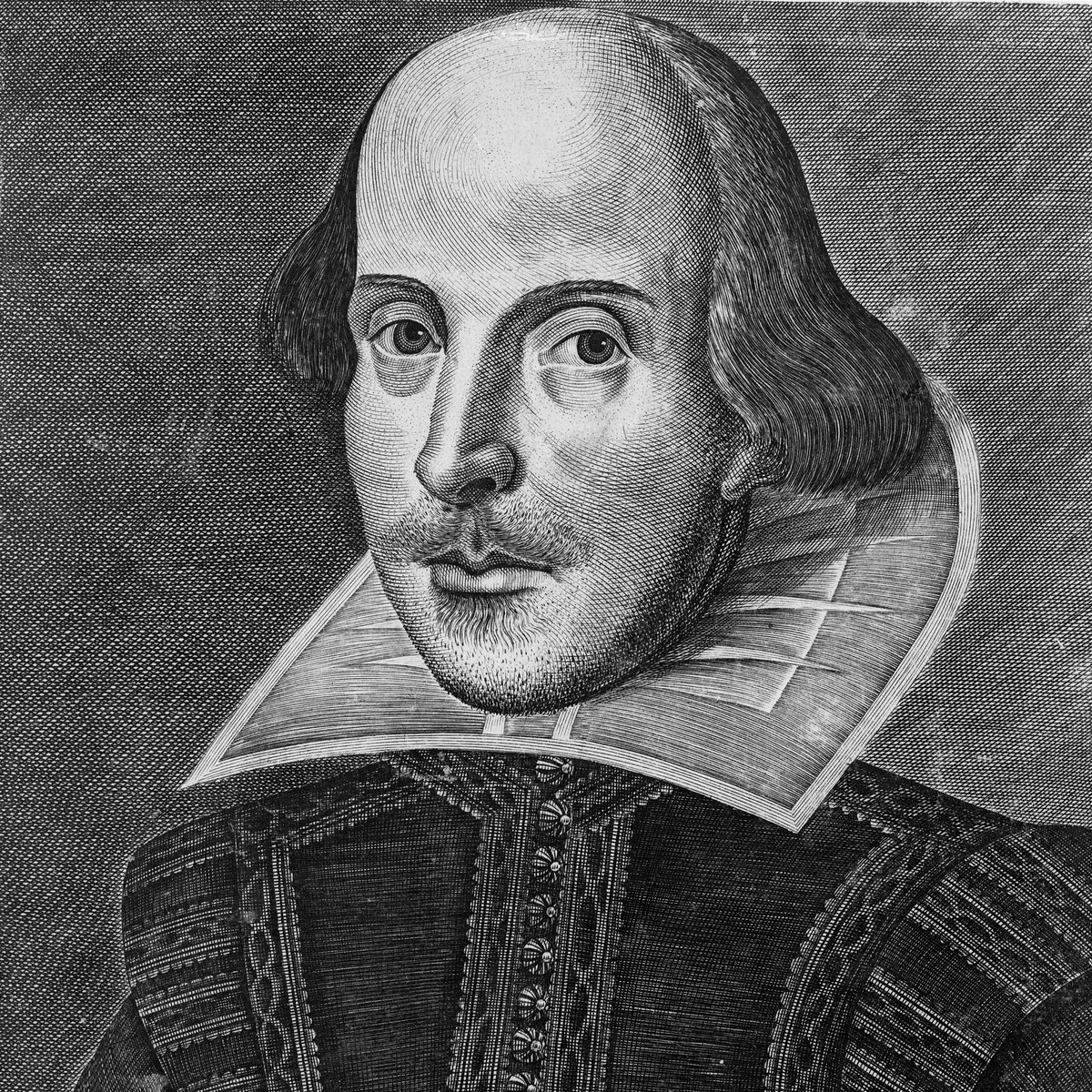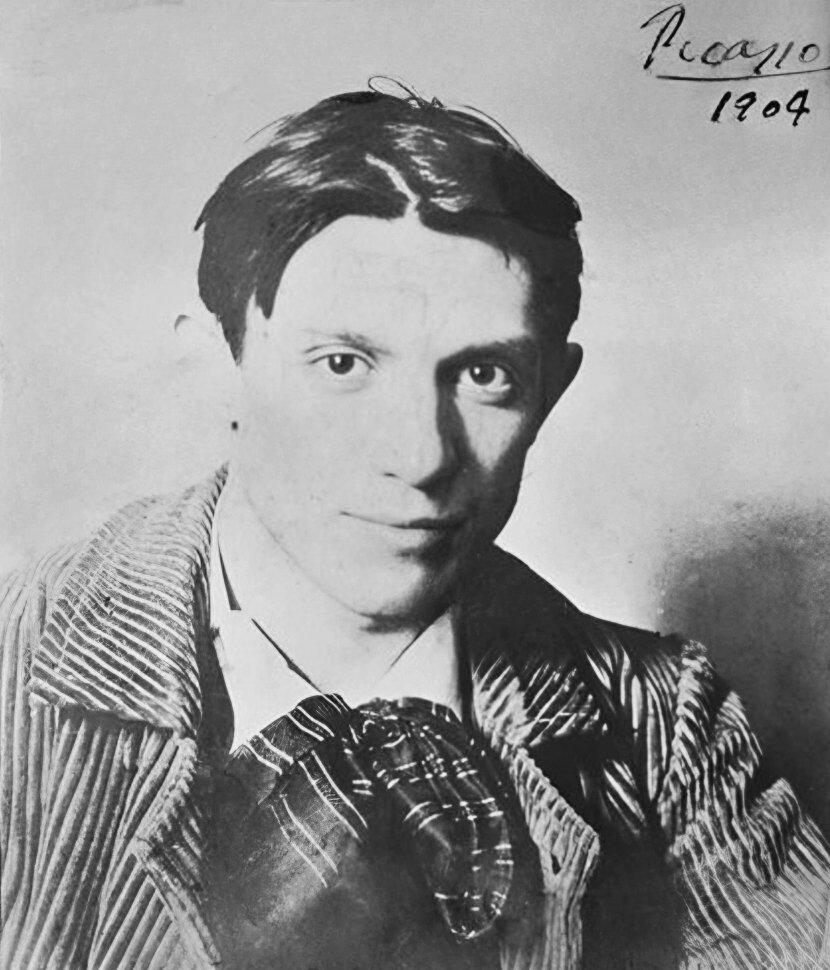

Martin Droeshout, 1623, First Folio frontispiece; digital facsimile courtesy of the Bodleian Libraries, University of Oxford (Arch. G c.7), CC BY 3.0 · Wikimedia Commons, 'Shakespeare Droeshout 1623.jpg' -- Martin Droeshout, copper engraving, frontispiece of the First Folio (1623), cropped scan from the Bodleian Libraries' digital facsimile of Arch. G c.7; original Commons file 2640 x 2640 pixels, downscaled once to 1200 x 1200 (never upscaled). A posthumous published engraving prepared for the Folio, not a likeness drawn from a documented sitting. · Public Domain (engraving of 1623; artist died c. 1650); facsimile source published by the Bodleian under CC BY 3.0
writer · Early Modern
William Shakespeare
1564–1616
Known For
Not yet included in personality matching — the documented evidence doesn't yet cover enough of the personality model. Everything else on this page is fully available.
Trait Constellation
Key Achievements
In 1598 Francis Meres named him the most excellent English writer in both comedy and tragedy for the stage, listing twelve plays including Romeo and Juliet and A Midsummer Night's Dream.
The First Folio of 1623, edited by two of his fellow actors, collected 36 plays, 18 of them never printed before, saving works such as Macbeth, Twelfth Night and The Tempest.
For almost twenty years he was the regular dramatist of the Lord Chamberlain's (later King's) Men, a sharer in the company and a member of the syndicates that held the Globe and Blackfriars.
Moments That Reveal Them
On 15 March 1595 the Treasurer of the Household's account recorded payment to William Kempe, William Shakespeare and Richard Burbage for two plays shown before the Queen at Christmas 1594, naming him with the company's leading figures.
This is consistent with a member whom the company trusted with its business, not only its writing. Collaboration
Ben Jonson wrote that the players praised Shakespeare for never blotting a line, that he answered 'Would he had blotted a thousand', and that he nonetheless loved the man, who 'flowed with that facility' that sometimes he needed to be stopped.
This is consistent with a writer who composed quickly and fluently, a quality his closest rival admired and also criticised. Execution Speed
Turning Points
Around 1594, after the plague closures, he joined the newly formed Lord Chamberlain's Men and became a sharer, staying with that company, later the King's Men, for the rest of his career.
This is consistent with a shift from writing for several companies to writing for, and co-owning, a single company. Opportunity Sensing
Similar People
People whose overall profiles resemble theirs.

Duke Ellington

Niels Bohr

Fyodor Dostoevsky

Akio Morita

Wolfgang Amadeus Mozart
Opposite Profile
Not a rival — a different profile shape worth a look.

Aung San Suu Kyi
Sources
- William Shakespeare (Q692) -- verified live via the Wikidata API (2026-10-11): English label 'William Shakespeare', description 'English playwright and poet (1564-1616)', Korean label present, baptism/birth given as 1564 (several dates recorded), died 23 April 1616 (a second death date is also recorded). Orientation only; not used as support for any row.
- Shakespeare Birthplace Trust, 'Shakespeare's Career' (Shakespedia) -- CANONICAL SIGNIFICANCE SOURCE: the Trust's account of his reputation established in London by 1592, the two narrative poems, membership and sharership in the Lord Chamberlain's Men (later the King's Men), almost twenty years as the company's regular dramatist at roughly two plays a year, membership of the Globe and Blackfriars syndicates, and the First Folio as the best illustration of his pre-eminence. Read in full.
- Folger Shakespeare Library (with the British Library, Bodleian Libraries, Shakespeare Birthplace Trust and The National Archives), 'Playwright, actor & shareholder', Shakespeare Documented -- overview essay and document list on Shakespeare's work as actor, playwright and shareholder in the Lord Chamberlain's / King's Men, and the company's playhouses (the Theatre, the Globe from 1599, Blackfriars from 1609). Read in full, plus the sub-essays 'Shakespeare's company', 'Shakespeare's playhouses' and 'Contemporary accounts and critical responses to plays'.
- Alan H. Nelson and Folger staff, 'Exchequer, Pipe Office, Declared Accounts: Listing Shakespeare as a leading player of the Lord Chamberlain's company' (The National Archives E 351/542, payment of 15 March 1595), Shakespeare Documented -- essay on the Treasurer of the Household's account naming William Kempe, William Shakespeare and Richard Burbage as the payees for two plays shown before the Queen at Christmas 1594. Read in full.
- Folger Shakespeare Library, 'Inquisition Post Mortem of Thomas Brend, showing Shakespeare and others occupying the Globe playhouse' (17 May 1599, The National Archives), Shakespeare Documented -- essay on the near-contemporary record of the newly built Globe 'in the occupation of William Shakespeare and others', read as evidence of his participation in the lease and a leading position among its leaseholders. Read in full.
- Folger Shakespeare Library, 'Shakespeare's playhouses', Shakespeare Documented -- overview essay on the Theatre, the Globe (1599) and the Blackfriars indoor playhouse, stating that Shakespeare was one of the original seven shareholders of the reorganized Blackfriars in 1608 and listing the Globe lease deeds of 1601 and 1608 that name him. The tail of the Blackfriars paragraph was cut off in the page text and was not read. Read to that point.
- Heather Wolfe, 'Greenes, groats-worth of witte: First printed allusion to Shakespeare as a playwright' (1592; Folger STC 12245), Shakespeare Documented -- essay on the pamphlet that attacks an 'upstart Crow' and 'Shake-scene', on Henry Chettle's apology in Kind-Heart's Dream and Thomas Nashe's denial of authorship. HOSTILE CONTEMPORARY witness (and Chettle's defence of him, as summarized by the Folger). Read in full; the Chettle document's own Folger page carries no description and Chettle's text itself was not read.
- Folger Shakespeare Library, 'George a Greene: George Buc interviews William Shakespeare and Edward Juby' (1599), Shakespeare Documented -- essay on the marginal notes in which the future Master of the Revels records two actors' answers about who wrote an anonymous play, with Shakespeare described as a leading member of the Lord Chamberlain's Men. Read in full.
- Grace Ioppolo, 'Henslowe's diary: including the first recorded performances of Henry VI and Titus Andronicus', Shakespeare Documented (Dulwich College MSS 7) -- essay on Philip Henslowe's account book: the diary does not name Shakespeare, but records performances of plays of his by other companies in 1592-94, and Ioppolo states there is no evidence he belonged to Lord Strange's Men and that he became a sharer in the Lord Chamberlain's Men in 1594. Read in full.
- Ben Jonson, 'Timber, or Discoveries' (written c. 1630, printed 1641), the passage 'De Shakspeare nostrat', Project Gutenberg ebook 5134 (Discoveries Made Upon Men and Matter and Some Poems, Cassell edition with Morley's introduction) -- PEER witness, a rival dramatist and friend writing some years after Shakespeare's death: he reports that the players praised Shakespeare for never blotting a line, says he answered 'Would he had blotted a thousand', and calls him honest, of an open and free nature, with an excellent fancy, brave notions and gentle expressions, but one whose facility sometimes needed to be stopped. Written from memory and as a personal note-book, so used for the characterization, not for dated events. Read the passage in full.
- Ben Jonson, 'To the memory of my beloved, the Author, Mr. William Shakespeare' (First Folio, 1623), transcription from The Works of Ben Jonson, vol. 3 (Chatto & Windus, 1910), Luminarium -- the commemorative poem. ADMIRING and a commissioned tribute, so only used for its remark that art as well as nature made him, that a poet must 'sweat' and 'strike the second heat upon the Muses' anvil', and for the 'small Latin and less Greek' line. Read in full as quoted.
- Internet Shakespeare Editions (University of Victoria), 'The First Folio (1623)' -- Life and Times essay quoting the 'To the great Variety of Readers' preface signed by John Heminge and Henry Condell, Shakespeare's fellow actors and editors of the Folio: 'His mind and hand went together; and what he thought, he uttered with that easiness, that we have scarce received from him a blot in his papers.' COLLEAGUE witness, admiring and published after his death. Read in full.
- 'Prose Contributions to Shakespeare's First Folio', The Cambridge Edition of the Works of Ben Jonson (Electronic edition, University of Victoria / HCMC) -- scholarly introduction on who wrote the Folio's prefaces, concluding that the 'blot' sentence was drafted by Heminges and Condell rather than Jonson and setting it beside Jonson's Discoveries passage. Read the relevant sections.
- Internet Shakespeare Editions, 'The first rave review' -- Francis Meres, Palladis Tamia: Wit's Treasury (1598), as quoted by permission of the Folger: Meres compares Shakespeare with Ovid in poetry and with Plautus and Seneca in comedy and tragedy and lists twelve plays by title. CONTEMPORARY CRITIC; the site notes he was unusually uncritical in his praise of English writers in general. Read in full.
- Michael Best, 'Textual Introduction' to King Lear, Internet Shakespeare Editions (University of Victoria; the page is marked as not peer reviewed) -- modern scholarly account of the 1608 quarto and 1623 Folio versions, setting out the case that Shakespeare himself revised the play, the contrary arguments and the evidence of authorial draft copy, and stating that scholars are divided. MODERN SCHOLARSHIP, explicitly contested. Read the revision sections in full.
- Peter Kirwan, 'Collaborations and (mis)attributions', Shakespeare Documented (Folger Shakespeare Library) -- scholarly essay on the Shakespeare Apocrypha, stating that scholars are now more willing to accept Shakespeare writing plays collaboratively and that The Two Noble Kinsmen has reached general consensus as collaborative. Read in full.
- Bodleian Libraries, University of Oxford, 'The Bodleian First Folio' (digital facsimile of Arch. G c.7) -- institution page used only to check the rights notice for the portrait source images (published under a Creative Commons Attribution 3.0 Unported licence). Not used for any scoring.