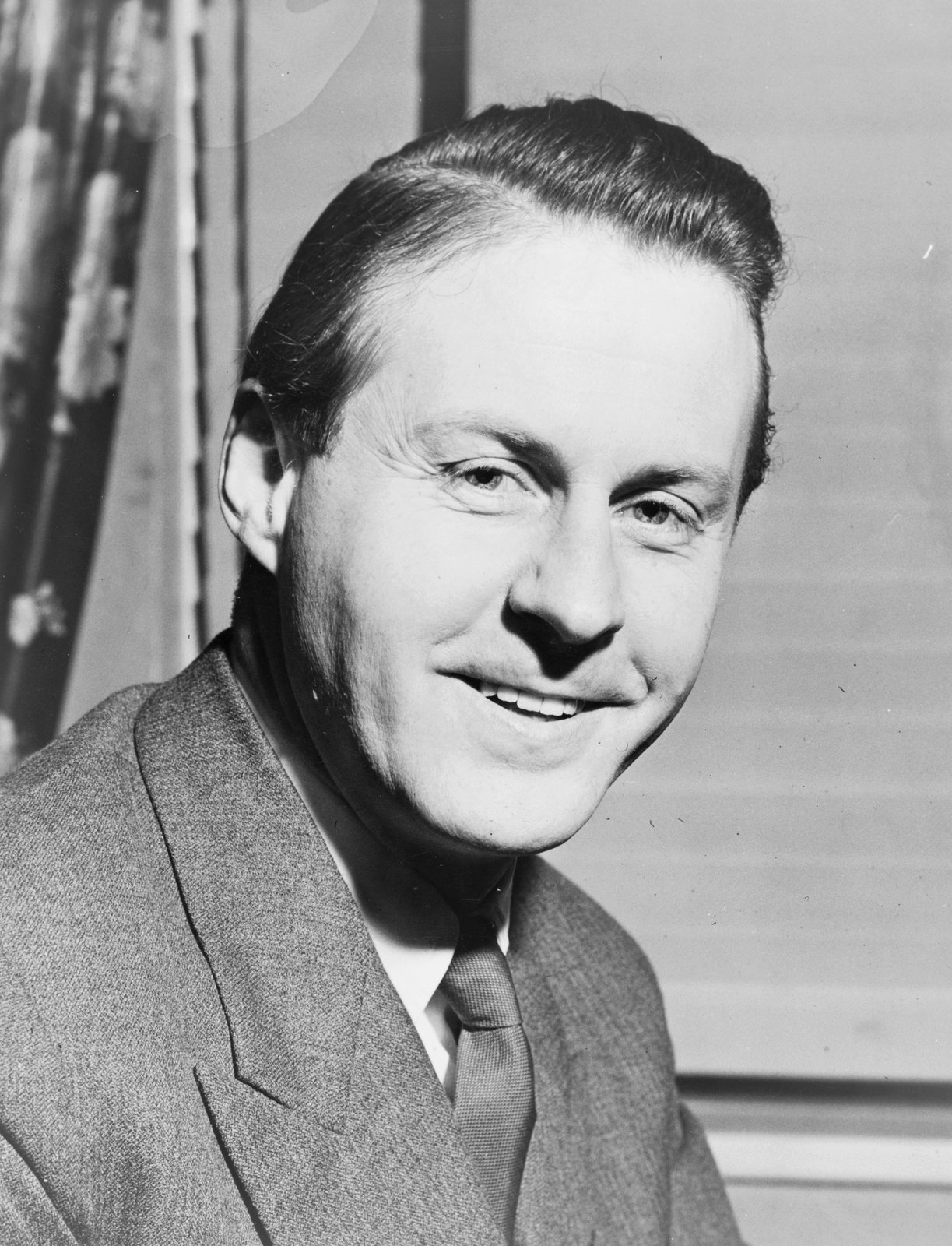

Al Ravenna, New York World-Telegram and the Sun staff photographer, 4 May 1951 (Library of Congress) · Library of Congress, New York World-Telegram and the Sun Newspaper Photograph Collection, via Wikimedia Commons · Public Domain (NYWTS collection, no known copyright restrictions)
Trait Constellation
Key Achievements
On 28 April 1947 Heyerdahl and five crewmates left Callao, Peru, on a balsa raft, the Kon-Tiki, and reached the Raroia atoll in Polynesia on 7 August, after 101 days at sea. The voyage was meant to show that such a raft could have crossed the Pacific; a scholarly encyclopedia entry notes that his scientific contributions gained only limited acceptance internationally.
In 1955-56 he led a Norwegian archaeological expedition to Easter Island with five archaeologists, among them Arne Skjolsvold, Edwin Ferdon and William Mulloy. The team excavated statues at the Rano Raraku quarry and found that figures long taken for heads had large torsos below the surface; Haaland notes that the excavations used stratigraphic methods and radiocarbon dating.
From 1988 to 1994 excavations at Tucume in Peru were organised by Heyerdahl and funded by the Kon-Tiki Museum and private donors, with Daniel Sandweiss and Alfredo Narvaez leading the fieldwork. Sandweiss writes that the research indicates Tucume took part in maritime activities, probably including long-distance exchange.
Moments That Reveal Them
Ra, a papyrus boat built in front of the Great Pyramid at Giza and launched from Safi, Morocco, in 1969, was abandoned about a week short of Barbados after its reeds took in much water and Heyerdahl feared it would sink. Ten months later four Aymara builders from Lake Titicaca made a shorter but more durable Ra II, which reached Bridgetown on 12 July 1970 after 57 days.
Returning with a rebuilt boat within a year is consistent with the profile's persistence reading; the sources read do not record his own reasons, and accounts differ on why the first boat failed. Persistence
In 1986, back on Easter Island, Heyerdahl, the Czech engineer Pavel Pavel and sixteen local residents moved a 15-ton statue upright with ropes, and the Kon-Tiki Museum reports that it could be made to 'walk' without much difficulty. The museum's biography of him also records that excavations at Anakena Beach showed the first arrivals were Polynesians from the west, contrary to his theory, adding that other research showed later contact.
Read with the Ra episode, the two items sit alongside the profile's mixed, low-confidence belief-updating row: a practical correction of method on one side, and on the other a central hypothesis that critics such as Diamond describe him as keeping in the face of contrary evidence. This is one reading among others. Belief Updating
Turning Points
In spring 1946 Heyerdahl presented his theory that South Americans had settled Polynesia to American anthropologists and was turned down. According to the Kon-Tiki Museum, Herbert Spinden replied that he should try sailing a balsa raft from Peru himself; Heyerdahl went on to plan the expedition, obtaining equipment through military contacts and recruiting five crewmates.
The sequence, from a rejected claim to a personal test of it, illustrates the profile's independent-thinking reading; whether the theory itself holds is a separate, disputed question this profile does not judge. Independent Thinking
Similar People
People whose overall profiles resemble theirs.

Elizabeth Cady Stanton

Mahatma Gandhi

Benjamin Franklin

Akio Morita

Galileo Galilei
Sources
- Thor Heyerdahl -- orientation only (dates, expeditions overview, scientific-reception summary); not used as support for any scored row. Fetched and read.
- Thor Heyerdahl (Q133622) -- identity verified live: label 'Thor Heyerdahl', description 'Norwegian anthropologist and adventurer (1914-2002)', citizenship Norway, born 6 Oct 1914, died 18 Apr 2002, P18 images 'ThorHeyerdahl.jpg' and 'Thor Heyerdahl 2000.jpg'; read via Special:EntityData JSON and the wbgetentities API (ko label '토르 헤위에르달'). Orientation only.
- Kon-Tiki Museum (Oslo), 'Kon-Tiki ekspedisjonen' expedition page, written by Kerstin Krohg -- institutional account of the 1946 rejection by American anthropologists and Spinden's challenge, the equipment obtained through military contacts, the crew recruitment and the 28 Apr-7 Aug 1947 voyage. The museum is the subject's own memorial institution and draws on his accounts, so all Kon-Tiki Museum pages count as ONE perspective. Fetched and read.
- Kon-Tiki Museum, 'Fatu Hiva, 1937' page (Kerstin Krohg) -- the 1937-38 stay: proposal to Liv Coucheron Torp, the Tahiti stop, zoological collecting on Prof. Bonnevie's guidance, the return after about a year. Same museum perspective as src_heyerdahl_kontiki. Fetched and read.
- Kon-Tiki Museum, '1953 Galapagos expedition' page (Kerstin Krohg) -- Metraux's photograph of a supposed statue, the team with Skjolsvold and Reed, the statue found to be recent, the pottery and Inca flute. Same museum perspective. Fetched and read.
- Kon-Tiki Museum, 'Easter Island, 1955-1956' page (Kerstin Krohg) -- the five archaeologists, the Rano Raraku excavations, the 1986 return with Pavel Pavel and sixteen islanders moving a 15-ton moai. Same museum perspective. Fetched and read.
- Kon-Tiki Museum, 'Ra, 1969 - Ra II 1970' page (Kerstin Krohg) -- the multinational crews, Ra's construction and abandonment a week short of Barbados, the four Aymara builders of Ra II and its 57-day crossing. Same museum perspective. Fetched and read.
- Kon-Tiki Museum, 'About Thor Heyerdahl' page (unsigned) -- short biography incl. the 1986 Anakena excavation result that the first arrivals were Polynesians from the west 'contrary to Heyerdahl's theory' alongside evidence of later contact. Same museum perspective. Fetched and read.
- Heron Dance Art Studio, 'Norman Baker: Forty Years On The World's Oceans' -- unsigned, undated interview-style profile of Norman Baker, navigator and second-in-command on Ra and Ra II and a Tigris crew member: INDEPENDENT FIRSTHAND CREW account (non-self for Heyerdahl) of how Heyerdahl prepared, financed and corrected the Ra boats. Author, date and original venue of the interview are not stated on the page. Fetched and read.
- Daniel Drosdoff (UPI), 'Explorer Thor Heyerdahl: Destroying the myths of science', 16 Mar 1986 -- contemporaneous wire interview written while Heyerdahl (71) was digging on Easter Island; contains his own statements (self-quotes, one perspective) plus the reporter's description of the dig and the moai test. Fetched and read.
- Jared Diamond, 'Twilight at Easter', The New York Review of Books, 25 Mar 2004 -- scholarly critical review essay on Easter Island: how Heyerdahl's Polynesia/Egypt/Peru diffusion premise fares against the archaeological evidence, and Diamond's remarks on Heyerdahl's handling of that evidence and on the islanders' statue-raising demonstration. Independent critical secondary source; read for the behavior, not to adjudicate the theory. Fetched and read.
- Daniel H. Sandweiss, 'Tucume', Encyclopedia of Latin American History and Culture (entry reproduced on Encyclopedia.com) -- entry by the archaeologist who co-led the fieldwork: the 1988-94 excavations were organised by Heyerdahl and led in the field by Sandweiss and Alfredo Narvaez, funded by the Kon-Tiki Museum and private donors. Independent firsthand collaborator. Fetched and read.
- Gunnar Haaland (Univ. of Bergen), 'Thor Heyerdahl', Store norske leksikon (snl.no), updated 23 Jul 2025 -- scholarly encyclopedia entry: ethnographer and zoologist by training; Easter Island excavations with stratigraphy and radiocarbon dating; Tucume 1988-94; Maldives 1982-84; assessment that his scientific contributions had limited acceptance internationally. Independent secondary source. Fetched and read.
- G. Figueroa G-H, 'William Mulloy: 1917-1978', Asian Perspectives XXII(1), 1979 -- obituary by a Chilean archaeologist who worked on the 1955-56 expedition: Mulloy received Heyerdahl's invitation in 1955 while working in Alberta, and the expedition redirected his career. FIRSTHAND colleague, independent of Heyerdahl. PDF text extracted and read in full.
- Suleiman Bulbulia, 'Remembering the RA II', Barbados Today column, 15 Jul 2020 -- retrospective column on the Ra II arrival at Bridgetown on 12 Jul 1970 after 57 days and on the aborted first voyage. Secondary/local-press retelling of the public record. Fetched and read.