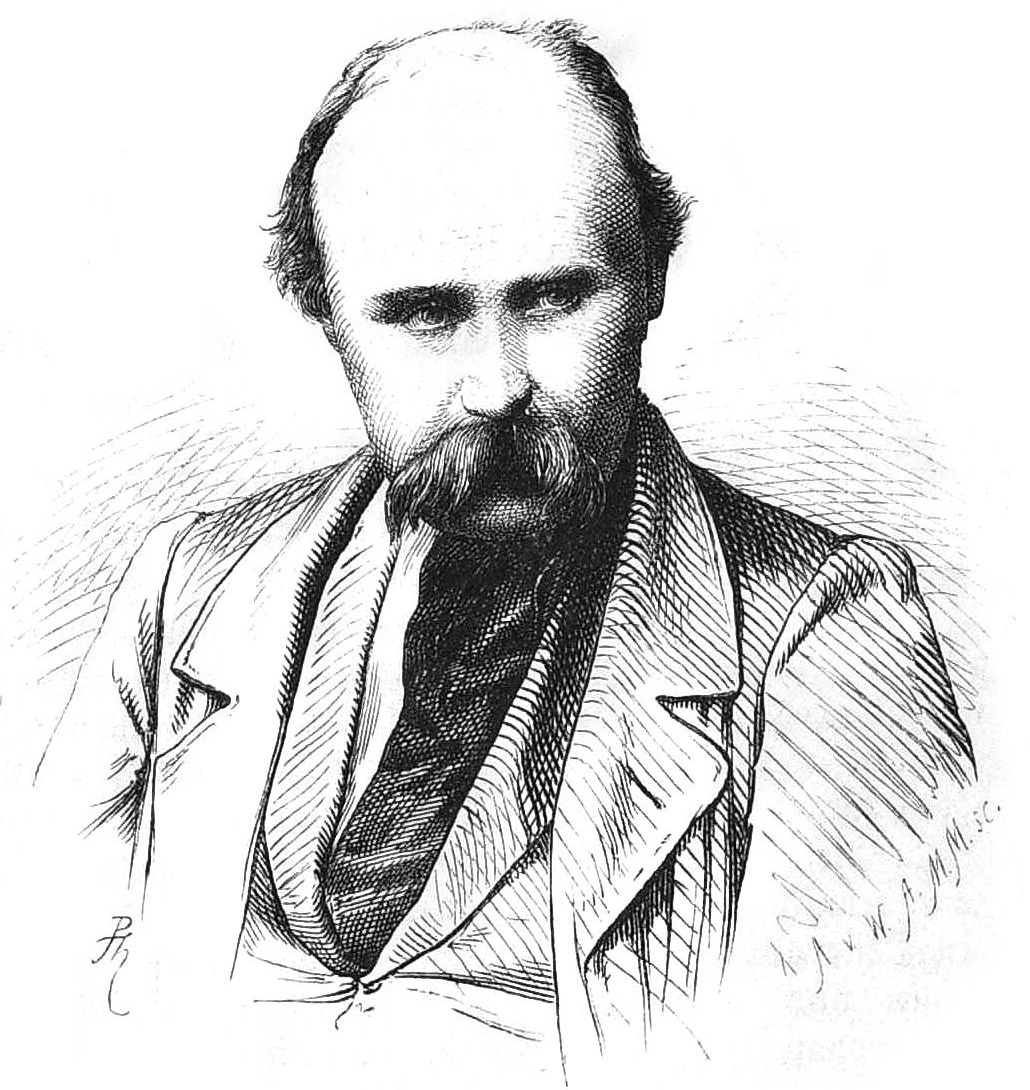
Illustration monogrammed PTh, Die Gartenlaube (Leipzig), 1862, page 437 · Wood engraving of Taras Shevchenko printed in the German magazine Die Gartenlaube (Leipzig: Ernst Keil, 1862), page 437, with the caption 'Taras Grigorjewitsch Schewtschenko' and a monogram 'PTh' at lower left; Wikisource edition of the volume and Commons scan. The page margins were trimmed (1030 x 1090) with no resizing and no upscaling. · Public domain: a wood engraving published in Leipzig in 1862 (monogram of the illustrator Paul Thumann, who died in 1908), public domain by age
poet · 19th Century
Taras Shevchenko
1814–1861
Known For
Not yet included in personality matching — the documented evidence doesn't yet cover enough of the personality model. Everything else on this page is fully available.
Trait Constellation
Key Achievements
His collection Kobzar (1840) and the poems that followed are credited with laying the foundations of modern Ukrainian literature and showing that Ukrainian could carry serious poetry; by the 1990s parts of Kobzar had been translated into more than 100 languages.
A painter trained at the Imperial Academy of Arts under Karl Briullov, he issued the etching album Picturesque Ukraine in 1844, painted more than 150 portraits and was named Academician of Engraving in 1860.
Under a ban on writing and painting during his 1847-57 military exile, he went on writing poems in secret notebooks and, as artist of the 1848-49 Aral Sea expedition, painted the landscapes of the region.
Moments That Reveal Them
Banned from writing and painting in exile, he copied one of his poems into a small book hidden in his boot, and he was re-arrested in 1850 for violating the ban.
This is consistent with continuing his creative work despite a real risk of punishment. Persistence
In January 1861 he compiled a primer for Ukrainian Sunday schools, published it at his own expense and gave copies free to the schools.
This is consistent with putting his own money into work meant to help others learn. Impact Motivation
Turning Points
Returning to St Petersburg in 1859, he took up etching and aquatint, and in September 1860 the Academy of Arts named him Academician of Engraving.
This is consistent with turning to a new medium late in his career and pursuing it to formal recognition. Experimentation
Similar People
People whose overall profiles resemble theirs.


Sequoyah

Abraham Lincoln

Louis Pasteur

Benjamin Franklin

Rabindranath Tagore
Opposite Profile
Not a rival — a different profile shape worth a look.

Otto von Bismarck
Sources
- Taras Shevchenko (Q134958), verified live via the Wikidata API (2026-11-06): description 'Ukrainian poet and artist (1814-1861)', born 1814 (the item lists 25 and 26 February and 9 March), died 1861 (10 March among three listed dates), Korean label 타라스 셰우첸코. Orientation only; not used as support for any row.
- Myroslav Antokhii, Daria Darewych, Marko Robert Stech and Danylo Husar Struk, 'Shevchenko, Taras', Encyclopedia of Ukraine (Canadian Institute of Ukrainian Studies; entry updated 2004; read). CANONICAL SIGNIFICANCE SOURCE: lists his works from Kobzar (1840) and Haidamaky (1841) to the secret exile poems and the 1861 primer he funded himself; describes him as the founder of modern Ukrainian literature whose Kobzar legitimised Ukrainian for serious literature and was translated into more than 100 languages by the 1990s; covers his training under Briullov, the Picturesque Ukraine album (1844), more than 150 portraits and the 1860 academician-engraver title, with 835 surviving works and about 270 lost. Its critical section notes that Soviet-era scholarship was heavily censored and falsified. Scholarly but laudatory.
- Taras Shevchenko Museum (Toronto), 'Short Biography' (shevchenko.ca; owned by the Taras H. Shevchenko Museum and Memorial Park Foundation; no author named; read). Reports his 1838 release from serfdom for 2,500 rubles raised by a lottery of a Briullov portrait, Academy studies and silver medals in 1839-41, the publication of Kobzar (1840) and Haidamaky (1841), the 1847 sentence with the order 'with a ban on writing and painting', secret copying of his poems into a small book hidden in a boot, a re-arrest in 1850 for violating the ban, and the Academy title of 2 September 1860. Admiring community museum; no independent critics.
- Taras Shevchenko Museum (Toronto), 'Final Years, Freedom on a Chain' (shevchenko.ca; read). Reports that from September 1859 he lived in the Academy of Arts and took up etching and aquatint, calling engraving a means for spreading art, that the Academy named him Academician of Engraving on 2 September 1860 for his etching success, and that in January 1861 he compiled and published a primer at his own expense and gave copies free to Sunday schools.
- Taras Shevchenko Museum (Toronto), 'Shevchenko's Art' (shevchenko.ca; read). Lists his genres (portraits, landscapes, compositions, genre scenes), media (watercolour, oil, pencil, ink, sepia, etching and aquatint), the six etchings of Picturesque Ukraine published in 1844 out of a larger plan, and his work as artist of the 1848-49 Butakov Aral Sea expedition. Laudatory and cites no independent critics; used for the factual outline only.
- 'Shevchenko, Taras Grigoryevich', The Columbia Encyclopedia, 6th edition (via Encyclopedia.com; read). Short general entry: born a serf, trained as an icon and mural painter, freed in 1838, became a prominent realist painter, wrote Ukrainian ballads and, in exile, lyric poetry and several novels, and had 'tremendous influence on Ukrainian literature'. Offers no critical assessment beyond that.
- 'Ein russisches Dichterleben', Die Gartenlaube (Leipzig: Ernst Keil, 1862), page 437 (German family magazine; the Wikisource transcription and the Commons page scan were read, only the opening paragraphs of the article were read closely). A contemporary German account written the year after his death; the page carries his printed portrait captioned 'Taras Grigorjewitsch Schewtschenko'. Portrait source record for the image used; not used as support for any row.