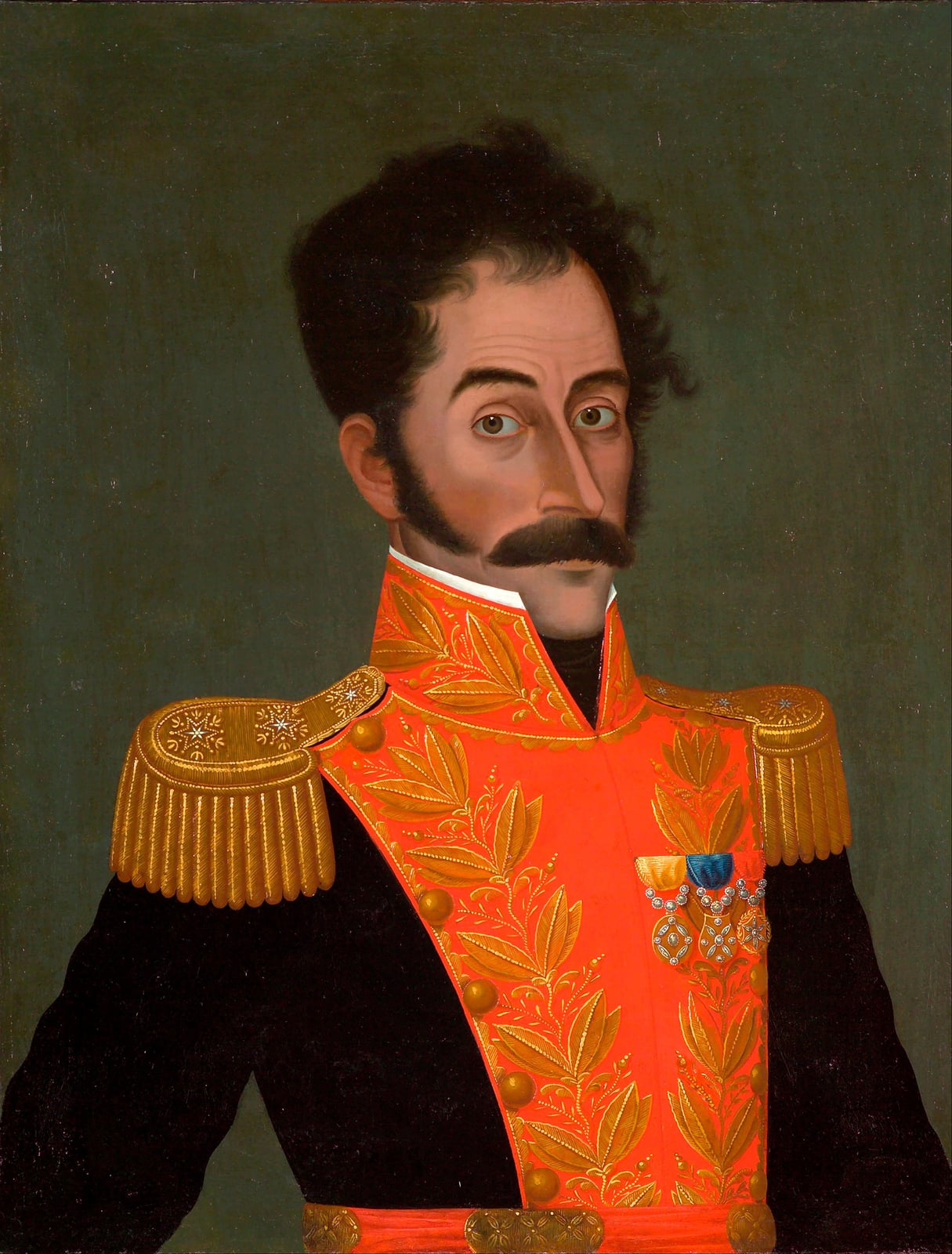
Simón Bolívar
93% Profile Match
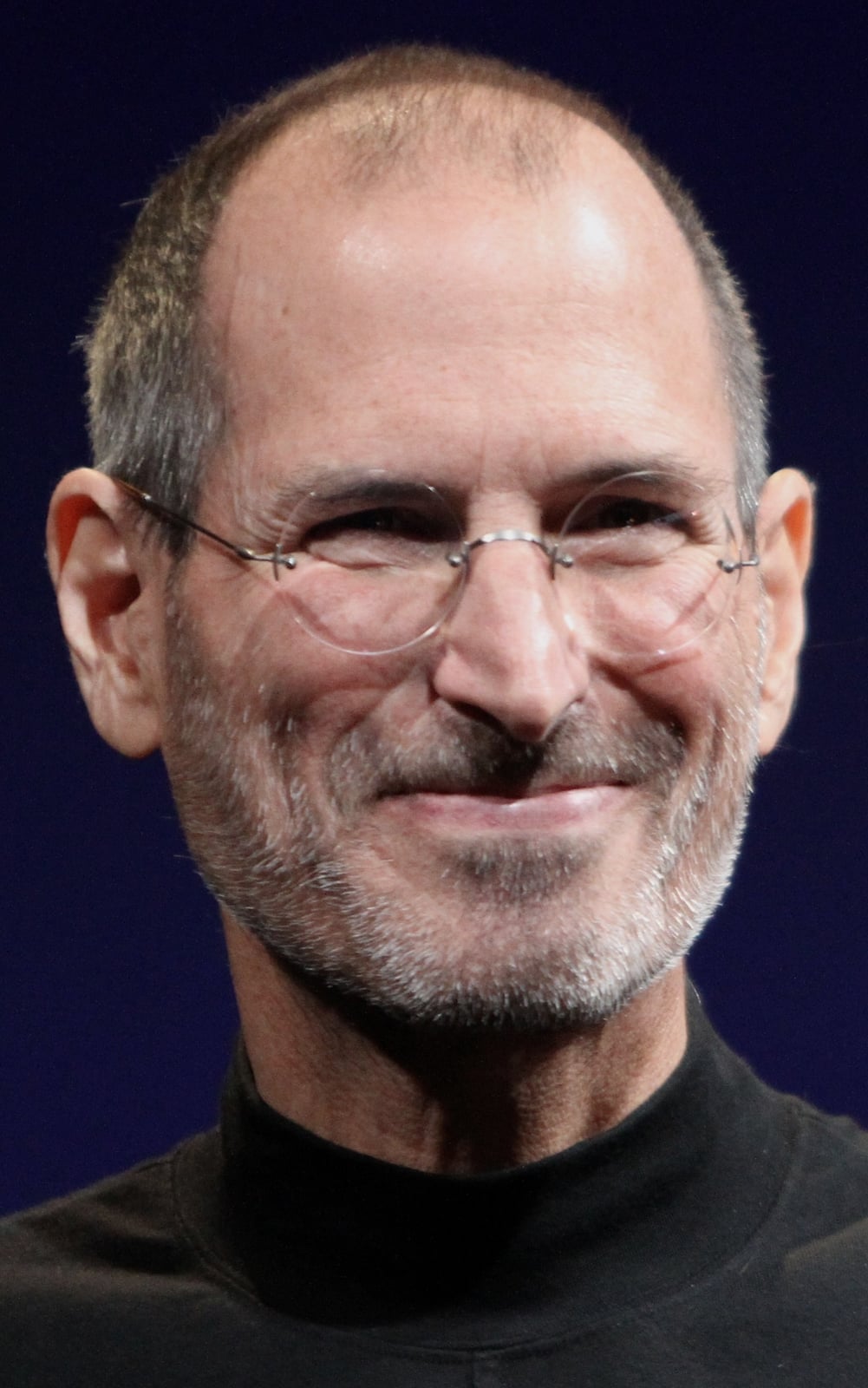
Photograph by Matthew Yohe, 2010, CC BY-SA 3.0 · Wikimedia Commons (resized/recompressed derivative) · CC BY-SA 3.0 / GFDL 1.2+
1955 — Born in San Francisco.
1976 — Co-founded Apple with Steve Wozniak; the Apple II followed in 1977.
1984 — Directed the release of the Macintosh, the first mass-produced computer with a graphical user interface.
1985 — Forced out of Apple after a boardroom power struggle; founded NeXT and bought the company that became Pixar.
1997–2007 — Returned to Apple through its acquisition of NeXT, became CEO by 2000, and later launched the iPhone in 2007.
2011 — Died of complications from a pancreatic neuroendocrine tumor first diagnosed in 2003.
Co-founded Apple with Steve Wozniak (and Ronald Wayne) in 1976; the Apple II (1977) was among the first mass-produced microcomputers, and the 1984 Macintosh — the first mass-produced computer with a graphical user interface — launched the desktop-publishing industry alongside the Apple LaserWriter.
After returning to Apple in 1997, directed its design and engineering teams through the iMac, iTunes and iPod, the iPhone (2007), the App Store, and the iPad — an integrated hardware-software-services model that became a template across much of the consumer technology industry.
As Pixar's majority shareholder and chairman from 1986 to 2006, after buying Lucasfilm's Graphics Group for $10 million, backed the studio that released Toy Story (1995), the first feature-length computer-animated film; Disney's 2006 acquisition of Pixar for $7.4 billion made him Disney's largest individual shareholder.
On a 1979 visit to Xerox PARC, Jobs immediately recognized the transformative potential of the graphical user interface and mouse Xerox's own researchers had built but never turned into a product, and had Apple's engineers build the ideas into the Lisa and then the Macintosh.
This matches the profile's high opportunity_sensing score: perceiving the significance of something another organization had already built but hadn't grasped the importance of. Opportunity Sensing
At NeXT, Jobs pursued aesthetic perfection even where it strained the business — most visibly in the NeXTcube's costly magnesium case — and by 1993, after selling only about 50,000 machines, the company abandoned hardware and pivoted to software.
In September 1985, after a boardroom power struggle with CEO John Sculley over whether the Macintosh should remain a closed system or open like the Apple II, Jobs was removed from the Macintosh group and resigned from the company he had co-founded; five senior Apple employees left with him to start NeXT, and his newly bought Pixar lost money for years afterward.
Apple acquired NeXT for $400 million in a deal finalized in February 1997; when CEO Gil Amelio was ousted that July, Jobs became Apple's de facto leader, was named interim CEO that September, and dropped the "interim" title in March 2000 — canceling underperforming projects like Newton and ending Macintosh-clone licensing before the company's actual product turnaround, the 1998 iMac, arrived the following year.
This matches the profile's high proactive_agency score: rather than simply being reinstated, Jobs maneuvered through the acquisition and its aftermath into direct control of the company that had removed him twelve years earlier. Proactive Agency
Jobs's own conduct in several documented episodes complicates a purely celebratory account. In a 1975 Atari deal, he told Steve Wozniak — who had done the actual circuit design — that a bonus was $750 when it was actually $5,000, splitting only the smaller figure with him; Wozniak learned the real amount only years later. He denied paternity of his daughter Lisa, born in 1978, until a court-ordered test found a 94.1% probability he was the father, and paid minimal support until his own Apple-IPO wealth made continued denial harder to sustain, though he later named the Apple Lisa computer for her. His biographer Walter Isaacson also documents a post-1997 management style staff described as rare but real "summary executions" of underperforming employees and projects — frequent enough that some reported dreading an encounter with him in an elevator.
The integrated hardware-software-services model Jobs directed at Apple — building the device, its operating system, and the store or service around it as one designed whole — became a template much of the consumer technology industry has since followed, built in each case by large design and engineering teams under his direction rather than by his invention alone. Pixar's early features, released while he controlled the studio, helped establish computer animation as a mainstream medium. The iPhone he introduced in 2007 remains a category-defining product line more than a decade after his death.
People whose overall profiles resemble theirs.