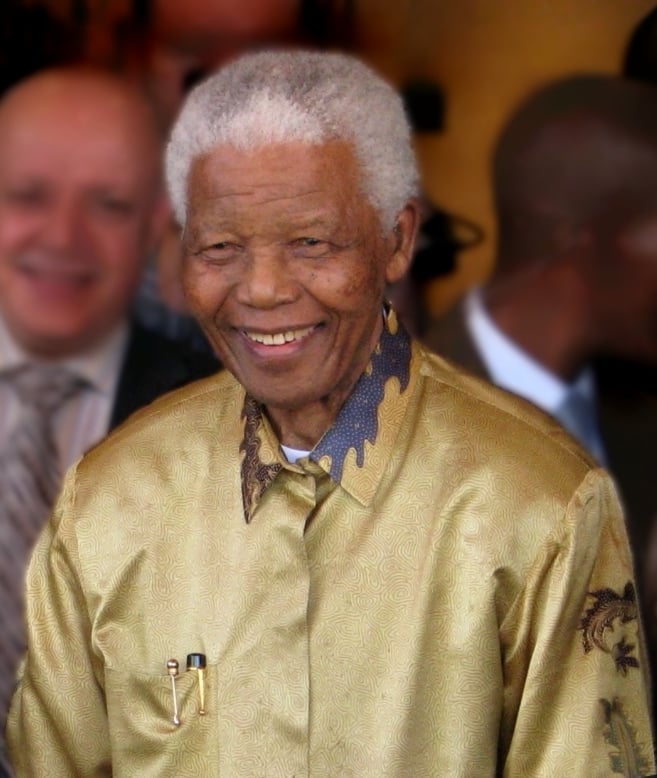
Nelson Mandela
94% Profile Match
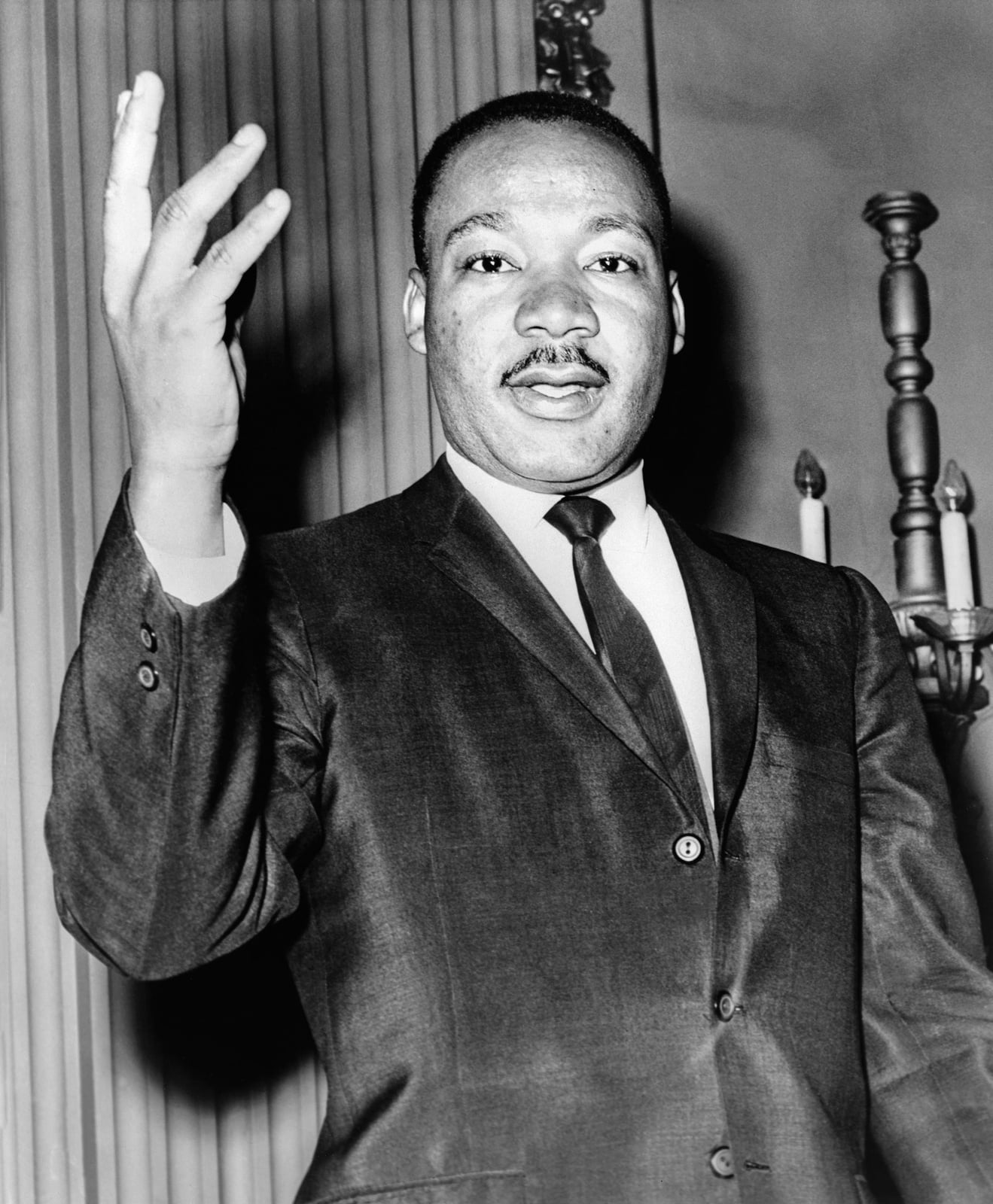
Dick DeMarsico, 1964 — Library of Congress, New York World-Telegram & Sun Collection · Wikimedia Commons (resized/recompressed derivative; see licenseUrl for the original) · Public Domain (pre-1968 work-for-hire; Library of Congress, no copyright restriction known)
1929 — Born.
Before 1955 — Pursued doctoral theological study, studying Gandhian nonviolent method in depth before applying it.
1955–1956 — Led the Montgomery Bus Boycott, his first major civil-rights campaign.
1963 — Led the Birmingham campaign and delivered the "I Have a Dream" address at the March on Washington.
1964–1965 — Saw the Civil Rights Act and Voting Rights Act pass during his Selma-era campaigns.
1967–1968 — Broadened his focus to economic justice and Vietnam War opposition; assassinated in 1968.
King led the 1955-56 Montgomery Bus Boycott, co-founded and led the Southern Christian Leadership Conference, and organized the Birmingham and Selma campaigns — sustained institutional civil-rights leadership across more than a decade, not a single high-profile moment.
His speeches, most prominently the 1963 'I Have a Dream' address at the March on Washington, are among the most extensively documented and studied rhetorical performances of the 20th century, part of a public oratory career sustained across thirteen years.
His campaigns were organized around securing specific, concrete legislative outcomes — publicly framed at the time around the Civil Rights Act of 1964 and the Voting Rights Act of 1965 — rather than protest for its own sake, and both pieces of legislation passed within that campaign period.
The 1963 Birmingham campaign, internally documented by organizers as 'Project C' for confrontation, was staged as a deliberately escalating sequence of actions, and the city was chosen specifically because its police response to protest was expected to be severe and visible enough to draw national media attention.
The choice reads less like tolerating a conflict that happened to arise and more like locating, in advance, exactly where a confrontation would do the most strategic work — a pattern the profile's opportunity_sensing score also picks up on. Opportunity Sensing
Written during his 1963 Birmingham jailing, 'Letter from Birmingham Jail' directly and systematically rebuts specific published criticisms from a group of fellow clergy point by point, addressing their argument that his campaign's timing was premature — a structured written rebuttal, not only a rhetorical appeal.
Before building the strategic framework he used in the American civil rights movement, he pursued formal theological doctoral study and specifically studied Gandhian nonviolent method in depth, adapting it rather than simply invoking it.
Studying and adapting an existing method, rather than applying raw talent, is closer to what the profile's mastery_orientation score is picking up here: the approach he became known for was deliberately developed, not simply improvised. Mastery Orientation
In his final years, King broadened his public focus from segregation specifically to economic justice — organizing the Poor People's Campaign — and, in his 1967 Riverside Church address, to public opposition to the Vietnam War. Both moves drew significant criticism, including from some longtime allies who saw them as a costly dilution of the civil rights message.
The profile's belief_updating score is easy to test against this specific record: this was a costly, publicly criticized expansion of position rather than a comfortable pivot, which is exactly the kind of evidence that should carry more weight than a change made under no real pressure at all. Belief Updating
People whose overall profiles resemble theirs.


Not a rival — a different profile shape worth a look.