Bette Davis
85% Profile Match
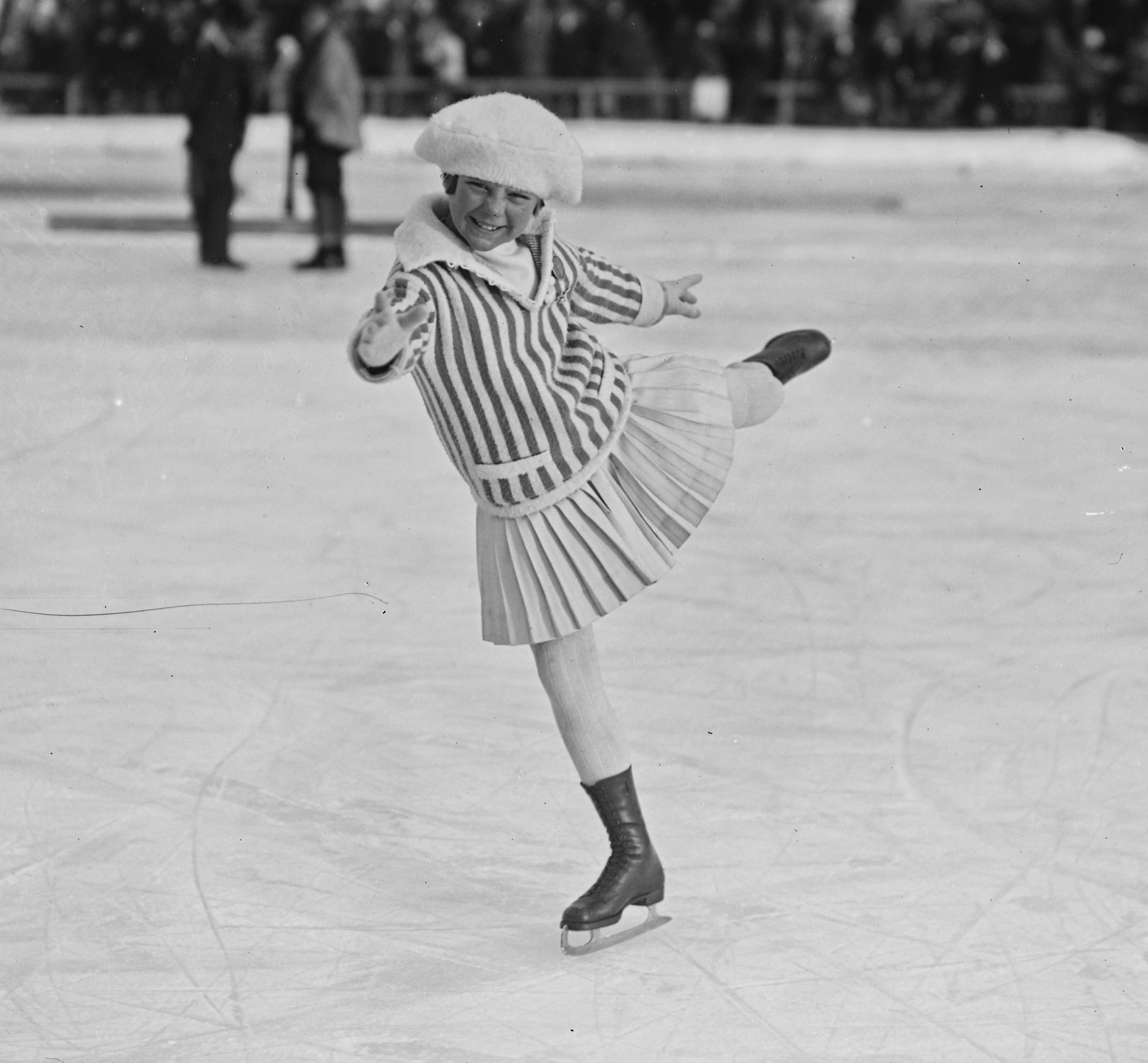
Agence Rol, photograph of Sonja Henie at the 1924 Winter Olympics, Chamonix, 27 January 1924; Bibliothèque nationale de France; public domain · Agence Rol press photograph, Bibliothèque nationale de France (Estampes et photographie, EI-13 (1077)), via Wikimedia Commons; cropped to the skater from the full frame · Public domain (1924 press photograph; public domain in France and the United States)
athlete · 20th Century
1912–1969
Not yet included in personality matching — the documented evidence doesn't yet cover enough of the personality model. Everything else on this page is fully available.
Henie won the Olympic women's figure-skating title three times in a row, at St. Moritz in 1928, Lake Placid in 1932 and Garmisch-Partenkirchen in 1936. She was also world champion ten years running from 1927 to 1936 and European champion six times from 1931 to 1936. Olympedia notes she had finished last of eight at the 1924 Games, aged 11.
Henie wanted to merge dance and figure skating, choreographing programmes to music she chose and wearing costumes that allowed freer movement. Britannica credits her ballet training and Anna Pavlova's influence, short skirts above the knee, and a repertoire of 19 spins; Vanity Fair describes her white boots as part of a shift in the sport toward a more feminine, poetic look.
After the 1936 Games Henie turned professional. She signed with the impresario Arthur Wirtz for touring ice shows and, with 20th Century Fox, starred in about ten films, beginning with One in a Million in 1936, most built around her skating. The Norwegian encyclopedia says her touring Hollywood Ice Revue earned her more than her films did.
When Darryl Zanuck offered Henie only a supporting part, she insisted on the title role, and the Norwegian encyclopedia says her father rented a Los Angeles ice hall and filled it with spectators before Zanuck agreed to her fee and to films built around her skating. Vanity Fair adds that she would not do a number in someone else's film. The Norwegian encyclopedia also says she later irritated Zanuck by going to him directly instead of through channels.
Holding out for the title role against a studio head is consistent with social assertiveness; the retellings share family sources and come from a single negotiation period. Social Assertiveness
Around 1951 Henie split from her touring partner Arthur Wirtz and produced her own ice show. Vanity Fair says Wirtz was already paying her half the profit and that his publicity director called the break an extraordinarily bad business decision; the Norwegian encyclopedia says her second husband had persuaded her Wirtz took too much. Her new show was booked into lesser halls, and Vanity Fair reports she borrowed from Wirtz to meet the payroll.
Choosing to run her own show over a profitable partnership is consistent with a need for autonomy, and the cost she paid shows the stance was double-edged; the sources disagree about how far the decision was her own. Need for Autonomy
Within a month of winning her third Olympic title in February 1936, Henie signed a touring contract with Arthur Wirtz, played a charity show at Madison Square Garden, and then, with her father, rented the Polar Palace rink in Los Angeles for two shows to draw the film studios after Metro-Goldwyn-Mayer turned her down. Zanuck attended the second show, and her first Fox film, One in a Million, followed that year.
Moving straight from the last amateur title to a self-organised campaign for a film career is consistent with proactive agency; her father organised much of it, so the credit is shared. Proactive Agency
People whose overall profiles resemble theirs.