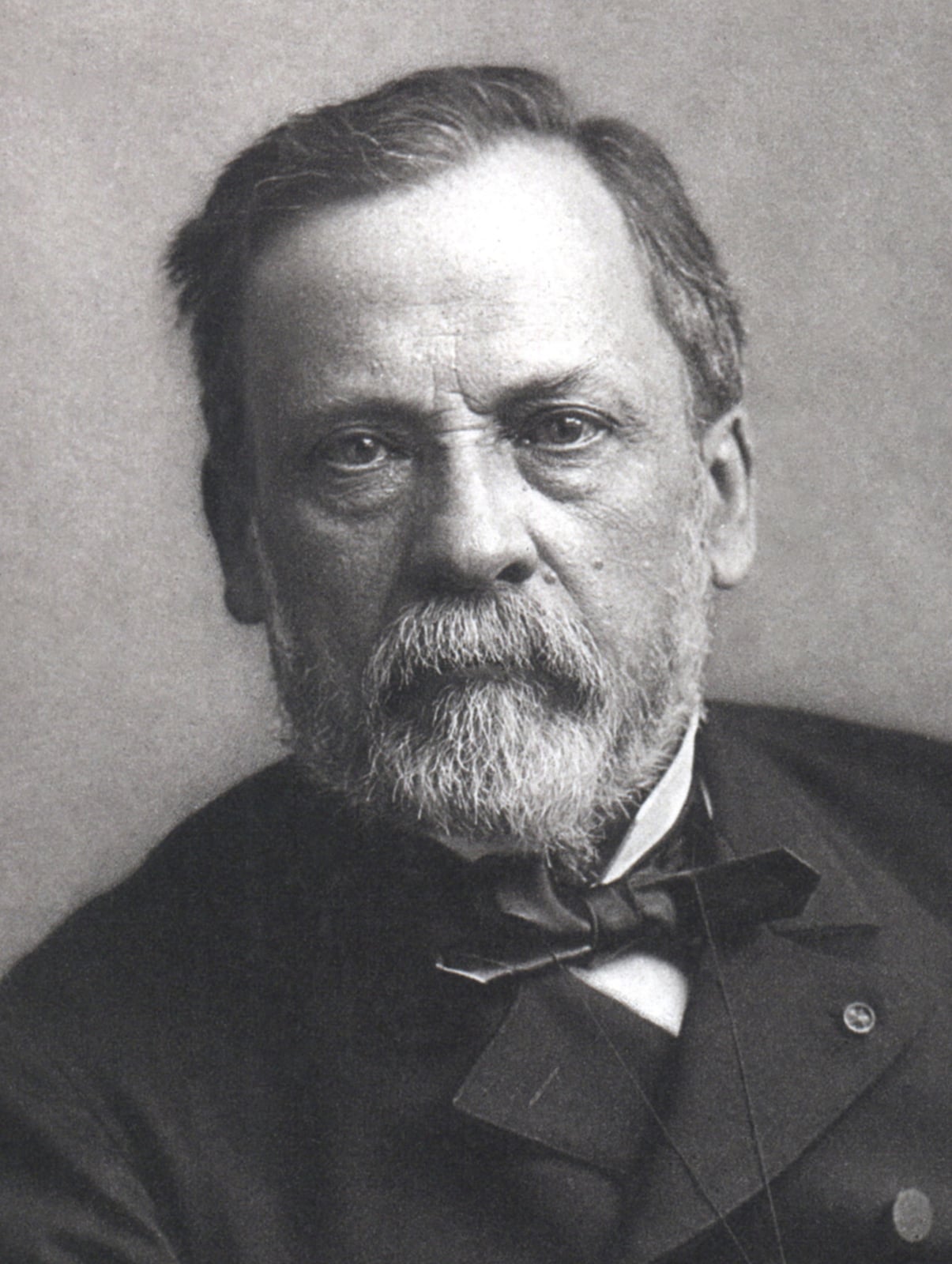
Louis Pasteur
92% Profile Match
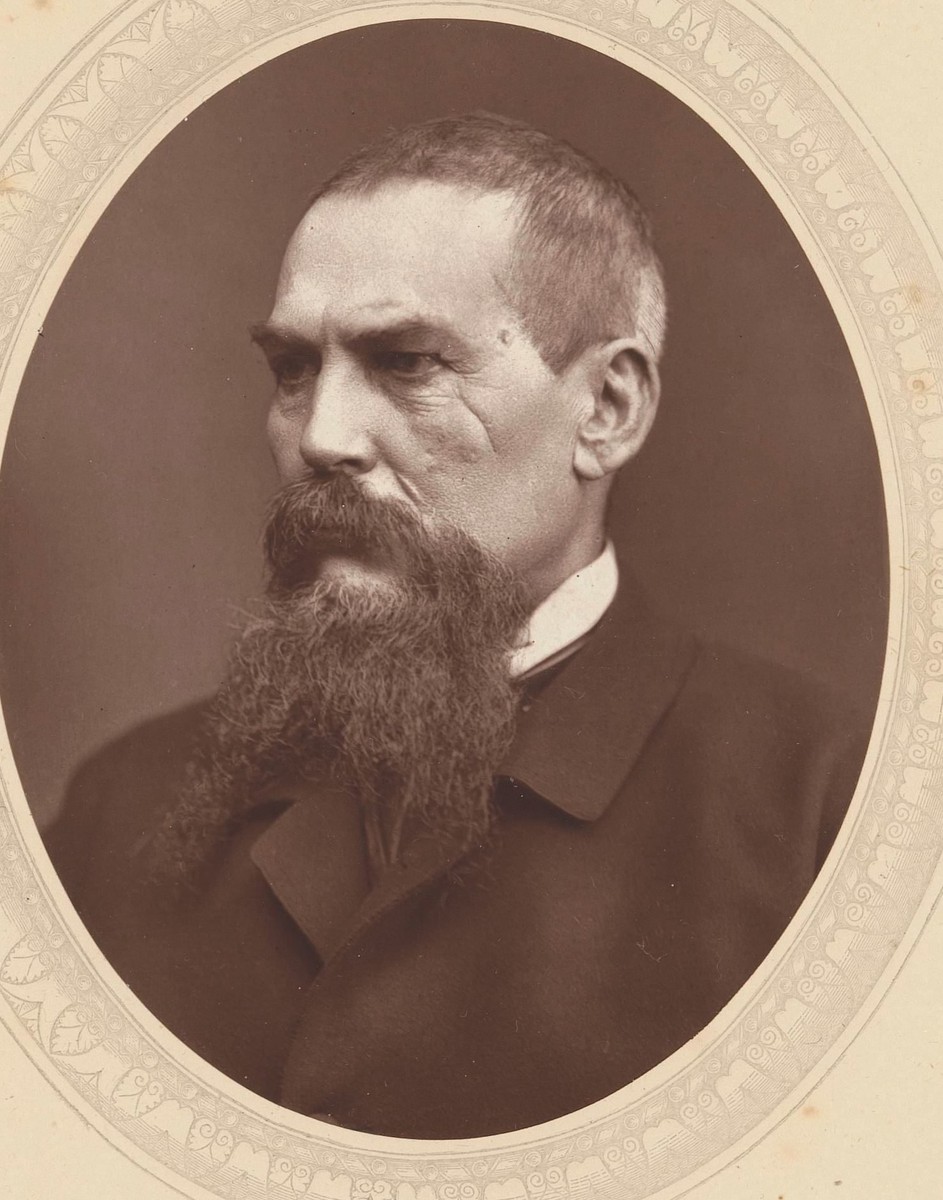
Lock & Whitfield, Captain Richard Francis Burton, about 1871-1876, woodburytype, Rijksmuseum, Amsterdam (RP-F-2001-7-235A-7), public domain · Woodburytype portrait print 'Captain Richard Francis Burton' by the London photographers Lock & Whitfield, about 1871 to 1876 (the museum's date range is 'in or before 1876'), 115 x 89 mm, tipped into a book, collection of the Rijksmuseum, Amsterdam (object RP-F-2001-7-235A-7, purchased with the support of several Dutch funds). The Rijksmuseum's own linked-art record (opened live) gives the photographer as Lock & Whitfield, the print title as Captain Richard Francis Burton, and an item-level Public Domain Mark on the image. The photographic studio worked in the 1860s to 1880s and the print was made well over 100 years ago. The file is the museum's full-resolution scan of the book spread (7146 x 4570 pixels), cropped to the oval portrait plate and reduced (downscaled only, never enlarged) to 943 x 1200 pixels. · Public domain (Rijksmuseum Public Domain Mark; 1870s photograph by Lock & Whitfield)
explorer · 19th Century
1821–1890
Not yet included in personality matching — the documented evidence doesn't yet cover enough of the personality model. Everything else on this page is fully available.
Victorian explorer who reached Mecca and Medina disguised as a Muslim pilgrim in 1853, visited Harar, and led the Royal Geographical Society's East African expedition, on which he became the first European in modern times to see Lake Tanganyika (1858).
Translated The Thousand Nights and a Night (The Arabian Nights, 1885-88) and the Kama Sutra, and wrote many books of travel and observation; the 1911 Britannica calls the Nights translation his greatest achievement while criticising its uneven scholarship.
Learned many languages, and used them and his disguises to record the religion, customs and daily life of the peoples he visited in books that the Oxford Companion to British History calls his best monuments.
In 1853 he joined a pilgrim caravan to Medina and Mecca disguised as an Afghan, at a time when non-Muslims were forbidden entry on pain of death, and wrote the account that made him famous.
This is consistent with a readiness to take extreme personal risk to see and record a place closed to outsiders. Risk Tolerance
After Speke claimed in 1858 that Lake Victoria was the source of the Nile, Burton rejected the claim and attacked it in Lake Regions of Central Africa (1860); the public quarrel lasted until Speke died the day before a scheduled 1864 debate.
This is consistent with a willingness to stay in a long public dispute over a contested claim, though the exploration press says he was wrong on the point. Conflict Tolerance
After being dismissed from Oxford in 1842 he joined the East India Company's army, and during seven years in Gujarat and Sind learned Hindi, Arabic and other languages among Muslims and began travelling in disguise.
This is consistent with a shift from formal schooling to learning languages and customs through immersion. Cross-Domain Range
People whose overall profiles resemble theirs.