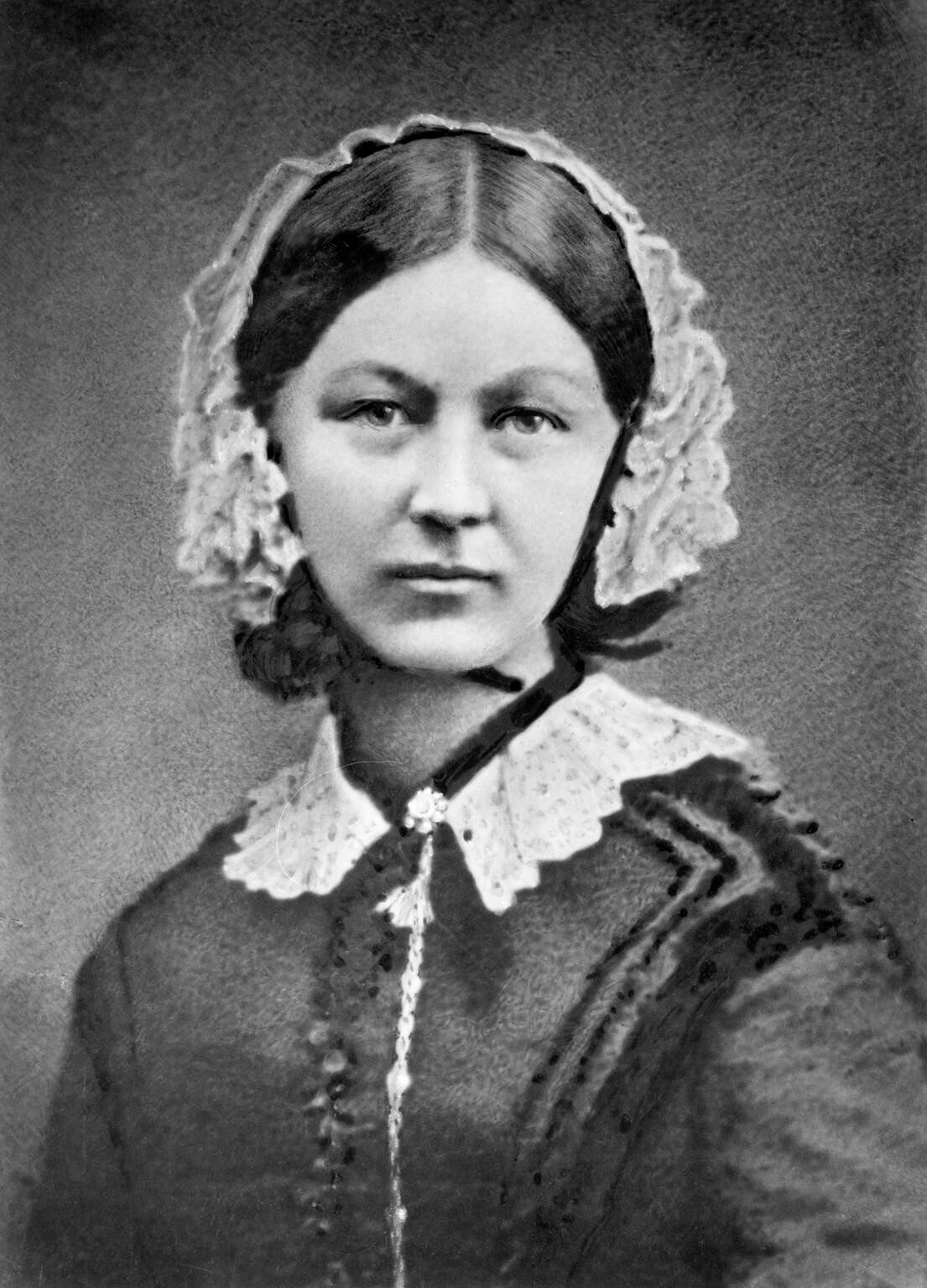
Florence Nightingale
93% Profile Match
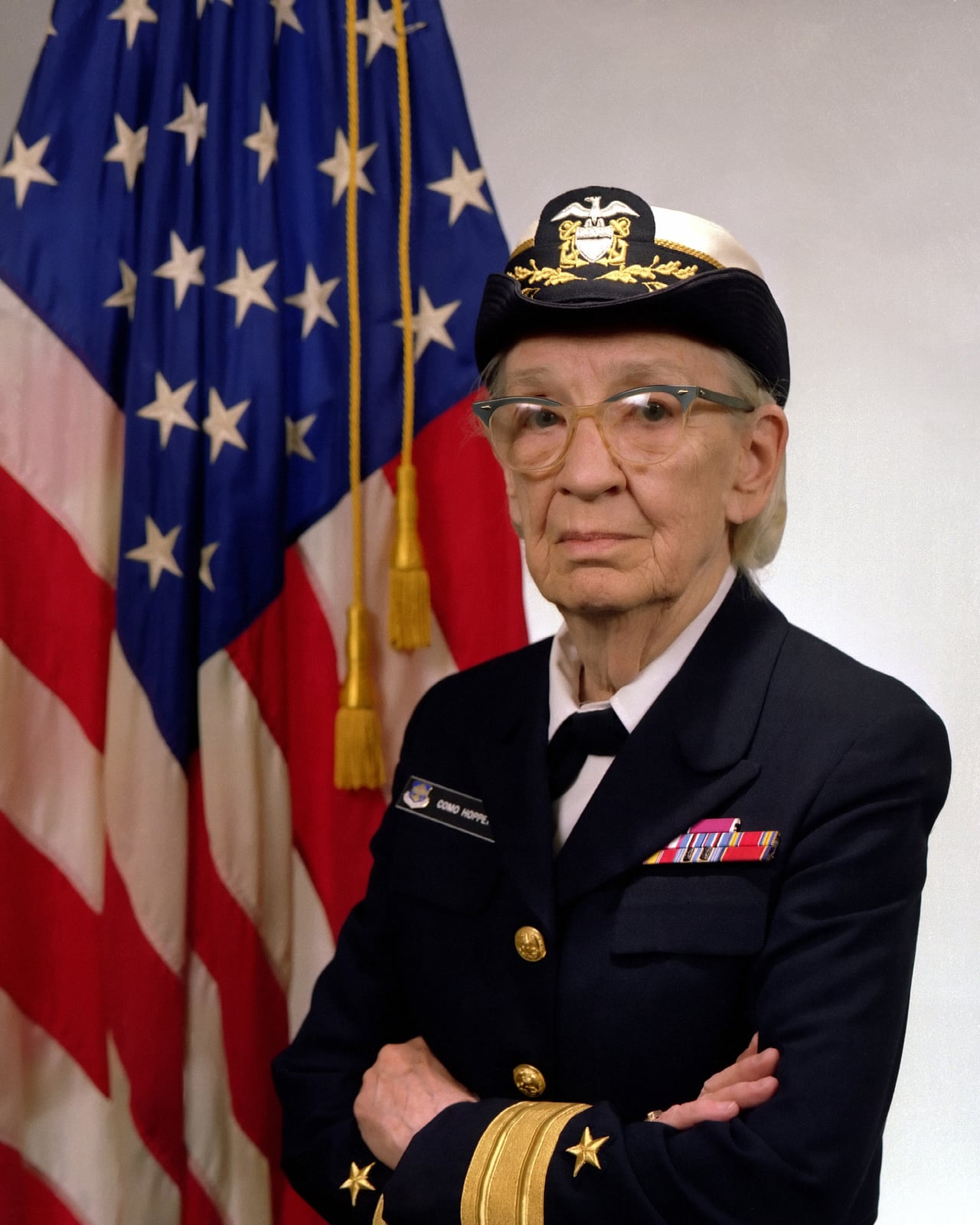
Photograph by James S. Davis, U.S. Navy, 1984, Public Domain · Wikimedia Commons (resized/recompressed derivative) · Public Domain
1906 — Born.
1947 — Found and documented an actual moth causing a Harvard Mark II relay malfunction, helping popularize the term "bug."
Early 1950s — Led the team at Remington Rand that built the A-0 System, generally credited as the first compiler.
1966–1986 — Retired and was repeatedly recalled to active Naval duty, including work standardizing COBOL across the Navy.
1986 — Retired for the final time at 79, as a rear admiral and the Navy's oldest active-duty commissioned officer.
1992 — Died.
In the early 1950s, Hopper led the team at Remington Rand that built the A-0 System, generally credited as the first compiler — a program translating symbolic, English-like instructions into machine code — establishing the core idea that later made languages like COBOL possible, according to Beyer's history of her career.
Beyer's account documents years of sustained argument, inside and outside her own organization, to convince both technical peers and military and corporate leadership that a computer could reliably execute instructions written in something resembling English — a claim many contemporaries in the early 1950s considered technically implausible — before compiler-based, standardized programming became industry practice.
In 1947, while Hopper was part of the Harvard Mark II computer team, her associates found a moth trapped in one of the machine's relays, causing a malfunction; the moth was taped into the operations logbook with the note "First actual case of bug being found." The term "bug" for a technical fault already existed in engineering before this — Hopper did not coin it — but she is credited with popularizing it, and the logbook page survives today at the Smithsonian's National Museum of American History.
Hopper retired from the Naval Reserve at the mandatory age of 60 at the end of 1966, but was recalled to active duty in August 1967 to help standardize COBOL across the Navy; she retired again in 1971 and was recalled again the following year. She remained in service after that, finally retiring in 1986 at age 79 as a rear admiral and, at the time, the oldest active-duty commissioned officer in the United States Navy.
Coming back to active duty not once but twice after mandatory retirement, and ultimately serving into her 80th year, fits a mastery orientation this profile places well above the achievement of any single milestone. Mastery Orientation
People whose overall profiles resemble theirs.