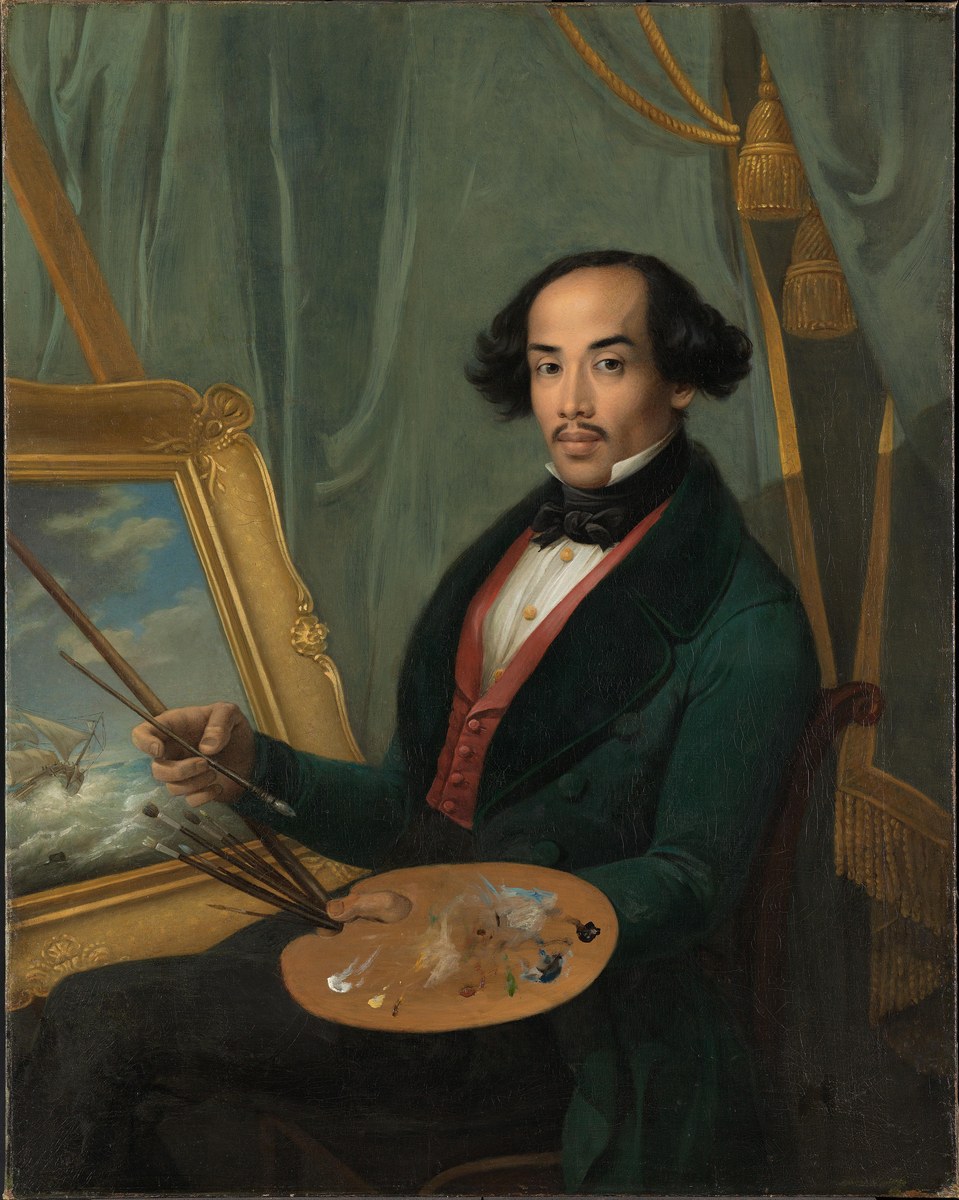
Attributed to Friedrich Carl Albert Schreuel, Portrait of Raden Syarif Bustaman Saleh, about 1840, Rijksmuseum, Amsterdam (SK-A-4703), public domain · Oil painting 'Portrait of Raden Syarif Bustaman Saleh', attributed by the museum to Friedrich Carl Albert Schreuel (1773-1853), about 1840, 106.7 x 85.3 cm, Rijksmuseum, Amsterdam, object SK-A-4703 (acquired 1978); the museum released the image under its Public Domain Mark and the data record under CC0. The sitter is named by the museum. The museum scan was 4884 x 6112 pixels; this project reduced it to 959 x 1200 pixels, never enlarging it · Public Domain (Rijksmuseum Public Domain Mark; painting of about 1840 by a painter who died in 1853)
painter · 19th Century
Raden Saleh
1811–1880
Known For
Not yet included in personality matching — the documented evidence doesn't yet cover enough of the personality model. Everything else on this page is fully available.
Trait Constellation
Key Achievements
Went to the Netherlands in 1829 on a royal stipend, spent more than 20 years training and working in Europe, was named King's Painter by William II in 1850, and is regarded in Indonesia as the father of modern Indonesian painting.
Painted lions, tigers and hunting scenes, including the Fighting Animals series of about 1850, which is regarded as his most critically acclaimed work.
Completed The Arrest of Pangeran Diponegoro in 1857, a history painting of the 1830 arrest that ended the Java War, now in the Istana Negara in Jakarta.
Moments That Reveal Them
Not long after reaching the Netherlands in 1829 he specialised in oriental scenes and began dressing as a Javanese prince, a shift from the European dandy of his earlier portrait.
This is consistent with a person who moved between cultural settings and used the difference deliberately. Adaptability
A friend wrote that Saleh lost his friendship for a time because he neglected his obligations and painted the animal trainer Henri Martin's portrait for free simply to be able to paint his lions.
This is consistent with intense focus on a subject, at some cost to a friendship, though it rests on one letter. Deep Focus
Turning Points
Returning to Java in 1851-52 after more than 20 years in Europe, he built a neo-Gothic palace and received the European elite there, and later founded his own school of landscape painting.
This is consistent with a person who carried his European training into a new setting and worked beyond painting alone. Cross-Domain Range
Similar People
People whose overall profiles resemble theirs.


Benjamin Franklin

Leonardo da Vinci

Maya Angelou

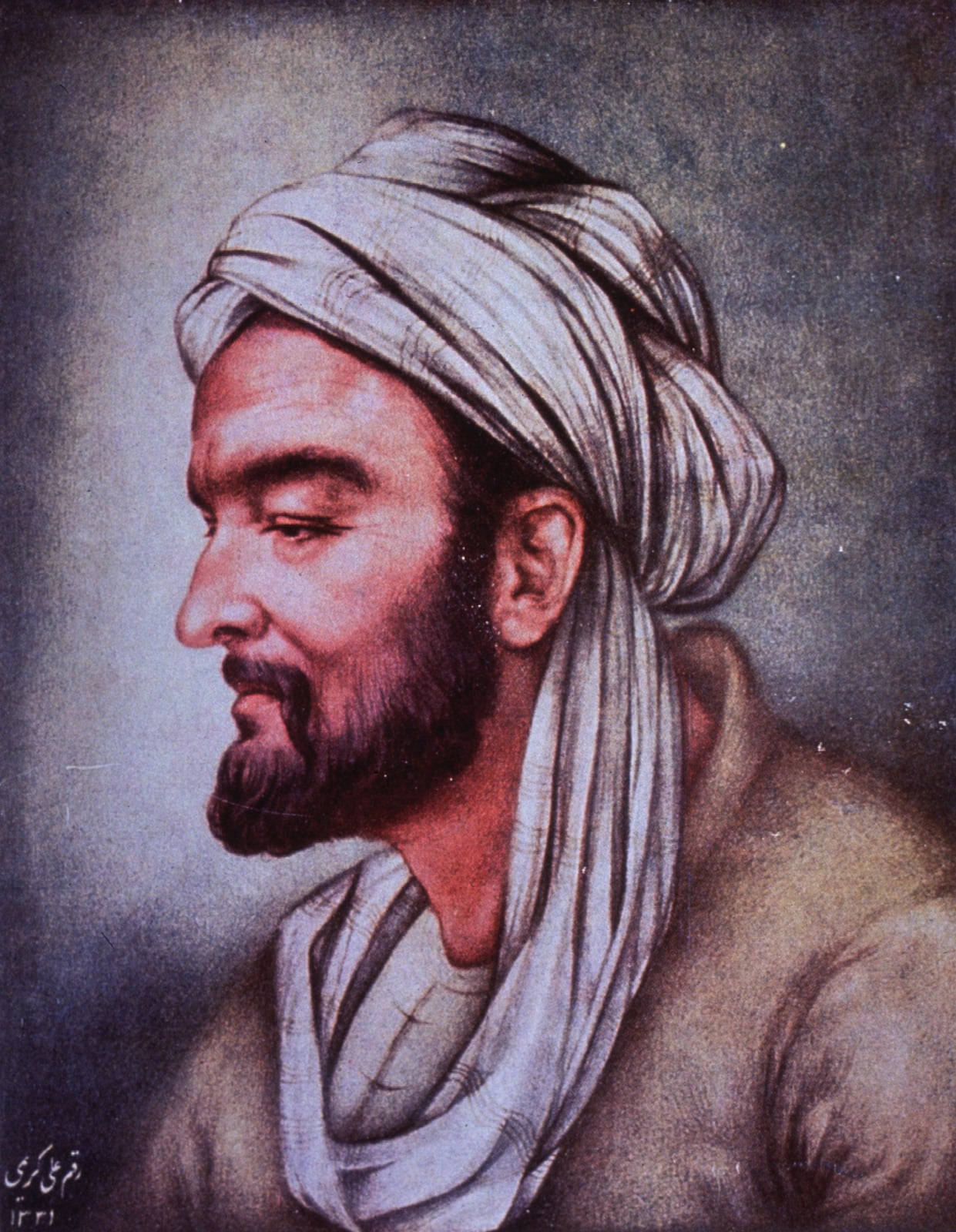
Ibn Sina

Aristotle
Opposite Profile
Not a rival — a different profile shape worth a look.
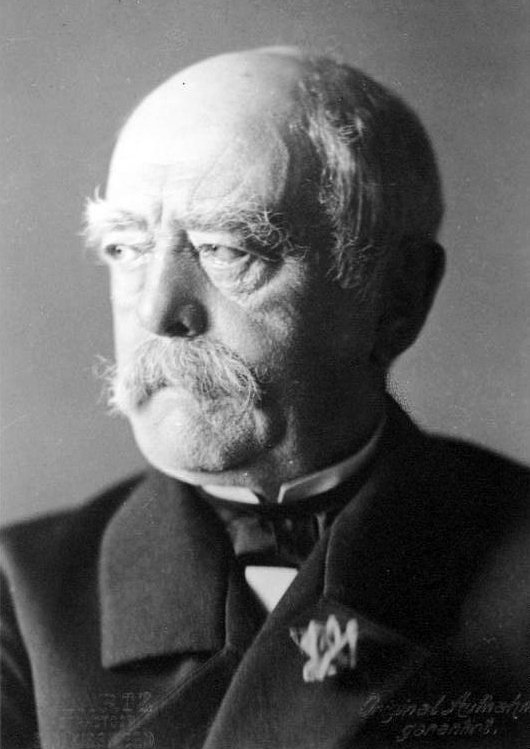
Otto von Bismarck
Sources
- Raden Saleh (Q1375979), verified live via the Wikidata API (2026-11-04): English label 'Raden Saleh', description 'painter from Indonesia (1811-1880)', died 1880-04-23, birth year recorded as 1811 with alternatives 1814 and 1807, Korean label present. Orientation only; not used as support for any row.
- Rijksmuseum, Amsterdam, object SK-A-4703 'Portrait of Raden Syarif Bustaman Saleh' (attributed to Friedrich Carl Albert Schreuel, c. 1840), museum label text read in the linked-art record: a scion of a Javanese regent family who came to the Netherlands in 1829 to train as a painter; shown here as a European dandy before a Western seascape, but he soon specialised in oriental scenes and dressed as a Javanese prince; back on Java (1851) he built a small neo-Gothic palace where he received the European elite; the label says he constantly shifted between his Javanese and European identity. A short museum text; the image record itself carries a Public Domain Mark and CC0.
- Niken Prathivi, 'An encounter with Raden Saleh', The Jakarta Post, 13 January 2013, read in full: an interview with the curator and biographer Werner Kraus, who calls Saleh an exceptional personality and the first educated Indonesian to reach Europe and the first to study art there, speaking at least four European languages and at home in both European and Javanese culture; says he was technically as good as or better than his European contemporaries, helped create German Orientalism in Dresden, and after returning to Java founded his own school of landscape painting while cut off from international developments; names the Arrest of Prince Diponegoro as Kraus's favourite work. CANONICAL SIGNIFICANCE SOURCE (together with the Rijksmuseum label). Kraus is the exhibition curator and author of the main monograph, so admiring and promotional.
- Dina Indrasafitri, "Raden Saleh's masterpieces on display at National Gallery", The Jakarta Post, 31 May 2012, read in full: coverage of the 2012 Jakarta exhibition 'Raden Saleh and the Beginning of Modern Indonesian Painting' (over 40 works, curated by Werner Kraus), calling him 'father of Indonesian modernity', saying he went to Europe at about 18 and spent over 20 years there, and describing him as also an architect, landscape gardener and collector of ethnographic and archaeological documents, who tried to introduce modernity to cultural and scientific fields, with a flamboyant, self-designed dress style; notes that the show opened amid allegations of widespread forgery of works by Indonesian masters. Exhibition-promotion coverage.
- Dina Indrasafitri, "Getting to know the 'Maestro'", The Jakarta Post, 12 June 2012, read in full: a profile based on the curator Werner Kraus; born in Semarang in 1811, left for Europe in 1829, first exhibited at the National Exhibition in Amsterdam in 1834, more than 20 years in Europe, felt unwelcome in the Netherlands but accepted in high-standing German families, settled in Germany and learned German, and is quoted as saying he came to Europe as a Javanese but returned to Java as a real German; on return he was warmly received but troubled by colonial racial prejudice; Kraus rejected offered works he did not consider genuine. Curator-sourced and sympathetic.
- Sarah Wiertz, 'The Father of Indonesian Painting', Qantara.de (Deutsche Welle's dialogue portal, undated), read in full: born on Java; the Belgian painter Antoine Payen recognised his talent and helped him win a scholarship to study in the Netherlands in 1830; trained and sent on study trips across Europe by the Dutch government; chose to stay in Dresden, where commissions let him work independently; fluent in five languages; recalled Saxony as the best time of his life; called back to Java in 1851, where he painted Javanese scenes, worked as a lay archaeologist and joined an expedition in Central Java; painted lions and tigers probably observed at a zoo or circus because lions do not live on Java; regarded as a founder of German Orientalism and the father of Indonesian painting. A popular article with no listed sources; some details conflict with other sources (study start 1829/1830, five versus four languages).
- Sotheby's Hong Kong, catalogue note 'Raden Saleh's Life and Work' for the 2017 Modern and Contemporary Art Evening Sale (lot 1026, 'Fighting Animals', c. 1850), read in full: arrival in the Netherlands in 1829 and a royal stipend; 22 years in Europe before returning to Java in 1852; the title 'King's Painter' from William II in 1850; his search for subject matter beyond portraiture and his study of the animals of the trainer Henri Martin's menagerie; quotes a letter from his friend M. E. Verstege (cited to Kraus and Vogelsang, 2012, p. 40) saying Saleh lost his friendship for a time by neglecting his obligations and painting Martin's portrait for free to get to paint his lions. An auction-house sales essay, so promotional; the note's date for the Martin show ('1937') is an evident misprint and is not used.
- Elly Kent, 'Stealing Raden Saleh: War and Art in Indonesia', Perspectives Magazine, National Gallery Singapore (26 March 2025), read in full: an Australian National University art historian's essay on later uses of his 1857 painting 'The Arrest of Diponegoro'; says he is sometimes claimed as Indonesia's first modern painter though he died decades before the first nationalist movement, served as court painter to the Dutch governor-general and several European courts, long seen as a weak copy of Pieneman's picture and now argued to have reworked it, the painting now in the Istana Negara and returned by the Dutch government in 1978; records that 1976 and 1996 writers disagreed about his patriotism. Used for critical context and for the painting's facts; the political readings are not scored.
- Peter Carey, 'Raden Saleh Syarif Bustaman (circa 1811-1880) and the Java War (1825-30): A Dissident Family History', Archipel 103 (2022), pp. 87-126, first 100,000 characters read: a historian's study of his childhood and family (guardianship in Semarang, apprenticeship to the Belgian painter Payen from about 1819-24), noting that his whereabouts in September 1825 are unclear and that most documented material concerns relatives; says that on return to a transformed Java the Dutch regarded him as belonging fully to neither Arab-Javanese nor Dutch society and that his later paintings may reflect his views of the colonial system. Scholarly and cautious; speculation about family trauma is not used.