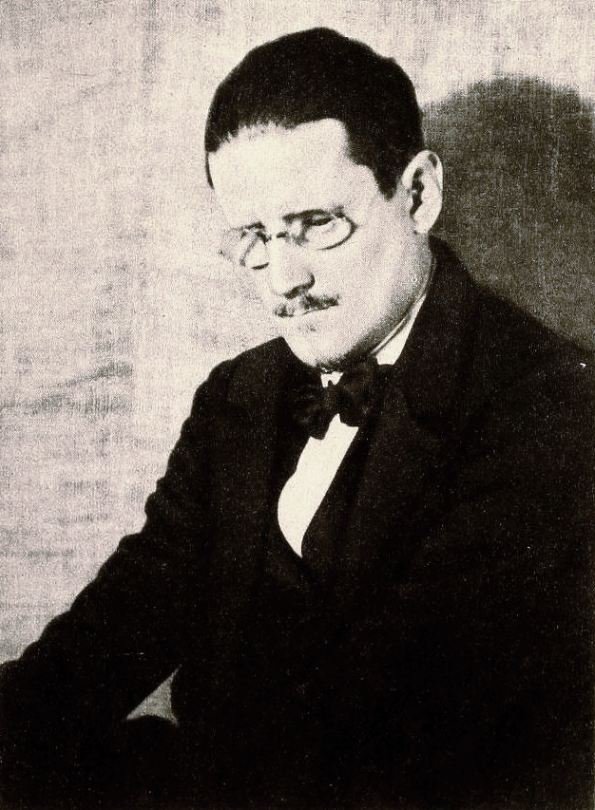
James Joyce
94% Profile Match
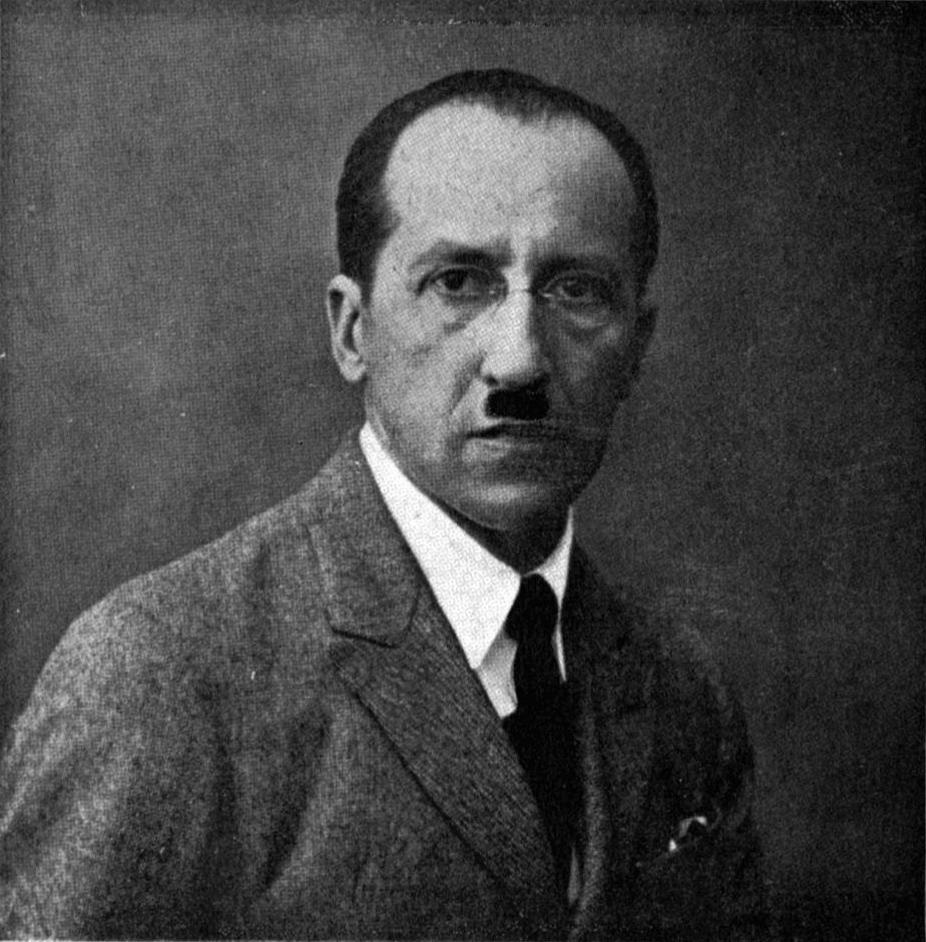
Anonymous photographer, published in De Stijl, December 1922 (public domain) · Wikimedia Commons 'Piet Mondrian 2.jpg': a photograph of Piet Mondrian by an anonymous photographer, published in the Dutch journal De Stijl vol. 5, no. 12 (December 1922), p. 179 (scan from the 1968 De Stijl complete reprint, Athenaeum/Bert Bakker/Polak & Van Gennep, vol. 2, p. 304), uploaded by Vincent Steenberg on 11 November 2008 and tagged PD-1923 and PD-anon-70-EU. Original 926 x 942 pixels, SHA-1 d4ea8e4aa3c8d9904441a860d1ae1c88a80b1600 (matches the downloaded file); saved unchanged, never resized or upscaled. Rights basis: first publication in a Dutch periodical in 1922 (anonymous, so EU 70 years after publication expired in 1992; published before 1931 so public domain in the United States). The photographer is unknown, which is the residual weakness. A 1899 anonymous portrait from the Gemeentemuseum Den Haag ('Piet Mondriaan.jpg', 618 x 826) was examined and rejected as the main choice because its Commons page gives only a creation date and a generic tag, not a documented first publication. No conflicting institutional copyright notice was found for the 1922 De Stijl publication. · Public domain (anonymous photograph published in De Stijl, December 1922; Commons tags PD-1923 and PD-anon-70-EU)
painter · 20th Century
1872–1944
Not yet included in personality matching — the documented evidence doesn't yet cover enough of the personality model. Everything else on this page is fully available.
Developed Neo-Plasticism, a pioneering form of abstract painting using only horizontal and vertical lines and primary colours; Tate says he had a profound influence on later art.
Co-founded the De Stijl journal with Theo van Doesburg in 1917 and set out his aims in its first issues, in the essay 'Neo-Plasticism in Pictorial Art'.
In New York from 1940 he loosened his strict grid into the livelier, jazz-linked Broadway Boogie Woogie and the unfinished Victory Boogie Woogie, testing ideas with coloured tape.
After Theo van Doesburg introduced diagonal lines into his compositions, Mondrian left the De Stijl group he had co-founded and kept to horizontals and verticals only.
This is consistent with a willingness to hold to his own formal rule even at the cost of a long working partnership, though sources differ on the date and the reasons. Independent Thinking
In New York he used newly available coloured adhesive tape to move colour blocks around the canvas before committing paint, and kept adjusting Victory Boogie Woogie until his last weeks.
This is consistent with a working method built on testing and revising ideas directly on the canvas. Experimentation
After seeing Cubist work in Amsterdam in 1911, he moved to Paris in 1912, adopted Cubism and gradually turned from it toward abstraction.
This is consistent with a painter willing to rework his approach substantially in response to new work he encountered. Belief Updating
People whose overall profiles resemble theirs.