Warren Buffett
94% Profile Match
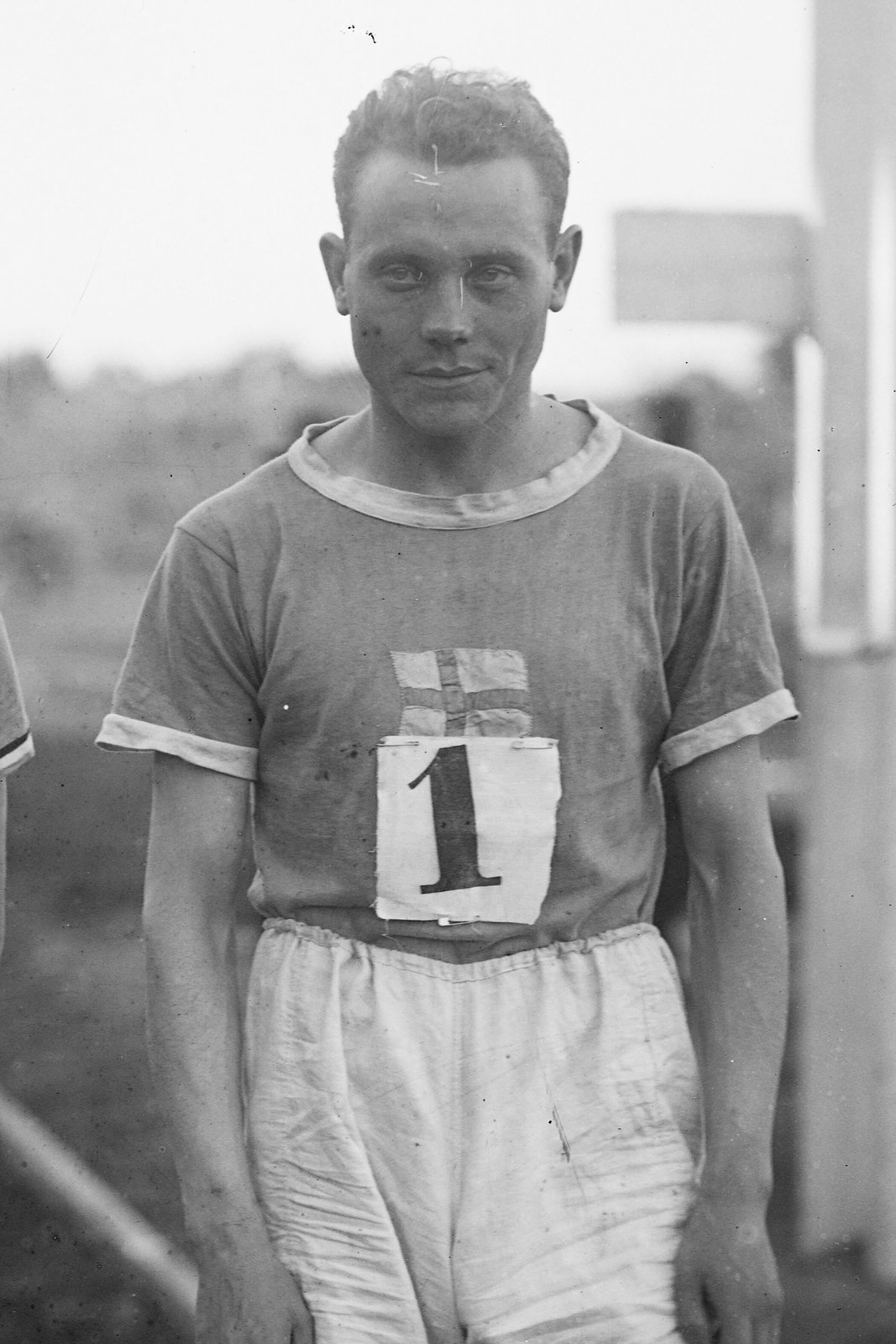
Agence Rol (photographic agency), 'Stade Pershing, 30/9/23, match d'athletisme, portraits des coureurs a pied, Paavo Nurmi et Lucien Duquesne', 30 September 1923; Bibliotheque nationale de France, Gallica; published in Le Petit Parisien, 1 October 1923, p. 4 · Bibliotheque nationale de France, Gallica, Agence Rol press photograph (glass negative), Stade Pershing, 30 September 1923, Rol 87116, ark:/12148/btv1b531190573, via Wikimedia Commons (cropped to Nurmi and downsized from a 2,100 x 3,150 px crop of the 6,192 x 8,508 px scan) · Public domain (Gallica: 'domaine public / public domain'; Commons: PD-France, PD-1996, PD-US-expired)
Between 1920 and 1928 Nurmi won nine Olympic gold medals, six individual and three team, and three individual silvers, which Olympedia calls a record. They came in the 10,000 m and the individual and team cross-country at Antwerp in 1920; the 1,500 m, 5,000 m, individual and team cross-country and the 3,000 m team race at Paris in 1924; and the 10,000 m at Amsterdam in 1928.
Olympedia counts 22 official world records for Nurmi, the first on 22 June 1921 when he ran 10,000 m in 30:40.2 in Stockholm; World Athletics Heritage dates his last world mark, at two miles, to 1931. They included the mile, in which his 4:10.4 stood from 1923 to 1931, according to Britannica. Racing Past lists him as holding the world records for the 1,500 m, mile, 2,000 m, 3,000 m, 5,000 m and 10,000 m at the end of 1924.
At the 1924 Paris Games Nurmi won the 1,500 m in 3:53.6 and, 42 minutes after that final, the 5,000 m in 14:31.2, a double Olympedia describes as chosen despite finals only 55 minutes apart. Two days later he won the cross-country in the heat, finishing almost one and a half minutes ahead, and the day after that he led the Finnish 3,000 m team to victory. A United Press report on 11 July 1924 called him a winner 'as he pleased'.
Racing Past reports that the Paris schedule put the 1,500 m and 5,000 m finals about 55 minutes apart, so on 19 June 1924 at Helsinki Nurmi tried the same double in one meeting, running 3:52.6 and 14:28.2, both world records. Olympedia notes that he had hurt his knee a few weeks before the Games and that his training let him recover quickly, and that he then decided to attempt the double at Paris.
Rehearsing the exact Olympic schedule weeks ahead is consistent with a strong planning orientation; the sources describe the rehearsal and its times but not his own reasoning for it. Planning Orientation
Lope Magazine's account of the 1925 American tour says that on 16 January Nurmi's train reached Chicago at 8:15 in the evening and that less than two hours later he was racing, setting a record for the 1 3/4 miles. He then took a train back to New York, where he ran a third race in three days. The Western Reserve Historical Society bulletin adds that over five months he ran 55 events, and that he left America fearing he had competed too often and burned himself out.
Accepting a schedule of overnight trains and a race almost every few days, in pursuit of records, fits a strong drive to achieve; the same bulletin's note that he feared he had overdone it shows the cost. Achievement Drive
In April 1932 the International Amateur Athletic Federation suspended Nurmi pending an investigation of his amateur status, and the Associated Press reported on 29 July 1932 that his Olympic entry had been rejected over money accepted on a 1931 tour of Germany. The Finnish leaders believed he had been unjustly convicted, and the AP said Nurmi himself declined to comment. His marathon ambition ended; Britannica notes he continued to race in Finland until 1934, and Finland100 says he then coached Finnish runners and built a construction and clothing business.
Turning from an international competitor to a domestic racer, coach and businessman is consistent with adaptability; the sources report what he did afterwards but not his own reasons, and this note takes no view on the merits of the ban. Adaptability
People whose overall profiles resemble theirs.