Ada Lovelace
93% Profile Match
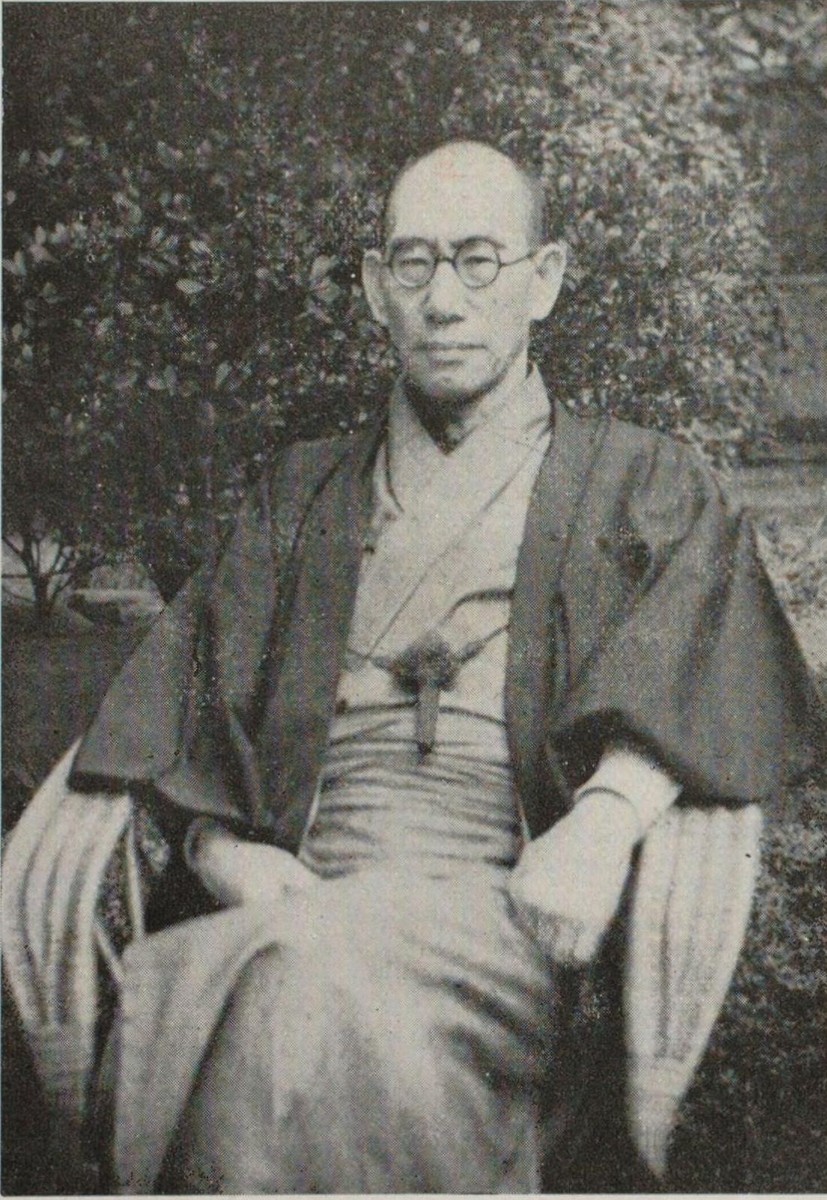
Source: Portraits of Modern Japanese Historical Figures, National Diet Library, Japan (https://www.ndl.go.jp/portrait/) · Photograph of Nishida Kitaro in later life, from the National Diet Library (Japan) digital exhibition Portraits of Modern Japanese Historical Figures, image 6069_2; the library does not name the photographer or give a date. Downscaled from 1098 x 1593 to 827 x 1200 pixels, never enlarged · Public domain (National Diet Library statement that all images in the Portraits of Modern Japanese Historical Figures exhibition are in the public domain)
philosopher · 20th Century
1870–1945
Not yet included in personality matching — the documented evidence doesn't yet cover enough of the personality model. Everything else on this page is fully available.
Wrote An Inquiry into the Good (1911), a book the National Diet Library describes as conceived as the first Japanese philosophical book with creativity, which merged Western philosophy with Zen and East Asian thought around 'pure experience', a state before the split between subject and object.
As professor of philosophy at Kyoto Imperial University (1914-1928), developed the philosophy of the 'place' of Nothingness; helped bring Tanabe Hajime, Watsuji Tetsuro and Kuki Shuzo to Kyoto and taught students such as Nishitani Keiji, and is often called the father of the Kyoto School.
Kept writing after retiring in 1928, producing the seven volumes of Philosophical Essays and finishing 'The Logic of Place and the Religious Worldview' two months before his death; he received the Order of Culture in 1940, and his collected works, issued from 1947, became best-sellers.
Despite failing health and the bombing of cities around him in the last years of the war, he kept up his philosophical work and finished the essay 'The Logic of Place and the Religious Worldview' two months before his death on 7 June 1945.
This is consistent with a person who kept to a long intellectual project under difficult conditions. Persistence
When the young scholar Takahashi Satomi criticised his notion of pure experience, he clarified it in an article soon after the book; later, criticism from Tanabe Hajime and Tosaka Jun about his neglect of history led him to develop his notions of the historical world and historical body.
This is consistent with a thinker who revised his positions in response to criticism, though the account rests on one reference entry. Belief Updating
After drafting An Inquiry into the Good from 1905 while teaching at provincial schools and practising Zen, he used the book to win a post at Kyoto Imperial University in 1910, moving from provincial teaching to the centre of Japanese academic philosophy.
This is consistent with original work turning into a new institutional platform. Creative Originality
People whose overall profiles resemble theirs.



Not a rival — a different profile shape worth a look.