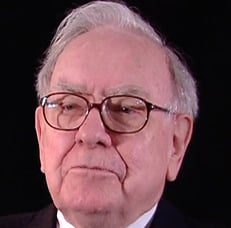
Warren Buffett
95% Profile Match
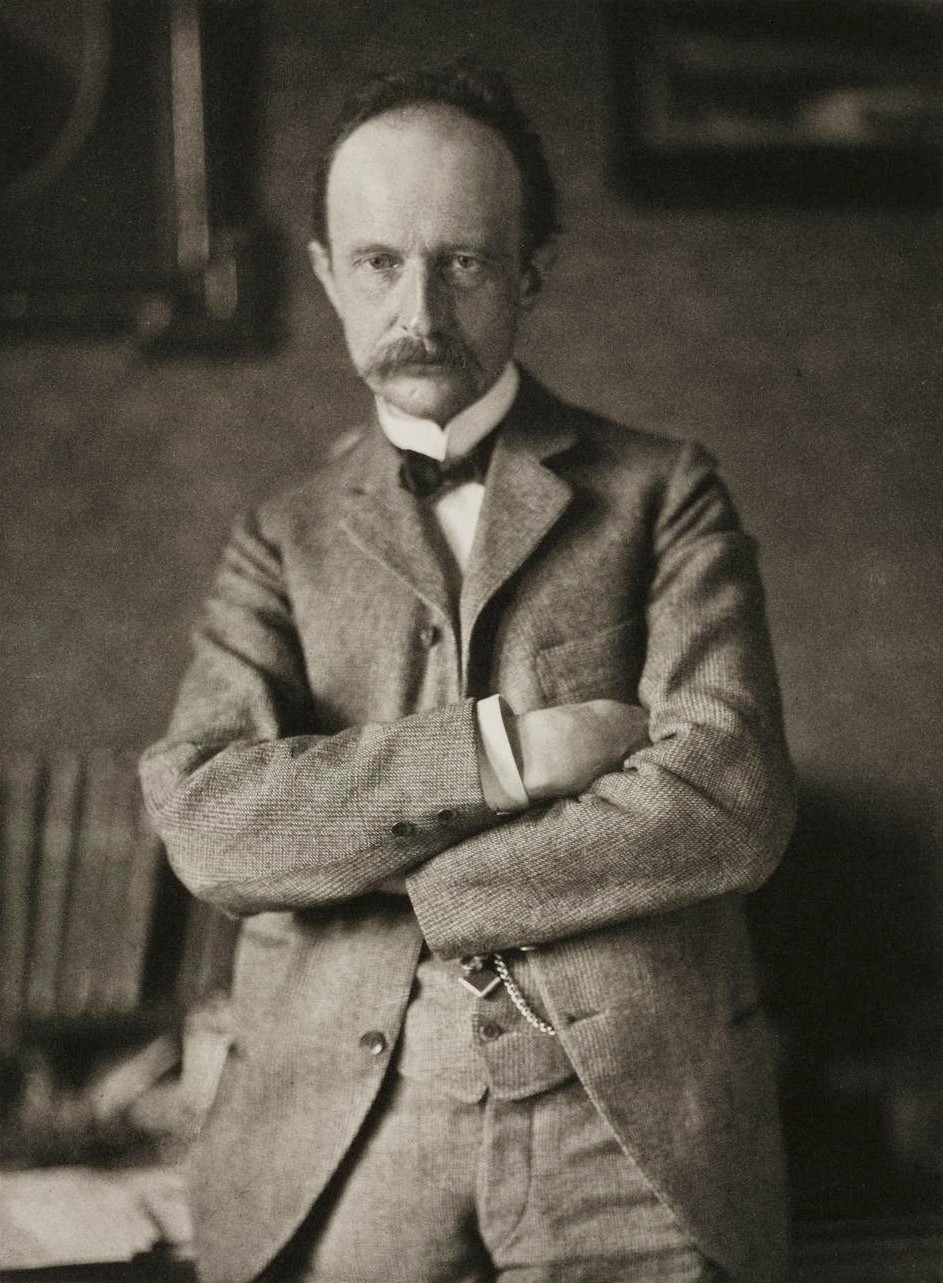
Rudolf Dührkoop, Max Planck, photogravure, Photographische Gesellschaft in Berlin, c. 1910; public domain (photographer died 1918); paper margin with imprint and signature cropped · Rudolf Dührkoop (1848-1918), photograph of Max Planck, reproduced as a photogravure published by the Photographische Gesellschaft in Berlin (plate no. 8175; plate inscribed 'R. Dührkoop phot.', facsimile signature 'Planck'), c. 1910; scan via Wikimedia Commons (uploaded 2023 from a JSTOR Community collection copy) · Public domain
On 19 October 1900 Planck presented a new formula for the spectrum of heat radiation to the German Physical Society in Berlin. On 14 December 1900 he gave a theoretical derivation of it that introduced the constant now known as Planck's constant, h. Historians still debate how far he saw the break with classical physics at the time.
He received the Nobel Prize in Physics for 1918, announced in November 1919, for his work on the theory of elementary quanta. He accepted it in Stockholm in June 1920. In 1908 the Swedish Academy had turned down a committee proposal to give him the prize.
He succeeded Gustav Kirchhoff at the University of Berlin in 1889 and taught theoretical physics there until he retired in 1926. He was a member of the Prussian Academy of Sciences from 1894. Many physics students learned from his published lecture courses, and Max von Laue was among his pupils.
Planck's 1879 doctoral thesis on the second law of thermodynamics drew almost no response. In his own late account, Helmholtz probably never read it, Kirchhoff disapproved of it, and Clausius did not answer his letters. He kept working on entropy through the 1880s, and his pupil Max von Laue said in his 1947 funeral address that 'he continued on his way'.
Years of work on a topic his seniors ignored is consistent with the profile's high persistence score. The account rests on Planck's own memoir and an admiring pupil's eulogy, though the two agree on the details. Persistence
Lise Meitner worked as Planck's assistant before the First World War. In a 1958 lecture she recalled that when she asked him a physics question he often replied, 'I will answer you tomorrow.' She linked this to his wish to stand fully behind everything he said.
A habit of checking an answer before giving it fits the profile's analytical rigor score. It comes from one close colleague's memory, so it is best read alongside the historians' accounts of how strictly he demanded derivations. Analytical Rigour
In late 1900, to derive his new radiation formula, Planck turned to Ludwig Boltzmann's statistical treatment of entropy, which he had long resisted. In a 1931 letter he called the step 'an act of desperation' and the energy elements 'a purely formal assumption'. By his own account and that of historians, he spent several more years trying to fit the quantum into classical physics; the historian Helge Kragh dates his acceptance that it could not be done to around 1908.
Taking up a method he had opposed when the measurements left no other route, and then holding on to classical physics for years afterwards, sits alongside the profile's mid-range belief updating score. The profile reads this as slow but real change rather than resistance alone. Belief Updating
People whose overall profiles resemble theirs.