Jane Goodall
93% Profile Match
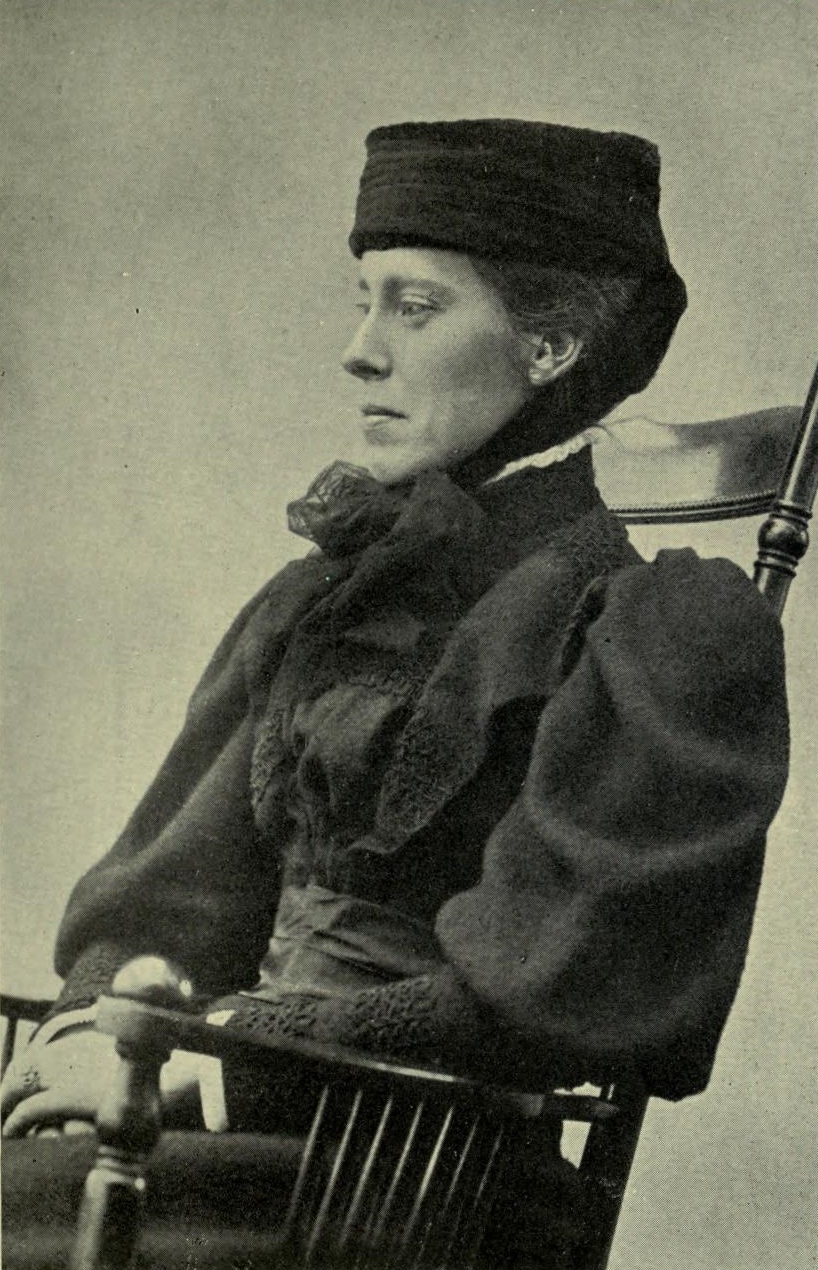
A. G. Dew-Smith (1848-1903), photograph of Mary H. Kingsley, published in Edward Clodd, Memories (1916), facing p. 74; public domain, via Wikimedia Commons · Edward Clodd, Memories (London: Chapman and Hall, 1916), plate facing p. 74, via Internet Archive (memoires00cloduoft) and Wikimedia Commons · Public domain
explorer · 19th Century
1862–1900
Not yet included in personality matching — the documented evidence doesn't yet cover enough of the personality model. Everything else on this page is fully available.
On her second West African journey (December 1894 to November 1895) Kingsley took a canoe up the Ogowe River in French Congo into the rapids above Njole, then crossed a largely unmapped stretch of Fang country overland from Lambarene to the Rembwe River. Before sailing home she climbed Mount Cameroon (Mungo Mah Lobeh).
She collected fishes, reptiles and insects for the British Museum on the Ogowe. In 1896 the museum's zoologist Albert Günther reported about 65 fish and 18 reptile species from her collection, named three new fish species kingsleyae after her, and noted that they arrived in excellent condition although her canoe often overturned in the rapids. A modern ichthyologist has called the collection a significant contribution to the study of Gabon's fishes.
Her Travels in West Africa (1897) combined a narrative of both journeys with chapters on West African religion ('fetish') and appendices on trade, followed by West African Studies (1899). In Science, the Princeton geographer William Libbey criticised the book's loose structure and flippant tone but judged its fetish chapters 'a valuable contribution'.
In her own account of 26 September 1895, Kingsley pressed on towards the summit of Mount Cameroon in worsening weather after her last two companions had stopped, and reached the summit cairn alone in fog and driving rain. She recorded that she had doubted whether she was right to risk her men, and that the fog robbed her of the view she had come for.
Her choice to go on alone fits the profile's high score for risk tolerance; her own doubts about exposing her men are part of why that score is marked dual-edged. Risk Tolerance
While Travels in West Africa was being prepared in 1896, a scientific reviser altered some of her wording, including a depth he gave for the Forcados bar that she said was wrong. In a letter to her publisher, George Macmillan, quoted by her biographer Stephen Gwynn, she refused to publish the changes, writing that she had a good character to lose as 'an honest observer of facts'.
The episode sits alongside Günther's praise for how carefully she chose specimens as evidence for her detail orientation, though the letter itself is her own account. Detail Orientation
After her parents died in 1892, Kingsley chose West Africa to continue her father's study of early religion and law. Before her second journey Albert Günther of the British Museum suggested she collect the fishes of the rivers she visited, and she sailed in December 1894 with a collector's outfit from the museum.
Pairing 'fish and fetish' offers one example of the curiosity this profile scores: a single journey given over to both natural history and the study of religion. Curiosity
People whose overall profiles resemble theirs.