Mahatma Gandhi
93% Profile Match
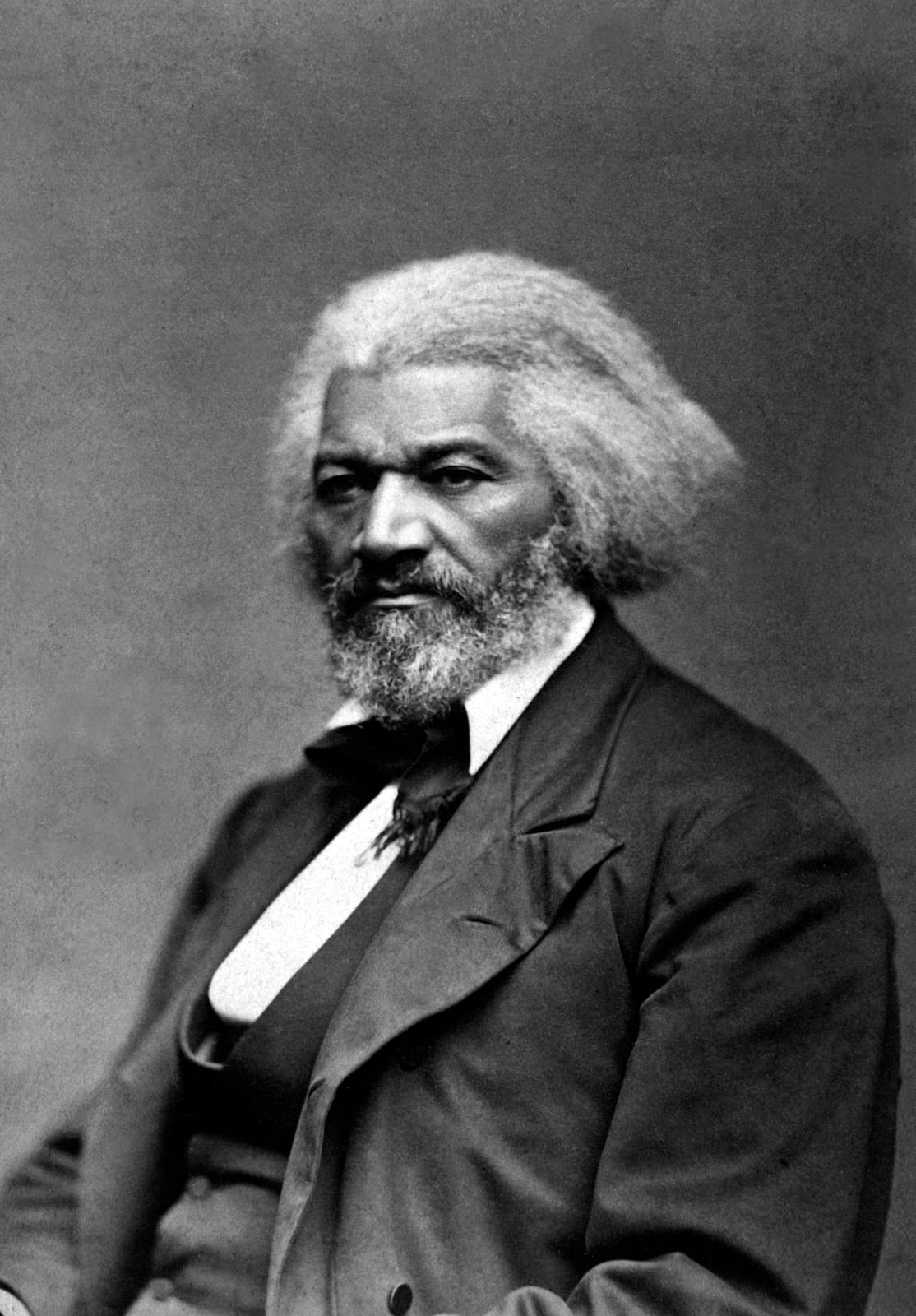
George Kendall Warren, circa 1879, US National Archives (NAID 558770), Public Domain · Wikimedia Commons (hosted locally by this app as a resized/compressed derivative; see licenseUrl for the full-resolution original) · Public Domain
c. 1818 — Born into slavery in Talbot County, Maryland; his exact birth date was unknown even to him.
1833 — Physically resisted a beating from an overseer known for "breaking" enslaved people, and prevailed.
1838 — Escaped slavery using a carefully prepared plan and borrowed papers.
1845 — Published his autobiography and became a leading abolitionist speaker; later founded the newspaper The North Star.
1881 — Appointed Recorder of Deeds for Washington, D.C.; later served as Minister Resident to Haiti.
1895 — Died.
As an enslaved child, Douglass taught himself to read by trading bread for reading lessons from poor white children in his neighborhood and by studying discarded newspapers he came across — in direct defiance of laws that made teaching an enslaved person to read illegal. He later practiced writing by copying letters from timber markings at a shipyard and from a boy's used copybooks.
His 1845 autobiography, Narrative of the Life of Frederick Douglass, an American Slave, was an immediate bestseller, and he went on to become one of the most sought-after public speakers of his era on both sides of the Atlantic — a sustained, decades-long rhetorical career, not a single celebrated speech.
He founded and edited the abolitionist newspaper The North Star, and later held two federal appointments — Recorder of Deeds for the District of Columbia and Minister Resident to Haiti — sustained institutional leadership across markedly different roles.
Douglass met directly with President Lincoln on two documented occasions to advocate for equal pay and equal treatment for Black Union soldiers, having already recruited soldiers for the Union Army himself, including his own sons.
Read against the profile's proactive_agency score, this is the same pattern in a different arena: rather than waiting to see how Black soldiers' treatment would be decided, he sought out the country's most powerful office directly. Proactive Agency
His 1838 escape from slavery was carefully prepared rather than impulsive: he secured a borrowed sailor's protection papers in advance and timed the journey around a specific train and boat schedule, carrying legal and physical risks that were severe and well understood if he were recaptured.
Hired out to a man named Edward Covey, known locally for 'breaking' enslaved people who resisted, Douglass eventually made a deliberate decision to physically resist a beating rather than submit, and prevailed in the ensuing confrontation. He described this moment, across all three of his autobiographies, as the point after which he ceased to feel himself a slave in spirit, even though years of actual enslavement remained ahead of him.
The profile's high autonomy_need score sits close to this account: Douglass frames the change not as a shift in legal status, which did not change that day, but as a shift in his own sense of who actually controlled him. Need for Autonomy
Douglass originally held William Lloyd Garrison's position that the U.S. Constitution was inherently a pro-slavery document. Influenced by the legal arguments of Lysander Spooner, he later publicly reversed this view, arguing the Constitution could be read as an anti-slavery text and used as a political tool — a reasoned position change that cost him his long alliance with Garrison's faction.
This is an unusually checkable case for the profile's belief_updating score: the position change is dated, reasoned, and openly acknowledged at the time, rather than something read back into his life from a later retelling. Belief Updating
People whose overall profiles resemble theirs.
Not a rival — a different profile shape worth a look.