
Warren Buffett
89% Profile Match
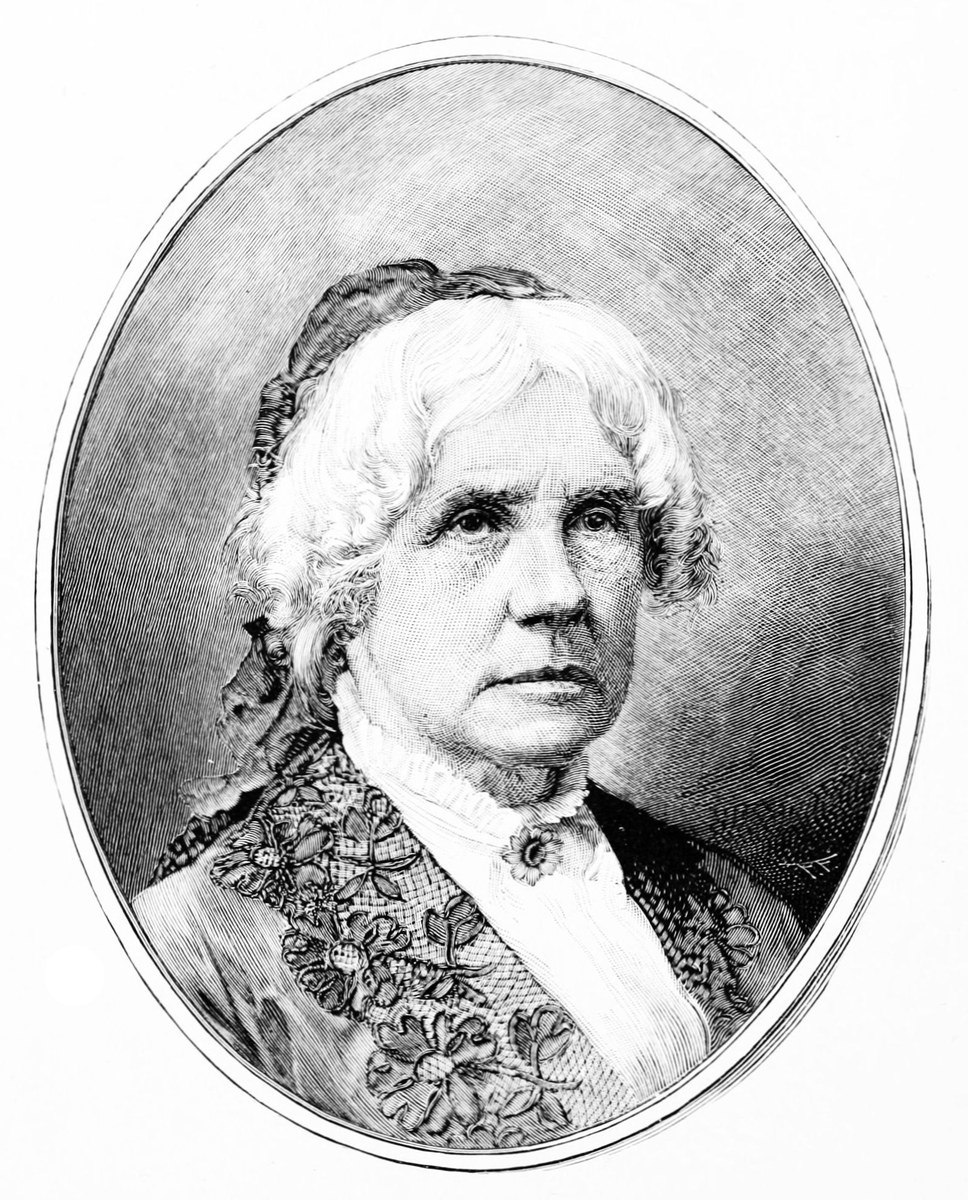
Engraved portrait of Maria Mitchell in Appletons' Popular Science Monthly, vol. 50, New York, 1896-1897 (Internet Archive scan), public domain by US publication before 1931 · Engraved oval portrait of Maria Mitchell, the unnumbered plate captioned 'Maria Mitchell' printed with the 'Sketch of Maria Mitchell' in Appletons' Popular Science Monthly, volume 50 (New York, 1896-1897), Internet Archive scan of the volume (item popularsciencemo50newy), page image extracted on Wikimedia Commons as 'PSM V50 D450 Maria Mitchell.jpg' (the Commons description text is wrong, but the file is this plate). The engraver is not named and the source photograph is not stated, so this is a later engraved depiction rather than a documented sitting. The file is the 1592 x 1974 scan downscaled to 968 x 1200 with no upscaling. · Public domain (published in the United States in 1896-1897)
astronomer · 19th Century
1818–1889
Not yet included in personality matching — the documented evidence doesn't yet cover enough of the personality model. Everything else on this page is fully available.
On 1 October 1847 she discovered a telescopic comet from Nantucket, later designated C/1847 T1 and called 'Miss Mitchell's Comet', and the King of Denmark awarded her a gold medal for it.
In 1848 she became the first woman elected to the American Academy of Arts and Sciences, and for 19 years she computed the positions of Venus for the American Nautical Almanac.
From 1865 to 1888 she was professor of astronomy and director of the observatory at Vassar College, where her students did original observing and she published their findings with her own.
According to her family's biographer, she spent every clear evening on the housetop 'sweeping' the heavens, even with guests in the parlour, and on 1 October 1847 she told her father she thought she had seen a comet but advised him to say nothing until they had observed it long enough to be sure.
This is consistent with long, repeated observing combined with caution before announcing a discovery. Persistence
In May 1870 she and Alida Avery wrote to the Vassar president asking for pay equal to the male professors, and in May 1871 she wrote again, asking that salaries be equal and paid in the same way and that the matter go to the trustees, who resolved in June 1871 to pay both women $2,500.
This is consistent with persistence in pressing her employer directly for equal pay. Social Assertiveness
In 1865 she left Nantucket for Vassar College, where, as Encyclopedia.com puts it, she chose to commit herself to teaching rather than theoretical astronomy, and her research time was sharply limited as she worked with students at the observatory.
This is consistent with a shift from solitary observing to working with students. Collaboration
People whose overall profiles resemble theirs.


Not a rival — a different profile shape worth a look.
