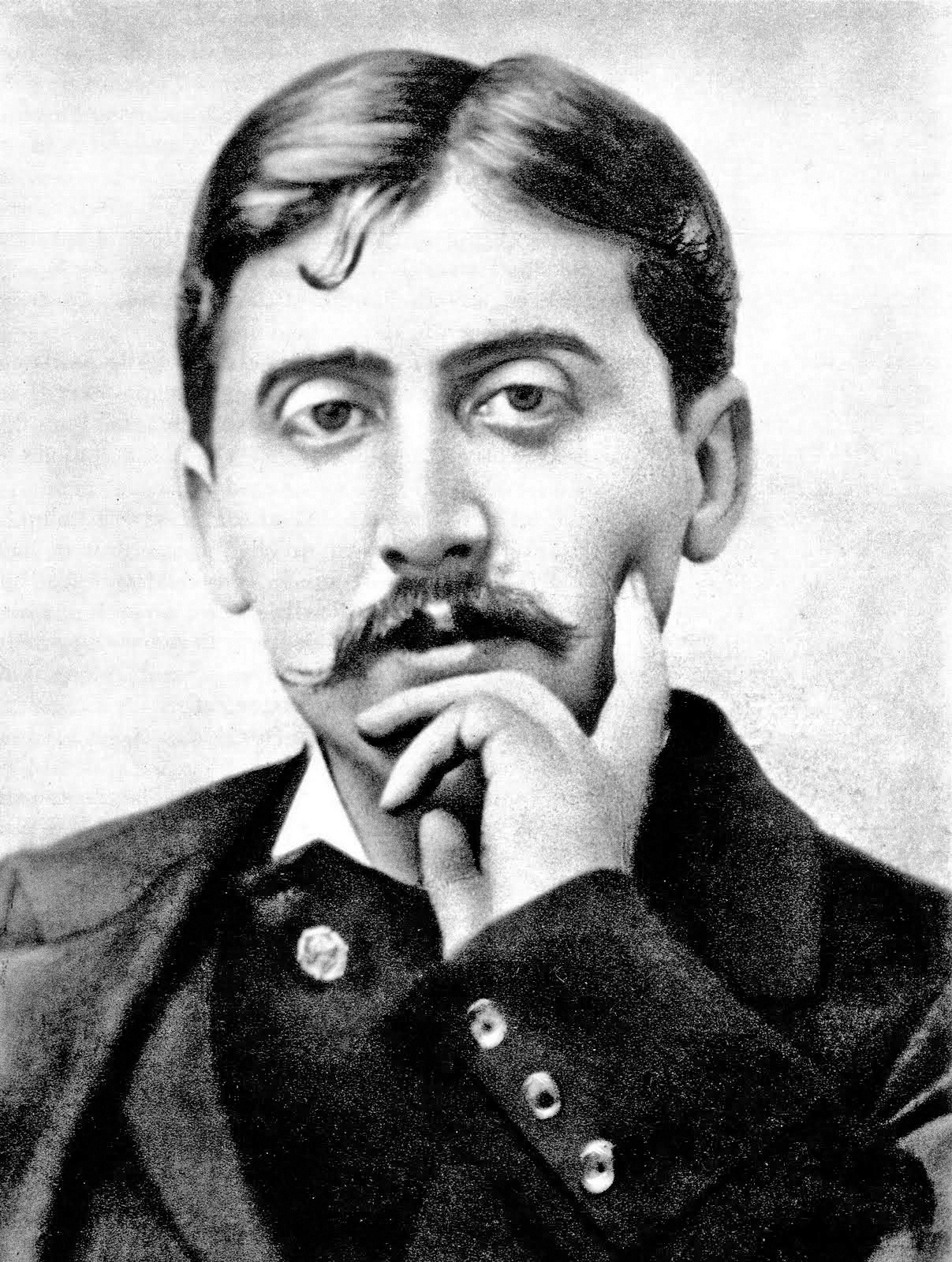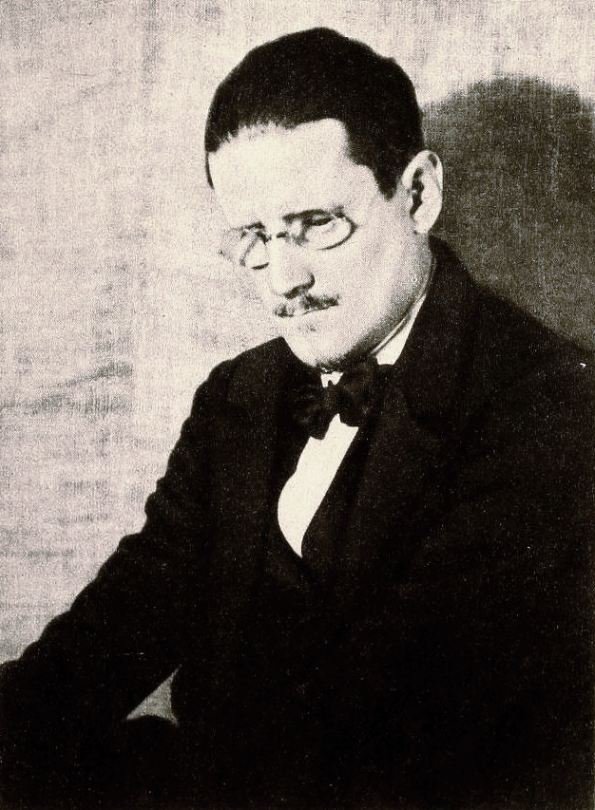

Otto Wegener, 1895; scan from a web copy of the photographer's cabinet card, uploaded to Wikimedia Commons by Yann Forget · Wikimedia Commons file 'Marcel Proust 1895.jpg', a contrast-enhanced scan of a studio portrait by Otto Wegener, Paris, 1895 · Public domain (photographer Otto Wegener died in 1924, so protection in France and the United States has long expired)
writer · 19th Century
Marcel Proust
1871–1922
Known For
Not yet included in personality matching — the documented evidence doesn't yet cover enough of the personality model. Everything else on this page is fully available.
Trait Constellation
Key Achievements
Proust wrote A la recherche du temps perdu (In Search of Lost Time). Its first volume, Du cote de chez Swann, was published by Bernard Grasset on 14 November 1913 at the author's expense; the NRF took over the work after the First World War, and the second volume, A l'ombre des jeunes filles en fleurs, won the Prix Goncourt of 1919. Sodome et Gomorrhe II appeared in 1922, and La Prisonniere (1923), Albertine disparue (1925) and Le Temps retrouve (1927) were published after his death.
Proust translated John Ruskin's The Bible of Amiens (Mercure de France, 1904) and Sesame and Lilies (1906), each with his own preface and notes; the preface to the second, on reading, began as a magazine essay. According to Pierre-Quint, his English was weak and he worked with dictionaries, and the Ruskin work absorbed him for about six years.
Les Plaisirs et les jours, Proust's first book, was published by Calmann-Levy in 1896 with illustrations by Madeleine Lemaire and a preface by Anatole France. It collected portraits, studies and stories he had contributed to Le Banquet and La Revue blanche, together with some unpublished pieces.
Moments That Reveal Them
In January 1914 Andre Gide wrote to Proust that the NRF's refusal of Swann would remain the review's gravest mistake and one of the most stinging regrets of his own life. Proust replied within days that, without the repeated refusals, he would not have received Gide's letter, and that its joy exceeded what publication by the NRF would have given him; he added that he had never pretended to be indifferent to the refusals.
In spring 1913 Proust wrote to Grasset that he had reworked his proofs so heavily that he would be dishonest not to pay for the extra composition, and offered a supplement; a few weeks later he apologised for the 'terrible mess' of the sheets he was returning. In June 1914 Grasset's staff told their printer that the author 'absolutely wants many more proofs'.
Reworking proofs far beyond the contract and offering to pay for it is consistent with perfectionism; the publisher's staff and a critic's complaint about surviving slips show that the result was not a clean text. Perfectionism
Turning Points
After Swann was declined by the NRF, the Mercure de France, Fasquelle and Ollendorff, Proust asked his friend Rene Blum in 1913 to take it to Bernard Grasset, offering to pay for the edition and publicity and to give the publisher a percentage of sales. Grasset accepted, the book came out in November 1913, and Proust went on to the second volume.
Carrying on to a fifth route to publication after four refusals is consistent with persistence; the account of the refusals comes from an admirer, and Gide's 1914 letter independently confirms the NRF's. Persistence
Similar People
People whose overall profiles resemble theirs.


Yayoi Kusama

Frida Kahlo
Coco Chanel

Miles Davis

Oscar Niemeyer
Opposite Profile
Not a rival — a different profile shape worth a look.
Alexander Hamilton
Sources
- Marcel Proust (Q7199) -- verified live via wbgetentities (2026-10-10): en label 'Marcel Proust', description 'French novelist, critic and essayist (1871-1922)', born 10 Jul 1871, died 18 Nov 1922, citizenship France, ko label '마르셀 프루스트'. Orientation only; not used as support for any row.
- Leon Pierre-Quint, 'Marcel Proust: His Life and Work' (translated by Hamish Miles, Alfred A. Knopf, New York, 1927; French original 1925), Internet Archive full text -- ADMIRING early critic-biographer (a contemporary reader and advocate who knew Proust's circle), writing within five years of his death from correspondence and acquaintances. Read: the chapters on the Ruskin years, the cork-lined room, the publisher refusals of 1912-1913 and Swann at Grasset, the reception of 1913, the NRF reconciliation, the war years and the last-years revision of proofs. Translation slips noted (it gives the Bible of Amiens as 1914; Pierre-Quint's own bibliography and Kolb's volume give 1904). The sections of literary analysis were skimmed.
- Leon Pierre-Quint, 'Comment travaillait Proust' (Editions des Cahiers libres, Paris, 1928), Internet Archive full text -- ADMIRING critic's study of Proust's working methods. Read: the bibliography listing Proust's books and their editions (Du cote de chez Swann at Grasset 1913 then NRF; the volumes to Le Temps retrouve 1927; the Ruskin translations of 1904 and 1906), the introduction, and the closing section that reprints Proust's own 1913 letter to the writer Rene Blum asking him to approach the publisher Bernard Grasset (self source, quoted by an admirer). The long section comparing magazine and book variants of one extract was skimmed, not checked line by line.
- Paul Souday (critic of the daily Le Temps), 'Marcel Proust' (Simon Kra, Paris, 1927, eighth edition), Internet Archive full text -- CONTEMPORARY CRITICAL REVIEWS reprinted in the book: his feuilleton on Du cote de chez Swann of 10 December 1913 (praise for talent and imagination, but 'not composed', 'chaotic', with grammatical slips he asks why Proust does not correct on proof) and his piece on the 1919 Prix Goncourt for A l'ombre des jeunes filles en fleurs (the decision was 'not generally well received'; he notes Proust still lets slips pass in his proofs). Read both chapters in full; the later chapters on the novel as a whole were not read.
- Robert Dreyfus (school friend of Proust from the 1880s), 'Souvenirs sur Marcel Proust, accompagnes de lettres inedites' (Bernard Grasset, Paris, 1926), Internet Archive full text -- FRIEND's memoir with published letters of 1888-1908. Read: the passages on Proust's schooldays, the letters of 1905-1908 mentioning his Ruskin translation work and his tastes in painting, and the closing chapters. Warm, anecdotal; not used for any claim about health or family.
- Philip Kolb (ed.), 'Correspondance de Marcel Proust', tome XIII: 1914 (Plon, Paris, 1985), Internet Archive full text -- scholarly critical edition of Proust's letters, with the editor's notes quoting the Grasset publishing house's own letter-books. Read: Andre Gide's letter of 10-11 January 1914 apologising for the NRF's refusal of Swann and Proust's reply, Proust's letters of April-May 1913 to Bernard Grasset about the extent of his proof corrections, Grasset's replies, the Grasset staff's June 1914 notes on Proust's demand for more proofs, and the Proust-Riviere letters on the NRF extract. Letters are SELF sources, but Gide's letter and the Grasset publisher-side notes are independent of Proust. Letters about health, family and private relationships were not used.