Marie Curie
94% Profile Match
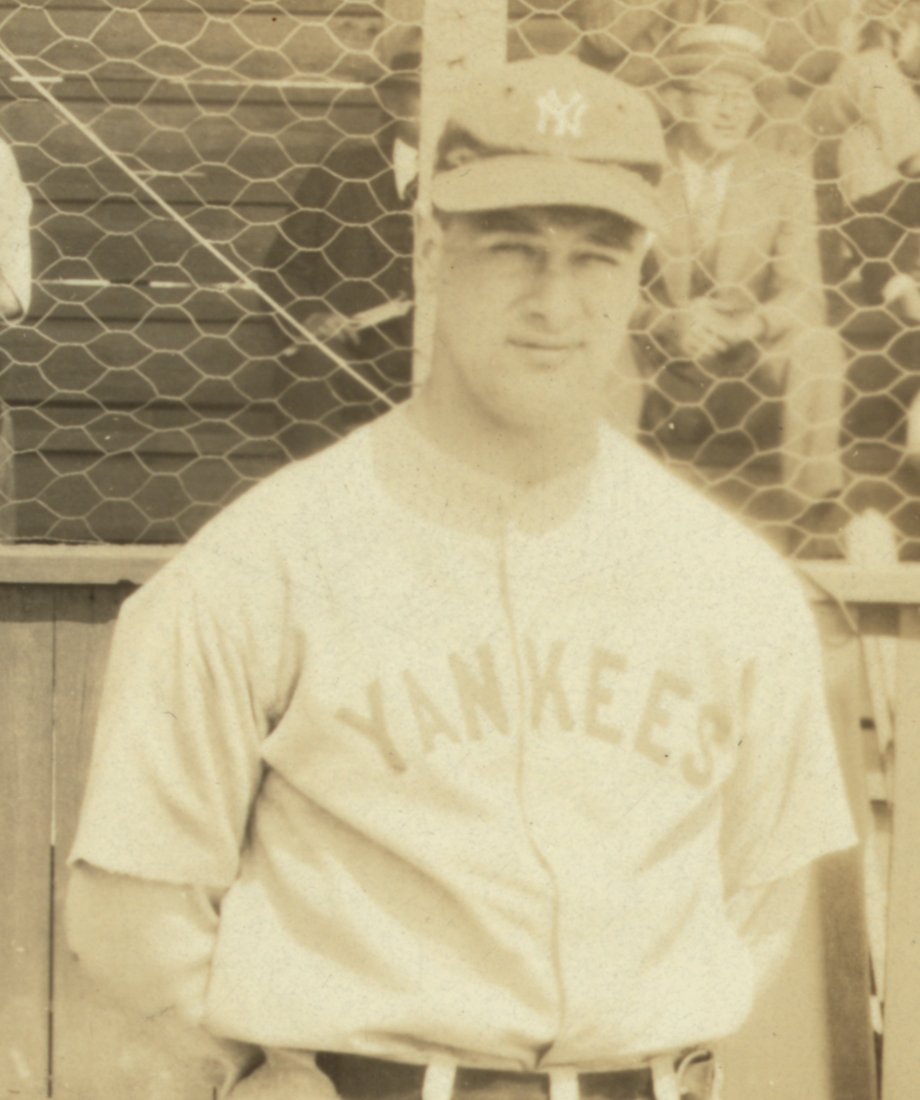
Keystone View Company, stereograph 'Lou Gehrig, famous Yankee first baseman', c1930, Library of Congress Prints and Photographs Division · Keystone View Company, 'Lou Gehrig, famous Yankee first baseman', stereograph No. 32597 (Meadville, Pa., c1930), Library of Congress Prints and Photographs Division, STEREO BIOG FILE - Gehrig, Lou; digital file LC-DIG-ppmsca-18599; left-hand view cropped to the player only · Public domain (published in the United States c1930; copyright registered JO 6667, no renewal found by the Library of Congress, checked 9/2016; US publication before 1931)
athlete · 20th Century
1903–1941
Not yet included in personality matching — the documented evidence doesn't yet cover enough of the personality model. Everything else on this page is fully available.
From June 1925 until May 1939, Gehrig played in 2,130 consecutive games for the New York Yankees, beginning with a pinch-hitting appearance on 1 June 1925 and his first start at first base the next day. The Baseball Hall of Fame calls it a streak long thought unbreakable until Cal Ripken Jr. passed it in 1995, and the run is what earned him the nickname the Iron Horse.
In 1927 Gehrig batted cleanup for the Yankees lineup the New York press dubbed Murderers' Row. He hit .373 with 47 home runs, a league-leading 173 runs batted in and a Yankees-record 52 doubles, was named the American League's Most Valuable Player, and the Yankees swept that year's World Series. He and Babe Ruth, who hit a record 60 home runs, formed the middle of the order for the decade.
Gehrig finished his career with a .340 batting average, 493 home runs and about 1,995 runs batted in, and the Yankees won six World Series in his 17 seasons, according to the Hall of Fame. In 1934 he led the American League in batting average (.363), home runs (49) and runs batted in (165), a Triple Crown, and in 1936 he won a second MVP award.
On 4 July 1939, 61,808 fans came to Yankee Stadium for Lou Gehrig Appreciation Day, where he gave the farewell speech that begins 'Today I consider myself the luckiest man on the face of the earth'. On 7 December 1939 the Baseball Writers' Association of America voted unanimously to suspend the waiting period and elect him to the Hall of Fame immediately, which MLB.com describes as one of only two times the writers have elected a player by special election.
In the last three weeks of the 1930 season Gehrig played with a broken finger that needed surgery once the season ended, and in the hospital doctors found bone chips in his left elbow that needed a second operation. He still appeared in every Yankees game that year and finished at .379 with 41 home runs and a league-leading 174 runs batted in.
Playing out a season with a broken finger instead of resting is consistent with persistence; it is one dated episode from a long run, and the later claim that he broke every finger over his career is a secondary tally. Persistence
After the 1927 barnstorming tour with Ruth, Gehrig let the Yankees' usual contract sit on his desk, though Ruth had urged him to insist on $30,000. A few weeks later he visited owner Jacob Ruppert at his brewery and agreed to a three-year deal at $25,000 a year, a big raise for him but well below what Ruth earned, and the length of the contract mattered more to him than the figure.
Pausing before signing, then settling quickly on security rather than the larger figure Ruth suggested, is consistent with a low-key rather than forceful negotiating style; the biography reports his stated priority, and one contract is a small sample. Social Assertiveness
On 2 June 1925, with the Yankees in seventh place, manager Miller Huggins started Gehrig at first base in place of Wally Pipp, who had been the regular for years. Gehrig, a backup who had been pinch-hitting, went 3-for-5, and Huggins told him before the next game that he was the first baseman 'today and from now on'. The SABR biography notes that the popular story of Pipp sitting out with a headache is untrue; Pipp was hitting .244 and the team was struggling.
People whose overall profiles resemble theirs.

Not a rival — a different profile shape worth a look.