Ada Lovelace
93% Profile Match
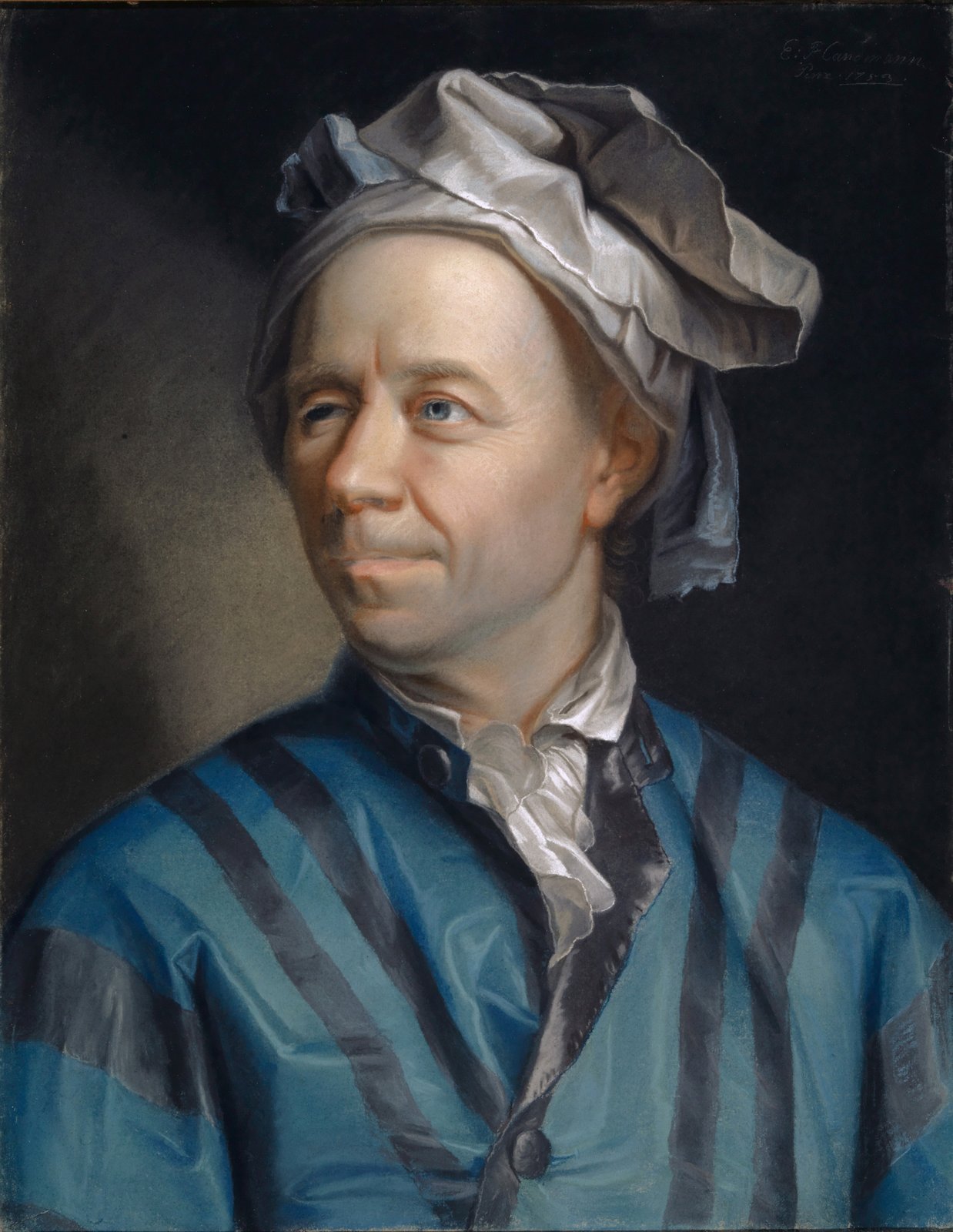
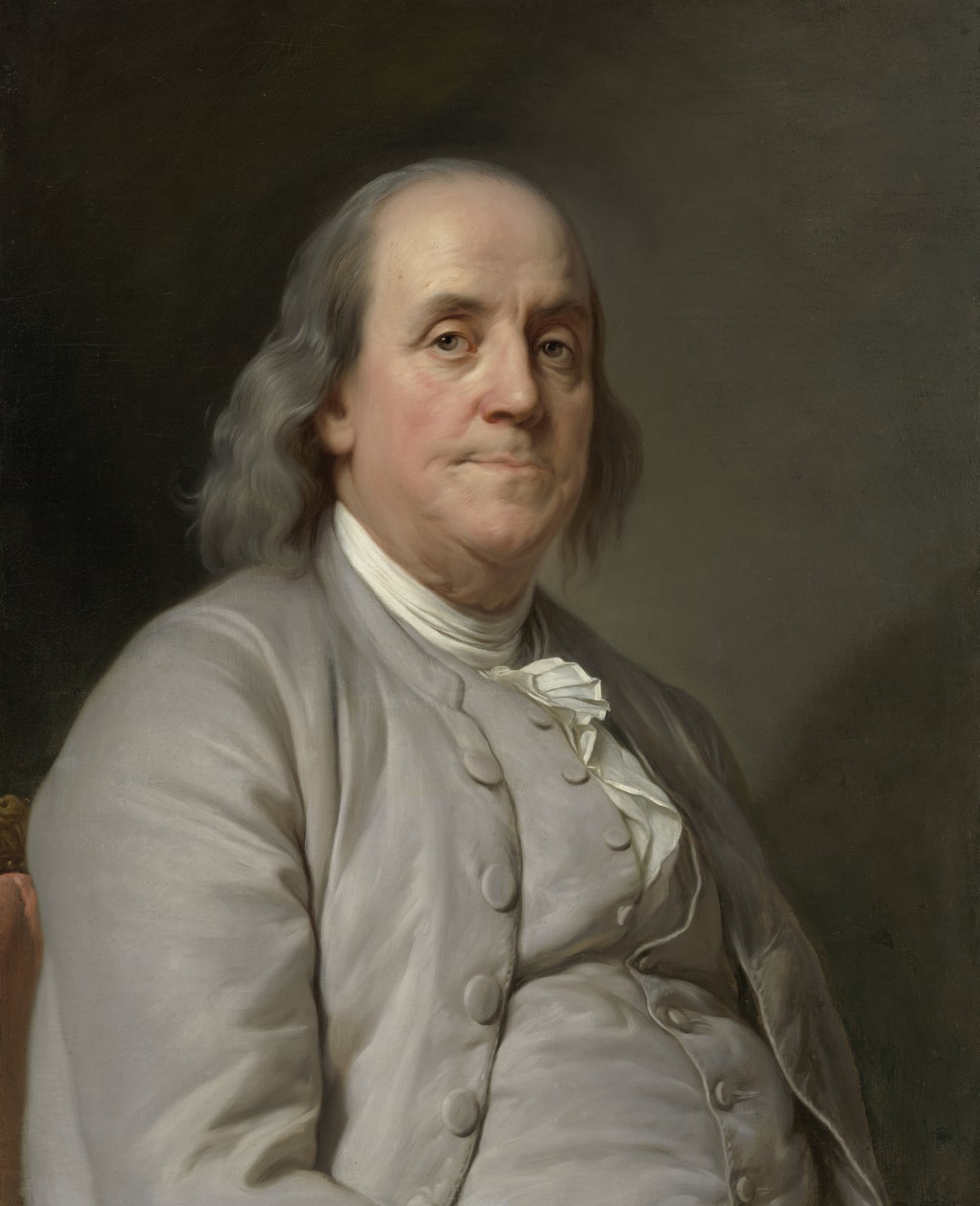
Jakob Emanuel Handmann, Portrait of Leonhard Euler, 1753, Kunstmuseum Basel (photograph: Martin P. Bühler); public domain via Wikimedia Commons · Jakob Emanuel Handmann, pastel on paper, 1753, Kunstmuseum Basel (inv. 276), via Wikimedia Commons · Public domain
MacTutor records that by 1735 Euler had shown the sum of the reciprocals of the squares of the whole numbers to be pi squared over six, a problem that had resisted the three Bernoullis and other leading mathematicians. He went on to obtain the sums for higher even powers, and by 1739 had expressed the general coefficients through the Bernoulli numbers.
In Mechanica (1736-37) Euler treated the motion of a point mass in a vacuum and in a resisting medium, under central forces and on surfaces, using mathematical analysis. MacTutor quotes Yushkevich contrasting this with earlier mechanics, which had mostly used synthetic and geometrical methods that demanded a separate approach for each problem, and Condorcet's 1783 eulogy also singles the treatise out as a landmark in applying analysis to motion.
Euler's lunar theory was used by the German astronomer Tobias Mayer in constructing his tables of the Moon. In 1765 Britain paid Mayer's widow 3,000 pounds for the tables' contribution to finding longitude at sea and paid Euler 300 pounds for his theoretical contribution.
In a letter of 13 March 1736 to the Vienna court astronomer Giovanni Marinoni, Euler called the Königsberg bridge puzzle banal but worthy of attention, since neither geometry, algebra nor the art of counting was enough to solve it. He wondered whether it belonged to the 'geometry of position' that Leibniz had longed for, and reported a simple rule that decides, for any number of bridges in any arrangement, whether a round trip crossing each bridge once is possible.
Treating a walking puzzle as a question about how the connections are arranged, rather than about particular routes, is consistent with the profile's systems-thinking row. The evidence here is a single letter, so it shows the habit only in outline. Systems Thinking
On 12 August 1755 the 19-year-old Joseph-Louis Lagrange sent Euler an analytic method for problems of maxima and minima, and Euler replied on 6 September saying how impressed he was. According to a survey of the field, Euler told the Berlin Academy in 1756 that the glory of first discovering the method had been reserved to Lagrange, and he also proposed Lagrange for election to the Academy, where he was elected on 2 September 1756. When Euler left Berlin in 1766 he recommended Lagrange to succeed him as director of mathematics.
One reading, consistent with the belief-updating row, is that Euler was willing to adopt a younger mathematician's better method and to say so publicly. The sources describe a revised method and a credit given, not a retracted claim, so the reading is modest. Belief Updating
In autumn 1726 Euler accepted an invitation from the St Petersburg Academy to serve as an adjunct in physiology and began medical studies, while also trying for a physics chair at Basel with a short paper on acoustics; he was not put forward as a candidate. He left Basel on 5 April 1727, was placed in the Academy's mathematics section on arrival, and never returned to Switzerland, although he kept his Swiss citizenship.
Preparing for a physiology post and then working in mathematics instead is consistent with the adaptability row. The sources read do not give Euler's own reasons for preferring one field, so this is a reading of the sequence, not of his motives. Adaptability
People whose overall profiles resemble theirs.


Not a rival — a different profile shape worth a look.