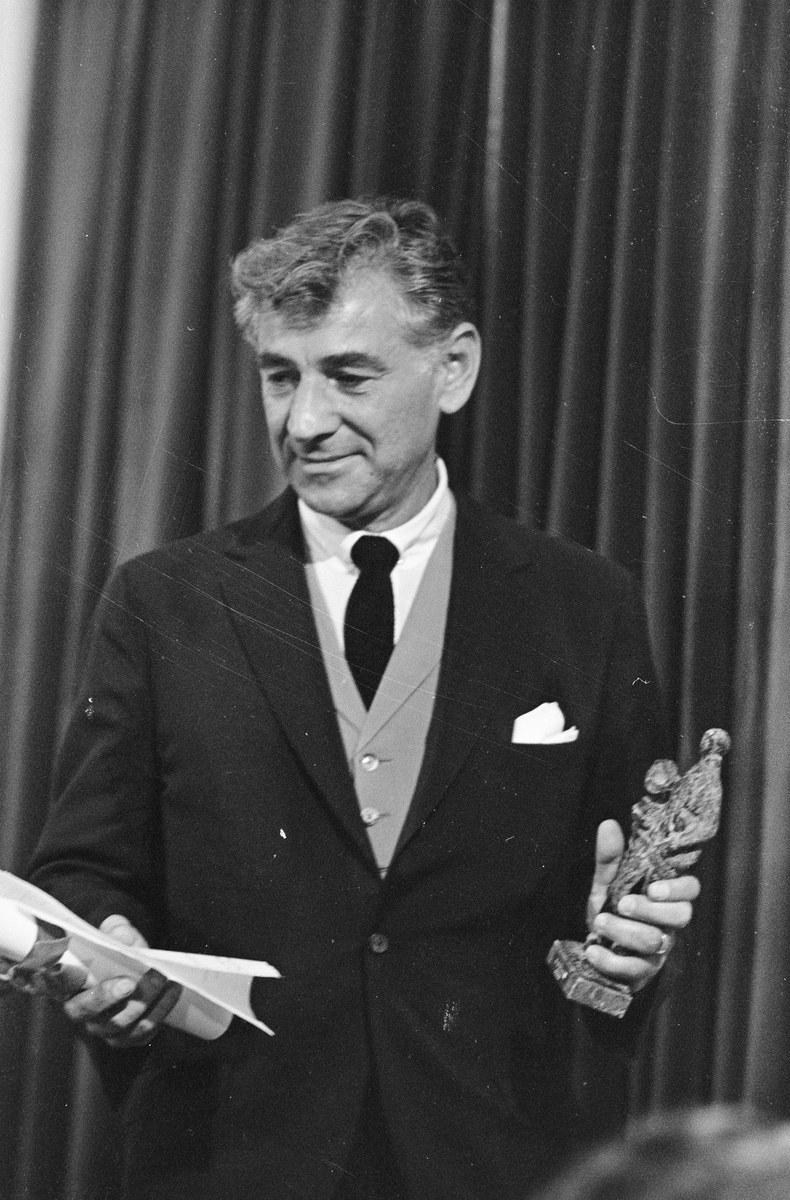
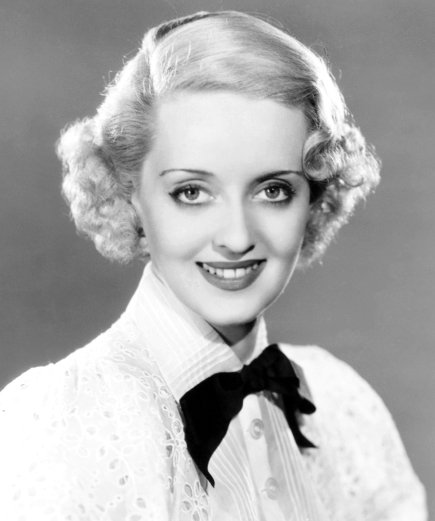
Anefo (photographer unknown), 20 September 1968, Nationaal Archief, CC0 · Nationaal Archief (Dutch National Archives), Fotocollectie Anefo, 'Leonard Bernstein in een ontspannen pose', 20 September 1968, Concertgebouw Amsterdam (Edison award reportage), inventory 921-6976, photographer unknown / Anefo; also on Wikimedia Commons as 'Leonard Bernstein in een ontspannen pose, Bestanddeelnr 921-6976.jpg'. Original file 2407 x 3658 pixels, downscaled once to 790 x 1200 (never upscaled). · CC0 1.0 Universal Public Domain Dedication
composer · 20th Century
Leonard Bernstein
1918–1990
Known For
Not yet included in personality matching — the documented evidence doesn't yet cover enough of the personality model. Everything else on this page is fully available.
Trait Constellation
Key Achievements
He made his name in 1943 by conducting the New York Philharmonic at short notice, became its music director in 1958, and championed Mahler and American composers.
He wrote the music for West Side Story (1957), which joined symphonic writing with Latin and jazz elements; its 1961 film won eleven Academy Awards.
He led 53 televised Young People's Concerts between 1958 and 1972, teaching music to a national audience.
Moments That Reveal Them
Before the Philharmonic's 1962 Brahms concert with Glenn Gould, he told the audience he did not fully agree with the pianist's very slow reading, then conducted it anyway because he found it interesting enough to hear.
This is consistent with voicing disagreement openly while still giving a colleague's different idea a fair hearing. Conflict Tolerance
In an Omnibus television lecture on Beethoven's Fifth Symphony he laid the opening bars out on the studio floor and studied the composer's discarded drafts to ask why Beethoven chose the final version.
This is consistent with an interest in how a work was made, not only in how it sounds. Curiosity
Turning Points
On 14 November 1943 the 25-year-old assistant conductor replaced the ill Bruno Walter at the Philharmonic with no rehearsal, and the concert, broadcast nationwide, made him a celebrity overnight.
This is consistent with being able to take on a very large task at short notice after preparing the repertoire in advance. Adaptability
Similar People
People whose overall profiles resemble theirs.


Leonardo da Vinci

Abraham Lincoln

Ibn Khaldun

Ibn Sina

Charles Darwin
Sources
- Leonard Bernstein (Q152505) -- verified live via the Wikidata API (2026-10-10): English label 'Leonard Bernstein', description 'American conductor and composer (1918-1990)', born 25 August 1918, died 14 October 1990, citizenship United States, Korean label present. Orientation only; not used as support for any row.
- Gino Francesconi (Carnegie Hall archivist and museum director), 'Leonard Bernstein's Famous Debut', Playbill, 1 November 2003 -- archivist's account of the 14 November 1943 concert in which the 25-year-old assistant conductor replaced the ill Bruno Walter at short notice and without a rehearsal; includes the New York Times front-page and editorial reaction and the count of his later Carnegie Hall appearances. Institutional archivist's account, admiring in tone. Read in full.
- 'Orchestra members remember Bernstein', Philadelphia Daily News / Inquirer, 9 January 2008 -- short recollections by Philadelphia Orchestra violinist-pianist Davyd Booth, cellist Richard Harlow and Israel Philharmonic trumpeter Roger Blackburn of rehearsing and performing under Bernstein (Tristan rehearsals 1977, Mahler Ninth 1979, a 1976 Dell concert, a 1972 Mahler film and a tired Carnegie Hall rehearsal). Three musicians' first-hand accounts, affectionate in tone. Read in full.
- Carnegie Hall, 'The Conductor: Focus On The Need to Lead', essay from the exhibition 'Bernstein: The Best of All Possible Worlds' (Carnegie Hall Corporation, 2001-2008) -- institutional essay on how he came to conducting (Mitropoulos), the 1943 debut, his appointment as New York Philharmonic music director, his advocacy for American concert music and Mahler, the criticism of his podium style, and a Philharmonic horn player's recollection. Institutional, admiring but acknowledging critics. Read in full.
- Carnegie Hall, 'The Educator: Focus On Televisions and Teachers', essay from the exhibition 'Bernstein: The Best of All Possible Worlds' (Carnegie Hall Corporation, 2001-2008) -- institutional essay on his Omnibus lectures (including the Beethoven Fifth Symphony lecture on discarded drafts), 53 televised Young People's Concerts between 1958 and 1972, a critic's remark on how little he simplified for children, and his mentoring of younger conductors. Institutional, admiring. Read in full.
- Matthew Wills, 'Leonard Bernstein, Teacher', JSTOR Daily, 24 September 2018 -- short feature on the Young People's Concerts (begun two weeks after he became Philharmonic music director in 1958, running fourteen years on CBS) with critic Sudip Bose's assessment of his teaching method and a statement by his daughter that he was proudest of his work as an educator. Secondary and admiring; the daughter's remark is family testimony about his own professional priorities only. Read in full.
- Margaret Shakespeare, 'Inspiring the Next Generation', Playbill, 1 March 2004 -- feature on the New York Philharmonic's Young People's Concerts, with conductor Marin Alsop, violist Rebecca Young and others recalling Bernstein's televised concerts and Alsop's account of him later becoming her mentor. Admirers' recollections; used only for the influence of the concerts and the mentoring. Read in full.
- Sudip Bose, 'Who's the Boss?', The American Scholar, 26 July 2018 -- critic's account of the 6 April 1962 New York Philharmonic concert in which Bernstein addressed the audience before Glenn Gould's Brahms D minor concerto, with the full text of his remarks, the disagreement over tempi, Bernstein's eventual agreement to play it Gould's way, Gould's later comments and Harold Schonberg's negative review. Independent and balanced. The second half (a 2000 Grimaud concert) was not used. Read the first half in full.
- Sara Fishko, 'Battling Over Brahms', Fishko Files, WNYC (produced 2006; page dated 12 October 2016) -- radio-feature transcript on the Bernstein-Gould 1962 concert quoting Bernstein's disclaimer, Schonberg's snide 'Ossip' review (the Times critic), and Tim Page's 1998 reassessment calling the performance significant and original. Independent. Read in full.
- William B. Kennedy, 'Bernstein Joins Symphonic and Jazz Elements in West Side Story', EBSCO Research Starters (History), 2021 -- encyclopedia-style article on how West Side Story developed from Jerome Robbins's 1949 idea through a shelved 'East Side Story', its 1954 revival, Bernstein's decision to hand lyrics to Stephen Sondheim, the score's mixture of Latin, jazz, ballad and operatic styles, and the show's mixed first reception. Secondary and independent; also mentions his Omnibus lectures and concurrent projects. Read in full.
- Nationaal Archief (Dutch National Archives), Fotocollectie Anefo, 'Leonard Bernstein in een ontspannen pose', 20 September 1968, inventory 921-6976 -- archive record page used to check the portrait's rights statement (rights holder 'Nationaal Archief, CC0', reuse 'rechtenvrij en gratis'). Not used for any scoring.