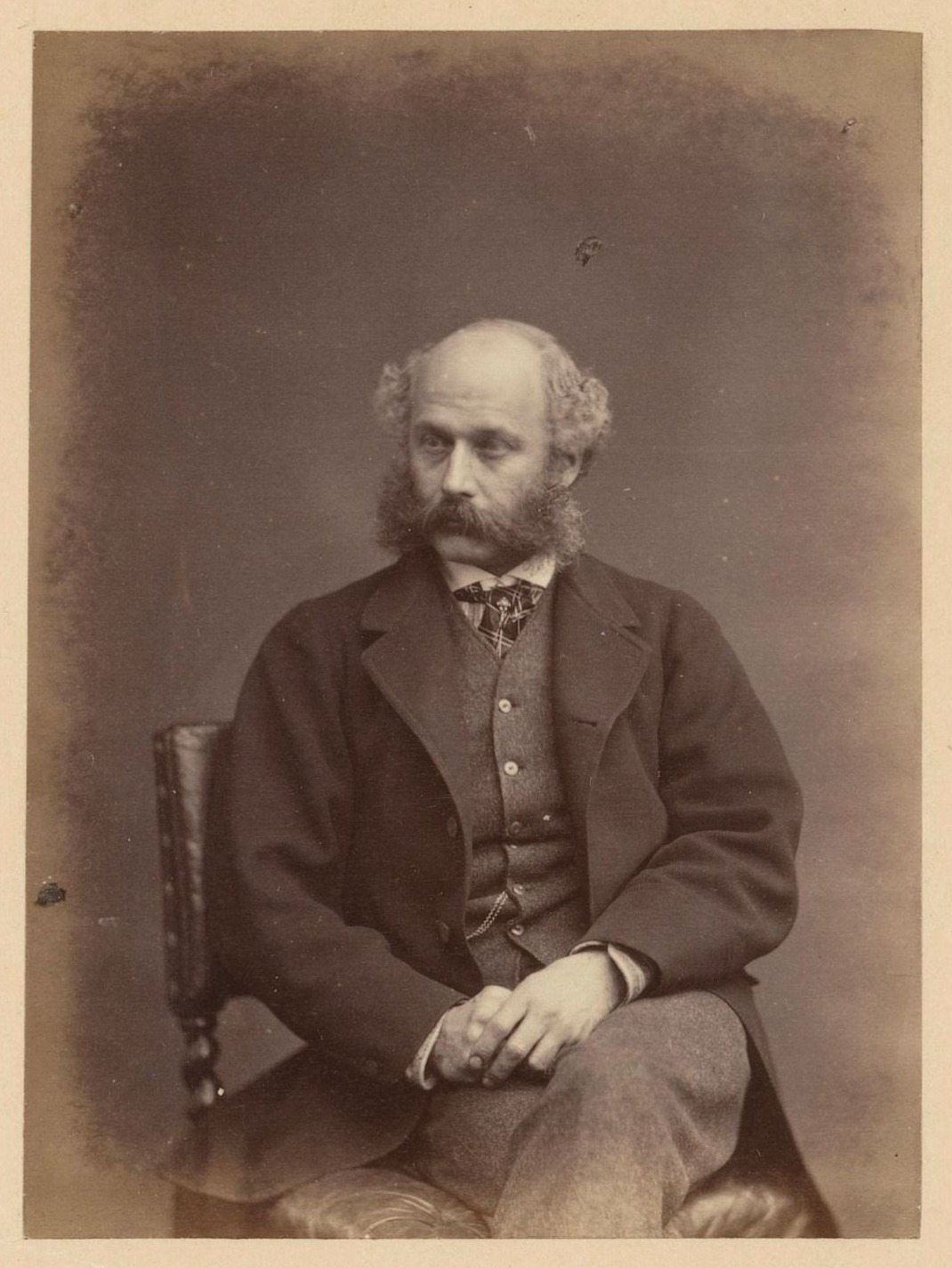

Photo: Ernest Edwards, c. 1864; Rijksmuseum, Amsterdam (RP-F-2001-7-349-80), public domain; cropped from the museum scan · Wikimedia Commons, 'Portret van Joseph Bazalgette, RP-F-2001-7-349-80.jpg' -- Rijksmuseum scan of an albumen print by Ernest Edwards (named on the object), c. 1853 - in or before 1867, a plate from a volume of portraits with a facing biography headed 'Joseph William Bazalgette, Esq., C.E.'. Cropped from the 5822 x 3686 book-spread scan to the print alone (1070 x 1425 pixels, original resolution, not resized). The Rijksmuseum record states Copyright: Public domain. The NPG Lock & Whitfield portrait was not used because the NPG's own rights page could not be opened. · Public domain (Rijksmuseum Public Domain Mark; pre-1867 photograph)
engineer · 19th Century
Joseph Bazalgette
1819–1891
Known For
Not yet included in personality matching — the documented evidence doesn't yet cover enough of the personality model. Everything else on this page is fully available.
Trait Constellation
Key Achievements
After the Great Stink of 1858 he designed London's main drainage system: intercepting sewers, roughly 82 miles of them, fed by over 1,100 miles of street drains and carrying sewage east by gravity and pumping stations. It opened in 1865 and was completed in 1875.
He built the Victoria, Albert and Chelsea embankments along the Thames. They housed the intercepting sewers in central London, and Victorian Web notes the Victoria Embankment spared the north-bank sewer a route under the Strand and Fleet Street.
He sized the system well above the needs of his day, for about four million people according to Thames Water, which is one reason much of it still works. The historian John Davis adds that outfalls sited about twelve miles below London Bridge left problems until treatment works followed an 1884 Royal Commission.
Moments That Reveal Them
The London Museum describes him reviewing every plan, personally signing drainage plans and inspecting every interchange for leaks, and insisting on strong, water-resistant Portland cement.
Consistent with a manager who checked the build closely, though this rests on a single museum article. Detail Orientation
Sizing the pipes for the densest population and the most generous sewage output, he reportedly then doubled their diameter because 'there's always the unforeseen'; the Science Museum says he chose wide egg-shaped tunnels over narrow pipes.
Consistent with someone who built in margin for growth and for what could not be foreseen. Planning Orientation
Turning Points
Financial problems and conflicts among consultants held up the drainage plans until 1859, a year after the Great Stink; he had been engineer to the Metropolitan Board of Works since 1856, and the network was then built between 1859 and 1875.
Consistent with someone who stayed with a long project through delay until it could be built, though the sources do not describe his own response to the delays. Persistence
Similar People
People whose overall profiles resemble theirs.

Elizabeth I of England

Warren Buffett

Maya Angelou

Ruth Bader Ginsburg

Thomas Aquinas
Opposite Profile
Not a rival — a different profile shape worth a look.

Fyodor Dostoevsky
Sources
- Joseph Bazalgette (Q981915) -- verified live via the Wikidata API (2026-10-22): English label 'Joseph Bazalgette', description 'British civil engineer (1819-1891)', born 28 March 1819, died 15 March 1891, instance of human, citizenship United Kingdom. Orientation only; not used as support for any row.
- Encyclopaedia Britannica, 'Sir Joseph William Bazalgette' -- short reference biography: chief engineer of the Metropolitan Board of Works, designer of London's main drainage system (83 miles of intercepting sewers, opened 1865, completed 1875), the Victoria, Albert and Chelsea embankments, Northumberland Avenue and the Putney and Battersea bridges; notes financial problems and consultant conflicts that delayed the work until 1859. CANONICAL SIGNIFICANCE SOURCE. Read in full.
- Alwyn Collinson, 'How Bazalgette built London's first super-sewer', London Museum -- museum article on the 1858 Great Stink, the scale of the network (about 1,100 miles of drains, 82 miles of sewers, 318 million bricks), his insistence on Portland cement, oversized tunnels, hands-on plan review, and the 1878 Princess Alice disaster beside the outfalls. Read in full via a web-fetch summary (the fetch tool summarises rather than reproduces).
- Institution of Civil Engineers, 'Sir Joseph Bazalgette: Pioneer of Modern Sewage Systems' (profile dated 19 August 2025) -- professional-body profile: appointments from 1849, engineer to the Metropolitan Board of Works from 1856 until 1889, the sewer, pumping-station and embankment works, the 1888 report that led to the purchase of toll bridges, new streets, and his 1884 ICE presidency. A health episode and family details in the profile were not used. Read in full.
- Thames Water, 'History of London's sewer system' -- utility's account of the 1859-1875 network, the intentional oversizing for about four million people, the gravity-and-pumping design, later extensions and the modern Tideway tunnel. A retrospective corporate account by the operator of the surviving system. Read in full.
- Jacqueline Banerjee, 'Sir Joseph Bazalgette (1819-1891)', The Victorian Web (last modified 2011) -- scholarly web biography quoting the 1861 Observer and Roger Ellis's Who's Who in Victorian Britain; covers the 1856 appointment, the Embankment housing the sewers and the thoroughfares he designed. Family details not used. Read in full.
- Grace's Guide to British Industrial History, 'Joseph William Bazalgette' -- biography compiled largely from The Engineer of 15 February 1889 (the page's 1891 obituary section is empty): his sizing of the sewers with a doubled diameter against 'the unforeseen', the pumping stations, and the editor's criticisms of untreated discharge and of the cost of the embankment. Read in full via a web-fetch summary; the page's own commentary is unattributed and not used for scoring.
- John Davis (Emeritus Fellow in History, The Queen's College, Oxford), 'Why Thames Water is top of Sue Gray's risk register', History & Policy -- historian's policy paper that calls Bazalgette's work heroic but argues his outfall siting (about twelve miles below London Bridge, chosen for speed and cost) and the rejection of separate rainwater drainage left lasting problems, citing the 1884 Royal Commission on Metropolitan Sewage Discharge. Independent and critical. Read in full via a web-fetch summary.
- Science Museum Group Collection, 'Joseph William Bazalgette (1819-1891)' -- museum biography: chief engineer of the Metropolitan Board of Works, his choice of wide egg-shaped brick tunnels over the narrow pipes favoured by Edwin Chadwick, and the limit that the system still discharged raw sewage near where the Princess Alice sank in 1878. Read in full via a web-fetch summary.
- Rijksmuseum, object record RP-F-2001-7-349-80 'Portret van Joseph Bazalgette' by Ernest Edwards (named on the object), albumen print, c. 1853 - in or before 1867, a page from a volume of portraits with a facing biographical text -- collection record whose own Copyright field reads 'Public domain'. Used only for portrait provenance, not as trait evidence. Read.