Oscar Niemeyer
93% Profile Match
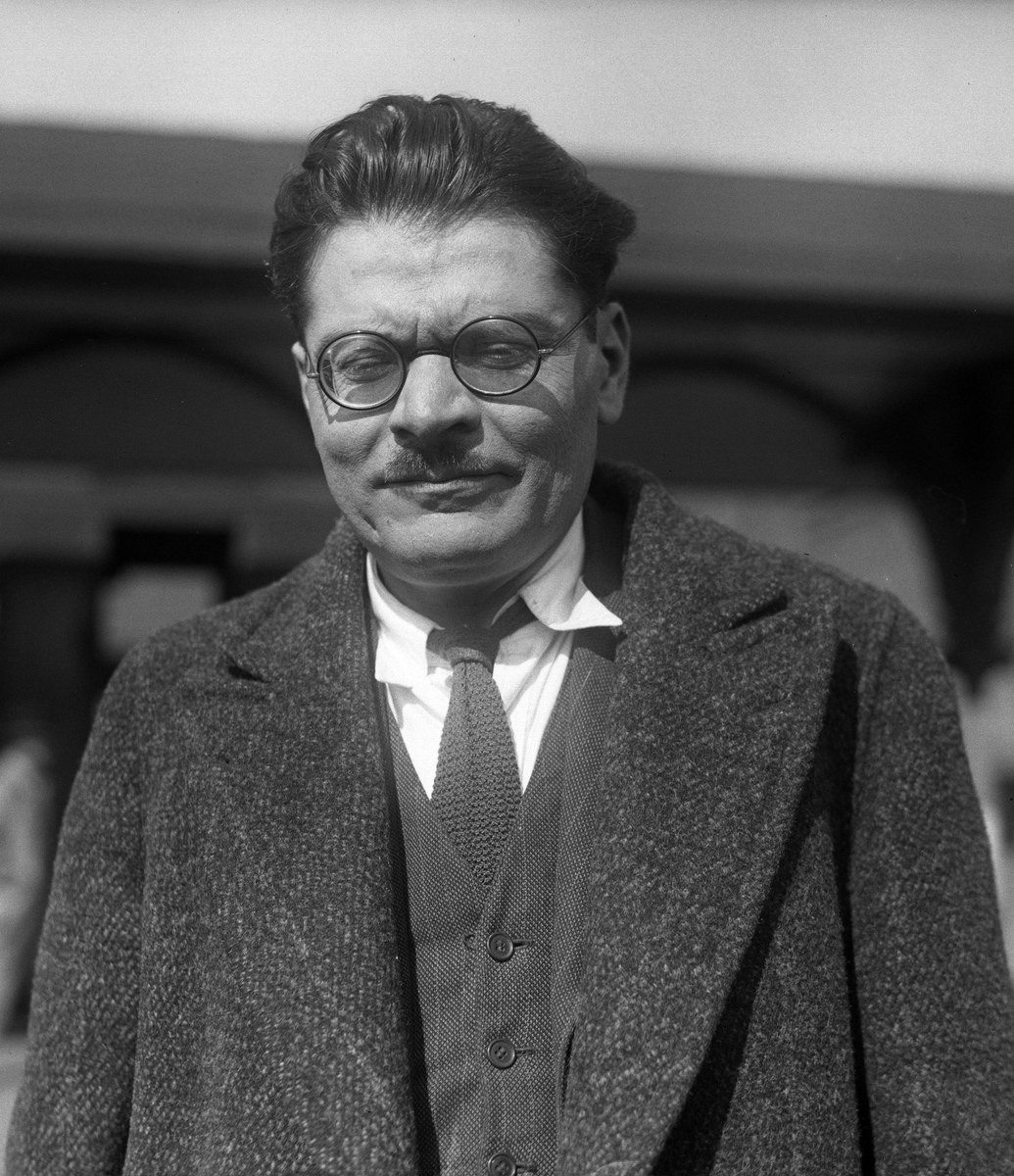
Photo: Los Angeles Times, 20 March 1930; Los Angeles Times Photographic Archive, UCLA Library Special Collections (via Wikimedia Commons) · Los Angeles Times photograph of Orozco on his arrival at a Los Angeles train station, 20 March 1930, published with a Los Angeles Times article of 21 March 1930 (page A9); glass negative in the Los Angeles Times Photographic Archive, UCLA Library Special Collections (identifier uclamss_1429_b3720_G3540). The file is the original 3774 x 4375 scan downscaled to 1035 x 1200 with no cropping and no upscaling. · Public domain in the United States (published in 1930, more than 95 years ago); UCLA Library also offers the scan under CC BY 4.0
painter · 20th Century
1883–1949
Not yet included in personality matching — the documented evidence doesn't yet cover enough of the personality model. Everything else on this page is fully available.
He was one of the Mexican muralists, with Rivera and Siqueiros, whose 1920s murals at the National Preparatory School in Mexico City began the Mexican muralist movement, and Britannica calls him the most important 20th-century muralist to work in fresco.
In the late 1930s he painted the frescoes of the Hospicio Cabañas chapel in Guadalajara, including the Man of Fire dome, which UNESCO calls one of the masterpieces of 20th-century mural painting.
In the United States he painted Prometheus at Pomona College (1930) and the 24-panel Epic of American Civilization at Dartmouth (1932-34), a National Historic Landmark that helped introduce Mexican mural art to American audiences.
In June 1940 he painted a fresco for the Museum of Modern Art in a gallery open to visitors, on six plaster panels that could be turned or rearranged in any order.
This is consistent with an artist who tested the limits of the fresco format rather than repeating a fixed wall composition. Creative Originality
At Pomona in 1930 he painted true fresco in sections of about two square yards beside a master plasterer, starting each day's section at the same hour so the colours would dry evenly.
This is consistent with a painter who treated the technical discipline of fresco as part of the craft. Mastery Orientation
After the Mexican government withdrew its support for the muralists in 1927 he settled in New York, built a reputation through commissions at Pomona, the New School and Dartmouth, and returned to Mexico in 1934 to paint Catharsis at the Palace of Fine Arts.
This is consistent with a shift from depending on state patronage in Mexico to building an international standing before returning. Achievement Drive
People whose overall profiles resemble theirs.

Not a rival — a different profile shape worth a look.