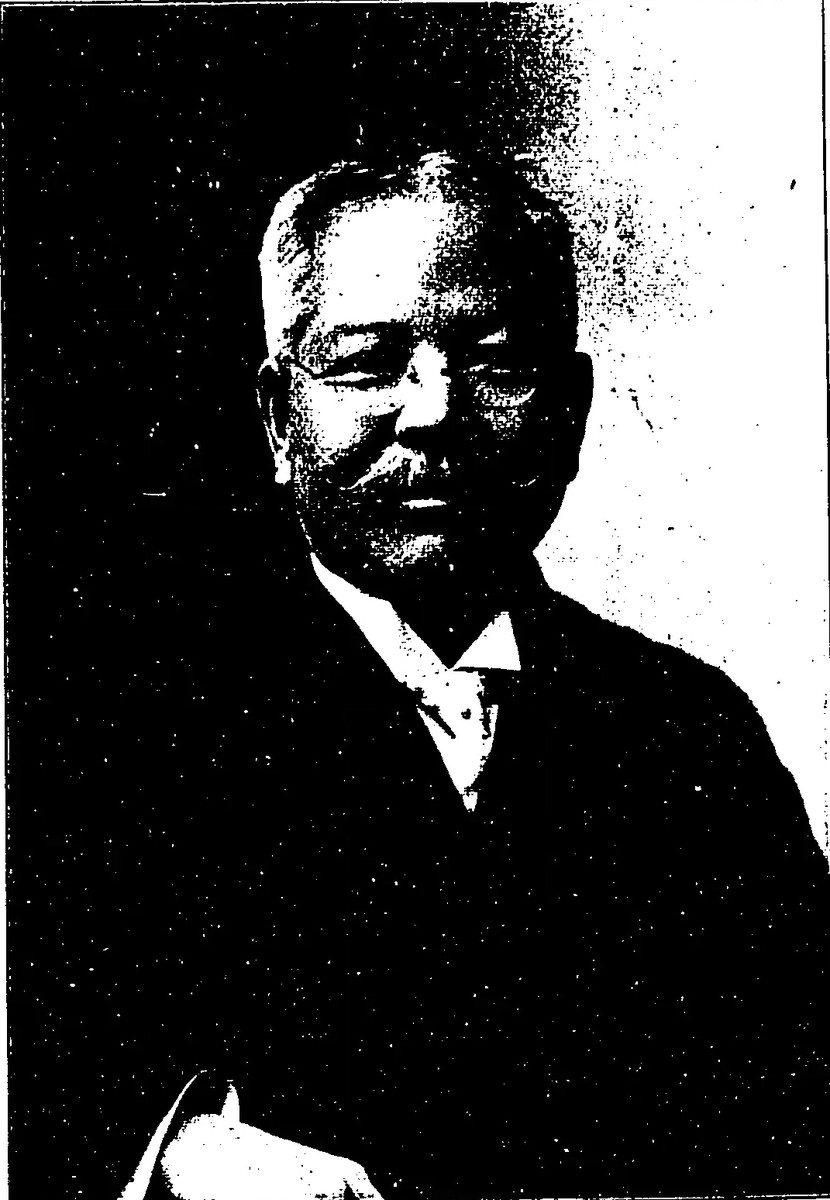

Photograph of Jokichi Takamine in Makino Terutomo, Gendai hatsumeika den (Teikoku Hatsumei Kyokai, 1911), National Diet Library of Japan Digital Collections, item 777757, Public Domain Mark · Halftone photograph of Takamine as the frontispiece of the book 'Gendai hatsumeika den' (Lives of Contemporary Inventors) by Makino Terutomo, published by Teikoku Hatsumei Kyokai, Tokyo, September 1911, captioned 'world-famous inventor Takamine Jokichi', National Diet Library of Japan, Digital Collections item 777757, page 11, with the library's Public Domain Mark. The photographer is not named in the book. The page image (3607 x 2777 pixels) was cropped to the photograph and downscaled to 830 x 1200 with no upscaling. The picture is a coarse printed halftone, so quality is low. · Public domain (published in Japan in 1911; National Diet Library Public Domain Mark)
chemist · 19th Century
Jōkichi Takamine
1854–1922
Known For
Not yet included in personality matching — the documented evidence doesn't yet cover enough of the personality model. Everything else on this page is fully available.
Trait Constellation
Key Achievements
With his assistant Keizo Uenaka he crystallised the hormone adrenaline in New York around 1900 and patented it as Adrenalin; it became a widely used medicine.
He developed Taka-diastase, a starch-digesting enzyme made from koji mould, and licensed it to Parke, Davis & Co., which sold it as a digestive medicine from 1895.
He founded the Tokyo Artificial Fertilizer Company and, in 1913 with Matasaku Shiobara, Sankyo Co., of which he was first president, and he proposed the research institute that became RIKEN.
Moments That Reveal Them
After the whiskey factory he was working with burned in 1891 and its operators ended his contract, he changed track, developed the enzyme as a digestive medicine and licensed it to Parke, Davis & Co., whose income then funded his own laboratory.
This is consistent with an inventor who found a new commercial route after a setback. Resourcefulness
After about three years without success on the adrenal gland hormone, he wrote to his former professor Nagayoshi Nagai, who recommended Keizo Uenaka; Uenaka came from Japan in 1900, and within six months the hormone was purified.
This is consistent with a lead who recruited help through his professional network when a problem stalled. Collaboration
Turning Points
In 1890 he moved his family to the United States to develop a commercial use for his enzyme in the distilling industry, a move that began his career as an inventor-entrepreneur abroad and led to the Parke, Davis partnership.
This is consistent with a willingness to leave a government career for an uncertain commercial venture. Risk Tolerance
Similar People
People whose overall profiles resemble theirs.

Fela Kuti

Nelson Mandela

Che Guevara

Malala Yousafzai

Elizabeth Blackwell
Opposite Profile
Not a rival — a different profile shape worth a look.
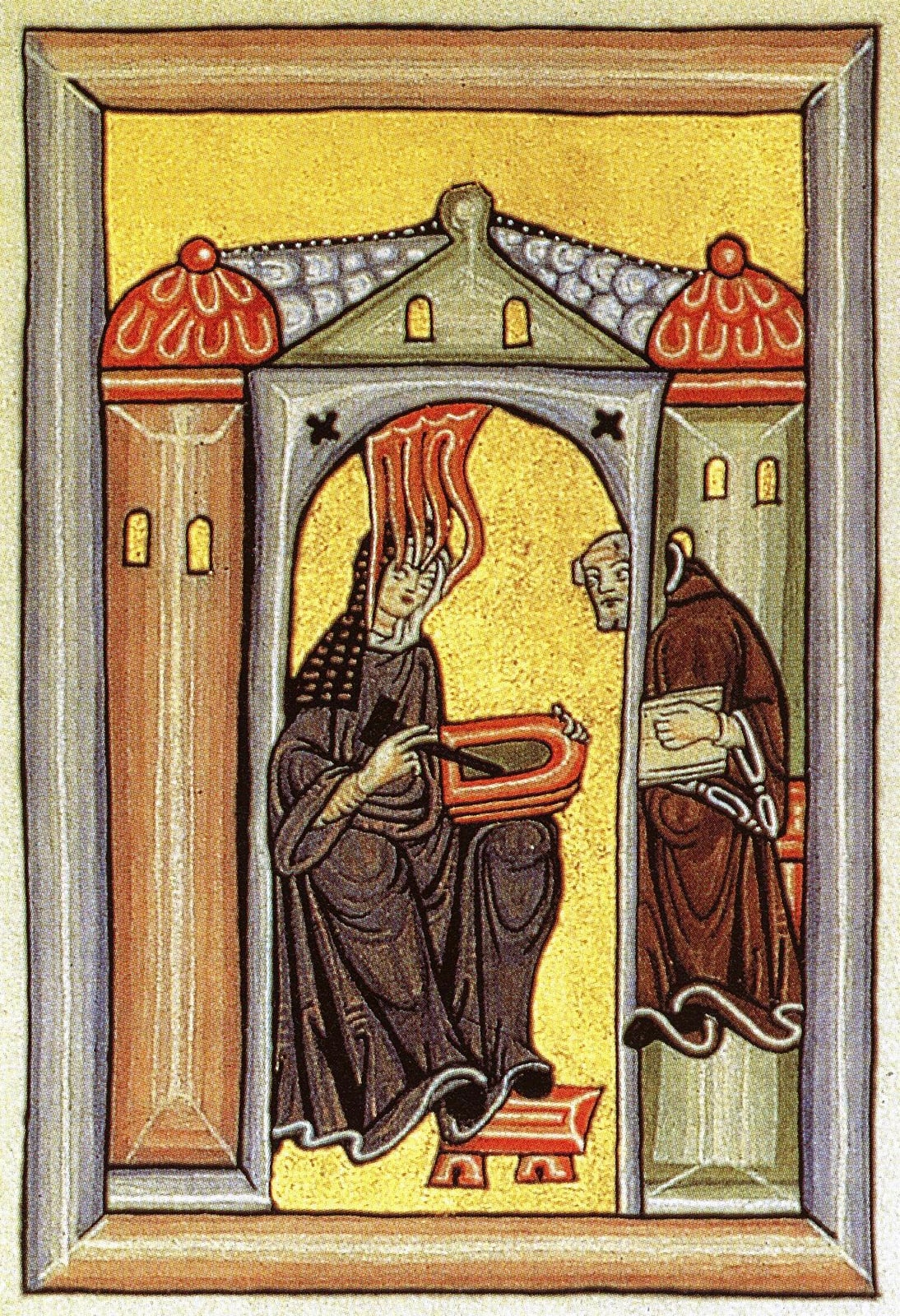
Hildegard of Bingen
Sources
- Takamine Jōkichi (Q910647), verified live via the Wikidata API (2026-11-01): label 'Takamine Jōkichi', description 'Japanese chemist (1854-1922)', born 3 November 1854, died 22 July 1922, citizenship Japan, Korean label 다카미네 조키치, Japanese label 高峰譲吉, image 'Jokichi Takamine.jpg'. Orientation only; not used as support for any row.
- Science History Institute, 'Jokichi Takamine' (Megan Krempa, Scientific Biographies, 17 September 2024), read in full. CANONICAL SIGNIFICANCE SOURCE: 'built bridges between Japanese and Euro-American science'; helped isolate the hormone epinephrine and developed new methods of fermentation; studied in Scotland, led the chemistry division of the Department of Agriculture and Commerce, founded the Tokyo Artificial Fertilizer Company, patented Taka-diastase from the koji mould, moved to the US in 1890, lost his factory to a fire in 1891 and licensed Taka-diastase to Parke, Davis & Co.; opened a laboratory in Clifton, New Jersey in 1897, failed for three years, recruited Keizo Uenaka through Professor Nagayoshi Nagai, purified the hormone within six months ahead of John Jacob Abel and filed for the 'adrenalin' patent, which a court upheld against Abel's challenge; later philanthropy and exchanges, helped found the Japan Society in 1907 (not scored). Institutional educational biography; sympathetic in tone.
- Mitsuo Ishida, Hormone Hunters: The Discovery of Adrenaline (Kyoto University Press, 2012; English edition 2018, Kyoto University Research Information Repository), read in the prologue and Chapters 5 and 8 and the profile of Takamine: an independent science-history account by a former Sankyo researcher who says earlier Japanese writing on Takamine was mostly written to honour him; over 20 researchers had raced to isolate adrenaline for 44 years; Takamine 'entered the race all of a sudden' and Parke, Davis & Co. had a major role; the crystals appeared in July 1900 in the laboratory of Takamine and Keizo Wooyenaka (Uenaka), who was named 'associate' but not co-author, which Ishida argues was the norm of the time; Wooyenaka said Parke, Davis 'exaggerated a bit' the story for publicity; Takamine presented a wrong molecular formula (C10) and called himself a practical scientist; he lectured widely (Edinburgh 1901, Tokyo 1902), arranged jobs at Sankyo for Wooyenaka, founded Sankyo with Matasaku Shiobara in 1913 and proposed the concept of RIKEN (1917); Sakichi Toyoda's autobiography records Takamine's advice about inventors. Independent scholarly source with a critical element.
- Daiichi Sankyo, 'Researcher Dr. Jokichi Takamine's Success in the Crystallization of Adrenaline Paved the Way for Development in Various Fields' (Our Stories, 31 January 2023), read in full: Takamine as first president of Sankyo, founder with Eiichi Shibusawa of Tokyo Jinzo Hiryo (now Nissan Chemical), a koji-malt whisky project, Taka-Diastase, work with Bakelite, Toyo Aluminum and Kurobe Railway; Keizo Uenaka's hundreds of experiments and the crystals in an unwashed test tube; Takamine introduced Uenaka as co-researcher at medical conferences. Corporate history by the successor company, so it is admiring and is used only for corroboration of facts also found in independent sources.
- Japan Patent Office, 'Jokichi Takamine: Taka-Diastase, Adrenaline' (Ten Japanese Great Inventors), read in full: Taka-Diastase discovered in 1894 and still an ingredient in medicines; in 1900 he succeeded in crystallising and isolating adrenaline, widely used as a haemostatic and cardiotonic agent. A short official note by a patent-history office.
- Life in the Fast Lane, 'Adrenaline or epinephrine?' (Eponymictionary), read for its account of the naming dispute (about half of the page): Abel named 'epinephrin' in 1899, von Furth's 'suprarenin' in 1900, and Takamine in 1901 reviewed both, said neither had the active principle in pure form and announced 'Adrenalin'; Parke, Davis chemist Thomas Aldrich confirmed his substance was identical and gave the formula C9H13NO3; the trade name Adrenalin led to a long split between 'adrenaline' and 'epinephrine'. Secondary medical-history source, independent of the Sankyo and Takamine literature.
- National Diet Library of Japan, Digital Collections, 'Gendai hatsumeika den' (Lives of Contemporary Inventors, Makino Terutomo, Teikoku Hatsumei Kyokai, September 1911), item record and page 11 opened through the library's open IIIF interface (access restriction: Public Domain Mark): a frontispiece portrait captioned 'world-famous inventor Takamine Jokichi'. Portrait record only; the book's text was not read.