Ada Lovelace
93% Profile Match
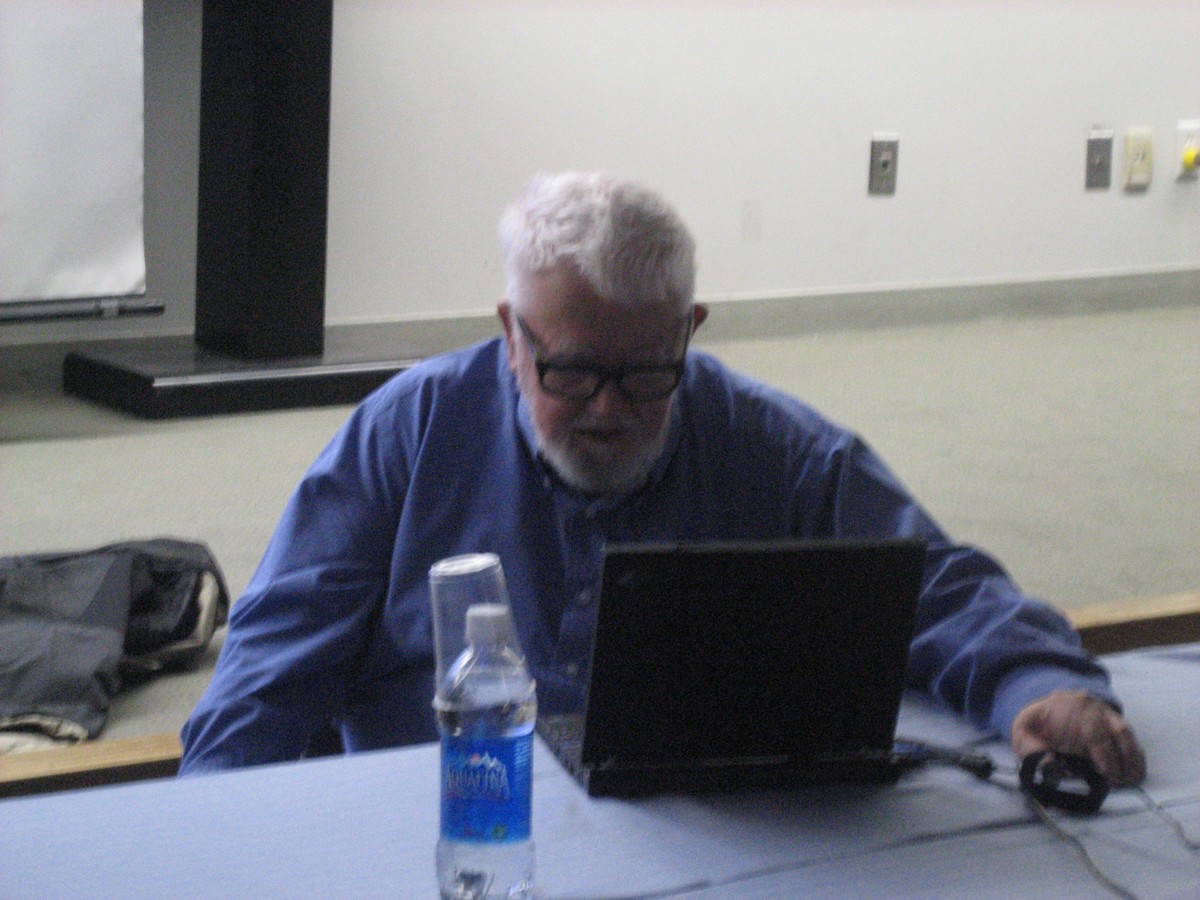
Photo: Tom Varco, 2006, CC BY-SA 3.0 · Wikimedia Commons 'John McCarthy 2006.jpg': photograph by Tom Varco (own work uploaded by the author), taken 21 April 2006 after a lecture at the University at Buffalo; licence CC BY-SA 3.0 stated by the author with attribution to 'Tom Varco' required (a notification request is not a condition). Original 1600 x 1200; downscaled once to 1200 x 900 (no upscaling). The Wikidata P18 image (Flickr 'null0', CC BY-SA 2.0) was NOT used: its Flickr source page now returns 404, so the licence could not be re-checked at the origin, and the author-uploaded file was legally clearer. · CC BY-SA 3.0
computer scientist · Contemporary
1927–2011
Not yet included in personality matching — the documented evidence doesn't yet cover enough of the personality model. Everything else on this page is fully available.
Wrote the 1955 proposal for the 1956 Dartmouth summer workshop that put the name 'artificial intelligence' into use, and spent decades on the logic-based approach to common-sense reasoning that the Kyoto Prize named his foremost achievement.
Invented the Lisp programming language in 1958, in which programs and data share one notation; it became widely adopted for AI research.
Proposed time-sharing at MIT (working with Fernando Corbato), founded the Stanford Artificial Intelligence Laboratory and directed it from 1965 to 1980, and received the 1971 Turing Award.
Crevier reports that the Dartmouth conference deeply disappointed its organizer, yet McCarthy persuaded most participants to adopt the name 'artificial intelligence' despite objections from Arthur Samuel and from Newell and Simon.
This is consistent with persuading peers toward a shared framing even when the event itself fell short of his hopes. Persuasiveness
Stanford colleague Les Earnest said McCarthy was so focused on his work that if engaged on a topic he was not interested in, he would sometimes turn away without saying a thing.
This is consistent with very intense concentration that sometimes came at the cost of ease in conversation. Deep Focus
In 1962 McCarthy left MIT, where he and Marvin Minsky had started the AI group, to head his own AI laboratory at Stanford, and he directed the Stanford AI Lab from 1965 to 1980.
This is consistent with a move from co-leading a shared group toward building his own laboratory around his preferred logic-based approach. Proactive Agency
People whose overall profiles resemble theirs.




Not a rival — a different profile shape worth a look.