Maimonides
87% Profile Match
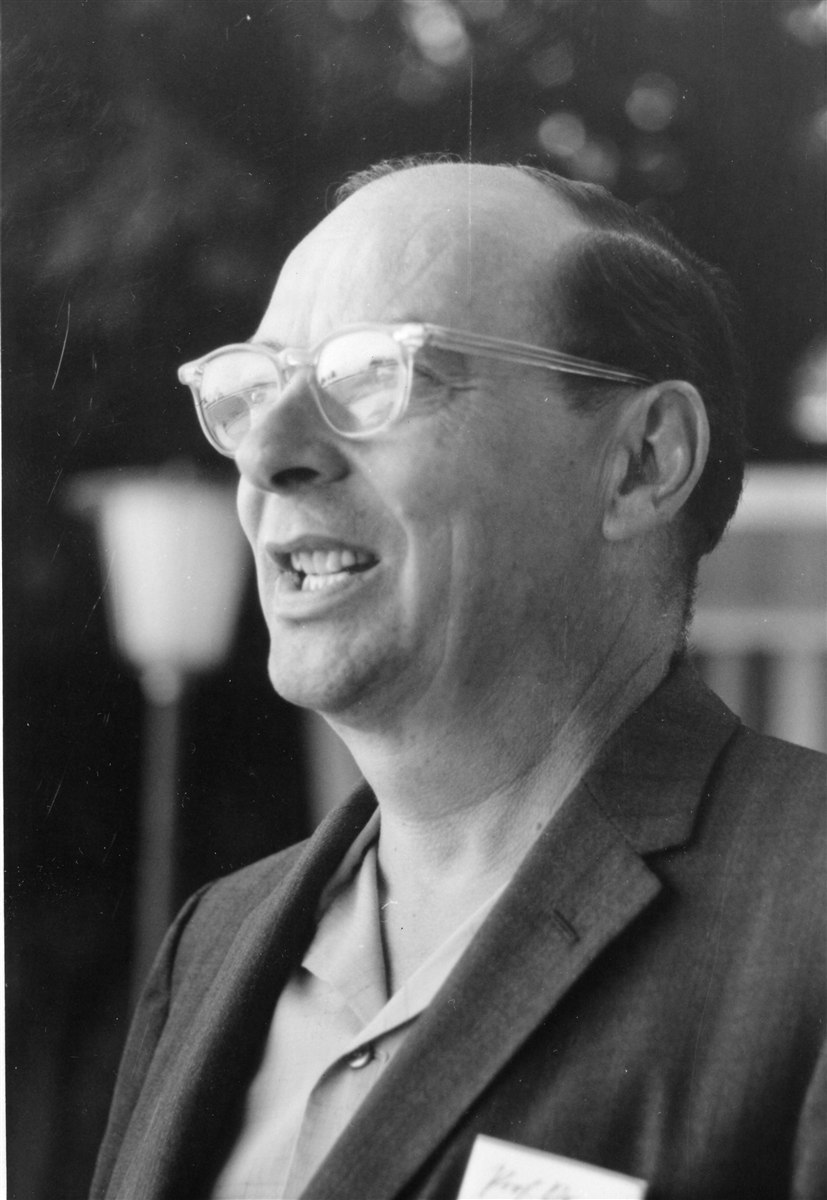
Segre Collection, AIP Emilio Segre Visual Archives, 1961 (photographer not individually named), reused with AIP's stated permission · 'Portrait of John Bardeen in Lindau' (1961), AIP Emilio Segre Visual Archives, Segre Collection, uploaded to Wikimedia Commons as 'John Bardeen in Lindau.jpg' (original 2422 x 3513) with the AIP statement that American Institute of Physics is the copyright holder and freely gives permission to use the image with the credit line, matching the AIP archive's published copyright guide. Identity: the Commons caption comes from the AIP archive, and a conference name tag reading 'Prof. Dr. Bardeen' is visible in this and in a second 1962 photograph from the Staatsarchiv Freiburg. Downscaled to 827 x 1200; no upscaling. CAVEAT: the AIP repository page (repository.aip.org/bardeen-lindau) returned HTTP 403 to automated requests, so the item's own Copyright Holder line could not be seen directly; the basis rests on the Commons page quoting AIP and the AIP guide. If the lead considers that insufficient, hold this portrait. · CC BY 4.0
physicist · 20th Century
1908–1991
Not yet included in personality matching — the documented evidence doesn't yet cover enough of the personality model. Everything else on this page is fully available.
At Bell Labs he and Walter Brattain discovered the transistor effect in the late 1940s; he shared the 1956 Nobel Prize in Physics with Brattain and William Shockley.
In 1957 he, Leon Cooper and Robert Schrieffer proposed the first successful explanation of superconductivity, the BCS theory, which earned the three the 1972 Nobel Prize in Physics.
He is described as the only winner of two Nobel Prizes in Physics, and at the University of Illinois from 1951 he founded a semiconductor laboratory and a theory group.
When Shockley said in January 1948 that he intended to be the only name on the transistor patent, Brattain protested aloud while Bardeen said little and left the room; Bell's lawyers then filed on the Bardeen-Brattain device.
This is consistent with a quiet reluctance to confront a dispute openly. Conflict Tolerance
Leading the superconductivity effort at Illinois, he gave postdoc Cooper and student Schrieffer freedom to pursue their ideas and later sent them to announce the BCS theory at an American Physical Society meeting.
This is consistent with a collaborative style that shares credit with junior colleagues. Collaboration
In 1951, after the rift with Shockley at Bell Labs, he became Professor of Electrical Engineering and Physics at the University of Illinois, where he turned to superconductivity theory.
This is consistent with seeking room to direct his own research. Need for Autonomy
People whose overall profiles resemble theirs.