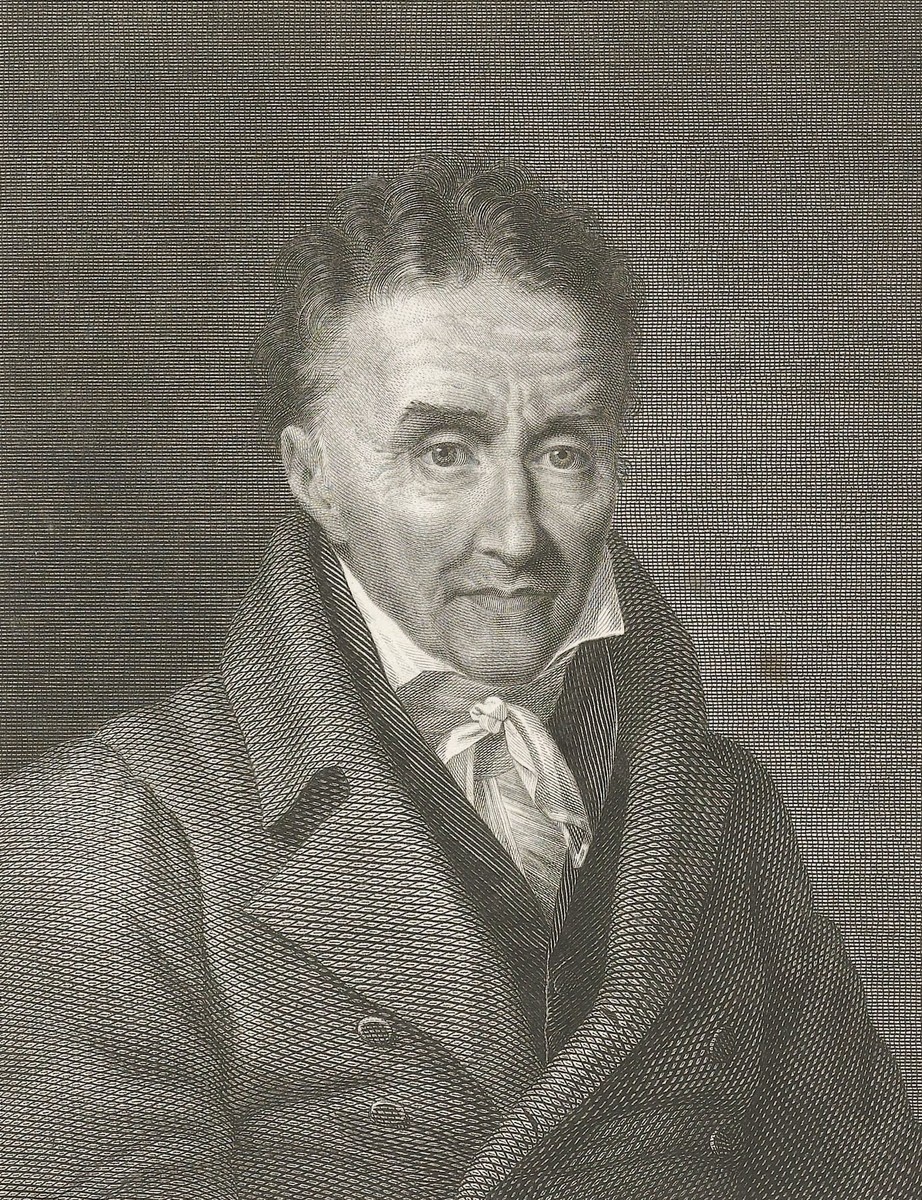

Christian Forssell, after Jean Henriette Rath, 1814. Rijksmuseum, Amsterdam (RP-P-1908-2712), https://www.rijksmuseum.nl/nl/collectie/object/RP-P-1908-2712--7d3e023b63434c743da1fded7e7b22d6 · Engraved portrait of Johann Heinrich Pestalozzi by Christian Forssell, dated 1814, after a painting by Jean Henriette Rath (print lettered 'Rath pinx.', 'Forssell sculp. 1814' and 'Pestalozzi, born 12 January 1746'), Rijksmuseum, Amsterdam, object RP-P-1908-2712. The file is the engraved image cropped from the museum's 4242 x 5602 pixel scan (1548 x 2015) and downscaled to 922 x 1200, with no upscaling and no retouching. · Public domain (Rijksmuseum Public Domain Mark on the image, CC0 on the record; an engraving of 1814)
teacher · Early Modern
Johann Heinrich Pestalozzi
1746–1827
Known For
Not yet included in personality matching — the documented evidence doesn't yet cover enough of the personality model. Everything else on this page is fully available.
Trait Constellation
Key Achievements
Swiss educational reformer who argued that the poor should be educated and built his method on observation and object lessons, moving from the familiar to the new and following the child's development, and who rejected corporal punishment and rote memorisation; Britannica says most of his principles have been absorbed into modern elementary education.
He ran schools for poor and orphaned children at Neuhof (from 1774) and Stans (1799), a teacher-training school at Burgdorf, and from 1804 to 1825 the Yverdon institute, which drew visitors from across Europe; Prussia sent teachers to study with him, and Friedrich Froebel and Joseph Neef were among those he trained.
His novel Leonard and Gertrude (1781-87) and his treatise How Gertrude Teaches Her Children (1801) carried his ideas abroad, though his own schools were fragile: Neuhof closed in debt, and Yverdon closed in 1825 after years of quarrels among his teachers and poor bookkeeping.
Moments That Reveal Them
The Stans orphanage opened on 14 January 1799, and within six weeks more than 80 children were in the care of Pestalozzi and a maid; in his letter on Stans he wrote that he was alone with them from morning to evening and slept in their midst.
This is consistent with a strong commitment to destitute children, though the detail of sleeping among them is his own account. Impact Motivation
At Yverdon the institute accepted very low fees, about one third of the pupils paid nothing and the teachers received only board and lodging, and heavy losses from a lack of budgeting and improper bookkeeping followed; when Joseph Schmid returned in 1815 he introduced strict bookkeeping, closed the printing works and dismissed half of the teachers.
This is consistent with generosity and idealism that outran financial planning and administrative control. Planning Orientation
Turning Points
After the months at Stans he decided to become a teacher, soon found the opportunity at Burgdorf, and there set up a school connected with a training institute for teachers; his 1801 book How Gertrude Teaches Her Children made him famous across Europe.
This is consistent with a shift from writing about education to testing and refining his method in a working school. Experimentation
Similar People
People whose overall profiles resemble theirs.

Jane Goodall

Elizabeth Blackwell

Malala Yousafzai

Abraham Lincoln

B. R. Ambedkar
Opposite Profile
Not a rival — a different profile shape worth a look.

Otto von Bismarck
Sources
- Johann Heinrich Pestalozzi (Q105428), verified live via the Wikidata API (2026-11-05): English label 'Johann Heinrich Pestalozzi', description 'Swiss pedagogue and educational reformer (1746-1827)', Korean label 요한 하인리히 페스탈로치, born 12 January 1746, died 17 February 1827, citizenship Switzerland. Orientation only; not used as support for any row.
- Encyclopaedia Britannica, 'Johann Heinrich Pestalozzi' (article by Kate Silber, author of 'Pestalozzi: The Man and His Work'), read in full. CANONICAL SIGNIFICANCE SOURCE: Swiss educational reformer who advocated the education of the poor and teaching methods designed to strengthen the student's own abilities; his method became widely accepted and most of his principles have been absorbed into modern elementary education; his doctrine moved from the familiar to the new through concrete activity and followed the child's development; he considered moral education pre-eminent, and his last book culminates in the maxim 'Life itself educates'; the article also records the failed Neuhof enterprise and orphan project, his years of writing in isolation, the Stans orphanage, the Burgdorf and Yverdon institutes, and that the Yverdon family spirit was shattered by a severe dispute among teachers and the institute lost its fame and pupils.
- 'Pestalozzi, Johann (1746-1827)', Encyclopedia of Education (Gale), as reproduced by Encyclopedia.com, read in full: an education-history entry on his methods (object lessons, the Anschauung principle, simultaneous group instruction, rejection of corporal punishment and rote memorisation, field trips), his institutions (Neuhof 1774 closed in debt in 1779, Stans 1799, the Burgdorf teacher-training school 1800-1804, Yverdon 1804-1825) and the spread of his ideas through trained teachers such as Joseph Neef and Friedrich Froebel and through Prussian reform.
- 'Johann Heinrich Pestalozzi', Encyclopedia of World Biography (Gale), as reproduced by Encyclopedia.com, read in full: a short biographical entry that stresses his sense of justice and the poor, his failure at Neuhof, the success of Leonard and Gertrude, the showplace at Yverdon, and a candid ending in which his fame brought out some of his more disagreeable characteristics, the school closed amid disputes and lawsuits, and he died embittered.
- Heinrich Pestalozzi website of the critical-edition scholars Arthur Bruhlmeier and Gerhard Kuhlemann, English pages 'Short Biography', 'Stans' (1798-1799) and 'Yverdon' (1804-1825), read in full: a scholarly account with long quotations from his letter on Stans, the 1799 opening with more than 80 children after six weeks, and the Yverdon institute's low fees, one third of pupils not paying, unpaid teachers, lack of budgeting and improper bookkeeping, the colleague Karl Justus Blochmann's critical description of him, and the years of quarrels between Joseph Schmid and Johannes Niederer that ruined the institute. Scholars who edit his works, so careful but not neutral about him.
- Roger de Guimps, 'Pestalozzi: His Life and Work' (English translation, New York, 1890; the biography by a former pupil of the Yverdon institute), read in selected chapters (Stans, the Yverdon dispute and the 1818-1820s statements) from the full text on the Internet Archive: includes his letter on Stans, his own statements that he lacked the strength and capacity to manage a numerous staff, the account of the dissensions at Yverdon, the visit of the geographer Ritter, and a refutation of a priest's later accusations about Stans. Written by a pupil and admirer, so admiring in tone and used with the scholars' account as a check.
- Rijksmuseum, Amsterdam, print RP-P-1908-2712 'Portret van Johann Heinrich Pestalozzi' (engraving, 1814, by Christian Forssell after a painting by Jean Henriette Rath), item record read through the museum's linked-art data: public domain mark on the image and CC0 on the record. Opened for the portrait only.