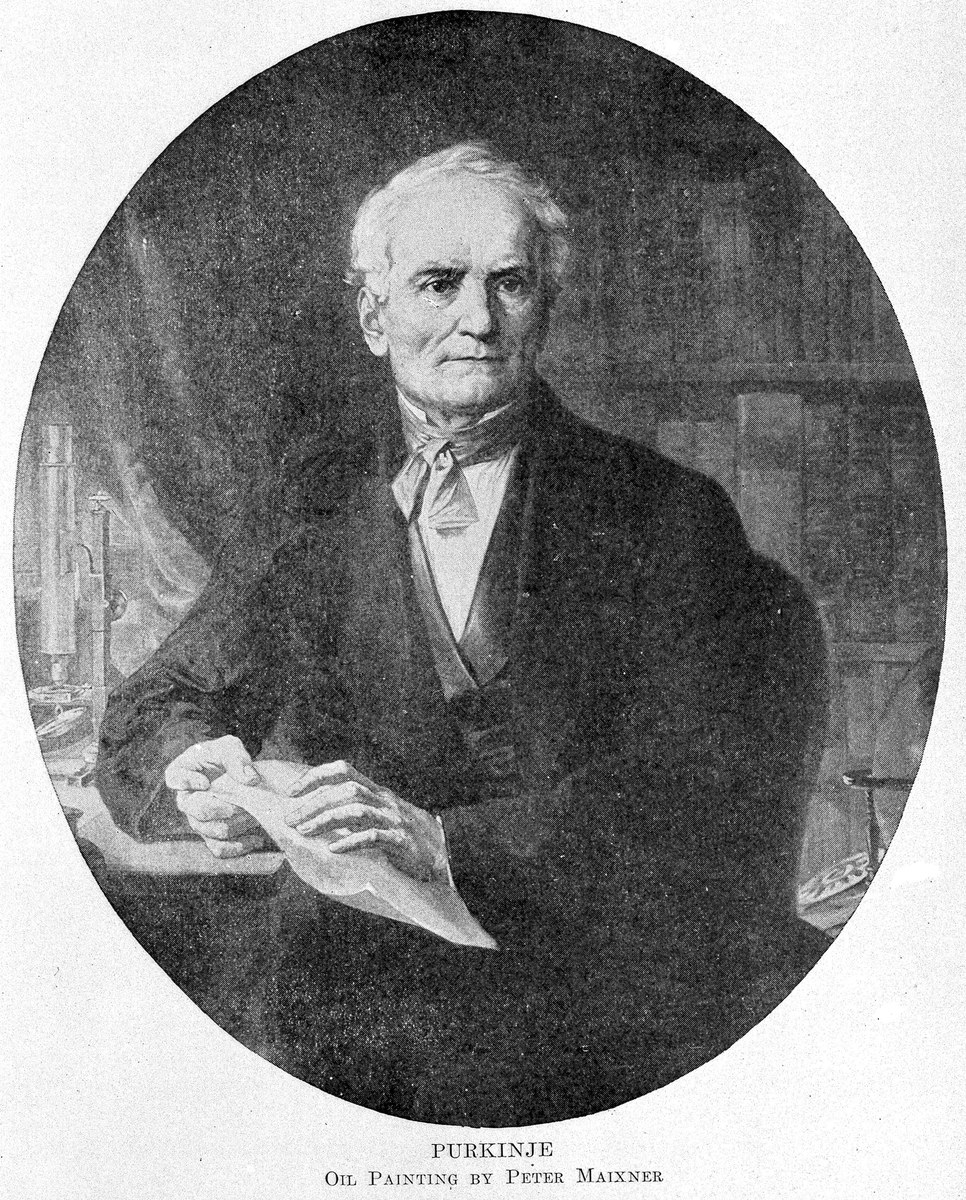
Peter Maixner, portrait of Jan Evangelista Purkyne, oil painting, reproduced in The Scientific Monthly (1948); Wellcome Collection, London (work wr3arg9q), CC BY · Oil painting of Jan Evangelista Purkyne by Peter Maixner (1831-1884), as reproduced in The Scientific Monthly and photographed on a glass-plate negative in 1948; printed caption 'Purkinje, Oil Painting by Peter Maixner'. Wellcome Collection, London (work wr3arg9q). The museum scan (2998 x 3660 pixels) was cropped to the oval and caption and downscaled once to 966 x 1200 pixels; nothing was upscaled. Shown as a later painting depiction, not as a documented sitting; the painting's date and present location are not given by the holder. · CC BY 4.0 as stated by Wellcome Collection for the photograph; the underlying painting is public domain by age (painter died 1884)
physician · 19th Century
Jan Evangelista Purkyně
1787–1869
Known For
Not yet included in personality matching — the documented evidence doesn't yet cover enough of the personality model. Everything else on this page is fully available.
Trait Constellation
Key Achievements
Through microscopic studies in the 1830s he described the large branching nerve cells of the cerebellum (1837) and the specialized fibres of the heart's ventricles, both now named for him.
His 1818-19 thesis on subjective vision led to the Purkinje effect, in which blue objects seem brighter than red ones as light fades, and he described the reflected images in the eye that also carry his name.
At Breslau he created an independent department of physiology (1839) and a Physiological Institute (1842), and in 1851 opened a second institute in Prague, building laboratory training into university teaching.
Moments That Reveal Them
He studied vertigo on the swings and roundabouts of a public amusement park in Prague at minimal expense, using himself as the experimental subject, and later tested digitalis and atropine on himself to show that the doses doctors prescribed were too small.
This is consistent with testing questions on himself with simple means rather than waiting for equipment or subjects. Experimentation
At Breslau his request for a new microscope was refused and he waited nine years for one, and when the university would not provide space and equipment he carried out much of his research and teaching in a laboratory in his own home.
This is consistent with finding a way round missing institutional support to keep working. Resourcefulness
Turning Points
In 1839 he established an independent department of physiology at Breslau and in 1842 a Physiological Institute, moving his experiments and teaching out of his home laboratory into a university facility with modern equipment.
This is consistent with turning an improvised home setup into a lasting institution. Proactive Agency
Similar People
People whose overall profiles resemble theirs.


Leonardo da Vinci

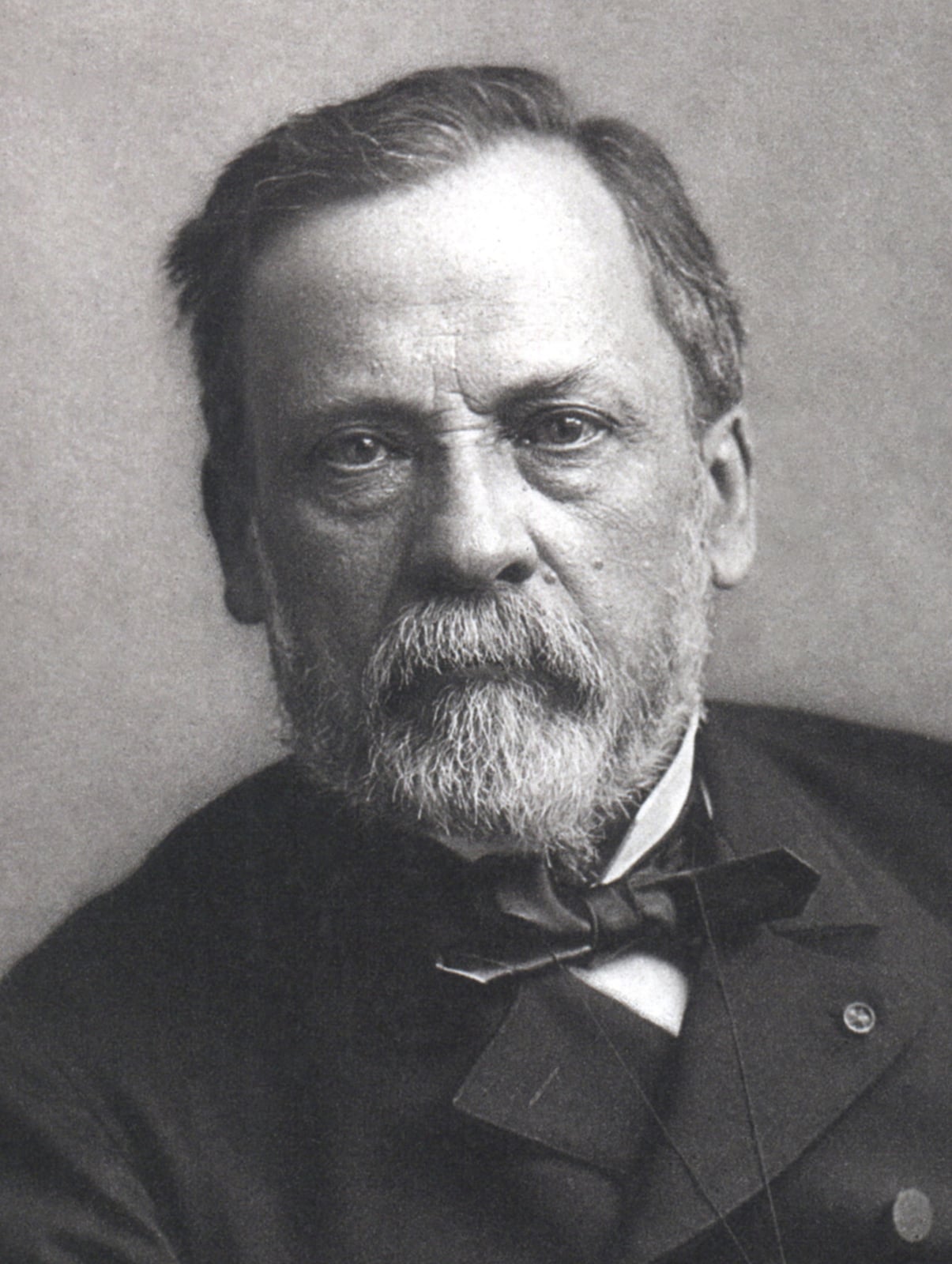
Louis Pasteur

Ada Lovelace

Abraham Lincoln

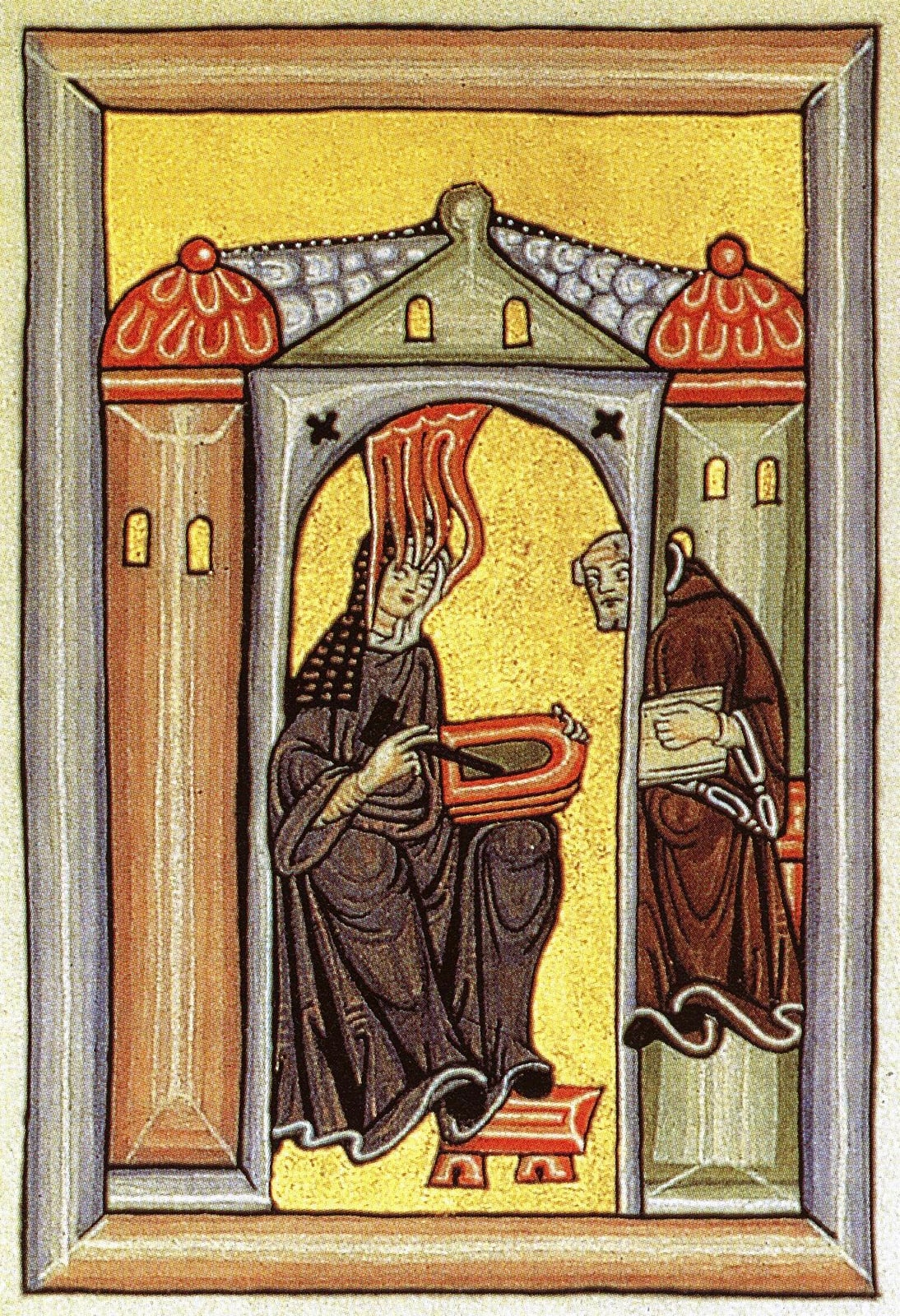
Hildegard of Bingen
Sources
- Jan Evangelista Purkyně (Q159542), verified live via the Wikidata API (2026-11-06): label 'Jan Evangelista Purkyně', description 'Czech biologist, physiologist, doctor, inventor and politician (1787-1869)', born 17 December 1787, died 28 July 1869, Korean label 얀 에반겔리스타 푸르키녜. Orientation only; not used as support for any row.
- Encyclopaedia Britannica, 'Jan Evangelista Purkinje' (public-web article read in full, about 500 words; the page also carries machine-generated summaries that were ignored). CANONICAL SIGNIFICANCE SOURCE: pioneer experimental physiologist whose work in histology, embryology and pharmacology helped create the modern understanding of the eye and vision, brain and heart function and cells; the Purkinje effect, the Breslau department (1839) and Physiological Institute (1842), Purkinje cells (1837) and fibres (1839), the term protoplasm, his self-testing of drugs, and a list of techniques Britannica says he was first to use.
- Lois N. Magner, 'Jan Evangelista Purkinje', Science and Its Times (Gale), reproduced on Encyclopedia.com (entry read in full, about 700 words). Independent reference account with a cautious tone on priority: his vision thesis of 1818-19, Goethe's interest, the Breslau chair of 1823 and his home laboratory 'cradle of histology' when the university would not provide space and equipment, the term protoplasm, a knife that was a precursor of the microtome (while the same entry's opening says he invented the microtome) and the observation that others are generally credited with early discoveries about the nucleus and cell division.
- Harold Ellis, 'Johann Purkinje: pioneering Czech histologist and physiologist', British Journal of Hospital Medicine, July 2019 (anniversary article by a surgeon-anatomist read in full, about 900 words). His inaugural lecture on the physician's task, the vertigo studies on amusement-park rides using himself as the experimental subject, the flood of publications from his department, the microtome, his self-experiments with drugs, and two limits: he never wrote a comprehensive textbook and, publishing in provincial journals, was less known in the west than he deserved.
- Magdalena Mazurak and Jacek Kusa, 'Jan Evangelista Purkinje: A Passion for Discovery', Texas Heart Institute Journal 45(1), 2018 (open-access biography by two Wroclaw cardiologists read in full, about 2,000 words). Dated life account: his education, the nine-year wait for a microscope at Breslau, the self-tests of digitalis and atropine, the fingerprint classification, the move of his work from his home to the institute, his translation and cultural work, and the later Prague institute and journals.
- Wellcome Collection, 'Portrait of Jan Evangelista Purkyne (1787-1869), Peter Maixner' (work wr3arg9q; catalogue record and IIIF image record read, item-level licence stated). Holder record for the portrait: glass-plate photograph of a reproduction of an oil painting by Peter Maixner published in The Scientific Monthly.