Leonardo da Vinci
85% Profile Match
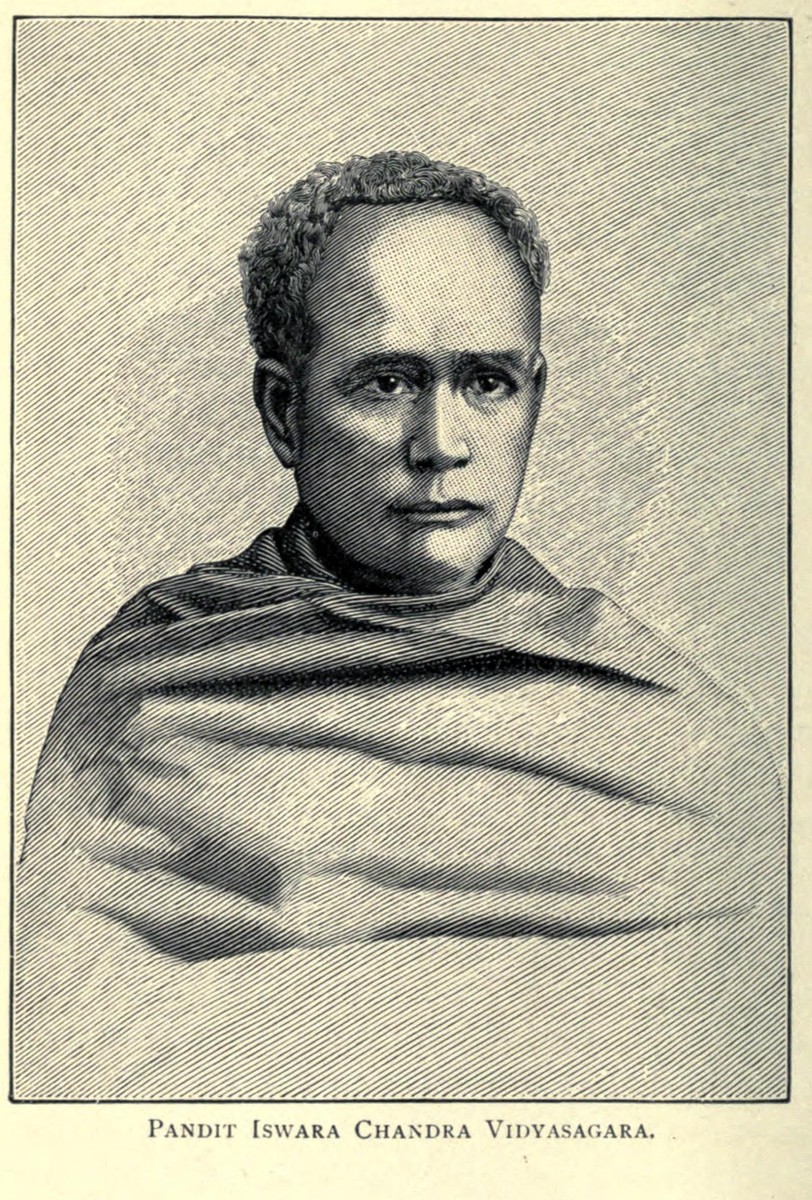
Pandit Iswara Chandra Vidyasagara, engraving in Sivanath Sastri, Ramtanu Lahiri, Brahman and Reformer, London, 1907. Internet Archive, University of California Libraries copy, public domain · Engraved portrait captioned 'PANDIT ISWARA CHANDRA VIDYASAGARA.', plate in Sivanath Sastri, 'Ramtanu Lahiri, Brahman and Reformer: A History of the Renaissance in Bengal' (London: Swan Sonnenschein, 1907), from the University of California Libraries copy digitised by the Internet Archive. The engraver and the photograph or drawing it was made from are not named in the book, so it is treated as a later engraved depiction made about sixteen years after his death, though it matches the same likeness printed in 1906 and 1911 publications. The file is a crop of the plate and its caption from the full-page scan (1360 x 2010), downscaled to 812 x 1200 with no upscaling. · Public domain (book published in London in 1907, before 1931; the archive's record gives NOT_IN_COPYRIGHT)
scholar · 19th Century
1820–1891
British Raj
Not yet included in personality matching — the documented evidence doesn't yet cover enough of the personality model. Everything else on this page is fully available.
As principal of Sanskrit College from 1851 he opened it to all Hindus, introduced nominal fees, made English a compulsory subject and had grammar and mathematics taught through Bengali and English as well as Sanskrit.
He wrote model Bengali textbooks, including the primer Barnaparichay and a Sanskrit grammar in Bengali, and through works such as Vetal Panchavimshati and Shakuntala is credited with helping to create a literary Bengali prose; Tagore credited him with establishing the beauty of Bengali prose.
As an inspector of schools he opened about twenty Bengali model schools and a teacher-training school in four districts and a village school largely at his own cost, took over the Calcutta Metropolitan Institution in 1864 and argued from Sanskrit texts that Hindu widows could remarry.
In 1851 he reported to the Education Council that Kayastha boys should be admitted to Sanskrit College; when the professors objected that it would pollute their religion he answered them with passages from the scriptures and said he would resign if the change failed, and the authorities approved it.
This is consistent with taking the initiative to change the institution he led and pressing the change through opposition. Proactive Agency
In September 1858, after differences with the Director of Public Instruction, he declined the director's request to change his letter of resignation, saying he could not consistently alter it, and left the government posts on which he earned Rs 500 a month.
This is consistent with putting independence from an overseer ahead of a well-paid post. Need for Autonomy
After resigning from Sanskrit College in 1847 he returned in December 1850 as professor of literature and a month later became its principal, a post created in a restructuring, which gave him the authority to revise the syllabus and rules.
This is consistent with returning to the same institution once he could direct its reform. Proactive Agency
People whose overall profiles resemble theirs.