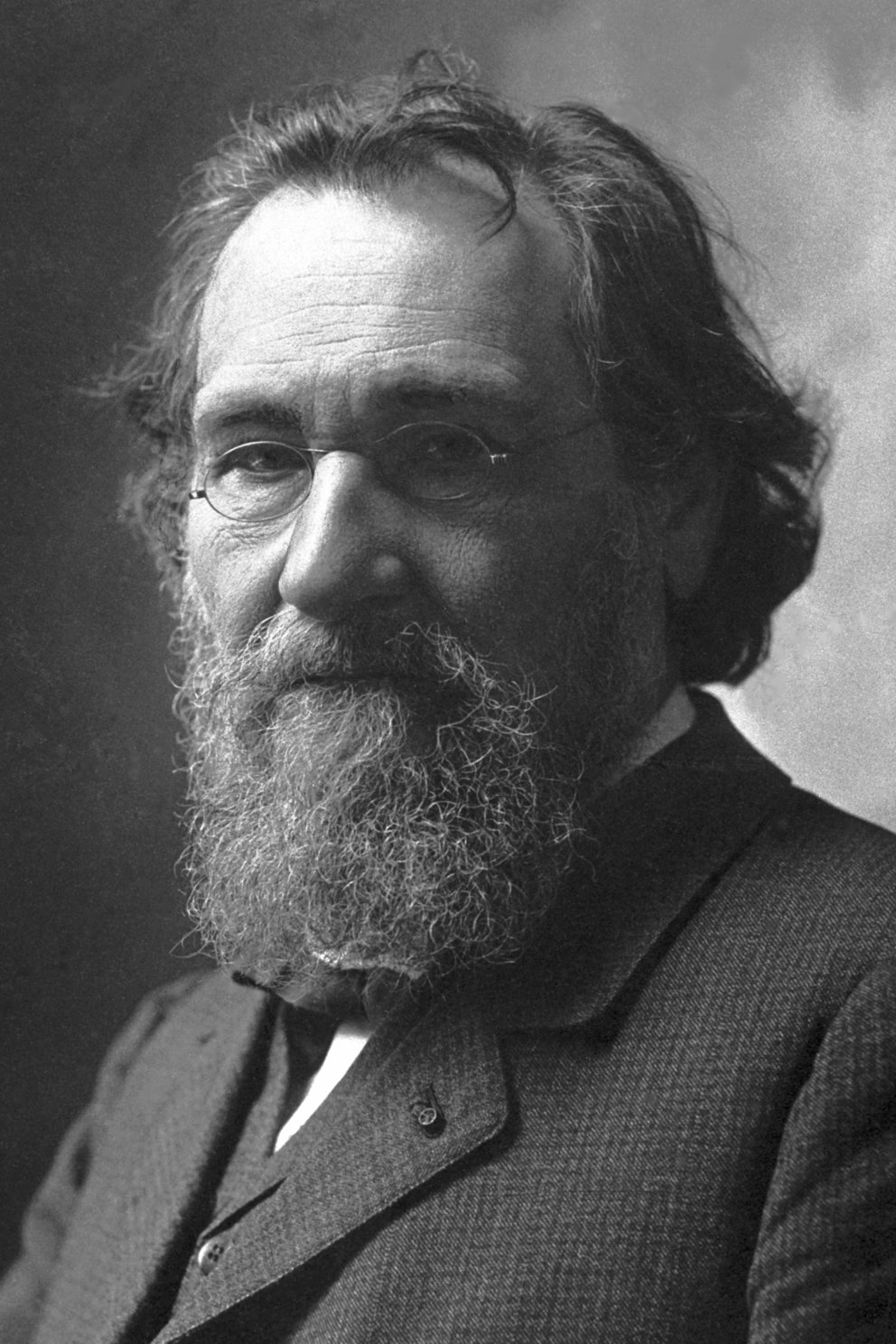
Nadar, Ilya Mechnikov, photograph, circa 1908; published in Les Prix Nobel 1908 (Stockholm, 1909); NobelPrize.org notes the Nobel Foundation's copyright has expired. Public domain by age. · Studio portrait credited to Nadar (Paris), circa 1908, reproduced in Les Prix Nobel 1908 (Stockholm, 1909) and on NobelPrize.org ('Photo: Nadar. Nobel Foundation archive'); Wikimedia Commons file 'Ilya Mechnikov nobel.jpg', original 992 x 1488, saved unchanged with no resizing or upscaling. · Public domain
biologist · 19th Century
Ilya Mechnikov
1845–1916
Known For
Not yet included in personality matching — the documented evidence doesn't yet cover enough of the personality model. Everything else on this page is fully available.
Trait Constellation
Key Achievements
Observing mobile cells in starfish larvae at Messina in 1883, he proposed that such cells defend the body by engulfing intruders and named the process phagocytosis, founding the cellular theory of immunity.
From 1888 he worked at the Pasteur Institute in Paris, where he defended the cellular theory against the humoral school of Behring and Ehrlich, and with Emile Roux showed that syphilis can be transmitted to monkeys; in 1908 he shared the Nobel Prize in Physiology or Medicine with Ehrlich.
In later years he studied the intestinal flora and proposed that fermented milk could slow senility; the effect was never validated, but reviewers see the idea as a forerunner of probiotics and microbiome research.
Moments That Reveal Them
To test his idea that mobile cells defend the body, he pushed thorns from a tangerine tree into transparent starfish larvae and found them surrounded by cells the next morning.
This is consistent with a habit of turning an idea into a direct, simple experiment. Experimentation
Virchow, after seeing his preparations at Messina, warned him that the accepted theory of inflammation was the opposite of his; he kept developing the phagocyte theory and defended it against Koch, Behring and others for about twenty-five years.
This is consistent with sticking to an evidence-based view against the prevailing consensus. Independent Thinking
Turning Points
After resigning from the University of Odessa in 1882 he worked in a private laboratory at Messina, where his observations moved him from zoology and embryology to pathology and immunity.
This is consistent with an ability to redirect a career into a new field when a discovery opens it. Cross-Domain Range
Similar People
People whose overall profiles resemble theirs.


Benjamin Franklin

Louis Pasteur

Leonardo da Vinci

Frida Kahlo

Sequoyah
Opposite Profile
Not a rival — a different profile shape worth a look.

Otto von Bismarck
Sources
- Elie Metchnikoff (Q172254) -- verified live via the Wikidata API (2026-10-26): English label 'Elie Metchnikoff', description 'Russian-French immunologist, embryologist, biologist (1845-1916)', Korean label '엘리 메치니코프', born 1845-05-03 (Julian; 15/16 May Gregorian variants listed), died 1916-07-02 (Julian) in Paris, citizenship Russia and France, P18 image 'Ilya Mechnikov nobel.jpg'. Orientation only; not used as support for any row.
- NobelPrize.org, 'Ilya Mechnikov - Biographical' (from Nobel Lectures, Physiology or Medicine 1901-1921, Elsevier, 1967), read in full. CANONICAL SIGNIFICANCE SOURCE: describes the discovery of phagocytosis at Messina (thorns in starfish larvae), the term 'phagocyte' suggested by Claus, the 1883 first paper, the hostility the cellular theory met, his move to the Pasteur Institute in 1888, work with Roux on syphilis in monkeys, the intestinal flora and fermented-milk diet, and the 1908 Nobel Prize shared with Paul Ehrlich. An award-body biography written for the Nobel Foundation: authoritative on the chronology but admiring, and partly based on Mechnikov's own submitted biography; its passages on bereavement, suicide attempts and health were read but excluded from scoring.
- Olga Metchnikoff, 'Life of Elie Metchnikoff, 1845-1916' (Boston and New York: Houghton Mifflin, 1921), Project Gutenberg text, chapters XVIII (Messina and the origin of the phagocyte theory), XXI (Vienna, Paris and Pasteur, Koch's cool reception, decision to leave Russia), XXIII (opposition to the phagocyte theory, the 1891 London Congress, Behring and antitoxins), XXIV (cholera experiments) and XXXI (1911 Kalmuk expedition) read in full; other chapters read only by heading. INSIDER AND PARTISAN: written by his widow, with long passages quoted from his own recollections and a letter from Emile Roux; the opponents' positions (Koch, Behring, Emmerich, Baumgarten) reach us only through her account. Weak independence; used for specific documented episodes, not for the family or private-life chapters.
- Siamon Gordon, Annabell Roberti and Stefan H. E. Kaufmann, 'Mononuclear Phagocytes, Cellular Immunity, and Nobel Prizes: A Historic Perspective' (Cells, 19 August 2024), read in the sections on Metchnikoff, Ehrlich and the 1908 award: Metchnikoff as grandfather of macrophage research, the Messina starfish observations, the cellular versus humoral schools (Pasteur Institute colleagues versus Behring and Ehrlich), the observation that he overlooked the lymphocyte, his yoghurt and microbiome ideas and his coining of 'gerontology', and the lasting admiration of Rene Dubos. Peer-reviewed historical review by specialist immunologists; admiring of Metchnikoff but historically balanced on the cellular-humoral dispute.
- Stefan H. E. Kaufmann, 'Immunology's Coming of Age' (Frontiers in Immunology, 3 April 2019), read in the sections on Metchnikoff, Behring, Ehrlich and the 1908 prize: Pasteur and Koch largely overlooked host defence, Metchnikoff identified the role of phagocytosis and intracellular killing from 1888 at the Pasteur Institute, turned from zoology to pathology, analysed phagocytes in anthrax, sepsis and tuberculosis, and shared the 1908 Nobel Prize with Ehrlich. Independent specialist historical review; no personal acquaintance.
- Philip A. Mackowiak, 'Recycling Metchnikoff: Probiotics, the Intestinal Microbiome and the Quest for Long Life' (Frontiers in Public Health, 13 November 2013), read in full. COUNTER-VOICE: reviews the autointoxication theory of senility, the fermented-milk regimen, and states that the efficacy of his treatment in retarding senility was never validated scientifically and that the idea drifted to the fringe of medicine before returning in the 1990s; also credits him with anticipating bacterial translocation and links between inflammation and ageing disorders. Critical-but-fair modern medical review.
- James F. Stark, '"Replace them by Salads and Vegetables": Dietary Innovation, Youthfulness, and Authority, 1900-1939' (Global Food History, 2018), read in the passages on Metchnikoff: his role in the early twentieth-century longevity movement, his proposal that yogurt-derived bacteria counter intestinal toxins, and how his advice was folded into existing narratives of simple diet and later reinterpreted in the vitamin era, placed beside the rejuvenation work of Steinach and Voronoff. Independent cultural-history article; reception evidence, not behavioural evidence on Mechnikov himself.
- Siamon Gordon, 'Remembering Metchnikoff in the time of COVID-19' (Journal of Leukocyte Biology, 25 February 2021), read in full: Metchnikoff's move from embryology to comparative pathology, the 1908 prize as an attempt to resolve the cellular-humoral dispute, his move to the newly founded Pasteur Institute by personal invitation, and his legacy through Rene Dubos and the Rockefeller macrophage laboratories. Admiring tribute essay by a specialist; used only as corroboration of reception and legacy.
- Wikimedia Commons file page 'Ilya Mechnikov nobel.jpg' (creator credited as Nadar, circa 1908, published 1909 in Les Prix Nobel 1908; tagged public domain by age), the NobelPrize.org facts page for the 1908 prize (photo credit 'Nadar. Nobel Foundation archive') and the Internet Archive scan of Les Prix Nobel 1908 (Stockholm, 1909), checked for the portrait only.