Alan Turing
89% Profile Match
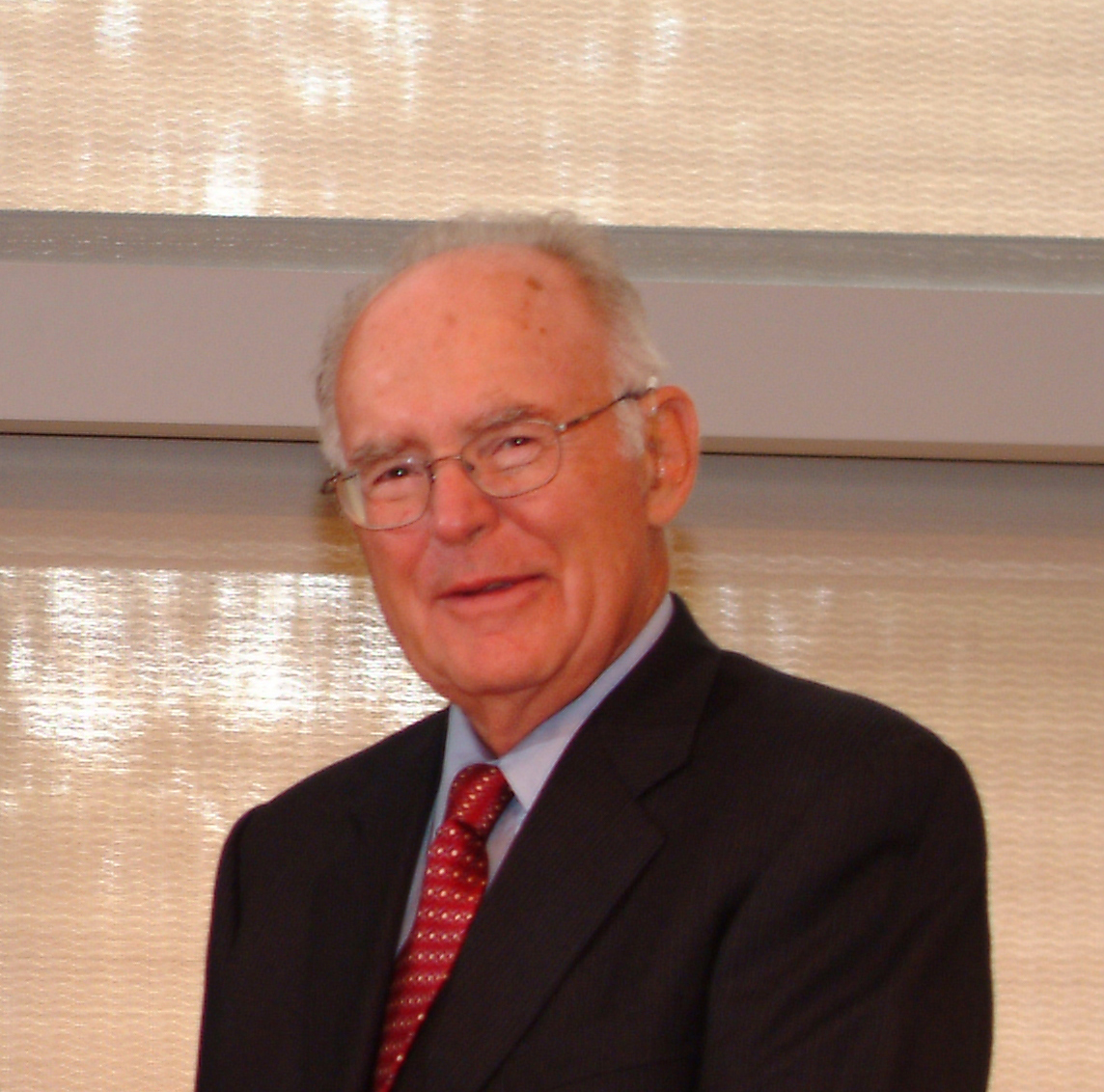
Staff photographer, Science History Institute, 14 September 2004, CC BY-SA 3.0 (image supplied by the Science History Institute to Wikimedia Commons with permission) · Science History Institute (formerly Chemical Heritage Foundation), photograph of Gordon E. Moore at Innovation Day, 14 September 2004, Philadelphia, via Wikimedia Commons 'Gordon Moore ID2004 crop.jpg' (crop of 'Rajiv L Gupta George Barclay Gordon Moore ID2004.JPG') · CC BY-SA 3.0
chemist · 20th Century
1929–2023
Not yet included in personality matching — the documented evidence doesn't yet cover enough of the personality model. Everything else on this page is fully available.
In the 19 April 1965 issue of Electronics, Moore forecast that the number of components on an integrated circuit was doubling about every year and would keep doing so for ten years, reaching around 65,000 by 1975. In 1975 he revised the rate to a doubling about every two years. The forecast, later called Moore's Law, became a reference point for the semiconductor industry.
In 1968 Moore and Robert Noyce left Fairchild to found Intel, with Arthur Rock arranging the financing and Moore first serving as executive vice president. Intel started by developing semiconductor memory; Moore was later its CEO (1975 to 1987) and chairman.
In 1957 Moore and seven colleagues left Shockley Semiconductor Laboratory, after Arnold Beckman declined to change its management, and founded Fairchild Semiconductor with backing from Fairchild Camera and Instrument. Moore was responsible for diffusion work and furnaces there, and Fairchild went on to make silicon mesa transistors by batch processing and to produce early integrated circuits.
In the mid-1980s Japanese competitors cut prices on memory chips and Intel's profits fell from $198 million in 1984 to under $2 million in 1985. Intel then left the memory business, laid off about 7,000 people, and concentrated on microprocessors. The change was led by Andy Grove as president; Moore, the CEO, answered Grove's question about what a new CEO would do with 'get out of the memory business'.
By Jay Last's account, in 1957 the Shockley group, unhappy with the management, had lunch together and Vic Grinich pressed them to act and call Arnold Beckman. After 'hemming and hawing', Moore said 'I'll do it' and telephoned, with what Last remembers as a quaver in his voice. Beckman was out, so Moore called again that evening, and Beckman came to meet the group.
The account links a step taken in front of colleagues with visible nervousness: he acted first, though he was not at ease doing it. It rests on one colleague's memory. Social Assertiveness
In 1995 Moore told Rob Walker that after the 8080 microprocessor he had asked Intel's designers to 'start over' and make the right microprocessor without regard to past compatibility. The result, the 432, was so complex that its performance was far below conventional microprocessors and it found no market. He said he was 'personally responsible', and that Intel had also backed a conventional 16-bit processor, which led to the 8086.
He describes an ambitious project that failed in his own words, accepts responsibility for it, and notes a parallel conventional project. This is his own account, so it shows how he tells it as much as what happened. Risk Tolerance
In 1985, with profits collapsing against Japanese memory makers, Andy Grove asked Moore what a new CEO brought in by the board would do. Moore answered, in Grove's telling, 'He would get us out of memories', and Grove replied that the two of them should walk out and do it themselves. Intel then left memory chips and concentrated on microprocessors.
The exchange shows Moore giving a direct answer that went against what Intel had been built on. Jones says he was not struggling with the decision as Grove was, and trusted Grove to carry it out. Belief Updating
People whose overall profiles resemble theirs.