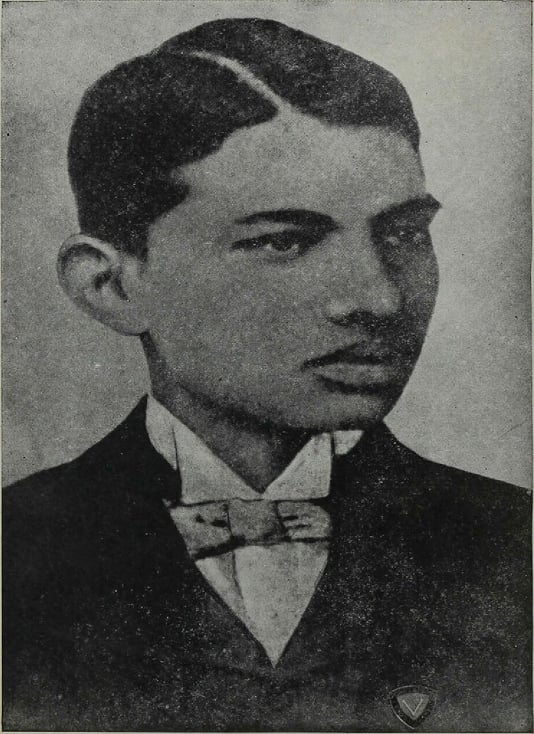
Mahatma Gandhi
93% Profile Match
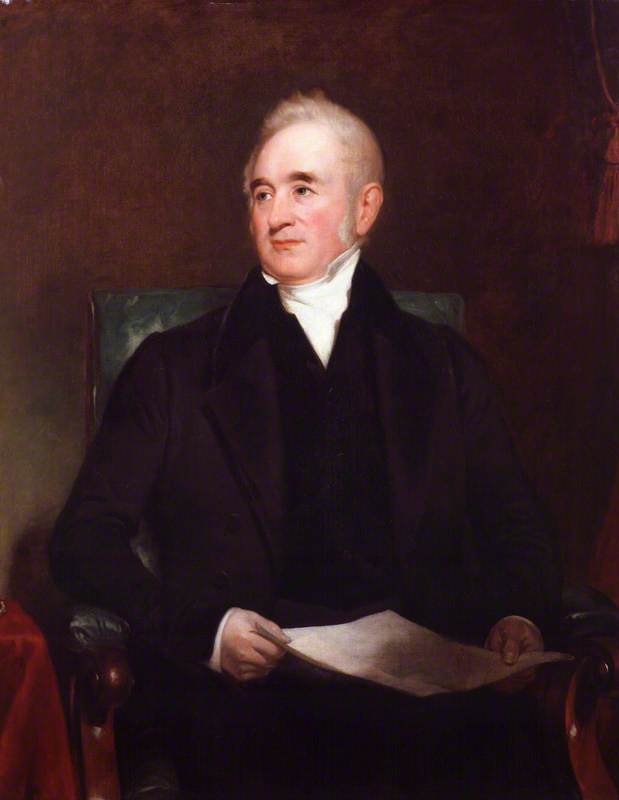
Henry William Pickersgill (1782-1875), George Stephenson, c.1845, oil on canvas, 111.8 x 87 cm, National Portrait Gallery, London (NPG 410); public domain (artist died 1875); file as hosted on Wikimedia Commons, not resized. · National Portrait Gallery, London (NPG 410), via Wikimedia Commons (Art UK image) · Public domain
He was engineer of the Stockton and Darlington Railway, opened on 27 September 1825, and of the Liverpool and Manchester Railway, opened on 15 September 1830, two of the earliest public railways to use steam locomotives for haulage. The Liverpool and Manchester line was carried across the Chat Moss bog. He laid both on the 4 ft 8.5 in gauge already used on the colliery wagonways, which later became the standard gauge.
From 1814 he built and improved locomotives at Killingworth colliery, and in 1823 he helped found the Newcastle works that became Robert Stephenson and Company. The Rocket, built there under his son Robert's direction, won the Liverpool and Manchester Railway's 500-pound premium at the Rainhill trials in October 1829. The tubular boiler is credited to a suggestion by the company's treasurer Henry Booth, so the achievement is a shared one.
In October and November 1815 he tested three miners' safety lamps at Killingworth colliery, built on the principle that flame will not pass through narrow tubes; the type became known as the Geordy lamp. Humphry Davy announced his own safety lamp the same autumn, and the priority between them was disputed: Davy's backers raised 2,000 pounds for him in 1816, and Stephenson's backers raised 1,000 pounds for him by 1818.
Chat Moss, the peat bog the Liverpool and Manchester line had to cross, is about twelve square miles in extent. According to Smiles, the first embankment sank repeatedly for weeks, and the directors held a board meeting on the Moss to decide whether to continue. At a Birmingham dinner in 1837 Stephenson recalled that other engineers had been consulted, that the directors were 'compelled' to let him go on, and that he never doubted the outcome. The first trial train crossed the Moss, drawn by the Rocket, on 1 January 1830.
Because the account of the directors' doubts and of his own certainty rests mostly on his 1837 recollection as relayed by Smiles, this episode is best read as one example consistent with the profile's persistence score, not as a settled measure of how steady he was throughout. Persistence
On 21 October 1815 Stephenson took his first safety lamp into a Killingworth gallery that had been boarded in to foul the air with gas from a blower. The under-viewer John Moodie warned that a lit candle there would cause an explosion. Nicholas Wood and Moodie withdrew out of sight while Stephenson carried the lit lamp toward the blower; the flame flared and went out without igniting the gas. Moodie gave evidence to this effect to the 1817 committee, while Davy's biographer Paris later argued that the first lamp was not a sound design.
Walking toward the gas with an untried lamp, after an experienced colleague's warning, is consistent with the profile's moderate risk-tolerance score; the profile holds that score down because he is also recorded pledging only modest speeds to the Liverpool directors and refusing lines whose estimates looked too low. Risk Tolerance
Late in 1821 Stephenson, then engine-wright at Killingworth colliery, travelled to Darlington with Nicholas Wood to ask Edward Pease, the promoter of the Stockton and Darlington Railway, to employ him as engineer, and to argue for locomotives over horses. He was appointed in early 1822. Until then his locomotives had run on private colliery lines; the appointment made him engineer of a public railway, and within about four years he was appointed engineer of the Liverpool and Manchester as well.
Going to the promoter himself, uninvited, rather than waiting to be approached, is consistent with the profile's proactive-agency score; the detail of the visit comes from Pease's recollection as reported by Smiles. Proactive Agency
People whose overall profiles resemble theirs.