
Warren Buffett
88% Profile Match
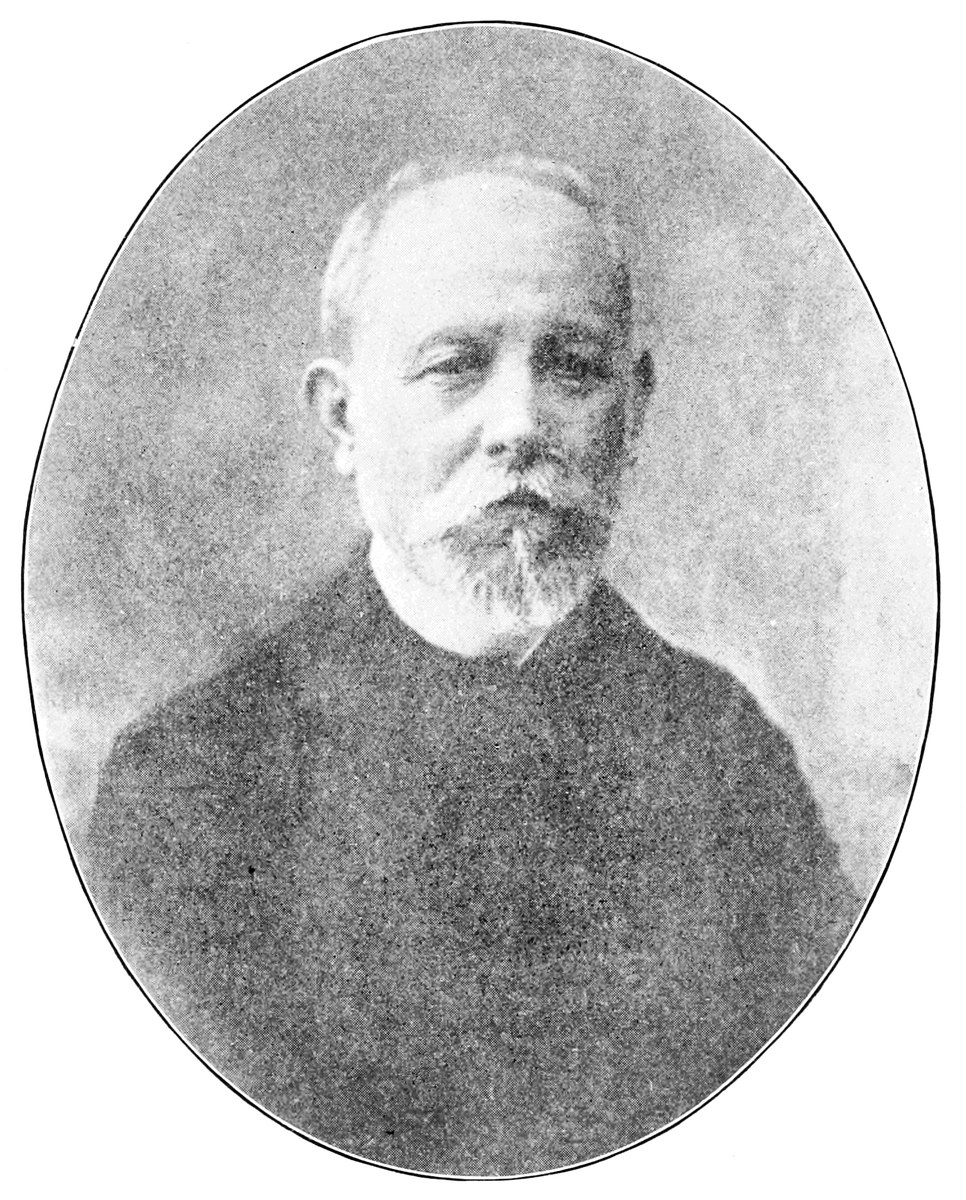
Unknown photographer, portrait of Florentino Ameghino, October 1910, published in Popular Science Monthly 80 (March 1912), public domain, via Wikimedia Commons · Photographic portrait of Florentino Ameghino captioned 'Portrait of Florentino Ameghino, October, 1910. Courtesy of W. J. Sinclair', printed as Fig. 1 of William Diller Matthew's obituary in Popular Science Monthly, volume 80, March 1912, New York. The photographer is unknown. The file is a plain downscale of the 1501 x 1864 pixel scan of that printed figure (a halftone in an oval frame) from Wikimedia Commons, reduced to 966 x 1200 pixels with no upscaling and no cropping. Identity rests on the printed caption and the article about him. · Public domain in the United States (published in 1912, before 1931)
naturalist · 19th Century
1853–1911
Not yet included in personality matching — the documented evidence doesn't yet cover enough of the personality model. Everything else on this page is fully available.
A self-taught Argentine naturalist, he made known the fossil mammals of the Argentine Pampas and Patagonia: a 1912 obituary credits him with over 500 new genera in about thirty years, and Britannica ranks his discoveries with those made in the western United States in the late nineteenth century.
His 1889 revision of Argentina's fossil mammals filled two large illustrated volumes; his bolder claim that humans, and mammals generally, originated in South America was not generally accepted and drew severe criticism.
He was professor at Cordoba and La Plata and sub-director of the La Plata Museum, founded and edited the Revista Argentina de Historia Natural (1891), and from 1902 directed the national Museum of Natural History in Buenos Aires until his death in 1911.
While his younger brother Carlos made long expeditions to Patagonia, Florentino stayed in La Plata and earned the money for both of them from a small stationer's shop, publishing the results in a flood of papers.
This is consistent with finding his own way to fund research that no institution was paying for. Resourcefulness
After he resigned as sub-director of the La Plata Museum in 1888 over differences with its director, he held no important post for ten or twelve years, yet in 1889 he published his revision of the fossil mammals and in 1891 began editing his own journal.
This is consistent with continuing a research programme after losing institutional support. Persistence
Having failed to win the endorsement of Argentina's two main museums for his conclusions on human antiquity, he took his collection to the Paris Exposition of 1878 and published La Antigüedad del Hombre en el Plata in 1880-81 with the support he received abroad.
This is consistent with taking an unpopular conclusion to a wider audience when local authorities would not endorse it. Independent Thinking
People whose overall profiles resemble theirs.


Not a rival — a different profile shape worth a look.
