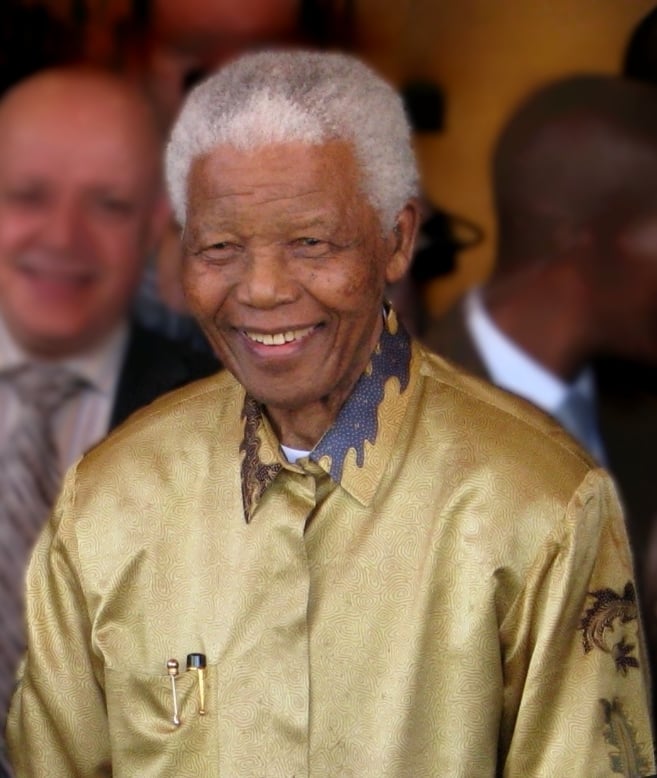
Nelson Mandela
93% Profile Match
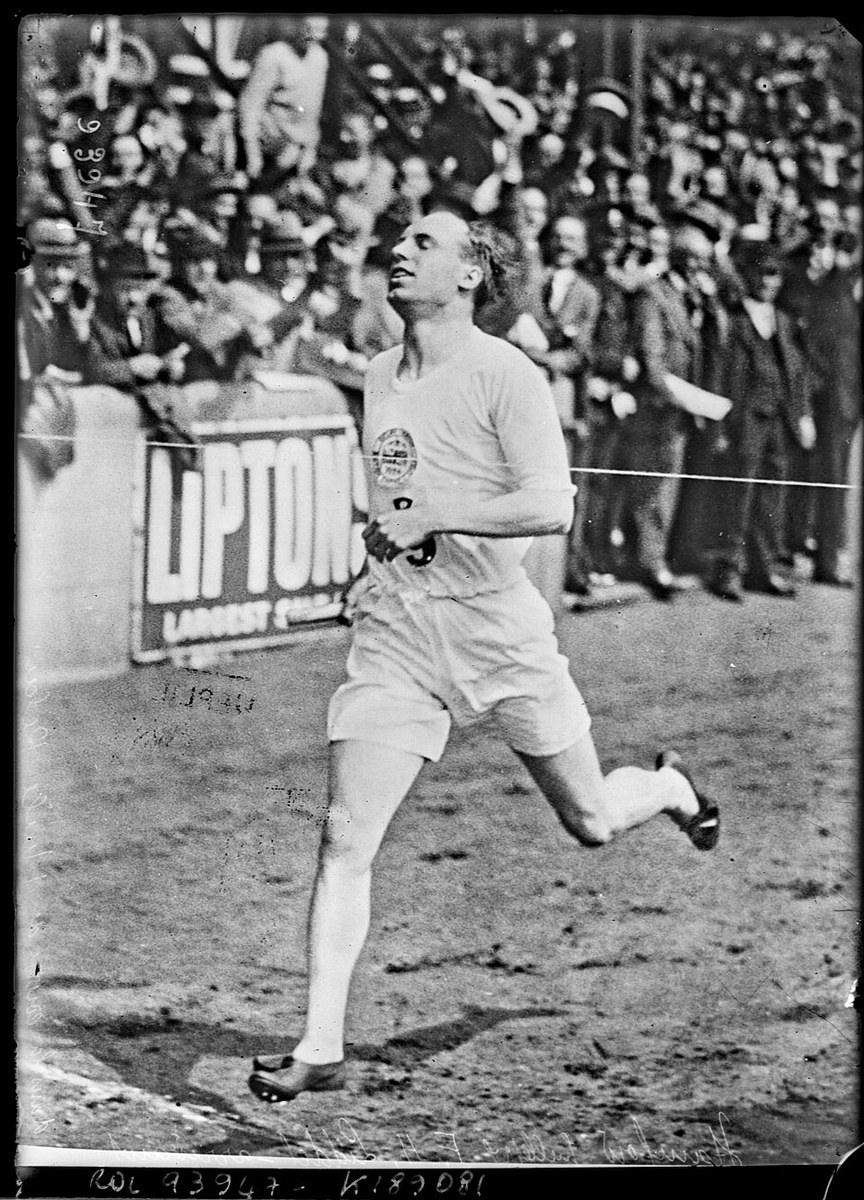
Agence Rol (photographer unknown), July 1924, Bibliotheque nationale de France, Gallica, public domain · Agence Rol press photograph 'Stamford, juillet 1924, F. [i.e. Eric] H[enry] Liddel [i.e. Liddell] arrivant dans la course de 1 mille relais' (Rol 93947), glass negative 18 x 13 cm, Bibliotheque nationale de France, departement Estampes et photographie, EI-13 (1132); catalogued by the BnF with the subject Liddell, Eric (1902-1945) and captioned 'Liddell' on the negative; shown on Gallica as public domain. Original scan 6122 x 8498 pixels; this copy downscaled to 864 x 1200 (never enlarged). · Public domain (BnF Gallica item-level statement 'domaine public'; 1924 press photograph by an agency)
athlete · 20th Century
1902–1945
Not yet included in personality matching — the documented evidence doesn't yet cover enough of the personality model. Everything else on this page is fully available.
Won the 400 m at the 1924 Paris Olympics in 47.6 seconds, an Olympic, European and British record, and took bronze in the 200 m.
Withdrew from the 100 m, his strongest event, because the heats fell on a Sunday and rebuilt his Olympic plan around the 400 m; the episode inspired the film Chariots of Fire.
Left athletics in 1925 to teach as a missionary at the Anglo-Chinese College in Tianjin, and from 1943 was interned at Weihsien, where he taught and organised activities for children until his death in 1945.
When the 1924 Olympic timetable put the 100 m heats on a Sunday, he refused to run, and a friend later recalled reporters at his door calling him a traitor while he said it was his belief and he would not run.
This is consistent with holding to an unpopular position under public pressure. Conflict Tolerance
Having dropped the 100 m, he went into the 400 m with little international experience at the distance, improved his best by more than a second in the semi-final, and won the final in 47.6 seconds.
This is consistent with reorganising a plan around a new event at short notice. Adaptability
Within weeks of his last Scottish championships in 1925 he left Edinburgh for China to follow his father as a missionary and teach at the Anglo-Chinese College in Tianjin, and he stayed in China when British nationals were advised to leave in 1941.
This is consistent with choosing a long-planned service career over continued athletic fame. Impact Motivation
People whose overall profiles resemble theirs.