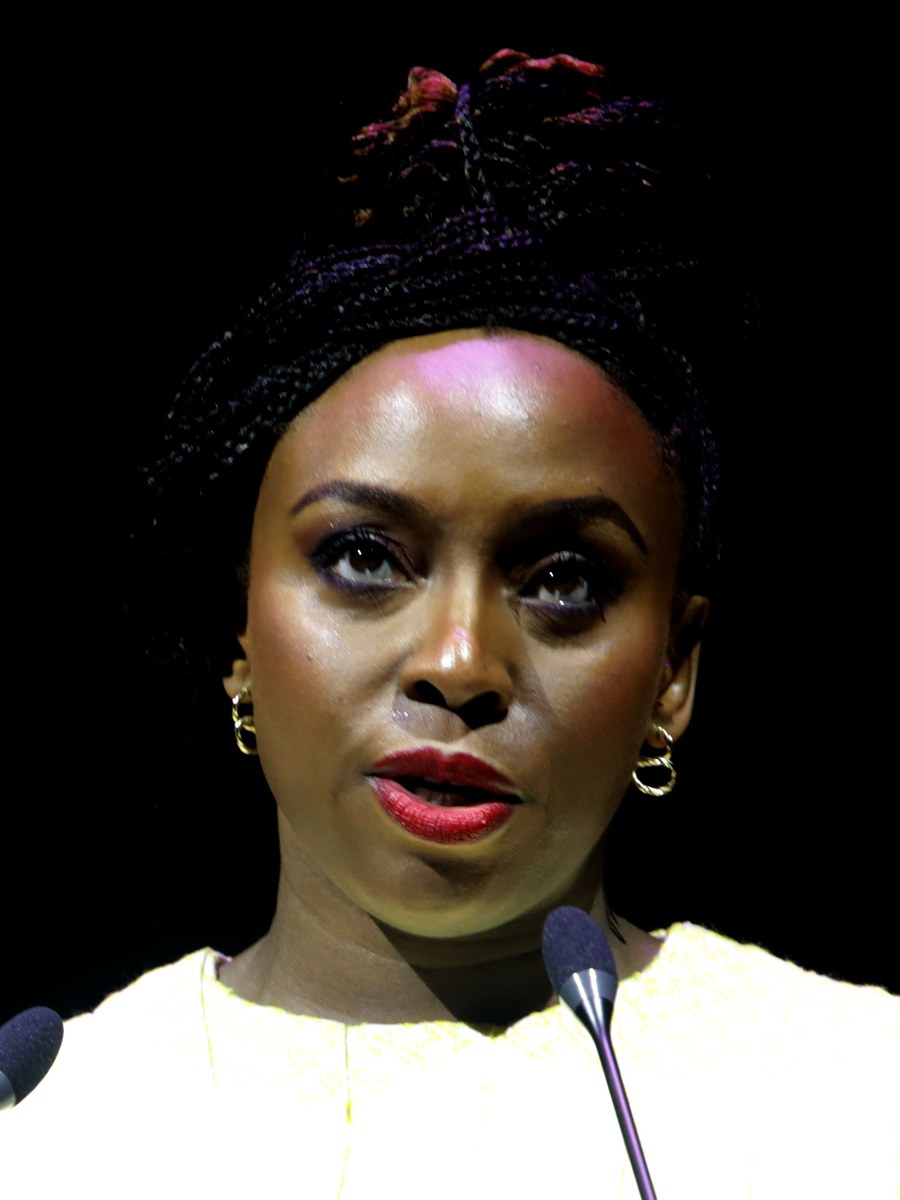

Photo: Greg Salibian / Fronteiras do Pensamento, 2025, CC BY-SA 2.0 · Wikimedia Commons, crop of the photograph 'Chimamanda Ngozi Adichie no Fronteiras do Pensamento 2025 em Sao Paulo, 013' taken on 16 June 2025 at the Teatro Renault, Sao Paulo, credited to Greg Salibian / Fronteiras do Pensamento and published on the lecture series' Flickr account under CC BY-SA 2.0; the Commons original carries a passed Flickr licence review and the live Flickr page shows the same licence. Crop 2100 x 2800 pixels, downscaled to 900 x 1200 (never upscaled). · CC BY-SA 2.0
writer · Contemporary
Chimamanda Ngozi Adichie
b. 1977
Known For
Not yet included in personality matching — the documented evidence doesn't yet cover enough of the personality model. Everything else on this page is fully available.
Trait Constellation
Key Achievements
Her debut novel Purple Hibiscus won the Commonwealth Writers' Prize and the Hurston/Wright Legacy Award; the Baltimore Sun called it one of the best novels to come out of Africa in years.
Half of a Yellow Sun, a novel of the Biafran war, won the 2007 Orange Prize, now the Women's Prize for Fiction, and was later named Best of the Best of the prize's second-decade winners.
Americanah, about a Nigerian woman's years in the United States, won the National Book Critics Circle Award and was named among the New York Times ten best books of 2013. She is a MacArthur Fellow and published Dear Ijeawele in 2017.
Moments That Reveal Them
While writing Half of a Yellow Sun she surrounded herself with more research than she could use, including photographs, and drew on her father's answers to her questions.
This is consistent with thorough preparation before writing about a historical subject. Curiosity
In 2007 she was running a free creative writing workshop in Nigeria, choosing thirty participants from more than a hundred entries; an annual ten-day Farafina Trust workshop in Lagos with her as facilitator was still announced in 2016.
This is consistent with a sustained effort to support other writers. Impact Motivation
Turning Points
After the Biafran war novel she turned to a contemporary subject in Americanah, saying she wanted to write about a different kind of immigration, of middle-class people seeking choice rather than fleeing war or poverty.
This is consistent with taking on a new subject as a writer rather than repeating a successful one. Mastery Orientation
Similar People
People whose overall profiles resemble theirs.
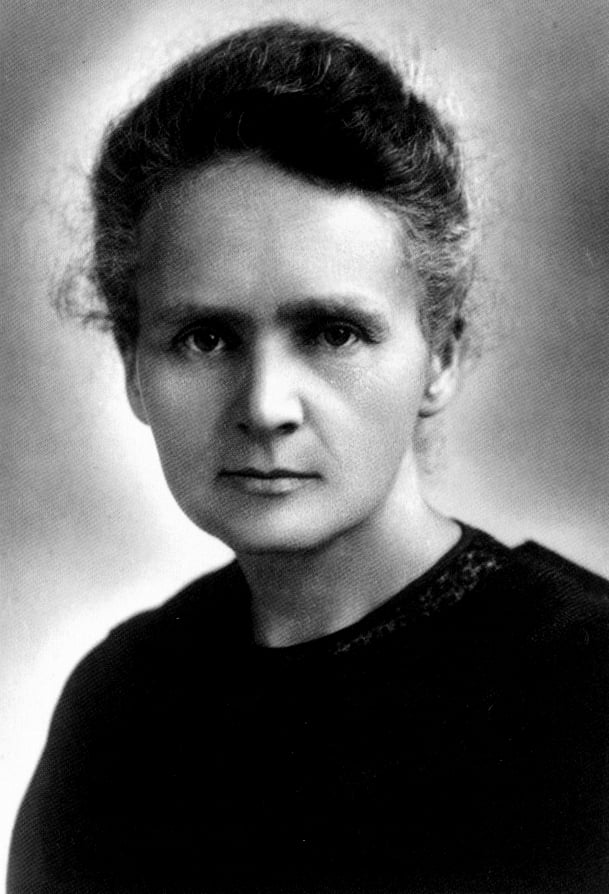

Marie Curie

Abraham Lincoln

Gertrude Bell

Marcus Aurelius

Confucius
Opposite Profile
Not a rival — a different profile shape worth a look.

Otto von Bismarck
Sources
- Chimamanda Ngozi Adichie (Q230141) -- verified live via the Wikidata API (2026-10-24): English label 'Chimamanda Ngozi Adichie', description 'Nigerian writer (born 1977)', Korean label present, born 15 September 1977, no death date, citizenship Nigeria. Orientation only; not used as support for any row.
- Women's Prize for Fiction, page on Half of a Yellow Sun (womensprize.com), read in full via a text fetch: the novel won the 2007 prize (then the Orange Prize) and was later named 'Best of the Best' of the winners of the prize's second decade, chosen by the past ten years' chairs of judges; the 2007 chair, Muriel Gray, is quoted saying that while it is sometimes pompous to call a book 'important', it is appropriate to say so of this one, and praising the author's ability to tell a tale of enormous scale. CANONICAL SIGNIFICANCE SOURCE (with the Lannan Foundation biography). Award-body record with a judge's praise; admiring, no behavioural detail beyond the work.
- Lannan Foundation, biography page for Chimamanda Ngozi Adichie (lannan.org/bios), read in full via a text fetch: debut novel Purple Hibiscus; Half of a Yellow Sun about Biafra's struggle for independence in the late 1960s and an Orange Prize winner and National Book Critics Circle finalist; Americanah (named by the New York Times among its ten best books of 2013, National Book Critics Circle Award); the story collection The Thing Around Your Neck; Dear Ijeawele, or a Feminist Manifesto in Fifteen Suggestions (March 2017); Commonwealth Writers' Prize and Hurston/Wright Legacy Award tied to Purple Hibiscus; MacArthur Foundation Fellowship; a Baltimore Sun line calling Purple Hibiscus one of the best novels to come out of Africa in years; she divides her time between the United States and Nigeria. CANONICAL SIGNIFICANCE SOURCE (with the Women's Prize page). Literary-foundation biography, admiring; years for most prizes are not stated on the page.
- Jane Ciabattari, 'Talking with Chimamanda Adichie', National Book Critics Circle website (7 February 2007), read in full via a text fetch (excerpting a September 2006 interview): Adichie, then a Yale graduate student, had surrounded herself with more research than she could use for Half of a Yellow Sun, including photographs of starving children that she found hard to face, and relied on her father's answers and memories; she calls the writing painful and says she often cried; she explains choosing three central characters (two men, one an Englishman modelled on a 75-year-old Englishman, and one woman), saying the story of Biafra cannot be told without the men and that she wanted to show what many women endured; she expects some to say a young writer has no business writing about Biafra and says the novel is about love. Critics'-circle interview in her own voice with an interviewer's framing (self-report; never sole support).
- Renee H. Shea, interview with Chimamanda Ngozi Adichie, Poets & Writers (dated 8 August 2007, after the Orange Prize), read in full via a text fetch: about four years spent writing Half of a Yellow Sun though she had thought about the subject all her life; she combined stories from her parents and family friends with the political history of the war; she does not think of her audience while writing and so does not censor herself; her American editor is her 'first eye' and she is open to changes; she says she is a perfectionist who finds it hard to please herself; she was running a free creative writing workshop in Nigeria, choosing thirty participants from more than a hundred entries with sponsorship from Fidelity Bank, and hoped to hold more; Yale African Studies graduate student who saw the degree as a way to learn things she would not otherwise meet; admiration for Chinua Achebe and friendship with Binyavanga Wainaina. Interview in her own voice (self-report; never sole support).
- Scott Simon, interview with Chimamanda Ngozi Adichie on Americanah, NPR Weekend Edition (11 May 2013), transcript read in full: host's framing (Purple Hibiscus won the Commonwealth Writers' Prize; stories in Granta, The New Yorker and the Financial Times; MacArthur fellow); Adichie says she wanted to write about a different kind of immigration, of middle-class people seeking choice rather than fleeing war or poverty, and calls the book a novel about love, race and hair, saying she is interested in hair aesthetically and politically. Broadcast interview (self-report); her remarks on race were treated as description of the novel, not scored.
- Terry Gross, interview with Chimamanda Ngozi Adichie, NPR Fresh Air (recorded September 2013, broadcast on the paperback release of Americanah), transcript read in part (about the first third): host quotes book critic Maureen Corrigan's description of the novel; Adichie reads a post by her blogging character and says the character's experiences of discovering racial categories in the United States drew on her own early years there (an essay in an undergraduate class, a classroom exchange about watermelon). Broadcast interview (self-report); used only to show how fiction drew on observation, and its remarks on race and privilege were not scored.
- Rosecrans Baldwin, book review of Americanah, NPR All Things Considered (14 May 2013), transcript read in full: Baldwin recalls the 'electricity' of Half of a Yellow Sun and says the first chapters set in Nigeria have a similar crackle, but says the writing falls surprisingly flat when the heroine is living offline, giving explanations instead of action and discourse with little drama, with some weak lines; he still praises her evocative power and looks forward to her future books; the hosts note her 2008 MacArthur grant and a New Yorker list of best writers under 40. Independent critic's review; a counter-voice on the novel's craft.
- Ainehi Edoro, 'Opportunity for African Writers: Farafina Trust Creative Writing Workshop', Brittle Paper (11 April 2016), read in full via a text fetch: a ten-day intensive writing retreat in Lagos run every year by Farafina Trust with Adichie as creative director and facilitator, structured as a class with assigned reading, daily writing exercises and mentorship, co-taught in 2016 by Binyavanga Wainaina and Aslak Sira Myhre, 21 June to 1 July 2016, applicants sending a 200-800 word sample, accommodation provided, Nigerian Breweries as sponsor. Independent literary-blog notice (an announcement, not an evaluation of the teaching).
- Wikimedia Commons file pages for the 2025-06-16 photograph of Chimamanda Ngozi Adichie at the Fronteiras do Pensamento lecture series (Teatro Renault, Sao Paulo) -- original file '...013.jpg' (5760 x 3840) and its crop '...013 (cropped).jpg' (2100 x 2800), checked for the portrait: source Flickr account 'fronteirasweb' (the lecture series), image credit in the description 'Greg Salibian/Fronteiras do Pensamento', Commons licence CC BY-SA 2.0 with a FlickreviewR 'passed' record (review of 13 February 2026, licence cc-by-sa-2.0); the live Flickr photo page was fetched on 2026-10-24 and carries the Creative Commons Attribution-ShareAlike 2.0 licence. Rights-basis pages; no person-specific claim rests on them.