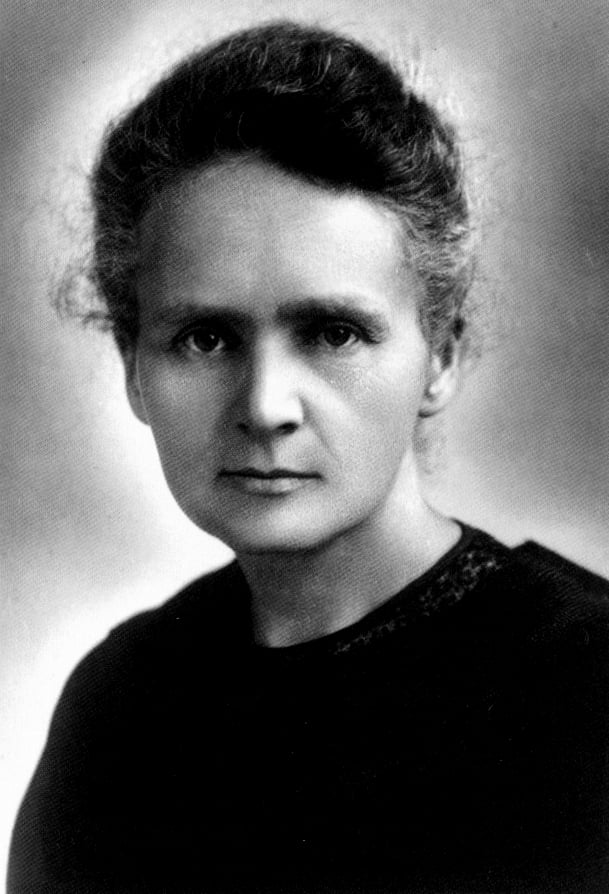
Marie Curie
93% Profile Match
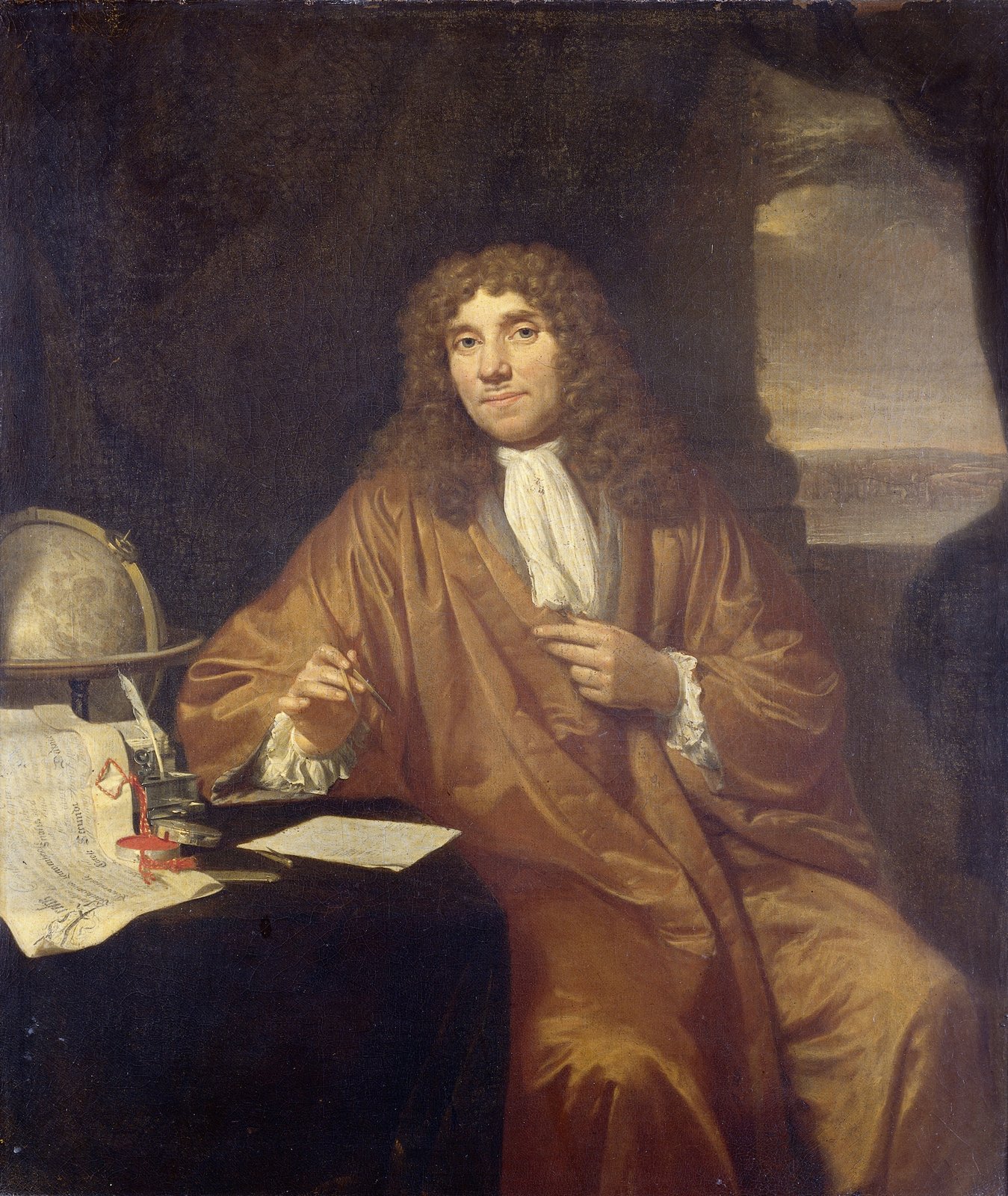
Jan Verkolje (I) (1650-1693), Portrait of Anthonie van Leeuwenhoek, natural philosopher and zoologist in Delft, oil on canvas, 56 x 47.5 cm, dated 1680-1686 by the Rijksmuseum, Rijksmuseum Amsterdam SK-A-957 (purchased 1879); public domain (painter died 1693); photograph released by the Rijksmuseum under CC0; saved as JPEG q85 at 1349x1600 from the 2148x2547 original · Jan Verkolje (I), oil on canvas, Rijksmuseum, Amsterdam (SK-A-957; on loan to Rijksmuseum Boerhaave, Leiden, accession P07252), via Wikimedia Commons · Public domain (painter d. 1693)
From 1673 until 1723 Leeuwenhoek sent the Royal Society letters written in Dutch, describing observations made with microscopes he made himself; Birch records his election as a Fellow on Dr Croone's motion on 29 January 1679/80 (Old Style). Dobell reports that he never went to London to attend a meeting, and that in 1723 his daughter sent the Society a cabinet of 26 lenses in silver mounts that he had arranged in 1701 to leave to it.
On 4 February 1669 the Court of Holland admitted Leeuwenhoek as a sworn surveyor, after the mathematician Genesius Baen had examined him in geometry; Dobell quotes the act from the Dutch State Archives. The editors of the Collected Letters cite this examination as a reason not to think him wholly unacquainted with the 'arts'.
After the Royal Society asked in February 1677 for his method of observing, Leeuwenhoek wrote on 23 March that he could not yet resolve to make his particular microscope public. On 5 October 1677 he sent statements from Delft witnesses, including ministers and a notary, who had watched him examine pepper-water in a capillary tube, and wrote that he had asked them to state only half of what they thought they saw. Birch records the statements being read on 1 November 1677 (Old Style) and Robert Hooke, after two unsuccessful tries, seeing the animals himself on 15 November.
Asking witnesses to understate their counts is consistent with the profile's moderate analytical-rigor score, which stays modest because the record is mixed: here he offered testimony in place of his method, and in 1685 Thomas Molyneux thought his reasoning sometimes went astray. Analytical Rigour
In February 1685 Thomas Molyneux visited Leeuwenhoek in Delft on behalf of the Royal Society's Secretary and reported in a letter, printed by Birch, that he was shown about a dozen microscopes of one ordinary sort. Leeuwenhoek told him he had another sort that no man living had looked through besides himself, and would not let him see them. Molyneux found the glasses shown far clearer than others he had seen and guessed that Leeuwenhoek's 'only secret' was better polishing.
Keeping his best instruments from an official visitor is consistent with the profile's high autonomy-need score; the source does not give his reasons, later writers offer several, and he also arranged in 1701 for a labelled cabinet of lenses to go to the Society after his death. Need for Autonomy
On 28 April 1673 the Delft physician Regnier de Graaf wrote to the Royal Society's Secretary, Henry Oldenburg, that a man named Leeuwenhoek had made microscopes surpassing those he had seen, and enclosed a letter of observations. In his reply of 15 August 1673 Leeuwenhoek wrote that he had often declined to put his observations on paper, because he had no style, had been brought up in trade rather than languages or arts, and did not gladly suffer blame or refutation, but had yielded at de Graaf's request; he asked the Fellows to remember that his work came from his own impulse and curiosity alone. Letters to the Society continued for fifty years.
Describing the work as coming from impulse and curiosity is consistent with the profile's curiosity score, though it is a self-description offered in a first letter to a learned body and is weighed as such. Curiosity
People whose overall profiles resemble theirs.