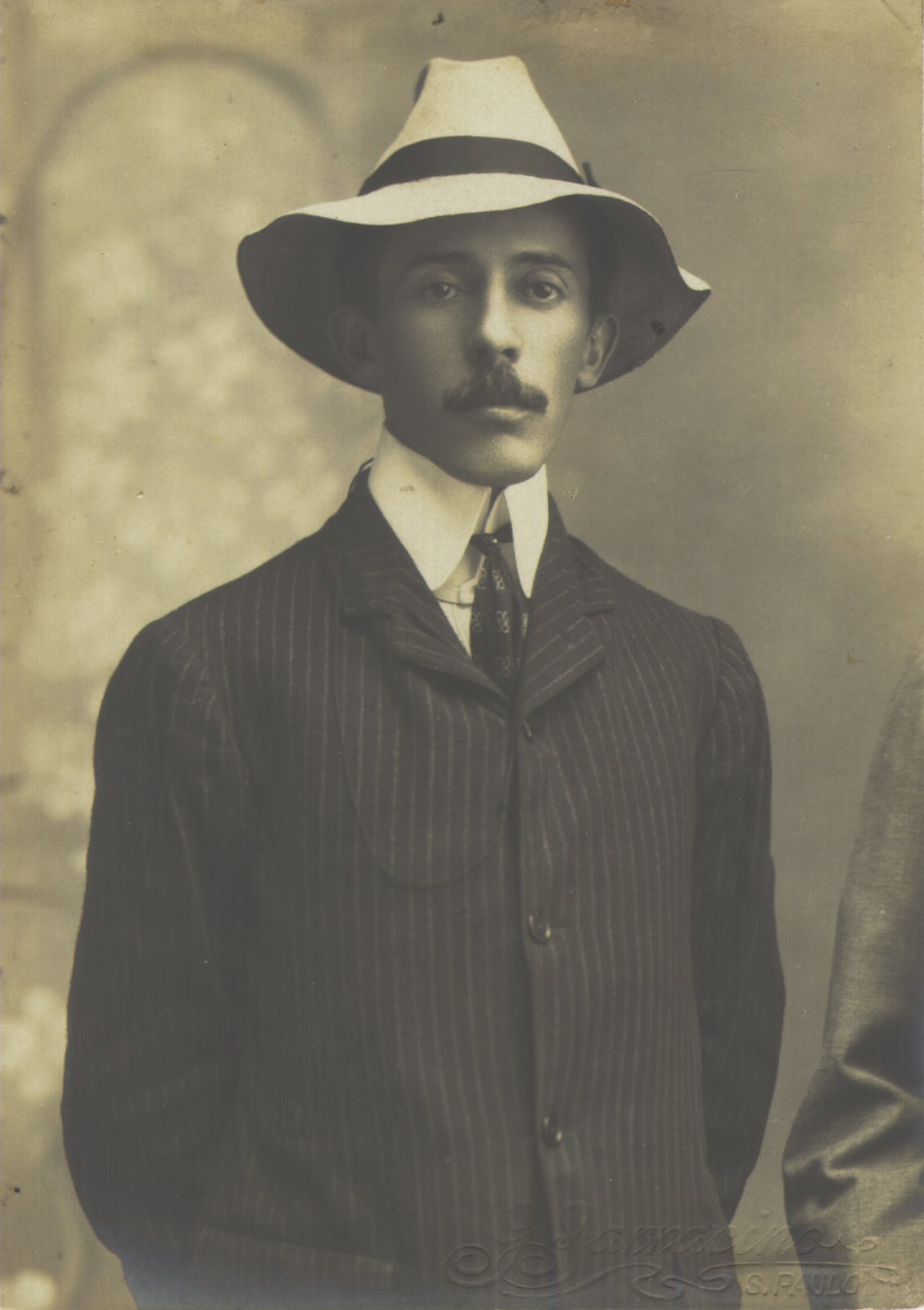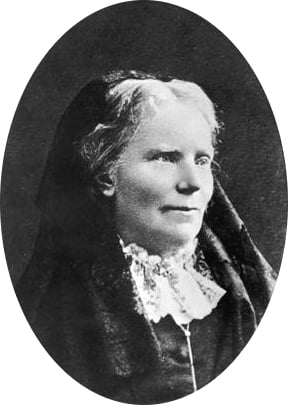

G. Sarracino (studio), São Paulo, 'Alberto Santos Dumont', photograph, 1903; Domínio público / Acervo Museu Paulista (USP) · Museu Paulista da Universidade de São Paulo, Coleção Alberto Santos Dumont (inventory 1-13675-0000-0000), digitized by José Rosael/Hélio Nobre; via Wikimedia Commons (GLAM partnership Museu Paulista / NeuroMat / Wikimedia Brasil) · Public domain
inventor · 20th Century
Alberto Santos-Dumont
1873–1932
Known For
Not yet included in personality matching — the documented evidence doesn't yet cover enough of the personality model. Everything else on this page is fully available.
Trait Constellation
Key Achievements
On 19 October 1901 Santos-Dumont flew his airship No. 6 from the Aéro-Club's grounds at Saint-Cloud around the Eiffel Tower and back, the course set for the 100,000-franc Deutsch prize. Whether his time should be counted to his first pass over the judges or to his landing was disputed, and the club's commission voted 15 to 9 to award him the prize on 4 November.
On 23 October 1906 at Bagatelle in Paris, with Aéro-Club de France representatives present, his 14-bis biplane flew about 60 metres, winning the Archdeacon cup for the first flight of over 25 metres. On 12 November 1906 it flew 220 metres in about 21 seconds, the distance recorded by the club's commission. Whether these were the first powered flights is disputed, because the Wright brothers had flown privately in the United States from 1903.
In November 1907 he flew his No. 19, a small monoplane that Scientific American's Paris correspondent described as built in two weeks. It was developed into the Demoiselle of 1909. In 1910 Popular Mechanics published working drawings of the Demoiselle that had been obtained from him and his workshops.
Moments That Reveal Them
On 8 August 1901, during his second attempt at the Deutsch prize, his airship lost gas and fell onto the roof of the Trocadero hotels; Paris firemen hauled him up by rope. In his own account he gave out the specifications for a new airship, No. 6, that same evening, and it was finished and inflated 22 days later. Historian Henrique Lins de Barros, drawing on the press of the time, adds that he tested the surviving motor in front of the crowd.
Ordering a replacement on the day of a near-fatal fall sits alongside the profile's high persistence score. It was one of several crashes between 1898 and 1907 that each led to a new or rebuilt machine. Persistence
In 1909 Santos-Dumont told the newspaper Le Matin that anyone could build his Demoiselle aeroplane and ask him for the plans. In June 1910 Popular Mechanics published the drawings, stating that the machine was 'unencumbered by patent rights' and that he had made it available to the world. Back in 1901, before the Deutsch prize flight, he had pledged the prize money to the poor of Paris and to his workmen.
Giving away a design and prize money that others might have kept is consistent with the profile's impact motivation score. He was wealthy, so these gestures cost him less than they would have cost many inventors, which is one reason that row is kept moderate. Impact Motivation
Turning Points
In 1898 Santos-Dumont fitted a petroleum engine from a motor tricycle under a balloon filled with hydrogen, a highly flammable gas. Fellow aeronauts urged him to use an electric motor instead; he later told a journalist that 'from the beginning everybody was against the idea'. His first airship flew on 20 September 1898, and the light petroleum engine stayed central to his airships and aeroplanes.
Choosing the engine that experienced balloonists warned against offers one example of the profile's independent thinking. Most of what we know about those objections comes from his own accounts and an authorized interview, which is why that row carries only moderate confidence. Independent Thinking
Similar People
People whose overall profiles resemble theirs.


Malala Yousafzai

Elizabeth Cady Stanton

Louis Pasteur

Miriam Makeba

Nina Simone
Sources
- Alberto Santos-Dumont (Q313211) -- verified live via wbgetentities (2026-10-02): en label 'Alberto Santos-Dumont', description 'Brazilian aviation pioneer (1873-1932)', P569 20 Jul 1873, P570 23 Jul 1932, citizenship Brazil (Q155) and France (Q142), instance of human, ko label '알베르토 산토스뒤몽', kowiki sitelink '알베르토 산토스뒤몽'. Orientation only; not used as support for any row.
- Alberto Santos-Dumont, My Airships: The Story of My Life (London: Grant Richards, 1904; English edition of Dans l'air), Project Gutenberg eBook #42344 -- SELF perspective (his own first-person account, written 1902-04). Read locally: Ch. I (plantation machinery), Ch. III-IV (first ascent 1897; the 113 m3 'Brazil' balloon and the builders' objections), Ch. VI-VII (choice of the petroleum tricycle motor, workshop and dynamometer tests, 18 and 20 Sept 1898 flights of No. 1), Ch. X (No. 2 accident 11 May 1899, redesign as No. 3, 13 Nov 1899 flight), Ch. XII-XV in full (Deutsch prize conditions, his own Santos-Dumont prize, 12-13 Jul and 8 Aug 1901 attempts, No. 6, 19 Oct 1901 flight, award dispute and disposal of the money), Ch. XX-XXI (Monaco loss 14 Feb 1902 and lessons; the Neuilly airship station 1902-03). Never the sole support for any row.
- Scientific American vol. 85 no. 18, 2 Nov 1901 (Internet Archive scientific-american-1901-11-02, djvu text): the news note that the Aero Club committee had not yet decided whether he was entitled to the Deutsch prize, and 'An Interview with M. Santos-Dumont', a digest of Sterling Heilig's authorized article in The Century (Nov 1901) -- JOURNALIST perspective, insider-leaning (authorized interview), which also quotes the critical view of Col. Charles Renard (French army airship engineer) that he was 'an aerostatic sportsman' rather than a man of science. Read in full. Used for the absence of patent applications as of 1901, the near-universal objection to a petroleum motor under hydrogen, and the pending committee decision.
- Scientific American vol. 95 nos. 18, 20 and 21 (3, 17 and 24 Nov 1906; Internet Archive djvu texts): 'Successful Flight of Santos Dumont's Aeroplane', 'Progress of Aeronautics in France' and 'Santos Dumont's Latest Flight' -- JOURNALIST perspective, independent and partly SKEPTICAL (the magazine compares the 14-bis unfavourably with the Wrights' claimed efficiency and reports American experimenters' doubts about its stability). Read the three articles in full. Used for the dated 13 Sep, 23 Oct and 12 Nov 1906 trials under Aero Club observers, the modifications after 13 Sep, the broken-bolt delay, and the decisions to cut power to avoid the crowd and not to fly against a strong wind.
- Scientific American vol. 97 no. 24, 14 Dec 1907 (Internet Archive scientific-american-1907-12-14, djvu text), 'Santos Dumont's Latest Aeroplane', by the magazine's Paris correspondent -- JOURNALIST perspective (independent). Read in full: his rapid switching between aeroplane and hydroplane work, construction of No. 19 in two weeks, its weight and surfaces, his quoted account of the 17 Nov 1907 flight, the 18 and 21 Nov 1907 trials before the Aero Club committee and the propeller failure.
- Popular Mechanics vol. 13 no. 6, June 1910 (Internet Archive sim_popular-mechanics_popular-mechanics_1910-06_13_6, djvu text): Arthur E. Joerin and A. Cross, 'How to Build the Famous Demoiselle: Santos-Dumont's Monoplane', with editor's note, and the magazine's advertisement for the working drawings -- JOURNALIST/PUBLISHER perspective (non-self). Read the article opening, the construction passages on his rod-end fittings and silk, and the advertisement. Used only for his announcement that he would give the Demoiselle plans to the public and the statement that the machine was 'unencumbered by patent rights', the plans having been obtained from him and his workshops.
- Henrique Lins de Barros (physicist and historian of science, Museu de Astronomia e Ciências Afins, Rio de Janeiro), 'Santos Dumont: o vôo que mudou a história da aviação', Parcerias Estratégicas no. 17, Sept 2003, pp. 303-338 (Internet Archive 239-945-1-pb, djvu text) -- SCHOLAR perspective (non-self; admiring in tone, but documented, citing L'Aérophile 1901-1906, La Nature, Aero Club commission minutes, Le Matin 15 Sep 1909 and Voisin's 1952 recollection). Read in full in Portuguese. Used for: 1903 No. 9 demonstrations, 1898-1901 accidents and rebuilds, the motor test after the 8 Aug 1901 Trocadero fall and the 22-day No. 6, his advance public pledge of the prize money, the commission's 15-9 vote on 4 Nov 1901 and his resignation from the Aero Club, the 1906-07 sequence 14-bis/No. 15/No. 16/No. 18 hydroplane/No. 19, the 1909 Demoiselle and his public offer of its plans. The article's sections on his illness, depression and death, and his 1932 political message, are NOT used.
- National Air and Space Museum, 'Clement V-2 Engine' collection-object record (A19080001000), summary and accession-file notes, via Smithsonian Open Access API -- institution/curatorial (non-self). Read in full. Used only to corroborate that his 1903 Airship No. 9 used a converted 12 kg Clement motorcycle engine that also drove the envelope blower.