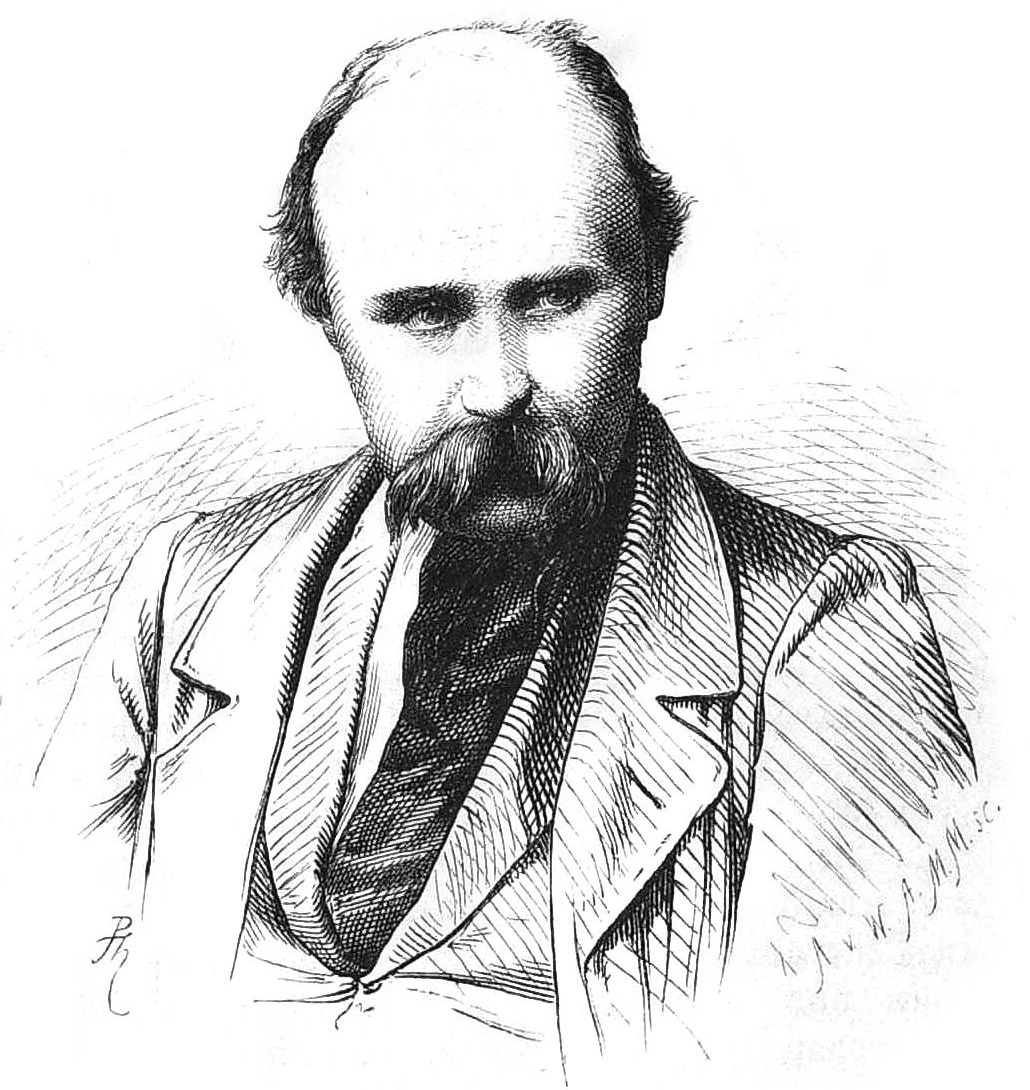

Illustration monogrammed PTh, Die Gartenlaube (Leipzig), 1862, page 437 · Wood engraving of Taras Shevchenko printed in the German magazine Die Gartenlaube (Leipzig: Ernst Keil, 1862), page 437, with the caption 'Taras Grigorjewitsch Schewtschenko' and a monogram 'PTh' at lower left; Wikisource edition of the volume and Commons scan. The page margins were trimmed (1030 x 1090) with no resizing and no upscaling. · Public domain: a wood engraving published in Leipzig in 1862 (monogram of the illustrator Paul Thumann, who died in 1908), public domain by age
시인 · 19세기
타라스 셰우첸코
1814–1861
주요 업적 분야
아직 성격 매칭에 포함되지 않았습니다 — 기록된 근거가 성격 모델 전체를 다루기에는 충분하지 않습니다. 이 페이지의 다른 모든 내용은 자유롭게 확인하실 수 있습니다.
핵심 특성
주요 업적
그의 시집 『코브자르』(1840)와 이후의 시들은 근대 우크라이나 문학의 토대를 놓았고 우크라이나어가 진지한 시의 언어가 될 수 있음을 보여 주었다고 평가받는다. 1990년대까지 『코브자르』는 100개가 넘는 언어로 번역되었다.
제정 러시아 예술 아카데미에서 카를 브률로프에게 배운 화가인 그는 1844년 판화집 『그림 같은 우크라이나』를 냈고, 150점이 넘는 초상화를 그렸으며, 1860년 판화 아카데미 회원 칭호를 받았다.
1847~57년 군 복무 유배 중 글쓰기와 그림 그리기가 금지되었는데도 그는 비밀 공책에 시를 계속 썼고, 1848~49년 아랄해 탐사대의 화가로서 그 지역의 풍경을 그렸다.
삶의 장면들
유배 중 글쓰기와 그림 그리기를 금지당한 그는 시 한 편을 작은 책자에 옮겨 적어 장화 속에 숨겼고, 1850년 금지를 어긴 혐의로 다시 체포되었다.
이는 처벌의 위험이 실제로 있는데도 창작을 계속하는 모습과 일치한다. 끈기
1861년 1월 그는 우크라이나 일요학교를 위한 초급 독본을 엮어 자비로 펴내고 학교들에 무료로 나누어 주었다.
이는 다른 사람들의 배움을 돕는 일에 자기 돈을 들이는 모습과 일치한다. 영향 창출 동기
전환점
1859년 상트페테르부르크로 돌아온 그는 에칭과 아쿠아틴트를 시작했고, 1860년 9월 예술 아카데미는 그에게 판화 아카데미 회원 칭호를 주었다.
이는 경력 후반에 새로운 매체로 방향을 돌려 공식적인 인정에 이르기까지 매진하는 모습과 일치한다. 실험 성향
비슷한 인물
전체적인 프로필이 이 사람과 닮은 사람들이에요.


세쿼야

에이브러햄 링컨

루이 파스퇴르

벤저민 프랭클린

라빈드라나트 타고르
출처
- Taras Shevchenko (Q134958), verified live via the Wikidata API (2026-11-06): description 'Ukrainian poet and artist (1814-1861)', born 1814 (the item lists 25 and 26 February and 9 March), died 1861 (10 March among three listed dates), Korean label 타라스 셰우첸코. Orientation only; not used as support for any row.
- Myroslav Antokhii, Daria Darewych, Marko Robert Stech and Danylo Husar Struk, 'Shevchenko, Taras', Encyclopedia of Ukraine (Canadian Institute of Ukrainian Studies; entry updated 2004; read). CANONICAL SIGNIFICANCE SOURCE: lists his works from Kobzar (1840) and Haidamaky (1841) to the secret exile poems and the 1861 primer he funded himself; describes him as the founder of modern Ukrainian literature whose Kobzar legitimised Ukrainian for serious literature and was translated into more than 100 languages by the 1990s; covers his training under Briullov, the Picturesque Ukraine album (1844), more than 150 portraits and the 1860 academician-engraver title, with 835 surviving works and about 270 lost. Its critical section notes that Soviet-era scholarship was heavily censored and falsified. Scholarly but laudatory.
- Taras Shevchenko Museum (Toronto), 'Short Biography' (shevchenko.ca; owned by the Taras H. Shevchenko Museum and Memorial Park Foundation; no author named; read). Reports his 1838 release from serfdom for 2,500 rubles raised by a lottery of a Briullov portrait, Academy studies and silver medals in 1839-41, the publication of Kobzar (1840) and Haidamaky (1841), the 1847 sentence with the order 'with a ban on writing and painting', secret copying of his poems into a small book hidden in a boot, a re-arrest in 1850 for violating the ban, and the Academy title of 2 September 1860. Admiring community museum; no independent critics.
- Taras Shevchenko Museum (Toronto), 'Final Years, Freedom on a Chain' (shevchenko.ca; read). Reports that from September 1859 he lived in the Academy of Arts and took up etching and aquatint, calling engraving a means for spreading art, that the Academy named him Academician of Engraving on 2 September 1860 for his etching success, and that in January 1861 he compiled and published a primer at his own expense and gave copies free to Sunday schools.
- Taras Shevchenko Museum (Toronto), 'Shevchenko's Art' (shevchenko.ca; read). Lists his genres (portraits, landscapes, compositions, genre scenes), media (watercolour, oil, pencil, ink, sepia, etching and aquatint), the six etchings of Picturesque Ukraine published in 1844 out of a larger plan, and his work as artist of the 1848-49 Butakov Aral Sea expedition. Laudatory and cites no independent critics; used for the factual outline only.
- 'Shevchenko, Taras Grigoryevich', The Columbia Encyclopedia, 6th edition (via Encyclopedia.com; read). Short general entry: born a serf, trained as an icon and mural painter, freed in 1838, became a prominent realist painter, wrote Ukrainian ballads and, in exile, lyric poetry and several novels, and had 'tremendous influence on Ukrainian literature'. Offers no critical assessment beyond that.
- 'Ein russisches Dichterleben', Die Gartenlaube (Leipzig: Ernst Keil, 1862), page 437 (German family magazine; the Wikisource transcription and the Commons page scan were read, only the opening paragraphs of the article were read closely). A contemporary German account written the year after his death; the page carries his printed portrait captioned 'Taras Grigorjewitsch Schewtschenko'. Portrait source record for the image used; not used as support for any row.