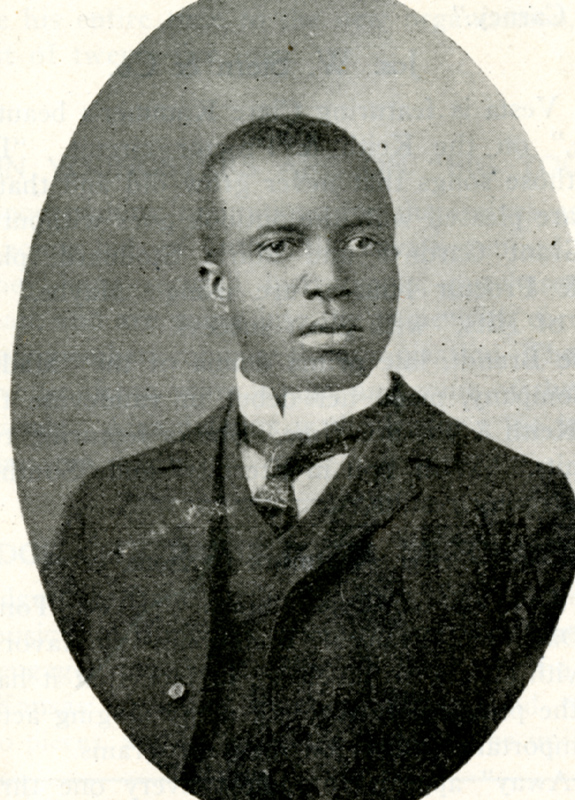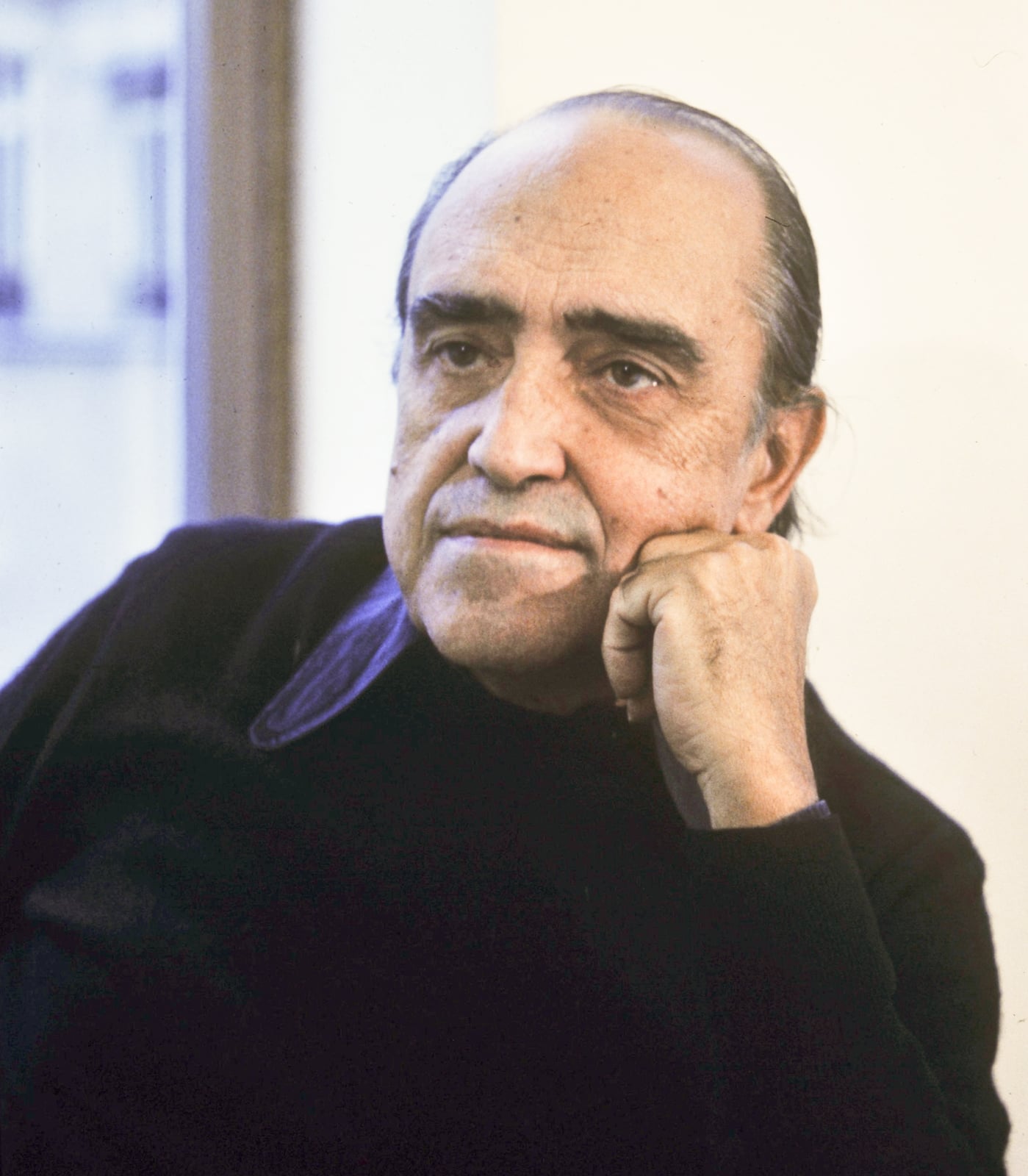

Unknown photographer, published in The American Musician and Art Journal, 17 June 1907. Library of Congress, Music Division (image from the Library's blog) · Portrait photograph of Scott Joplin published in The American Musician and Art Journal, 17 June 1907 (photographer not credited), held by the Library of Congress Music Division and shown as the lead image of the Library's blog post 'Scott Joplin & the Magical Maple Leaf Rag' (2024). The oval halftone was printed on a magazine page and the file shows faint show-through of print around it; it is shown uncropped at its original 575 x 800 pixels with no upscaling. · Public domain (photograph first published in the United States in 1907)
작곡가 · 20세기
스콧 조플린
1868–1917
주요 업적 분야
아직 성격 매칭에 포함되지 않았습니다 — 기록된 근거가 성격 모델 전체를 다루기에는 충분하지 않습니다. 이 페이지의 다른 모든 내용은 자유롭게 확인하실 수 있습니다.
핵심 특성
주요 업적
'래그타임의 왕'으로 불린 작곡가이자 피아니스트로, 1899년의 《메이플 리프 래그》로 미주리주 세달리아의 지역 명사에서 전국적 주목을 받는 인물이 되었고 이후 래그타임 작곡의 기준을 세웠다. 브리태니커는 그의 명성이 《메이플 리프 래그》와 《디 엔터테이너》를 포함해 1899년부터 1909년까지 출판된 고전 래그들에 있다고 평가한다.
그는 래그타임을 더 큰 형식으로 확장해 래그타임 발레(1902), 지금은 전하지 않는 오페라 《명예의 손님》(1903), 교본 《래그타임 학교》(1908), 그리고 1911년 자비로 출판했으나 생전에 온전한 무대를 보지 못한 3막 오페라 《트리모니샤》를 남겼다.
오랜 무명 끝에 그의 음악은 되살아났다. 1971년 뉴욕 공공도서관이 그의 작품집을 펴냈고, 《트리모니샤》는 1972년 처음 온전히 상연되어 1975년 브로드웨이에 올랐으며, 1973년 영화 《스팅》이 《디 엔터테이너》를 히트곡으로 만들었고, 1976년 퓰리처상 위원회는 미국 음악에 대한 공헌을 기려 그에게 사후 특별상을 수여했다.
삶의 장면들
1895~96년에 낸 첫 출판작들이 작곡 기법 면에서 미숙했던 그는 오티스 소더스와 토니 윌리엄스의 조언을 받아 세달리아의 조지 R. 스미스 칼리지에서 음악 과정을 수강했고, 1897년에는 친구들과 오랫동안 즉흥으로 연주하던 복잡한 리듬을 악보로 옮길 수 있게 되었다.
이는 자신의 부족한 점을 솔직히 인정하고 그것을 메우기 위해 체계적으로 공부한 음악가의 모습과 부합한다. 숙련 지향
1913년 할렘의 극장이 예정된 상연에서 손을 떼자, 조플린은 1915년 링컨 극장에서 의상도 소품도 오케스트라도 없이 《트리모니샤》를 직접 무대에 올렸는데, 이미 재산 대부분을 이 오페라에 쏟아부은 뒤였고 비평은 한 줄도 나오지 않았다.
이는 후원을 구하지 못하는 실패가 거듭되어도 큰 작품의 실현을 포기하지 않고 막대한 개인적 비용을 치른 창작자의 모습과 부합한다. 끈기
전환점
1899년 출판업자 존 스타크가 세달리아에서 《메이플 리프 래그》를 출판했고 그 성공으로 조플린은 지역 연주자에서 전국적 명성을 얻는 인물이 되었으며, 1900년 스타크가 세인트루이스로 옮기자 조플린도 1년 안에 뒤따라 더 큰 시장에서 작곡과 연주로 성공하기를 바랐다.
이는 돌파구가 된 성공을 발판 삼아 자신의 작품을 위한 더 큰 무대로 나아가려 한 작곡가의 모습과 부합한다. 성취 욕구
비슷한 인물
전체적인 프로필이 이 사람과 닮은 사람들이에요.


프리다 칼로

볼프강 아마데우스 모차르트

쿠사마 야요이

마야 안젤루

마리 퀴리
출처
- Scott Joplin (Q191499), verified live via the Wikidata API (2026-11-02): label 'Scott Joplin', description 'American composer, musician, pianist (1867/68-1917)', Korean label 스콧 조플린, several candidate birth dates recorded and death April 1917. Orientation only; not used as support for any row.
- Encyclopaedia Britannica, 'Scott Joplin' (Britannica Editors, revised by Rene Ostberg), read in full. CANONICAL SIGNIFICANCE SOURCE: American composer and pianist who became known as the 'king of ragtime'; he settled in Sedalia, Missouri, in 1895, studied music at the George R. Smith College for Negroes and hoped for a career as a concert pianist and classical composer; his first published songs brought him fame and in 1900 he moved to St. Louis to work with the publisher John Stark; 'Maple Leaf Rag' ignited the ragtime craze; he published a ragtime ballet suite in 1902, an opera A Guest of Honor (1903, no longer extant), and in New York The School of Ragtime, an instruction book that was widely imitated; most of his later effort went into the three-act opera Treemonisha, published at his own expense in 1911 and given only one semipublic performance in his lifetime; his reputation rests on the classic rags published 1899-1909, and he was awarded a special Pulitzer Prize posthumously in 1976. Its remarks on his later health are not used.
- Handbook of Texas Online (Texas State Historical Association), 'Joplin, Scott' by Theodore Albrecht, read in full: childhood in Texarkana and piano lessons from Julius Weiss, years as an itinerant pianist, the Sedalia period and the George R. Smith College, the 1899 publication of Maple Leaf Rag (this entry names Carl Hoffman of Kansas City as publisher, which conflicts with the Missouri Encyclopedia, the SHSMO and the Library of Congress, who name John Stark of Sedalia; the Stark account is followed here) and the sheet music's reported sale of over a million copies, the on-and-off arrangement with John Stark, the ballet and two operas (orchestration scores of both operas lost), conductor Alfred Ernst's remark that he was 'an unusually intelligent young man and fairly well educated', the statement that he held a strong conviction that education was the key to success for African Americans, the unsuccessful 1915 staging of Treemonisha, and the posthumous recognition (Songwriters Hall of Fame 1970, New York Public Library collected works 1971, The Sting 1973, Pulitzer 1976). State historical association reference; admiring in tone; the sales figure is disputed by Berlin (see the Gracyk review).
- Missouri Encyclopedia, 'Scott Joplin (1868-1917)' by Susan Curtis (from the Dictionary of Missouri Biography, University of Missouri Press), read in full: foremost contributor to a 'Missouri style' of ragtime; his early publications lacked compositional sophistication, so on the advice of Otis Saunders and Tony Williams he enrolled in courses at the George R. Smith College; he collaborated with Arthur Marshall and Scott Hayden; Maple Leaf Rag (1899) 'set the standard' though he was 'not the first' to capture the rhythm on the page; Stark coined 'King of Ragtime Writers'; conductor Alfred Ernst (1909) and critic Monroe Rosenfield (1903) praised him; his 1903 opera A Guest of Honor drew no financial backing and was staged little more than once as a dress rehearsal; in New York he joined the Colored Vaudevillian Benevolent Association (executive committee 1912); Treemonisha, which he insisted was grand opera and 'strictly Negro' music, found no backer, a Harlem theatre deal collapsed in 1913, and the 1915 staging had no costumes, props or orchestra and drew no critical comment; he had invested most of his money in it. University-press scholarly reference by a historian; the passages on illness and family are not used.
- State Historical Society of Missouri, 'Scott Joplin' (Historic Missourians), read in full: wrote 44 original piano rags, two operas and one ragtime ballet and co-wrote seven rags; led a band at the 1893 Chicago fair; trained at the George R. Smith College to turn his music into notation; Alfred Ernst and Monroe Rosenfield praised his work; 'trouble raising money to produce the works that he cared most deeply about'; 1911-1915 unstaged run-throughs and partial performances of Treemonisha without backing for a full production; Treemonisha first fully produced in January 1972 (Morehouse College and the Atlanta Symphony), which 'drew criticism from some reviewers' as well as praise; his work revived in the 1940s and more in the 1970s; The Entertainer a hit after The Sting (1973); special Bicentennial Pulitzer 1976. State historical society educational biography.
- Library of Congress blog 'Timeless', 'Scott Joplin & the Magical Maple Leaf Rag' by Neely Tucker (21 November 2024), read in full: the two 1899 copyright-deposit copies of Maple Leaf Rag in the Music Division, with Joplin credited as composer on the cover; Joplin got a penny from every 50-cent sale and it made him moderately well off for several years; no original manuscript survives; the piece is so difficult that Joplin rehearsed before playing it in public; no recordings of his playing survive apart from edited piano rolls (preserved in the National Recording Registry, 2002); the 1973 film The Sting score topped the Billboard Hot 100 for five weeks in 1974; the St. Louis house he rented after 1900 is a National Historic Landmark; Eubie Blake's recollection of a poor late performance is NOT used. The page also captions the portrait photograph used here as published in The American Musician and Art Journal, 17 June 1907.
- Tim Gracyk, book review of Edward A. Berlin's 'King of Ragtime: Scott Joplin and His Era' (Oxford University Press), Phonographs, Singers and Old Records (gracyk.com), read in full. Independent critical voice by an old-records collector: Berlin never exaggerates Joplin's popularity, Stark's claimed million copies of Maple Leaf Rag is judged inflated by Stark's own ledgers, and 'it did not sell as much as the most popular vocal music' (quoting Berlin); the reviewer argues ragtime never dominated the period, finds Treemonisha musically weak ('not a good opera') and says Stark's refusal to publish it 'is testimony to sound business instincts', and detects 'some arrogance' in Joplin's belief that he could succeed in opera and in his sheet-music instruction that it is never right to play ragtime fast; notes Joplin was not regarded as a strong player late in life, that few contemporary black musical leaders took notice of him, and that a pupil called him 'a little hot headed' (the same review treats that pupil as an unreliable source). Opinionated secondary review; used as the counter-voice and for what it reports from Berlin.
- The Pulitzer Prizes, 'Scott Joplin', 1976 Special Citations and Awards, read: 'A special award is bestowed posthumously on Scott Joplin, in this Bicentennial Year, for his contributions to American music.' Award-body record used only for the recognition fact.