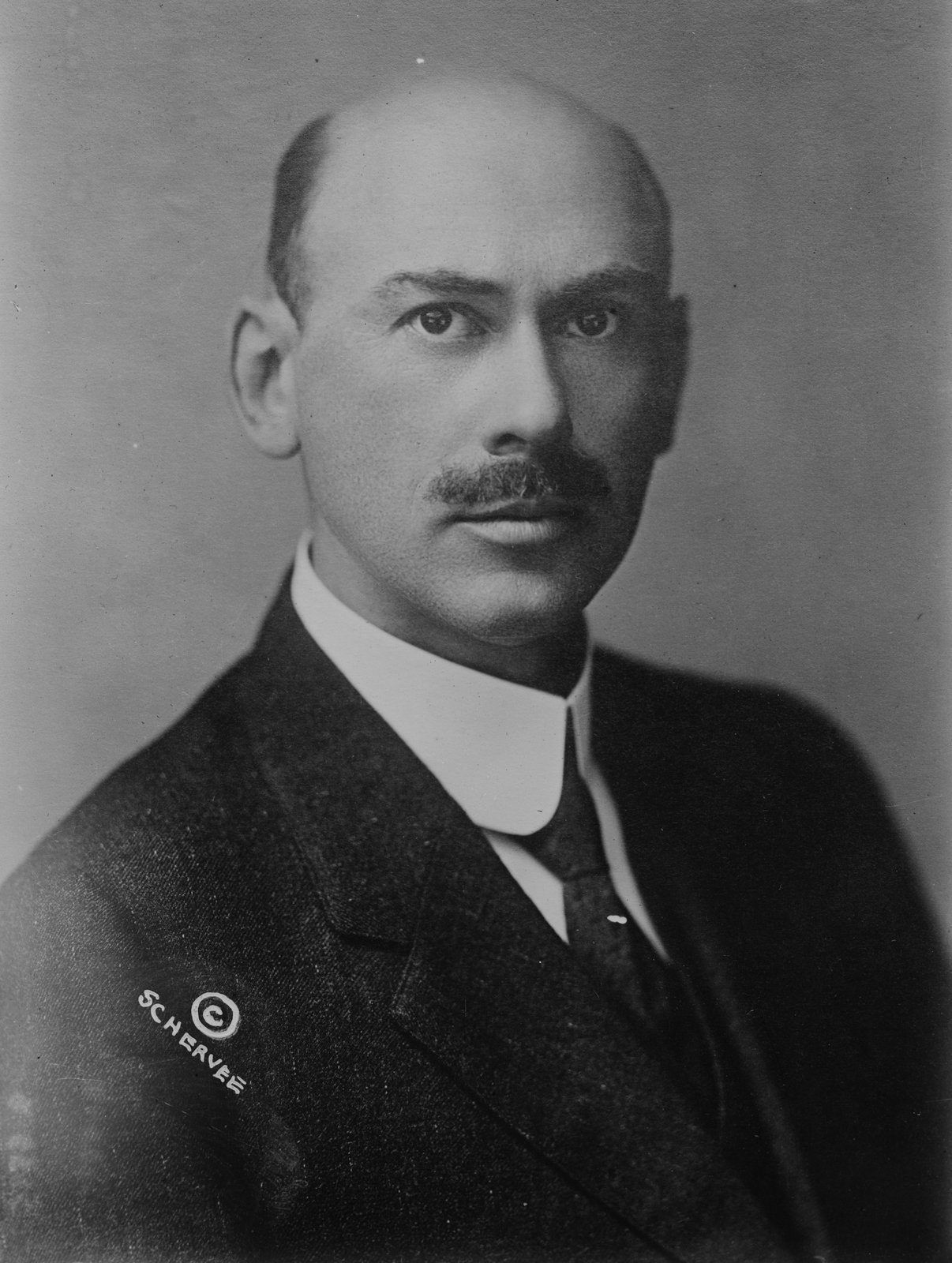

Dr. Rob't H. Goddard, Bain News Service, [between ca. 1915 and ca. 1920], glass negative, George Grantham Bain Collection, Library of Congress (LC-DIG-ggbain-30106); the print carries the studio mark 'Schervee' (Commons credits Herman Schervee, 1867-1923); public domain (published before 1931); cropped to the portrait and downscaled · Bain News Service, George Grantham Bain Collection, Library of Congress Prints and Photographs Division (LC-DIG-ggbain-30106; call no. LC-B2- 5133-14), via Wikimedia Commons · Public domain (PD-US-expired)
핵심 특성
주요 업적
고더드는 1915~16년에 시판 화약 로켓의 추력을 탄도 진자로 측정했다. 데이비드 스턴에 따르면 연료 에너지 가운데 분사 속도로 바뀌는 몫은 2% 남짓에 불과했고, 드 라발식 노즐을 쓰자 효율은 최대 63%까지 올랐다. 이 결과와, 진공에서도 반동이 유지된다는 실험은 스미스소니언이 1919년에 펴내 1920년 1월에 일반에 공개한 논문 「극한 고도에 도달하는 방법(A Method of Reaching Extreme Altitudes)」에 실렸다.
1926년 3월 16일 고더드는 매사추세츠주 오번의 한 농장에서 휘발유와 액체 산소를 쓰는 로켓을 발사했다. 로켓은 약 2.5초 동안 41피트가량 올랐다가 발사틀에서 184피트 떨어진 곳에 떨어졌다. 데이먼드 베닝필드에 따르면 같은 곳에서 1929년 7월 17일에 이뤄진 발사에서는 카메라, 온도계, 기압계를 실은 로켓이 약 90피트까지 올랐다가 추락했다.
톰 크라우치에 따르면 고더드는 1935년 봄 뉴멕시코주 로스웰 인근에서 자이로스코프 제어 장치 개발에 몰두하고 있었다. 크라우치가 인용한 편지에서 고더드는 클라크 대학 총장에게 가장 최근의 비행이 연구 전 기간을 통틀어 가장 좋았다고 전했다. 그가 그해 11월 스미스소니언에 보낸 A 시리즈 로켓은 남아 있던 여러 로켓의 부품을 모아 조립한 것이었고, 고더드는 이 로켓들이 도달한 최고 고도가 1마일을 조금 넘는다고 적었다.
삶의 장면들
스미스소니언이 1920년 1월 고더드의 논문을 공개한 뒤, 1월 13일 자 《뉴욕 타임스》 사설은 고더드가 “고등학교에서 날마다 나눠 주는 지식”이 부족해 보인다고 썼다. 프랭크 윈터가 전하는 1월 14일 자 《보스턴 헤럴드》 기사에서 고더드는 기자에게 논문 사본을 건네며 “그것이 전부를 말해 준다”고 했고, “자기 방어를 위해 신문 기자들을 피해야 한다”고 덧붙였다. 베닝필드는 데이비드 클래리의 전기를 인용해, 그가 그 사설에 다른 보도 이상의 관심을 두지 않았다고 전한다. 《타임스》는 1969년 7월 17일 이 사설을 정정했다.
당시 캘리포니아 공과대학(칼텍) 대학원 조교였던 프랭크 말리나는 1968년에 쓰고 1986년에 칼텍의 《Engineering & Science》에 개작해 실은 글에서, 1936년 8월 28일 고더드와 이야기를 나눈 뒤 다음 달 로스웰로 찾아갔던 일을 회고했다. 그는 작업장(다만 관측 로켓의 부품은 보지 못했다), 발사탑, 추력 2,000파운드급 시험대를 볼 수 있었지만, 고더드는 이미 발표한 1936년 스미스소니언 보고서 이상의 기술적 세부 사항은 밝히려 하지 않았고, 말리나는 고더드가 로켓을 자신만의 영역으로 여기는 듯한 인상을 받았다.
이 일화는 이 프로필의 중간 이하 협업 점수와 부합하며, 이 점수는 소규모 팀과의 긴밀한 작업이 아니라 외부와의 관계를 가리킨다. 다만 말리나는 협력을 구하러 간 당사자로서 약 30년 뒤에 이 방문을 회고한 것이며, 베닝필드의 기사는 고더드가 이때 자신의 작업을 상당 부분 보여 주었다고 적는다. 협업 성향
전환점
1929년 7월 17일의 발사로 오번의 발사장에 경찰차와 구급차가 출동한 뒤, 톰 크라우치에 따르면 고더드는 사실상 그 지역에서 로켓을 날릴 수 없게 되었다. 11월 22일 찰스 린드버그가 《포퓰러 사이언스》 기사를 읽고 전화를 걸었고 두 사람은 이튿날 만났다. 린드버그가 이 연구를 해리 구겐하임에게 알렸고, 구겐하임은 초기 지원금 5만 달러를 내기로 했다. 이후 고더드의 로켓 연구는 1930년부터 뉴멕시코주 로스웰 인근을 거점으로 했으며, 이곳은 한 기상학자의 제안에 따라 그가 고른 장소였다.
이 흐름은 매사추세츠에서의 발사 금지 이후에도 연구가 이어졌다는 점에서 이 프로필의 끈기 점수를 보여 주는 사례이다. 다만 자금과 이전은 고더드 자신만큼이나 린드버그와 구겐하임의 주도에 힘입은 것이었다. 끈기
비슷한 인물
전체적인 프로필이 이 사람과 닮은 사람들이에요.
출처
- Robert H. Goddard (English Wikipedia; lead section fetched via the MediaWiki API) -- orientation only (identity, dates, occupations); not used as support for any scored row. The Korean Wikipedia article title 'ko:로버트 고더드' was confirmed through the Wikidata sitelink and the ko.wikipedia API (title only).
- Robert H. Goddard (Q182546) -- identity verified live through the Wikidata API (wbgetentities: labels, descriptions, claims, sitelinks): en label 'Robert H. Goddard', en description 'American physicist', ko label '로버트 고다드' (kowiki sitelink title '로버트 고더드'), born 1882-10-05, died 1945-08-10, citizenship Q30 (United States), P18 'Dr. Robert H. Goddard - GPN-2002-000131.jpg' (not used; see provenance). Orientation only.
- Damond Benningfield, 'Who Was the Original Rocket Man?', National Air and Space Museum, Air & Space Quarterly (Summer 2026 issue; posted 17 June 2026) -- journalist's centenary feature built on interviews with museum and NASA historians (Neufeld, J. Anderson, C. Anderson) and quotations from Clary's biography and Goddard's diary. Non-self, secondary, critical in tone. Fetched with curl and read in full.
- Michael J. Neufeld and Frank H. Winter, 'Robert Goddard: Secret Space Visionary', National Air and Space Museum (16 March 2026) -- two retired NASM rocketry curators reading Goddard's 1919-1920 Smithsonian papers, his March 1920 confidential report to Abbot and his January 1918 essays. Non-self, scholarly secondary, critical of his secrecy. Fetched and read in full.
- Frank H. Winter, 'The Misunderstood Professor', Air & Space (Smithsonian), May 2008 -- curator emeritus's account of the January 1920 press flap (Boston Herald exchange of 14 Jan 1920, the New York Times editorial of 13 Jan 1920 and its 17 July 1969 correction), Goddard's press policy and his assistants. Non-self, scholarly secondary (same author as one half of the Neufeld/Winter piece, so ONE Winter perspective). Fetched and read in full; several statements (e.g. assistants' agreements) are given without a cited document.
- Tom D. Crouch, 'Reaching Toward Space', Smithsonian Magazine / Air & Space (February 2001; byline read in the page's markup) -- Smithsonian curator's narrative of Goddard's relations with the Smithsonian, the 17 July 1929 launch and its aftermath, Lindbergh's visit of 23 Nov 1929, the Guggenheim grant and Roswell, the September 1935 visit and the November 1935 donation of an A-series rocket (quotes Goddard's letters, Lindbergh's autobiography and von Karman). Non-self, scholarly secondary. Fetched and read in full.
- Tom Crouch, 'Robert Goddard and the Smithsonian', National Air and Space Museum (3 Dec 2010; excerpt from 'Smithsonian National Air and Space Museum: An Autobiography') -- Goddard's September 1916 letter to Abbot, the $5,000 grant and the 1919 treatise. Same author as src_goddard_crouch_reaching (ONE Crouch perspective). Fetched and read in full.
- David P. Stern, 'Robert Goddard and His Rockets', NASA Goddard Space Flight Center (ISTP historical pages 'From Stargazers to Starships', archival page updated 2005, edited 2016) -- a NASA physicist-educator's technical account of the 1913 diary list, the 1915-16 ballistic-pendulum, nozzle and vacuum measurements, the switch to liquid fuel in 1922, the 1926 flight and later gyroscope/vane control. Non-self secondary that draws on Goddard's own papers; reads as sympathetic but factual. Fetched and read in full.
- Frank J. Malina, 'The Rocket Pioneers', Caltech Engineering & Science (November 1986; adapted from Malina's 1968 E&S article) -- FIRSTHAND account by the young Caltech rocket experimenter of his 28 Aug 1936 meeting with Goddard at Caltech and his September 1936 day at Roswell, with an extract from von Karman's memoir 'The Wind and Beyond'. Interested but non-self, recalled about 30 years later (the passages on Goddard's supposed bitterness or self-regard are not used). Downloaded as PDF and read: the opening and the Goddard passages closely; the remainder (GALCIT test narrative) skimmed by keyword only.
- Smithsonian Institution Archives, 'Stories from the Smithsonian: Robert H. Goddard' primary-source transcriptions written by GODDARD (self): his 27 Sept 1916 proposal letter, his 9 Jan 1917 reply on receiving the grant, his March 1920 'Report Concerning Further Developments' and his 28 May 1930 letter to Abbot. All read (the March 1920 report: first part and keyword-searched remainder). Pages, all under https://siarchives.si.edu/history/featured-topics/stories/: september-27-1916-goddards-proposal-smithsonian (cited url), january-9-1917-goddard-secretary-walcott-after-receiving-grant, march-1920-report-concerning-further-developments-space-travel, may-28-1930-goddard-secretary-abbot-thanking-smithsonian-its-support. SELF-AUTHORED -- counts as one self perspective.
- Smithsonian Institution Archives, transcriptions of contemporaneous Smithsonian records written by OTHERS: C. G. Abbot's memoranda to Secretary Walcott of 2 Oct 1916 and 16 Dec 1916 and Walcott's letter to Goddard of 5 Jan 1917 approving the $5,000 Hodgkins Fund grant. Non-self, contemporaneous institutional records (the Smithsonian was the funder). All read in full. Pages, all under https://siarchives.si.edu/history/featured-topics/stories/: december-16-1916-assistant-secretary-abbot-secretary-walcott-goddards-propo (cited url), october-2-1916-assistant-secretary-abbot-secretary-walcott-goddards-proposa, january-5-1917-secretary-walcott-goddard-approving-grant.
- Solomon Hajramezan, 'Celestial Visions: Imagining and Engineering Spaceflight in the United States, 1899-1969' (MA thesis, University of Alberta, 2021), PDF downloaded and read: the Goddard section of chapter 1 (c. pp. 12-18) and the passage on the Malina/Goddard meeting and the 1938 Guggenheim cooperation attempt (c. p. 34). Scholarly secondary that re-tells Clary (2003), Hunley (1995), Malina and von Karman (derivative, weakly independent).
- Matthew Wills, 'Robert H. Goddard, the Forgotten Father of Rocketry', JSTOR Daily (16 Oct 2017) -- a two-minute summary of J. D. Hunley, 'The Enigma of Robert H. Goddard', Technology and Culture 36:2 (1995). Read in full; Hunley's article itself is behind a paywall and was NOT read. Used only to report Hunley's assessment of Goddard's departure from step-by-step engineering practice (a secondary summary of a secondary source).