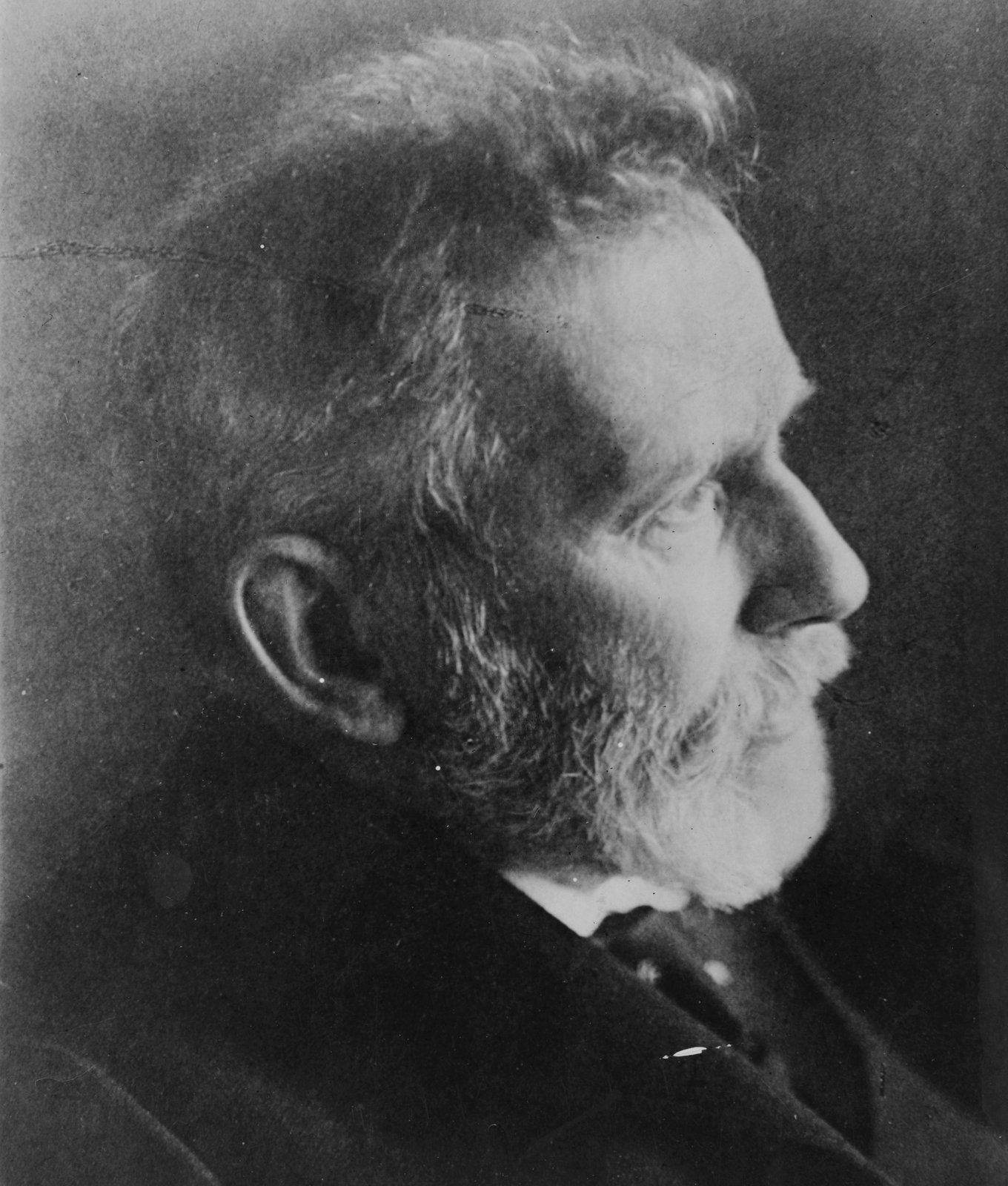
Bain News Service, Prof. Paul Ehrlich, photograph, 1909; Library of Congress, LCCN 00650787; no known restrictions on publication. Cropped to the photographic image area (handwritten caption, number and black border removed) and downsized to 1600 px. · Bain News Service, 'Prof. Paul Ehrlich', photographic print (Bain negative/print no. 728-1), 1909; Library of Congress Prints and Photographs Division, George Grantham Bain Collection, LCCN 00650787 (digital ID cph.3c26279), rights statement 'No known restrictions on publication'; via Wikimedia Commons (master TIFF 3319x4096). The Library of Congress item page itself is behind a bot-check and was not opened; the rights chain rests on the Commons file wikitext, which quotes the LoC statement and tags it PD-Bain and PD-old-70-1923 (US news-agency photograph, 1909). · Public domain
핵심 특성
주요 업적
에를리히와 공동 연구자들은 비소 화합물을 오랫동안 연달아 만들어 시험했고, 그 606번째인 아르스페나민은 1907년에 만들어졌다. 하타 사하치로(Sahachiro Hata)가 1909년에 이 약이 감염된 토끼의 매독을 치료함을 보이자, 에를리히와 하타는 1910년 4월 19일 비스바덴 내과학회에서 이를 발표했고 획스트(Hoechst)사가 '살바르산'이라는 이름으로 판매했다. 발렌트 등은 이것을 매독에 대한 최초의 합성 약제로 설명한다. 이 약은 기생체만 공격하고 환자 자신의 세포는 비켜 가는 '마법의 탄환'이라는 에를리히의 구상에 기반했다.
에를리히는 1897년에 곁사슬 이론을 제안했다. 세포에는 독소와 특이적으로 결합하는 구조가 있고, 세포가 이를 더 많이 만들어 내보내면 항독소, 곧 항체로 작용한다는 것이다. 1900년에는 이 구조를 '수용체'라고 불렀다. 면역에 관한 이 연구로 그는 1908년 노벨 생리의학상을 일리야 메치니코프(Ilya Metchnikoff)와 함께 받았으며, 메치니코프의 식세포 이론은 그의 이론과 서로 보완되는 관계였다.
에를리히는 1890년부터 로베르트 코흐(Robert Koch)의 연구소에서 에밀 폰 베링(Emil von Behring)의 디프테리아 항독소 연구에 참여했다. 그는 혈청마다 항독소 함량이 크게 다름을 보이고, 고정된 표준에 대비한 항독소 단위를 정의했으며, 노벨상 공식 약력은 이 방법이 이후 모든 혈청 표준화의 토대가 되었다고 적는다. 1896년부터는 치료용 혈청을 관리하기 위해 세워진 프로이센 연구소를 이끌었고, 1899년에는 프랑크푸르트의 왕립 실험요법연구소 소장이 되었다.
에를리히는 학생 시절과 베를린 샤리테 병원의 젊은 의사 시절에 염료를 산성, 염기성, 중성으로 분류하고 이를 이용해 혈액 세포 속 과립을 구별했으며, 노벨상 공식 약력은 이 연구가 혈액학의 토대를 놓았다고 적는다. 1882년에는 코흐가 막 발견한 결핵균을 염색하는 개선된 방법을 발표했는데, 이는 오늘날에도 쓰이는 지엘-닐센 염색법의 바탕이 되었다.
삶의 장면들
1906년 게오르크 슈파이어 하우스에서 에를리히는 화학자 세 사람에게, 아톡실이 1863년 이래 통용되던 공식의 '아닐리드'가 아니라 자유 아미노기를 가진 아미노페닐비소산이라고 말하고 그 전제로 작업을 진행하라고 지시했다. 마르콰르트(Marquardt)의 기록에 따르면 이 가운데 폰 브라운과 슈미츠는 이를 거부하고 떠났고, 베르트하임(Bertheim)은 남았으며 에를리히와의 공동 논문은 1907년 5월 1일에 발표되었다. 노벨상 공식 약력은 에를리히가 베르트하임과 함께 올바른 구조식을 확립했다고 적는다.
통용되던 공식에 맞서 자신의 화학적 해석을 고집하고, 화학자 두 명을 잃으면서까지 그에 따라 작업을 지시한 일은 독립적 사고와 부합한다. 같은 기록은 이런 태도가 사람을 잃는 대가를 치렀음도 보여 준다. 독립적 사고
1909년 하타 사하치로는 1907년에 효과가 없다며 제쳐 두었던 606번 화합물이 매독에 걸린 토끼에게 효과가 있다고 보고했다. 에를리히는 실험을 거듭 되풀이하라고 요구했고, 마르콰르트의 기록에 따르면 에를리히가 결과를 받아들이고 1910년 발표를 준비하기 전에 하타가 조바심을 냈다. 노벨상 공식 약력은 수백 번의 실험이 그 효능을 거듭 입증했다고 적는다.
자신이 간절히 바라던 결과였음에도 거듭 확인을 요구한 일은 완벽주의와 부합한다. 같은 요구는 실험을 맡은 사람을 지치게 하기도 했다. 완벽주의
전환점
1906년 에를리히는 프랑크푸르트의 게오르크 슈파이어 하우스 소장이 되었다. 이 화학요법 연구소는 프란치스카 슈파이어(Franziska Speyer)의 기부금으로 그의 연구소 옆에 세워졌다. 이곳의 화학 실험실 덕분에 그는 혈청 연구에서 벗어나 자신이 설계한 화합물을 직접 만들어 시험할 수 있게 되었고, 발렌트 등은 이 기부가 606호로 이어진 선별 연구의 필수 토대였다고 설명한다.
혈청 연구에서 자신에게 없던 화학 실험실로 방향을 옮기고 그것을 민간의 기부로 마련한 일은 자원 활용 성향과 부합한다. 자원 활용 성향
비슷한 인물
전체적인 프로필이 이 사람과 닮은 사람들이에요.
출처
- Paul Ehrlich (English Wikipedia) -- orientation only; not used as support for any scored row. Korean Wikipedia title '파울 에를리히' confirmed via the Wikidata kowiki sitelink.
- Paul Ehrlich (Q57089) -- verified live via wbgetentities (2026-10-05): en label 'Paul Ehrlich', description 'Jewish-German physician and scientist (1854-1915)', ko label '파울 에를리히', P569 1854-03-14, P570 1915-08-20, P18 two images (Paul Ehrlich 3.jpg; the 1920 Voigt portrait). Orientation only.
- Martha Marquardt, 'Paul Ehrlich' (London: William Heinemann Medical Books, 1949; introduction by Sir Henry Dale; enlarged from her 1924 'Paul Ehrlich als Mensch und Arbeiter'), Internet Archive digitised copy (Digital Library of India scan, OCR text) -- chapters III, IV, V, VII, VIII, IX, X, XI, XIV, XV, XVI, XVII, XXI, XXIV and XXV read in full; VI, XII and XVIII read in part; I, II, XIII, XIX, XX, XXII and XXIII not read. INSIDER AND ADMIRING (Ehrlich's secretary 1902-1915, writing three decades after his death; much dialogue is reconstructed from memory; she is openly partisan about Wassmann and about credit for 606). It also relays letters and recollections from Henry Dale, William Bulloch, Reid Hunt, Edmund Landau, William Welch, Johan Almqvist, Hans Sundberg and Felix Pinkus, and long extracts from Ehrlich's own 1899 and 1906 letters and autobiographical notes -- each such passage is cited below as a relayed account, not a separate source. Read: Charite assistant years and the 1882 stain for the tubercle bacillus; the Behring contract dispute; the Steglitz and Frankfurt institutes; the Gruber debate over the side-chain theory; working habits, 'blocks', reading and forgetfulness; the 1906 atoxyl scene with the chemists; the arsenic series, 606 set aside and re-tested by Hata; distribution of Salvarsan in 1910; the early necrosis problem; the 1912 refusal of lay lectures; Neosalvarsan as a compromise; the 1914 Wassmann libel case; the last year.
- Peter Valent, Bernd Groner, Udo Schumacher, Giulio Superti-Furga and colleagues (Medical University of Vienna commemorative symposium), 'Paul Ehrlich (1854-1915) and His Contributions to the Foundation and Birth of Translational Medicine', Journal of Innate Immunity 8(2), 2016, 111-120 (open full text, DOI 10.1159/000443526), read in full (body text; reference list skimmed) -- SCHOLARLY REVIEW, ADMIRING BUT MODERN AND INDEPENDENT OF MARQUARDT. Read: the three phases of his career (staining and haematology 1878-1890; antitoxin standardisation and side-chain theory 1890-1900; chemotherapy 1904-1914), the receptor and chemoreceptor concept with Langley, the screening programme (methylene blue 1891, trypan red with Shiga, arsacetin, arsenophenylglycin, 606, 914), the roles of Bertheim and Hata, the 1910 Wiesbaden announcement and 65,000 free samples, the remark that he was criticised for a 'too lively' imagination and overinterpretation, and the post-Salvarsan limits (resistance, combination with mercury or bismuth).
- Paul Ehrlich, 'Partial Cell Functions', Nobel Lecture, 11 December 1908 (Nobel Lectures, Physiology or Medicine 1901-1921; NobelPrize.org PDF), read in full -- PRIMARY, SELF. Read: toxin-toxoid-antitoxin reasoning and the receptor concept, credit given by name to Morgenroth, Wassermann, Franke, Rohl, Gulbransen and Browning, the trypanosome recidive-strain experiments, his own statement that the work has gaps, and his claim that arsenophenylglycin was an 'entirely ideal remedy' in animals.
- NobelPrize.org, 'Paul Ehrlich - Biographical' (from Nobel Lectures, Physiology or Medicine 1901-1921, Elsevier 1967), read in full -- INSTITUTIONAL SUMMARY; its closing paragraph says it relies on Martha Marquardt's biography for personal habits, so it is NOT independent of her on character. Used for dated facts: staining work, serum standardisation, side-chain theory, the 606th substance set aside in 1907 and tested on Hata's syphilitic rabbits, Neosalvarsan as the 914th substance, the 1908 prize shared with Metchnikoff.
- Paul Ehrlich and S. Hata, 'Die experimentelle Chemotherapie der Spirillosen (Syphilis, Rueckfallfieber, Huehnerspirillose, Framboesie)' (Berlin: Julius Springer, 1910), Internet Archive copy (Yale Medical Historical Library) -- Ehrlich's preface (Vorwort) read in full in German; Hata's experimental chapters and the tables were not read (technical OCR text). PRIMARY, SELF. Read: his statement of method (a planned search for a type of remedy improved by modification and substitution, not aimless trial of substances), the list of named collaborators and chemists he thanks, the Hoechst, Cassella and Rockefeller (through Flexner) support, his admission of having been 'a spendthrift' with his own means in the early years, and his statement that without Hata's exact work the result would not have been reached.
- Dr. med. Heinrich Dreuw (Berlin dermatologist), 'Die Salvarsangefahr' (Berlin: Ritter-Verlag, 1914; this copy carries a Georg-Speyer-Haus library stamp), Internet Archive OCR text -- opening survey and the sections on how 606 was introduced, the restricted early distribution, the switch from subcutaneous to intravenous injection, and the Berlin Dermatological Society discussion read (about the first 17 pages of the text, OCR partly garbled); the remainder skimmed. ADVERSARIAL CONTEMPORARY CRITIC AND POLEMICIST: the author states he is waging a public campaign against 'Ehrlich-Hata 606', quotes a Prague pharmacologist (Hering) on inadequate animal toxicology, a newspaper report of a 1910 Berlin society meeting, and his own observation of necroses; his case counts (for example about 280 deaths in the literature) are not independently checked and are not used. Cited only for what Ehrlich is said to have claimed ('therapia magna sterilisans', 'ideal', 'hyperideal'), the early limited distribution to chosen physicians, and the complaint that he did not answer a September 1910 letter.