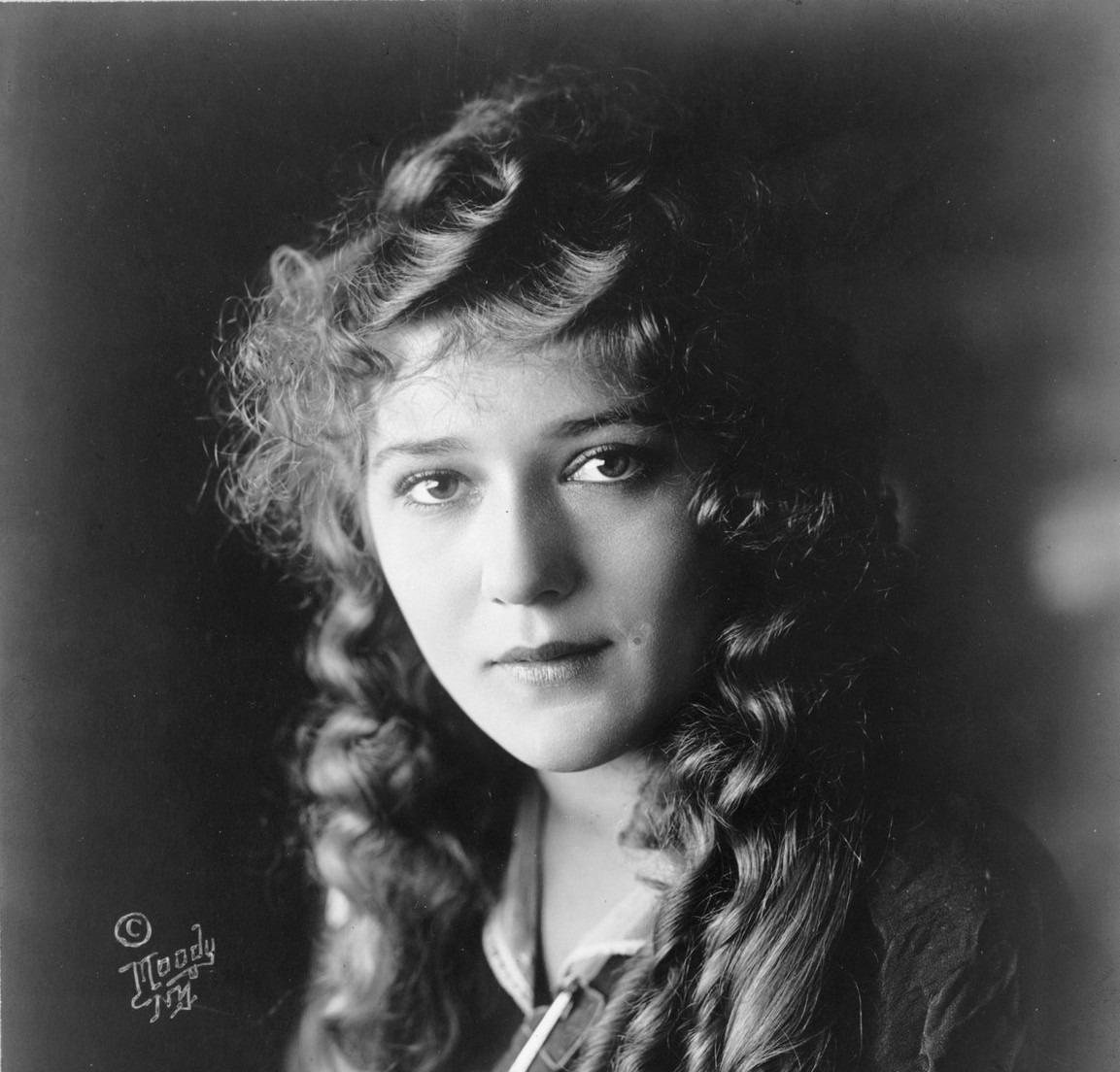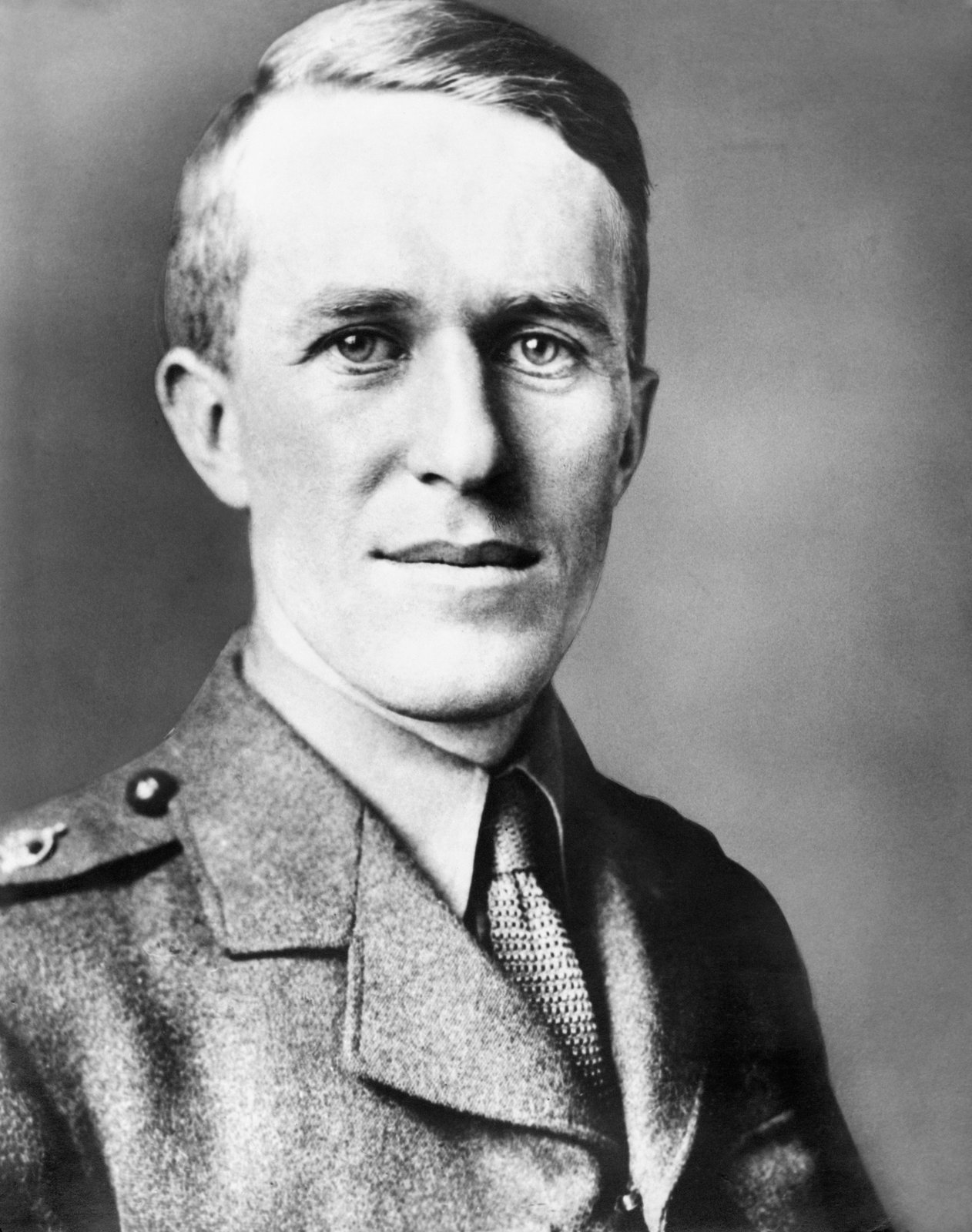

Rufus Porter Moody (1873-1922), 'Mary Pickford, head-and-shoulders portrait, facing front', photographic print, between 1910 and 1920; Library of Congress Prints and Photographs Division (LC-USZ62-117995); studio copyright notice 'Copyright by Moody, New York' (photographer died 1922) · Library of Congress Prints and Photographs Division, biographical-file portrait photograph (LC-USZ62-117995; digital ID cph.3c17995; control no. 97510062), Moody, New York · Public domain
핵심 특성
주요 업적
메리 픽퍼드는 1909년 바이오그래프의 단편 영화로 영화 경력을 시작해, 1910년대 중반에는 세계에서 가장 인기 있고 출연료가 높은 영화배우 가운데 한 명이 되었고 '미국의 연인'이라 불렸다. 영화사학자들은 픽퍼드를 클로즈업 카메라에 어울리는 보다 자연스러운 연기 양식을 개척한 배우로 평가한다. 「테스 오브 더 스톰 컨트리」(1914)는 네 개 대륙에서 상영되었고, 1917년경에는 캘리포니아에서 영국과 일본에 이르기까지 그의 영화를 보는 관객이 있었다.
1919년 픽퍼드는 찰리 채플린, 더글러스 페어뱅크스, D. W. 그리피스와 함께 유나이티드 아티스츠를 세웠다. 배우와 영화인이 자기 영화의 배급을 직접 통제하고 수익을 나눌 수 있게 하려는 배급사였다. 픽퍼드는 그보다 앞선 1916년에 이미 자신의 제작 부문을 확보했는데, 영화학자 게일린 스터들러는 이를 할리우드 스타로서는 처음 있는 일이라고 설명한다. 픽퍼드는 1935년부터 경영진으로 일했고, 1956년 지분을 팔 때까지 유나이티드 아티스츠의 소유주로 남았다.
1927년 픽퍼드는 영화예술과학아카데미를 세운 36명의 창립 회원 가운데 한 사람이었고, 1930년에 열린 제2회 시상식에서 첫 유성영화 「코케트」(1929)로 여우주연상을 받았다. 앞서 1921년에는 영화인 구호 기금(현 모션 픽처 & 텔레비전 펀드)의 창립에 참여했고, 1932년에는 급여 공제 기부 제도인 '페이롤 플레지'를 앞장서 추진했다.
삶의 장면들
1907년 여름, 순회 극단 배우였던 열다섯 살의 글래디스 스미스는 브로드웨이 제작자 데이비드 벨라스코의 사무실을 날마다 찾아갔지만 내일 다시 오라는 말만 들었다. 세부 내용은 기록마다 다르다. 2005년 PBS 다큐멘터리는 마침내 사무실로 뛰어들어 벨라스코를 만나지 못하면 목숨이 걸렸다고 외쳤다고 전하고, 1926년 테리 램지의 영화사는 리허설 중인 무대로 뛰어들었다고 전한다. 두 기록 모두 그가 벨라스코의 극단에 들어갔다는 점은 같고, 메리 픽퍼드라는 예명도 벨라스코가 붙여 주었다.
이 일화는 기회가 오기를 기다리기보다 스스로 기회를 만들어 낸다는, 이 프로필의 높은 주도적 행동성과 일관된다. 선제적 행동력
1918년 아돌프 주커가 도시를 비운 사이 픽퍼드는 「스텔라 마리스」 촬영에 들어갔다. 부유한 병약한 소녀와, 학대받으며 절뚝이며 걷는 고아 하녀 유니티 블레이크를 한 사람이 연기하는 작품이었고, 주커가 승인하지 않았을 배역이었다. 돌아온 주커는 분장한 채 촬영장에 있는 픽퍼드를 보고 크게 당황했으며, 픽퍼드는 자기 배역이 영화가 끝나기 전에 죽는다며 그를 안심시켰다. 영화는 호평을 받았고, PBS 다큐멘터리에 따르면 주커는 그 연기가 픽퍼드 경력에서 '가장 놀라운' 것이었다고 인정했다.
이는 제작자가 반대했을 법한 비관습적인 배역을 밀어붙였다는 점에서 이 프로필의 위험 감수 성향과 일관된다. 다만 이후 「로지타」(1922)처럼 팬들의 반응이 덜했던 시도도 있었다. 위험 감수
전환점
1915년경 픽퍼드와 어머니는 그의 영화가 파라마운트의 다른 작품까지 팔리게 하는 힘이 되고 있다고 판단했다. 1916년 전국적인 화제가 된 협상 끝에 주커와 맺은 계약은 그의 이름을 건 제작 부문을 통한 수익 분배와 작품에 대한 더 큰 발언권을 보장했고, 픽퍼드는 「푸어 리틀 리치 걸」(1917) 같은 작품을 직접 고르기 시작했다. 월급을 받는 스타에서 제작자로 바뀐 이 위치는 1918년 퍼스트 내셔널을 거쳐 1919년 유나이티드 아티스츠로 이어졌다.
이는 높은 급여만이 아니라 자기 작업의 소유권과 통제권을 요구했다는 점에서 이 프로필의 강한 자율성 욕구와 일관된다. 자율성 욕구
비슷한 인물
전체적인 프로필이 이 사람과 닮은 사람들이에요.
출처
- Mary Pickford (Q104109) -- verified live via wbgetentities (2026-10-04): en label 'Mary Pickford', description 'Canadian actress and producer (1892–1979)', P569 8 Apr 1892 (a second claim gives 1893), P570 29 May 1979, citizenship Canada (Q16), instance of human, ko label '메리 픽퍼드', P18 'Mary Pickford cph.3c17995u.jpg'. Orientation only; not used as support for any row.
- Mary Pickford -- English Wikipedia article (read 2026-10-04 via action=raw). Orientation only: used to locate leads (Motion Picture Relief Fund, film-donation history, the 1930 Oscar controversy) and never as support for a scored row.
- Sue Williams (writer/director), 'Mary Pickford', PBS American Experience, aired 4 April 2005 -- full documentary transcript read. SCHOLAR perspective (non-self): narration plus interviews with biographers Eileen Whitfield and Scott Eyman and film historians Tino Balio, Jeanine Basinger, Kevin Brownlow, Robert Cushman and Kathryn Fuller-Seeley, with archival clips of Pickford, Fairbanks, Zukor and Chaplin quoted. Used for her 1907-1919 career moves, the 1915-16 salary and production-unit negotiation, Stella Maris, the formation of United Artists, the 1920s Lubitsch/Rosita and Coquette episodes, and the later decline. Its passages on her marriages, her family's drinking, her own drinking and her mother are not used as trait evidence.
- PBS American Experience, 'The Long Decline' (feature article accompanying the 2005 Mary Pickford film) -- scholarly/editorial overview (non-self), read in full. Used for the sound-era transition (Coquette), the shift in audience taste, and her 1930s-50s attempts at producing and radio; its remarks on drinking and family are not used.
- PBS American Experience, 'Women on Screen' (interview excerpts with film historians Jeanine Basinger, Scott Eyman, Kevin Brownlow and Eileen Whitfield on Pickford's appeal, her working method with D. W. Griffith and her audience) -- scholar perspective (non-self), read in full.
- The Canadian Encyclopedia, 'Mary Pickford' (article by the encyclopedia's editors) -- national reference entry (non-self), read in full: Toronto birth, stage career, Biograph and IMP, United Artists and the Mary Pickford Company, the Motion Picture Relief Fund (1921), the Academy (1927), Coquette, her 1934 Toronto return and later citizenship. Its mention of her later alcoholism and depression is not used.
- Adolph Zukor with Dale Kramer, The Public Is Never Wrong: The Autobiography of Adolph Zukor (New York: G. P. Putnam's Sons, 1953), Internet Archive full text (Media History Digital Library scan) -- COUNTERPARTY perspective (her employer and negotiating opponent, writing self-interestedly about himself, but non-self about Pickford). Read locally: his 1913 recruitment of her at Delmonico's and the $500-a-week contract, the 1914-15 salary negotiation against a serial offer, the 1916 contract and the Mary Pickford Company inside Famous Players, her disclosure of the First National offer in 1918, and his account of her leaving. His comments on her private life are not used.
- Benjamin B. Hampton, A History of the Movies (New York: Covici-Friede, 1931), Chapter 8 'The Pickford Revolution', Internet Archive full text -- PERIOD industry historian (non-self) who personally negotiated with Mary and Charlotte Pickford in 1916 while trying to merge Paramount with V-L-S-E; an interested participant but independent of both Pickford and Zukor. Read pp. 146-160: the exhibitors' 'wrap everything around her neck' remark, the January 1915 contract, the demand for a Mary Pickford company, fewer and better pictures sold outside the program system, and the dispute over whether her Famous Players contract was still in force.
- Terry Ramsaye, A Million and One Nights: A History of the Motion Picture (New York: Simon and Schuster, 1926), Internet Archive full text -- PERIOD film historian (non-self), read in the passages on her 1907 Belasco entry, her moves between Biograph, IMP and Majestic, and the formation of United Artists in 1919 (the McAdoo and Price arrangements and the quoted 'lunatics have taken charge of the asylum' reaction). Its early-career material may derive from Pickford's own telling and is treated with that caution.
- Gaylyn Studlar (David May Distinguished University Professor, Washington University in St. Louis), 'Artists, United: The Radical Origin of a Film Corporation', Washington University Center for the Humanities, 8 April 2019 -- SCHOLAR perspective (non-self) and the main CRITICAL source: it credits the 1919 founding, but states that after assuming executive leadership of United Artists in 1935 Pickford 'made mistakes, among them the loss of UA's distribution of Disney films', that management left her hands in 1951 and that she sold her stock in 1956. Read in full.
- Cari Beauchamp (Hollywood historian), 'The Creation of United Artists', essay on the Mary Pickford Foundation website -- historian's account (non-self; hosted by the Foundation that preserves her legacy, so friendly in tone), read in full: the block-booking grievance, First National, the 1919 merger rumour, the 5 February 1919 signing, William McAdoo as counsel and Joseph Schenck's later role.
- Cari Beauchamp, 'Making and Promotion of Stella Maris', essay on the Mary Pickford Foundation website -- historian's account (hosted by the Foundation) drawing on Pickford's own memoir Sunshine and Shadow (self), trade-press reviews (Motion Picture World, Photoplay, 1918), Frances Marion and the Stella Maris press kit; read in full. Describes the dual role, the shoe she altered to produce a limp and Zukor's dismay on seeing her as Unity Blake.
- Cari Beauchamp, 'Lubitsch, Pickford and the making of Rosita', essay on the Mary Pickford Foundation website (written for the 2023 Museum of Modern Art restoration) -- historian's account (hosted by the Foundation) quoting Pickford's own later interviews (Brownlow 1974, Pratt 1958, Columbia oral history), read in full. The American Legion exchange and the 'court of the last appeal' remark rest on her own recollections (self perspective).
- Cari Beauchamp, 'Mary Pickford on the Road Selling Liberty Bonds', essay on the Mary Pickford Foundation website (cites 1918 Washington Post, Houston Press, Oakland Tribune, San Francisco Chronicle and Los Angeles Times reports) -- historian's account (hosted by the Foundation), read in full: the April-May 1918 tour with Chaplin and Fairbanks and her autumn 1918 California bond appearances.
- Cari Beauchamp, 'Mary Pickford's Role in the History of the Motion Picture & Television Fund', essay on the Mary Pickford Foundation website (cites Los Angeles Times reports of 1925-1941) -- historian's account (hosted by the Foundation), read in full: the 1921 founding, the WAMPAS fundraising link, the 1924 building-fund chairmanship, the 1932 Payroll Pledge Program and the 1941 groundbreaking of the Motion Picture Country House.
- Motion Picture & Television Fund, 'Our History' (mptf.com timeline 1921-1971) -- institutional history (non-self) of the organisation she helped found; read the 1921, 1932 and 1939-1942 entries: incorporation of the Motion Picture Relief Fund with Joseph Schenck as president and Mary Pickford as vice president, her 1932 Payroll Pledge Program and the 1941 groundbreaking of the Country House.
- Academy of Motion Picture Arts and Sciences, 'Academy History and Structure' (oscars.org) -- institutional page (non-self), read: the Academy was founded in May 1927 by 36 members of the film community, including Mary Pickford.
- Academy of Motion Picture Arts and Sciences, 'The 2nd Academy Awards, 1930' (oscars.org ceremony page) -- awards-body record (non-self), read: Mary Pickford listed as Best Actress winner for Coquette, with the other nominees.
- Mary Pickford Foundation, 'Mary Pickford and the Academy of Motion Pictures Arts & Sciences' -- legacy-organisation page (friendly, partly self perspective with her 1947 interview quotations), read in full: her role among the 36 founders, the early meetings at Pickfair, the lecture series and sound-transition exchange of knowledge, and the 1979 donation of her papers to the Academy library.
- Mary Pickford Foundation, 'Mary Pickford and the Library of Congress' -- legacy-organisation page (friendly), read in full: the 1943 request from the Librarian of Congress, the 1946 delivery of 42 crates of nitrate film, the 1970 transfer of Biograph negatives, and Librarian Daniel Boorstin's description of the gift as the most important individual donation to the Library's film collection.
- Margarita Landazuri, 'Coquette', Turner Classic Movies article, 3 January 2007 -- secondary film-writing (non-self), read in full: the 1929 sound film, her bobbed-hair image change and the favouritism charge after her 1930 Best Actress win. The tea-for-judges claim is a reported allegation and is not used as trait evidence.