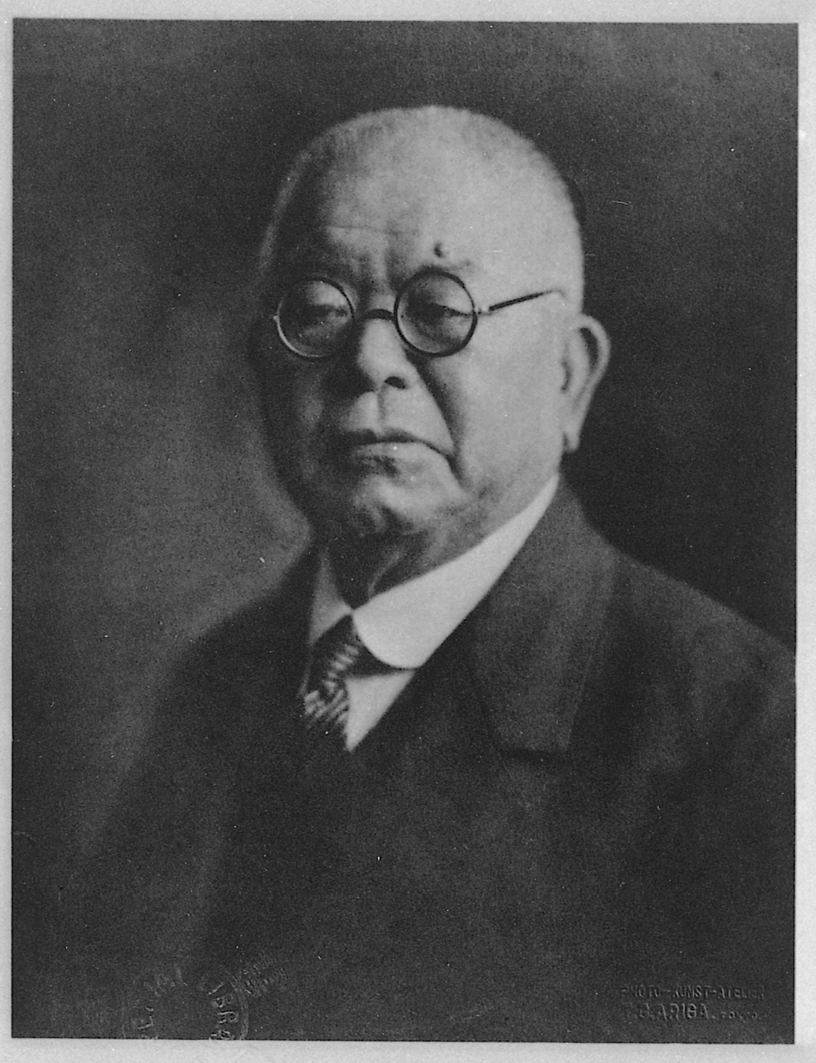

Photo-Kunst-Atelier T. Ariga, Tokyo, undated; reproduced by the National Diet Library, Japan, Portraits of Modern Japanese Historical Figures. · Studio portrait photograph of Kitasato Shibasaburo as an older man, bearing the stamp of Photo-Kunst-Atelier T. Ariga, Tokyo, reproduced in the National Diet Library's online exhibition 'Portraits of Modern Japanese Historical Figures' (image 0259_1, 816 x 1063). The Library's usage notice states that every portrait image in the exhibition is one whose copyright term has expired and that no application is needed to reuse it, including commercially. Date of the sitting is not stated; he died in 1931. Used at its original size, not upscaled. · Public domain (copyright term expired; National Diet Library usage notice)
과학자 · 19세기
기타자토 시바사부로
1853–1931
주요 업적 분야
아직 성격 매칭에 포함되지 않았습니다 — 기록된 근거가 성격 모델 전체를 다루기에는 충분하지 않습니다. 이 페이지의 다른 모든 내용은 자유롭게 확인하실 수 있습니다.
핵심 특성
주요 업적
베를린의 로베르트 코흐 연구소에서 1889년 파상풍균의 첫 순수배양에 성공했고, 1890년 에밀 폰 베링과 함께 디프테리아와 파상풍 면역에 관한 논문을 발표해 혈청요법의 토대를 놓았다.
1894년 홍콩에서 페스트균을 보고했으나 알렉상드르 예르생도 며칠 사이에 균을 보고했고, 두 사람의 우선권은 지금도 문서로 남은 논쟁이다. 오늘날 널리 받아들여진 것은 예르생의 발견이었다.
1914년 기타사토 연구소를 세우고 게이오대학 의학부의 초대 학장을 지냈으며, 시가 기요시와 노구치 히데요 같은 연구자들이 그의 연구소에서 배웠다.
삶의 장면들
파상풍균의 순수배양이 불가능하다고 여겨지던 때, 그는 수소로 산소를 몰아내는 장치와 밀폐 가능한 접시를 고안해 1889년 첫 순수배양에 성공했다.
이는 기존 방법이 통하지 않을 때 직접 장치를 만들어 낸 연구자의 면모와 부합한다. 자원 활용 성향
1894년 6월 홍콩에서 그는 의사 제임스 로슨과 『랜싯』을 통해 페스트균을 보고했고, 한 역사가는 그의 기술이 예르생의 것과 네 가지 중요한 점에서 달랐다고 전한다.
이는 엄밀한 실험실 연구자였으나 서둘러 낸 현장 보고가 논쟁적 결과를 남긴 모습과 부합한다. 분석적 엄밀성
전환점
1914년 정부가 그의 연구소를 문부성으로 옮기자, 그는 기타사토 연구소를 세웠고 연구진 대부분이 그와 함께했다.
이는 자신의 연구 기관을 다시 세우고 팀을 곁에 둔 과학자의 면모와 부합한다. 주도 성향
비슷한 인물
전체적인 프로필이 이 사람과 닮은 사람들이에요.


어니스트 섀클턴

마하트마 간디

마틴 루터 킹 주니어

윌버 라이트

모리타 아키오
출처
- Kitasato Shibasaburō (Q442225) -- verified live via the Wikidata API (2026-10-26): English label 'Kitasato Shibasaburō', description 'Japanese bacteriologist, immunologist', Korean label '기타자토 시바사부로', born 1853-01-29, died 1931-06-13, citizenship Japan, P18 images 'Kitasato Shibasaburo.jpg' and 'Shibasaburō Kitasato 1910.jpg'. Orientation only; not used as support for any row.
- National Diet Library (Japan), 'Portraits of Modern Japanese Historical Figures: Kitasato Shibasaburo' (entry text) and the NDL feature 'People who worked to overcome infectious diseases', read in full (in Japanese). CANONICAL SIGNIFICANCE SOURCE: the entry describes him as a bacteriologist who studied under Koch from 1886, achieved the culture of the tetanus bacillus in 1889, directed the Institute for Infectious Diseases after returning in 1892 and founded a new institute in 1915 after the dispute over the government transfer of the old one; the feature says the serum therapy he established in Germany is highly regarded and carried forward in today's vaccines and antibody drugs, that Nagayo Sensai and Fukuzawa Yukichi supported him, and that Shiga Kiyoshi and Noguchi Hideyo worked at his institute. Institutional reference text written by library staff; read in Japanese by the agent.
- Nobuo Okui, 'Shibasaburo Kitasato (1853-1931): Pioneer of Japanese Medicine and Global Immunology Innovator' (Cureus, 31 August 2024), read in full: Berlin work under Koch, the 1889 first pure culture of the tetanus bacillus with a hydrogen apparatus and a sealable dish he devised, the 1890 paper with Behring, the 1894 Hong Kong plague bacillus report and the note that it differed from Yersin's and that Yersin's findings gained wider acceptance, the 1892 institute funded with Fukuzawa's support, the 1914 Kitasato Institute, the Keio medical school dean post, his stated research principles, and his mentoring of Shiga, Hata and Noguchi. Admiring profile by a Japanese dental-school historian, with photographs supplied by the Kitasato Institute museum; the Behring-side accounts are complementary.
- The Victorian Web, 'Shibasaburo Kitasato' (bacteriology biography page), read in full: his Kumamoto and Tokyo training, the 1889 papers on culturing the anaerobic bacteria of black leg and tetanus, the 1890 co-authored paper with Behring (Behring on diphtheria, Kitasato on tetanus), the 1894 plague work in Hong Kong where Yersin independently found the same bacterium within days and the episode was first generally hailed as simultaneous discovery, the 1901 Nobel nomination for tetanus antitoxin and the plague bacillus, the 1914 institute dispute, and later posts and honours. Encyclopaedic secondary biography that cites Bibel and Chen and notes a later account favouring Yersin's priority; a minor date discrepancy with Okui (Japan Medical Association presidency) is why no such year is stated.
- NobelPrize.org, 'Emil von Behring - Biographical' (Nobel Lectures, Physiology or Medicine 1901-1921), read in full for the joint work: 'In 1890 Behring and S. Kitasato published their discovery' that graduated doses of sterilised broth cultures of diphtheria or tetanus bacilli made animals produce toxin-neutralising substances (antitoxins). Award-body text that names Kitasato only once and credits the 1901 prize to Behring; consistent with the existing Behring record.
- Stefan H. E. Kaufmann, 'Remembering Emil von Behring: from Tetanus Treatment to Antibody Cooperation with Phagocytes' (mBio editorial, 2017), read in full for the Kitasato partnership: at Koch's institute Behring teamed up with Kitasato, who was experienced in culturing anaerobic tetanus bacilli, to run the experiments published in the paper on toxin-destroying activity in serum. Specialist historian-immunologist; independent of the Japanese tributes and the most critical of Behring.
- Ka-wai Fan, 'The "Two Camps" Competition: the 1894 Hong Kong Plague in Two English Medical Journals' (Medicina Historica, 2022), read in full: Kitasato arrived in Hong Kong on 12 June 1894 and Yersin on 15 June, both claimed the plague bacillus and Kitasato claimed earlier, James Lowson wired Kitasato's result to The Lancet, The Lancet backed Kitasato while the British Medical Journal backed Yersin and Cantlie, the cited view of Bibel and Chen that Kitasato's description was similar to Yersin's with four major differences, and the cited view of Solomon that Lowson pushed Kitasato to publish too quickly with an imprecise description. Independent historian's analysis that deliberately does not rule on who was first; the source of the counter-voice for the plague priority dispute. Bibel and Chen (Bacteriological Reviews, 1976) was found but only its abstract page could be opened, so its conclusions are used only as relayed by Fan.
- National Diet Library (Japan), 'Portraits of Modern Japanese Historical Figures' entry for Kitasato Shibasaburo (image 0259_1) and the site's usage notice, checked for the portrait only.