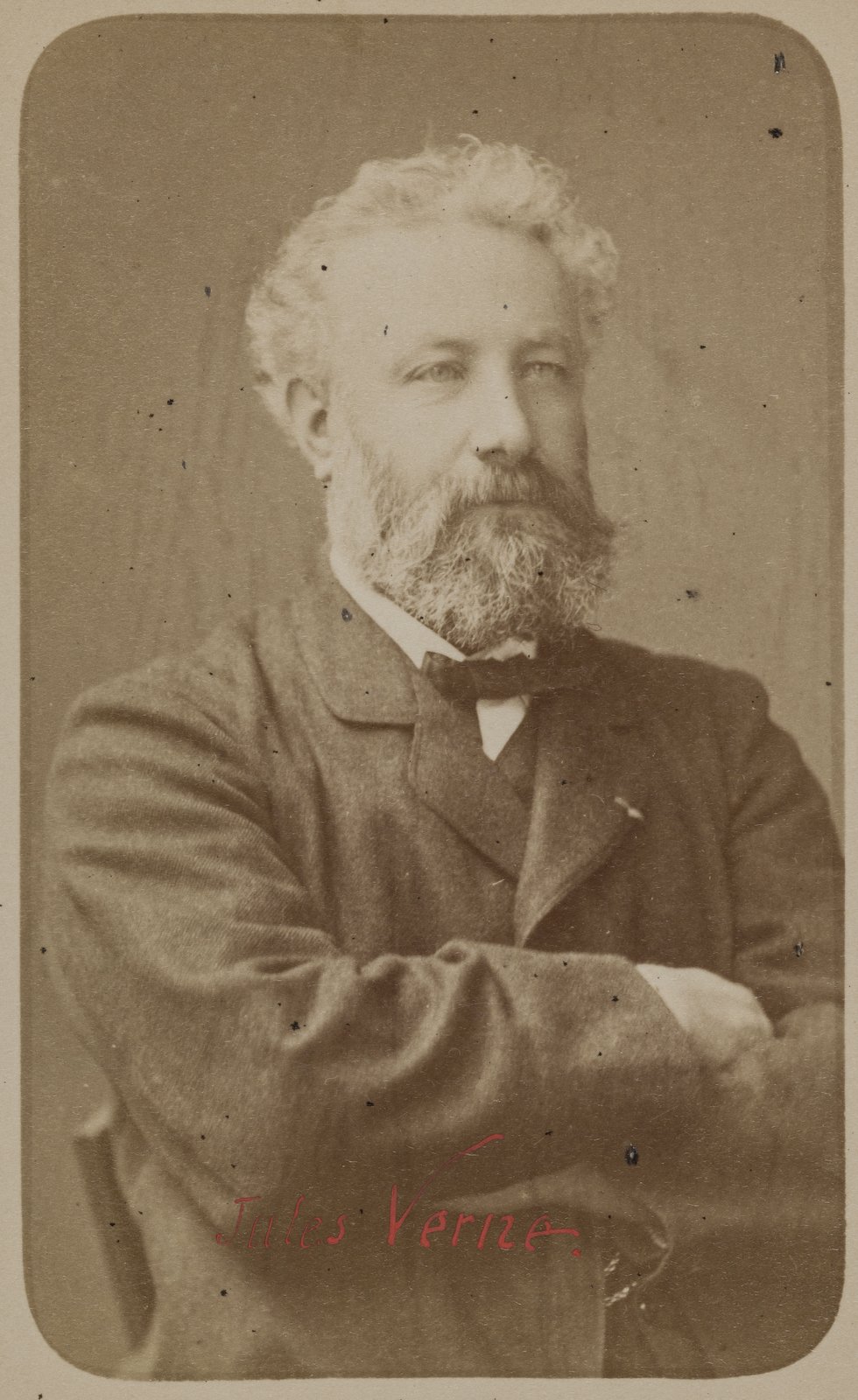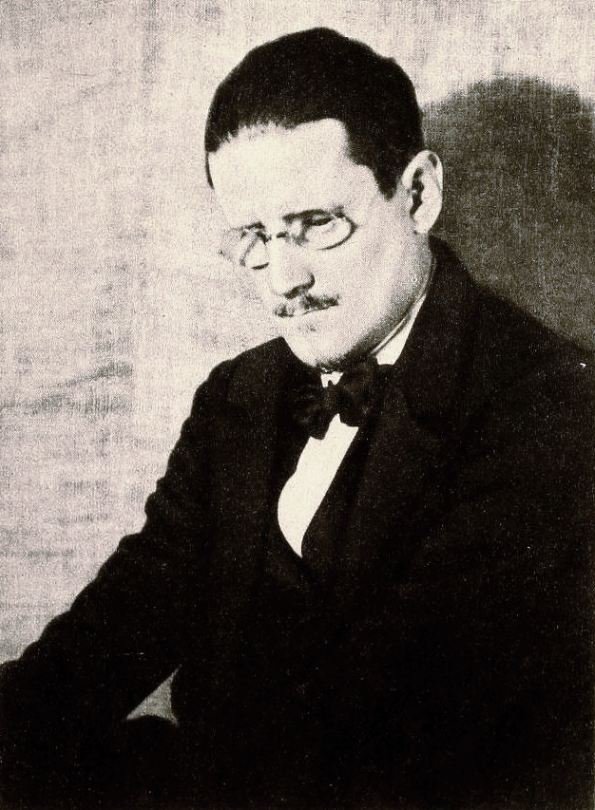

Atelier Nadar, Portrait of Jules Verne, albumen carte-de-visite, Musée Carnavalet - Histoire de Paris (PH57401); CC0 Paris Musées; card mount cropped, downscaled · Atelier Nadar, Portrait de Jules Verne (1828-1905), écrivain, carte-de-visite albumen print (9.3 x 5.8 cm), between 1860 and 1890, Musée Carnavalet - Histoire de Paris, inv. PH57401; CC0 digitization by Paris Musées via Wikimedia Commons · CC0 1.0
핵심 특성
주요 업적
파리의 출판인 피에르쥘 에첼은 1863년 베른의 〈기구를 타고 5주간(Five Weeks in a Balloon)〉을 펴냈다. 1866년부터 에첼은 베른의 소설을 '경이의 여행(Voyages Extraordinaires)' 시리즈로 내놓았고, 이 시리즈에는 베스트셀러 모험 소설인 〈지구 속 여행(Journey to the Center of the Earth)〉(1864), 〈해저 2만 리(Twenty Thousand Leagues Under the Seas)〉(1870), 〈80일간의 세계 일주(Around the World in Eighty Days)〉(1872)가 들어 있다. 두 사람의 협력은 1886년 에첼이 세상을 떠날 때까지 이어졌다.
베른은 1979년 이후 세계에서 두 번째로 많이 번역된 작가로, 애거사 크리스티보다는 아래, 셰익스피어보다는 위에 있다. 영국과 미국의 출판사들은 그의 책을 거의 청소년 독자에게만 팔았는데, 이 사업상 결정은 영어권에서의 그의 평판에 오래 영향을 미쳐 그를 오로지 아동 작가로만 대해도 된다는 인식을 낳았다.
그는 연극 대본도 썼다. 극작가 아돌프 데네리와 함께 쓴 『80일간의 세계 일주』와 『미하일 스트로고프』 무대판은 파리에서 큰 성공을 거두었다. 1904년에도 『미하일 스트로고프』는 샤틀레 극장에서 다시 공연되고 있었다.
삶의 장면들
1893년 아미앵에서 한 인터뷰에서 베른은 기자 로버트 셰라드에게 교정쇄를 일곱 번이나 여덟 번은 받아 보아야 만족한다고 말했다. 셰라드는 그의 곁에서 베른이 '여섯 번째 교정쇄'라고 부른 뭉치를 보았다. 낭트에 보관된 원고에도 같은 작업 과정이 남아 있다. 연필로 쓴 초고에 잉크로 고친 흔적, 여백에 새로 쓴 장들, 그리고 여러 차례의 교정쇄다.
조판이 끝난 뒤에도 이렇게 여러 번 고쳐 쓴 것은 이 프로필의 완벽주의 점수와 부합한다. 베른 스스로 이 습관에 시간뿐 아니라 돈도 많이 들었다고 말했기 때문에, 이 특성은 양면적인 것으로 표시되어 있다. 완벽주의
1893년부터 1904년까지의 인터뷰에서 베른은 매일 오후 같은 신문 열다섯 종을 읽고, 스무 종이 넘는 신문을 구독하며, 과학·지리 학술지도 챙겨 보고, 쓸모 있어 보이는 것은 오려 두거나 메모한다고 말했다. 1894~95년 기자 마리 벨록은 그의 서재에서 2만 건이 넘는 메모가 든 판지 서류함을 보았고, 베른은 그 메모들을 주제별로 분류해 두었다고 말했다.
평생 이어진 이 읽고 정리하는 습관은 이 프로필의 호기심 점수와 나란히 놓인다. 설명의 대부분은 베른 자신의 말이지만, 벨록이 직접 본 서류함은 그 습관을 보여 주는 물리적 흔적이다. 호기심
전환점
1869년 봄 에첼은 『해저 2만 리』의 마지막 장들을 받아들이지 않았다. 베른은 네모 선장을 1863년 봉기의 진압에 복수하는 폴란드인으로 설정했지만, 에첼은 상업적·외교적 이유로 반대했다. 베른은 자신이 느끼지 못하는 것은 그려 낼 수 없다며 요구대로 인물을 고치기를 거부했지만, 다른 수정은 받아들였다. 출간된 책에서 네모의 국적과 동기는 설명되지 않은 채로 남았다. 결국 누구의 뜻이 관철되었는지를 두고는 학자들의 견해가 엇갈린다.
출판사의 규칙 안에서 일하면서도 주인공을 지켜 내려 한 것은, 이 프로필이 그의 자율성 욕구를 높은 쪽이 아니라 중간 부근에 두는 이유를 보여 주는 한 사례다. 이후의 편지에서 그는 에첼의 제안을 더 분명하게 거절하기도 했지만, 1886년 에첼이 세상을 떠날 때까지 그와 함께 일했다. 자율성 욕구
비슷한 인물
전체적인 프로필이 이 사람과 닮은 사람들이에요.


듀크 엘링턴

찰스 다윈

마리 퀴리

소르 후아나 이네스 데 라 크루스

제임스 조이스
출처
- Jules Verne (English Wikipedia) -- orientation only; not used as support for any scored row. Korean Wikipedia title '쥘 베른' confirmed via the Wikidata kowiki sitelink.
- Jules Verne (Q33977) -- verified live via wbgetentities (2026-10-03): en label 'Jules Verne', description 'French writer (1828–1905)', ko label '쥘 베른', P569 1828-02-08, P570 1905-03-24, citizenship Q142 (France), P18 'Félix Nadar 1820-1910 portraits Jules Verne.jpg', kowiki '쥘 베른'. Orientation only.
- Robert H. Sherard, 'Jules Verne at Home: His Own Account of His Life and Work', McClure's Magazine vol. 2 no. 2 (Jan. 1894), pp. 115-124 (copyright 1893), archive.org OCR full text (sim_new-mcclures-magazine_1894-01_2_2), read in full -- JOURNALIST INTERVIEW: mostly Verne's own words as reported (SELF content mediated by a journalist) plus Sherard's own eyewitness observations at the Société Industrielle, Amiens, and of his house and workroom (non-self: the pile of proofs he said was 'the sixth set', a long report he was writing for the Amiens municipal council, the plain workroom with neatly cut manuscript paper). Read: his stated routine (at the desk at five until eleven, writing and rewriting each sentence; 'never satisfied with less than seven or eight proofs'); reading of fifteen papers daily and scientific reviews 'pencil in hand', some 20,000 notes; the Eighty Days meridian idea; carrying ideas for 10-15 years; yachting 'always with an eye to getting information for my books'; Five Weeks written without ballooning experience; complaints about his place in French literature and the Academy; publishing terms before and after 1875 ('I am not and never have been a money-getting man'); 'I am an artist'. Sherard dates Five Weeks to 1861 (it appeared in Jan. 1863) -- an error noted. The 1886 shooting passage was read and NOT used.
- Marie A. Belloc, 'Jules Verne at Home' (Illustrated Interviews no. XXXIX), The Strand Magazine vol. 9 (Jan.-June 1895; Feb. 1895 issue), pp. 206-213, archive.org OCR full text (sim_strand-magazine_january-june-1895_9), read in full -- JOURNALIST INTERVIEW with an INSIDER voice: Verne's own statements (self) plus remarks by his wife Honorine (insider) and Belloc's own observations of the house, the bare cell-like workroom and the library (non-self). Read: Belloc's note that he was 'singularly modest' and reluctant to talk about his work; his account of method (full draft before writing, chapter plan, pencil first copy with half-page margin, rewriting in ink, 'real labour begins with my first set of proofs', rewriting whole chapters, 'eight or nine revises'); 'two completed novels a year' and manuscripts ready several years ahead (writing the 1897 book in 1894-95); Mme Verne's statement that he rose at five and finished writing and proof-correcting by eleven, was asleep by eight or half-past, and never re-read a finished book; the library table with sorted papers and cardboard pigeon-holes holding 'twenty odd thousand notes' (observed); subscription to over twenty newspapers; his wish to make even the wildest romance 'realistic and true to life'. Belloc's OCR gives his age as seventy-eight and a first meeting with his wife fifty-three years earlier -- both wrong (he was 66-67; they met in 1856-57), so her chronological details are treated cautiously.
- William Butcher, 'Hidden Treasures: The Manuscripts of Twenty Thousand Leagues', Science Fiction Studies 32.1 (March 2005), pp. 43-60, PDF read via ibiblio.org/julesverne (Butcher's own article archive), pp. 43-50 in full plus skim of the remainder -- MODERN SCHOLAR perspective (Butcher is a Verne translator/editor and biographer working from the Nantes manuscripts and the published Verne-Hetzel correspondence). Used for: Verne began the novel in March 1868 and his letters show mounting excitement; Hetzel rejected the closing chapters for seven months from March 1869; Verne's letters of 8, 15 and 17 May and c. 11 June 1869 arguing for a Polish Nemo and refusing to write the letter Hetzel asked for ('je ne vous écrirai point la lettre en question'), offering instead to stay silent on Nemo's nationality or change the ending; Butcher's judgment that 'in the end... Verne is forced to take on board most of the publisher's ideas' while subverting some; the two surviving manuscripts (MS1, MS2) and Verne's practice of correcting several sets of proofs; Verne visited the British Isles at least fourteen times and from 1865 owned boats. Also read: Butcher, 'Verne - The Manuscripts', Nautilus (Jules Verne Society GB newsletter) no. 2 (Autumn 2001), 1 p. (two or three manuscripts prepared per novel; Hetzel-imposed endings for Hatteras, Servadac, Mysterious Island) and Butcher's 2-page review of the Correspondance inédite vol. 1 (Verne 'invariably respectful', arguing 'patient point by patient point'; quotes Verne 15 Feb. 1871 'I stick to my ideas like a Breton').
- Arthur B. Evans, 'Hetzel and Verne: Collaboration and Conflict' (review essay on Correspondance inédite de Jules Verne et de Pierre-Jules Hetzel (1863-1886), tome I (1863-1874), ed. O. Dumas, P. Gondolo della Riva, V. Dehs, Slatkine 1999), Science Fiction Studies #83, 28.1 (March 2001) -- read in full via the Wayback Machine copy (the live depauw.edu URL now returns 404) -- MODERN SCHOLAR perspective, independent of Butcher (Evans is a Verne scholar and SFS editor; the two disagree on the outcome of the Nemo dispute). Used for: Hetzel's 'firm rejection' of the Paris au XXe siècle manuscript; Verne's early letters accepting Hetzel's critiques (Hatteras ending rewritten from suicide to madness; Joe's long narrative cut from Five Weeks 'without pain'; 'have you ever found me recalcitrant on deletions or rewrites?'; 'I am impatient to receive your notes'); the May 1869 Nemo dispute and Verne's letter of 17 May 1869 ('I am totally incapable of depicting what I don't feel'... 'Make your observations and I will take into account all that are possible'), with Evans's reading that 'neither Verne nor Hetzel would give in'; Verne's letter of 23 Sept. 1873 on Mysterious Island ('I need a savage'; 'I can see it clearly only on the proofs'); Hetzel's replies of Sept./Oct. 1873 (incl. Verne sending corrected proofs straight to the printer); Verne's 1882 letter on L'École des Robinsons rejecting 'inadmissible' observations (cited from Parménie 1953); the shift in his letter closings; Evans's statement that Verne destroyed his personal letters late in life; Hetzel's house rules on morality and pedagogy and the 'narrow milieu' complaint. Verne's own letter wording quoted by Evans/Butcher is SELF content; the scholars' framing and Hetzel's letters are non-self.
- Gordon Jones, 'Jules Verne at Home', Temple Bar vol. 129 (June 1904), pp. 664-671, archive.org OCR full text (sim_temple-bar_1904-06_129_523), read in full -- JOURNALIST INTERVIEW (self content as reported, plus Madame Verne as insider, plus the journalist's own observation that 'as any Amienois will tell you' he lived in quiet retirement, 'scarcely ever visiting, rarely receiving'). Used for: his account that after Five Weeks his publishers urged more books in the same style and 'although not wholly pleased with the idea, I complied'; his routine (rose at five, three hours' writing before breakfast, two more hours later in the day); cutting out and labelling newspaper paragraphs for later reference; 'two volumes a year for some years past'; his stated practice of basing inventions on 'a groundwork of actual fact' and contemporary engineering (Nautilus vs. Wells); Madame Verne: she took no part in his creations and noise did not disturb his work. His eyesight and refusal of a cataract operation were read and NOT used (health).
- Jules Claretie, Jules Verne (Célébrités contemporaines no. 33; Paris: A. Quantin, 1883), 32 pp., archive.org OCR full text (julesverne00clar, Univ. of Ottawa copy), read in full in French (OCR badly garbled on pp. 9-11 and 29-30; those passages not used) -- CONTEMPORARY JOURNALIST/FRIEND perspective: Claretie was a Paris critic and acquaintance, admiring; the booklet embeds a long first-hand portrait by Charles Raymond (Musée des Familles, c. 1875), a SAILING COMPANION (insider) who describes the first Saint-Michel, its on-board reference library (tide tables, charts, 'three or four big dictionaries and volumes of travels') which let him 'continue, even on board, the research necessary for his work', the sea absorbing 'all the time he can steal from work', and that in critical moments he always handed command to his experienced sailor Sandre. Claretie himself: when writing a novel on a country or a scientific problem 'Verne surrounds himself with all the documents'; the eminent scientists Joseph Bertrand and Jules Janssen expressing interest in his work; d'Ennery guided his stage adaptations but with Kéraban le Têtu (1882-83) 'Verne wants to walk alone'; each summer he sailed round France, sometimes 150-200 leagues without touching land. Hector Malot's characterisation 'franc comme l'or' (hearsay, not scored).
- Agnès Marcetteau-Paul (then director of the Bibliothèque municipale de Nantes), 'Le fonds Jules Verne à la Bibliothèque municipale de Nantes', 2-page article (c. 1999; cites 1998 visitor figures), enssib digital library document 46398, read in full in French -- INSTITUTIONAL/ARCHIVAL perspective (the library that holds about 95 autograph manuscripts acquired in 1981), describing what the physical manuscripts show, citing the library's own Catalogue des manuscrits de Jules Verne (1988): a 'travailleur acharné' who even on sea voyages took notes, drafted first in pencil, corrected by going over the text in ink, rewrote whole chapters in the margins (he habitually wrote on the left half of the page, keeping a wide margin), then corrected 'multiple sets of proofs'; from the early notebooks 'corrected in all directions' to the 'methodical and almost unchanging presentation' of the mature novels; Hetzel's annotations appear on the manuscripts; his son Michel's additions and corrections on the last (posthumous) manuscripts. Independent of the magazine interviews (manuscript evidence).