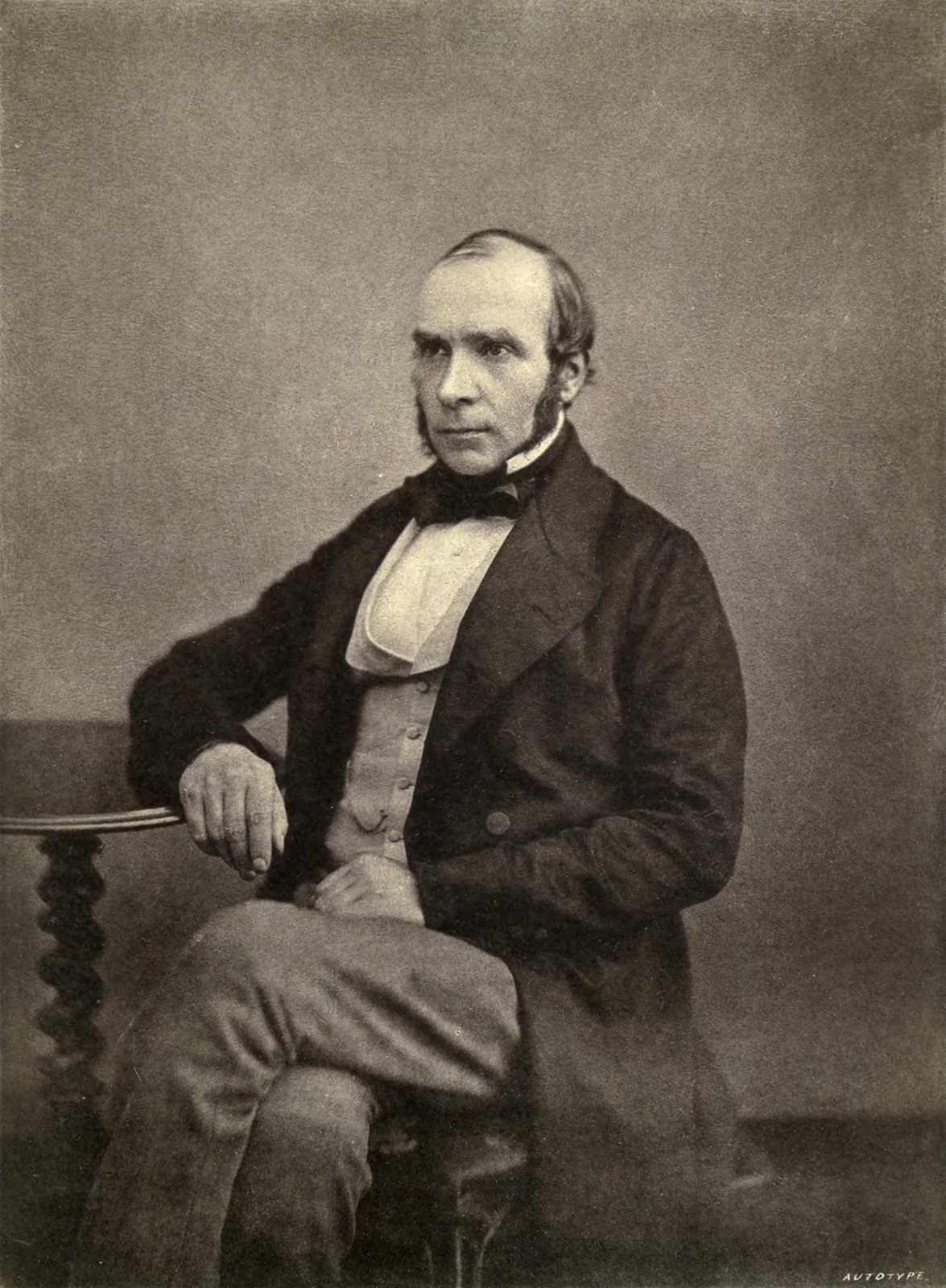

John Snow, photograph of 1856 by an unrecorded photographer, reproduced as an autotype in The Asclepiad, vol. IV (1887); scan: Internet Archive / University of Toronto; cropped to the photograph and downscaled · Autotype plate facing p. 274 in B. W. Richardson (ed.), The Asclepiad, vol. IV (London: Longmans, Green, 1887), captioned 'Autotype from a Presentation Portrait, 1856, and Autograph facsimile.—B. W. R.'; University of Toronto (Gerstein) copy digitized by the Internet Archive · Public domain
핵심 특성
주요 업적
1849년 그는 콜레라가 나쁜 공기가 아니라 앞선 환자에게서 나온 물질을 삼키면서, 대개 오염된 물을 통해 퍼진다고 주장하는 글을 발표했다. 1855년에 크게 보강한 개정판에는 런던 시내의 하수로 오염된 템스강 물을 끌어 쓰는 회사와 더 상류의 물을 쓰는 회사, 두 남런던 상수도 회사 고객들의 콜레라 사망을 집집마다 비교한 조사가 더해졌다.
1854년 소호의 브로드가 콜레라 발생에 대한 그의 조사는 동네 공용 펌프를 지목했다. 그와 부목사 헨리 화이트헤드가 참여한 교구 위원회는 1855년 이 발생이 '어떤 방식으로든' 그 우물물과 관련이 있다고 결론지었지만, 같은 해 중앙보건위원회의 과학조사위원회는 그의 설명을 받아들이지 않았다.
1847년부터 흡입기를 고안하고 에테르와 이어 클로로포름에 관한 실용적인 연구를 발표해, 런던에서 가장 많이 찾는 마취의 가운데 한 사람이 되었다. 자신이 시행한 모든 마취를 사례 기록으로 남겼으며, 1853년과 1857년 빅토리아 여왕의 두 차례 출산 때 클로로포름을 투여했다.
삶의 장면들
브로드가 콜레라가 발생한 지 일주일쯤 지난 1854년 9월 7일 저녁, 스노는 교구 구빈위원회에 발언 기회를 청해 펌프를 가리키는 자신의 조사 결과를 설명했다. 이튿날 펌프 손잡이가 제거되었다. 그러나 그 자신의 수치와 뒤에 부목사 헨리 화이트헤드가 낸 수치 모두, 새 환자가 이미 그 전부터 줄고 있었음을 보여 준다.
공식 직책도 없이, 그의 이론을 믿는 사람이 거의 없던 때에 자신이 모은 증거를 들고 지역 당국을 찾아간 일은 먼저 나서서 행동하는 성향을 높게 본 이 프로필의 해석과 맞닿아 있다. 선제적 행동력
1855년 3월 스노는 제조업자들을 대신해 의회 위원회에 나가, 뼈 삶는 일 같은 업종에서 나오는 악취 자체가 유행병을 일으키지는 않는다고 증언했다. 적대적인 질문이 이어지자 그는 그런 업종을 특별히 연구한 적은 없다고 인정했다. 『랜싯』은 두 차례의 신랄한 사설로 응수했고, 그중 하나는 그의 증언을 과학이 아닌 '외골수의 독단'이라며 깎아내렸다.
여론이 반기지 않는 편에 서서 압박 속에서도 입장을 지킨 이 일은 논쟁을 피하지 않는 그의 태도를 보여 주는 한 예다. 동시에, 그가 때로 증거가 감당할 수 있는 것보다 논증을 더 밀어붙였다는 친구 리처드슨의 평가와도 나란히 놓인다. 갈등 감내
전환점
1846년 12월 에테르 마취 소식이 런던에 전해졌지만 초기 결과는 들쭉날쭉했다. 친구 B. W. 리처드슨에 따르면, 스노는 문제가 증기를 투여하는 방식에 있다고 보고 개선된 흡입기를 만들어 동물 실험을 거친 뒤 런던의 병원들에서 마취를 맡게 되었다. 얼마 지나지 않아 외과의들이 그를 꾸준히 찾으면서, 그는 어렵던 일반 개업의 생활에서 벗어났다.
새로운 기법을 그대로 받아들이지 않고 직접 실험하고 기구를 만들어 대응한 일은, 이후 다른 마취제 연구에서도 이어지는 그의 손수 해 보는 실험 방식을 잘 보여 준다. 실험 성향
비슷한 인물
전체적인 프로필이 이 사람과 닮은 사람들이에요.
출처
- John Snow (English Wikipedia) -- orientation only; not used as support for any scored row. Korean Wikipedia title '존 스노 (의사)' confirmed via the Wikidata sitelink.
- John Snow (Q356407) -- verified live via wbgetentities (2026-09-26): en label 'John Snow', description 'English epidemiologist and physician (1813–1858)', ko label '존 스노', born 1813-03-15, died 1858-06-16, citizenship Q174193 (United Kingdom of Great Britain and Ireland), P18 'John Snow.jpg', kowiki '존 스노 (의사)'. Orientation only.
- Benjamin Ward Richardson, 'Memoir of the Author', pp. i-xliv prefixed to John Snow, On Chloroform and Other Anaesthetics (London: John Churchill, 1858), archive.org OCR (onchloroformothe00snow) -- INSIDER/FRIEND perspective (Richardson knew Snow for his last eight years and shared experiments with him; admiring, written just after his death), embedding a FIRSTHAND FELLOW-STUDENT letter from Joshua Parsons (co-lodger 1836-37), recorded as a separate perspective. Read the memoir in full (pp. i-xl): early life, Parsons' letter, the 1838 Apothecaries' refusal, Westminster Medical Society, ether 1846-47 and chloroform, the 1851 Lord Campbell/Alfred Taylor dispute, cholera work 1848-55 and the Broad Street representation, the cost of the 1855 book, the 1855 offensive-trades evidence and the 1858 Chadwick exchange, amylene and self-experiment, and the 'personal history' section (order, diary, habits, controversy). Also consulted the book's own amylene chapter (SELF) for his case record of a death under amylene.
- Rev. Henry Whitehead, 'The Broad Street Pump: an Episode in the Cholera Epidemic of 1854', Macmillan's Magazine 13, no. 74 (Dec. 1865): 113-122, archive.org OCR of the Wellcome offprint (b22449231) -- INDEPENDENT, INITIALLY SCEPTICAL LOCAL WITNESS: curate of St Luke's, Berwick Street, who expected his own inquiry to refute Snow and says so. Read in full. Used for: Snow having 'prevailed upon the parish authorities' to remove the handle on 8 Sept. while 'scarcely any one seriously believed in his theory'; Whitehead's own reluctant conversion through house-to-house inquiry; Snow's case findings as Whitehead relays them; Whitehead's follow-up of the earliest Broad Street cases 'in consequence of Dr. Snow's suggestions'.
- Cholera Inquiry Committee, Report on the Cholera Outbreak in the Parish of St. James, Westminster, during the Autumn of 1854, presented to the Vestry July 1855 (London: J. Churchill, 1855), archive.org OCR (b22327460) -- LOCAL INSTITUTIONAL perspective (committee of vestrymen, medical men and clergy; general report drafted by J. Marshall), with Snow's own report (SELF) and Whitehead's report bound in. Read: Introduction (membership; methods: the failed printed return, Snow's report of 12 Dec. 1854 laid before it 'at the desire of the Committee', the house-to-house 'Visitors' Inquiry List' prepared by King, Lankester and Snow); the General Report sections on the well water, the attack table, the committee's conclusion that the outbreak was 'in some manner attributable' to the Broad Street well while refraining from endorsing any hypothesis of its mode of action, and its note that sewage entry into the well was unproved until Whitehead's later findings.
- General Board of Health, Medical Council, Report of the Committee for Scientific Inquiries in relation to the Cholera-Epidemic of 1854 (London: HMSO, 1855), archive.org OCR (b21687043) -- ADVERSARIAL OFFICIAL perspective. Read the contents, the Golden Square section (pp. 51-53) and the water-supply chemistry/microscopy sections. Used for: the committee's explicit rejection of Snow's Broad Street explanation ('After careful inquiry, we see no reason to adopt this belief') and its preferred atmospheric/organic-impurity account.
- John Snow, On the Mode of Communication of Cholera, 2nd ed. (London: J. Churchill, 1855), read in the reprint Snow on Cholera (New York: Commonwealth Fund, 1936), archive.org OCR (b3134818x_0001) -- SELF, one perspective, never sole support for a row. Read: the Broad Street/Golden Square section (the 73-death inquiry, the 7 Sept. interview with the Board of Guardians, the attack table and his own statement that attacks had fallen so far before the handle was removed that its effect could not be decided); the Deptford nitrate-of-silver passage; the 1854 south-London inquiry (the chloride-of-silver test distinguishing the two companies' water, and his engaging Mr J. J. Whiting for districts he could not cover himself).
- John Snow's evidence to the Select Committee on the Public Health and Nuisances Removal Bills, 5 March 1855 (questions 117-172), transcribed on the UCLA Department of Epidemiology John Snow site (R. R. Frerichs), Wayback copy of ph.ucla.edu/epi/snow/snows_testimony.html -- SELF answers under HOSTILE questioning by committee members (a parliamentary record). Read the whole transcription. Used for: his open statement that he appeared at the manufacturers' request, his flat denial that decomposition effluvia cause disease, and his admission that he had not studied those trades particularly and had first been asked to consider the subject 'two or three days ago'.
- The Lancet, editorials 'The Public Health and Nuisances Removal Bill: Dr. Snow's Evidence' (23 June 1855) and 30 June 1855, plus the Lancet editorial of 14 May 1853 on chloroform at the royal birth, as transcribed with commentary on the UCLA John Snow site (pages reactionandcommitteeaction.html and lancet1853reaction.html, Wayback copies) -- ADVERSARIAL CONTEMPORARY PRESS perspective. Read both pages in full. Used for: the Lancet's attack on Snow as 'singular in his opinion' with 'hobbyistic dogmas' and its 'main sewer' jibe, i.e. contemporary evidence that he publicly held a minority position; and its logical objection to his evidence. The 1853 editorial is context only (no row).
- R. R. Frerichs (UCLA Dept. of Epidemiology), John Snow site pages 'Reverend Henry Whitehead' and 'John Snow and the removal of the Broad Street pump handle' (Wayback copies, read in full) -- SCHOLAR/COMPILER perspective quoting primary texts: Edwin Lankester's 1866 recollection (local physician and member of the St James committee: Snow 'demanded an audience' and 'was not believed'), Whitehead's 1867 table showing fatal attacks already falling before 8 Sept., and Whitehead's farewell speech of 16 Jan. 1874 (via H. D. Rawnsley's 1898 memorial sketch) recalling Snow's conversations and a medical friend's 1855 remark that Snow's views were 'generally regarded in the profession as very unsound'.
- Michael A. E. Ramsay, 'John Snow, MD: anaesthetist to the Queen of England and pioneer epidemiologist', Proceedings (Baylor University Medical Center) 19(1) (2006): 24-28 (PMC1325279), read in full -- MODERN CLINICIAN-HISTORIAN overview, secondary and not error-free (it misdates the first cholera essay to 1848 and places the Golden Square outbreak in 1853), so used only as light corroboration: his casebooks logging some 5,000 anaesthetics over twelve years, and his continuing to argue the waterborne theory for the rest of his life without convincing most peers. Never sole support.