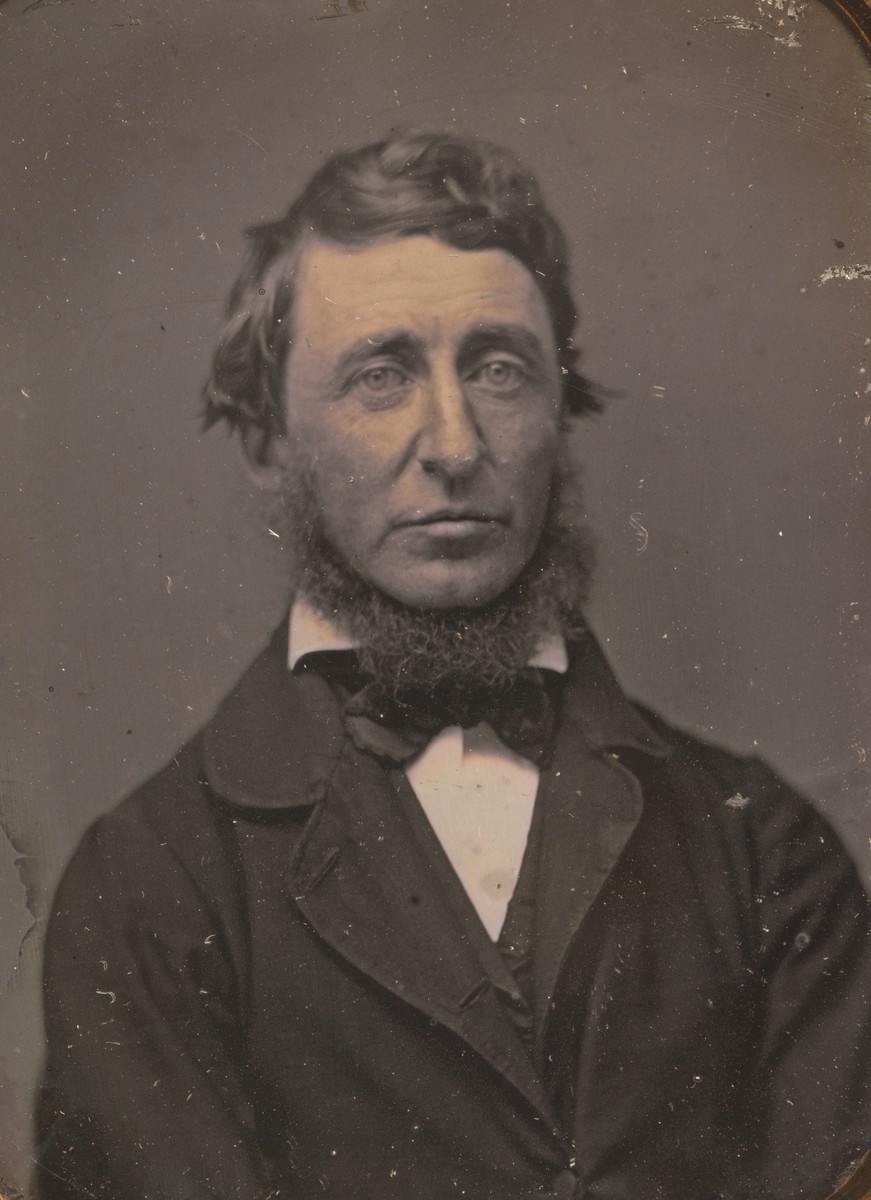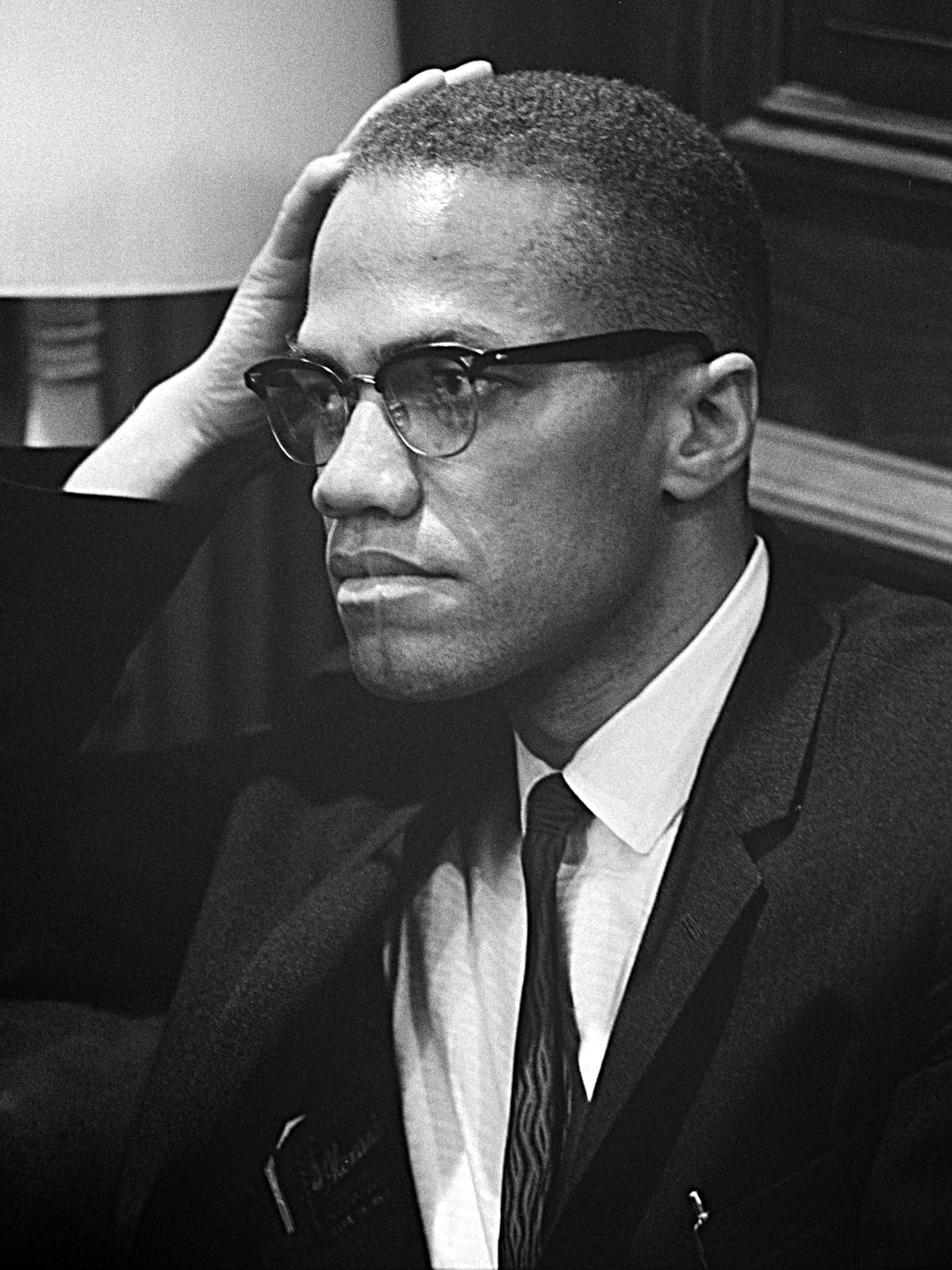

Benjamin D. Maxham, Henry David Thoreau, 1856, ninth-plate daguerreotype, National Portrait Gallery, Smithsonian Institution; gift of anonymous donor (NPG.72.119), CC0 · Ninth-plate daguerreotype of Henry David Thoreau by Benjamin D. Maxham (1821-1899), made at his studio in Worcester, Massachusetts, in June 1856, National Portrait Gallery, Smithsonian Institution, Washington (object NPG.72.119, gift of an anonymous donor). A documented sitting during the sitter's lifetime. The file is a plain crop of the plate from the museum's own 3345 x 4000 pixel scan of the cased object (the case and mat are cut away), downscaled to 871 x 1200 with no upscaling and no retouching. · CC0 (Smithsonian Open Access); photographer died 1899, so also public domain by age
작가 · 19세기
헨리 데이비드 소로
1817–1862
주요 업적 분야
아직 성격 매칭에 포함되지 않았습니다 — 기록된 근거가 성격 모델 전체를 다루기에는 충분하지 않습니다. 이 페이지의 다른 모든 내용은 자유롭게 확인하실 수 있습니다.
핵심 특성
주요 업적
그는 월든 호숫가에서 2년간 산 경험을 서사, 자연에 대한 면밀한 관찰, 철학적 성찰로 엮은 《월든》(1854)을 썼다.
인두세 납부를 거부해 하룻밤 투옥된 뒤 그는 「시민 정부에 대한 저항」, 훗날 「시민 불복종」으로 불리는 에세이를 썼으며, 스탠퍼드 철학 백과사전은 이 글을 간디, 킹 같은 후대 인물과 연결한다.
그는 1837년부터 죽을 때까지 여러 권의 자연 관찰 일지를 썼고, 훗날 과학자들은 1850년대의 식물 기록을 이용해 콩코드의 개화 시기가 어떻게 변했는지 연구했다.
삶의 장면들
하버드를 졸업한 뒤 콩코드 공립학교 교사로 채용되었으나, 학생 훈육 방식을 두고 교육감과 의견이 달라 2주 만에 사직했다.
이는 자기 방식대로 일하려는 강한 선호와 일치한다. 자율성 욕구
하버드와 보스턴 대학의 연구자들은 콩코드의 개화에 관한 그의 1851~1858년 기록을 현대 조사와 비교해, 식물이 평균 약 일주일 일찍 꽃을 피운다는 것을 확인했다.
이는 150년 뒤에도 쓸 수 있을 만큼 신중하고 반복적인 관찰과 일치한다. 디테일 지향
전환점
1845년 7월 4일 그는 월든 호숫가의 작은 집으로 들어가 첫 책을 쓰고 일주일에 하루만 일해도 생활할 수 있는지 시험하고자 했으며, 이 생활은 1847년 9월까지 이어져 《월든》의 바탕이 되었다.
이는 글쓰기와 관찰을 중심으로 삶을 꾸리기로 한 결정과 일치한다. 실험 성향
비슷한 인물
전체적인 프로필이 이 사람과 닮은 사람들이에요.
출처
- Henry David Thoreau (Q131149), verified live via the Wikidata API (2026-10-31): label 'Henry David Thoreau', description 'American essayist, poet, and philosopher (1817-1862)', born 12 July 1817, died 6 May 1862, citizenship United States, Korean label 헨리 데이비드 소로, images including the Maxham daguerreotype. Orientation only; not used as support for any row.
- Stanford Encyclopedia of Philosophy, 'Henry David Thoreau', read in the biography, Walden, journal, natural-history and critics sections. CANONICAL SIGNIFICANCE SOURCE: born and died in Concord, Massachusetts, Harvard graduate of 1837, friendship with Emerson, supported himself mainly as a land surveyor with brief spells as a schoolteacher and pencil maker; lived at Walden Pond for two years and two months from 1845 as an 'experiment'; published two books in his lifetime, A Week on the Concord and Merrimack Rivers and Walden (1854), the latter combining narrative, close observation and philosophical speculation; kept a multivolume journal from 1837 until his death; discussed field findings with leading naturalists and read Humboldt and Darwin; his natural-science writings were not published until the late twentieth century; critics include Stanley Cavell's remark that his work may embarrass academic philosophy, doubts that 'transcendentalist' fits him, his ambivalence about science and his possible overestimate of how far a person can detach from institutions. Scholarly reference; the political material in the entry is NOT scored.
- Thoreau Society / Thoreau Alliance, 'Meet Henry David Thoreau (1817-1862)', adapted from Richard J. Schneider, 'Thoreau's Life' (PDF read in full): graduated Harvard in 1837 in the top half of his class during a depression, resigned a Concord school post after two weeks over a dispute with the superintendent about discipline, worked in his father's pencil business where the family's pencils were considered the best in America 'largely because of Henry's research into German pencil-making techniques', opened a private school with his brother in 1838, built the Walden house in 1845 with two goals (to write A Week and to test whether he could meet his needs working one day a week), revised Walden extensively after A Week sold poorly, supported himself by pencil-making, surveying, lecturing and essays, kept careful journals of nature observations and left dozens of volumes of journals and unfinished studies of local nature. Admiring institutional biography; its political and family sections are NOT used.
- Ralph Waldo Emerson, 'Thoreau' (funeral address of May 1862, printed in the Atlantic Monthly, August 1862), as reprinted by Cabinet magazine, read via a fetched summary: contemporary account by his mentor and friend. After a pencil experiment praised by Boston experts Thoreau declined to continue it, preferring walking and study; he taught briefly with his brother and then took up land surveying, which suited his accuracy and gave access to remote land for his nature studies; he earned only enough for modest needs, keeping his time free; he knew Concord's rivers, ponds, animals and plants closely and observed patiently and precisely. Emerson also criticises him: little ambition ('the captain of a huckleberry party'), contrariness, a quickness to refuse and severe standards that made him a hard companion ('that terrible Thoreau'), paradoxical prose and rough verse. Friendly but candid primary account; the full text was not read line by line.
- Harvard Gazette, 'Effects of climate change vary greatly across plant families' (October 2008), read in full, with the bibliographic record and abstract of A. J. Miller-Rushing and R. B. Primack, 'Global warming and flowering times in Thoreau's Concord: a community perspective', Ecology 89 (2008), via AGRIS: independent scientists (Charles Davis, Charles Willis and Brad Ruhfel at Harvard; Primack and Miller-Rushing at Boston University) used Thoreau's 1851-1858 notes on plant occurrence and flowering times at Walden and Concord as the earliest part of a roughly 150-year community-level dataset, finding that plants now flower about a week earlier on average, that species respond very unevenly, and that about 27 percent of the species he recorded are locally extinct. The papers also state the limits of his records: different observers, methods and sampling intensities, and a subset of 43 species. Independent scientific use of his behaviour; it confirms the records were usable, not that he worked as a scientist.
- Rebecca Beatrice Brooks, 'James Russell Lowell's Feud with Henry David Thoreau', History of Massachusetts Blog (2013, updated 2025), read in full: popular secondary account of Lowell's hostile judgements of Thoreau (a mocking verse in 1848 and a North American Review essay in 1865 that charged him with narrow provincialism, egotism, and a lack of imagination, originality, logic and humour, and said he preached the forest cure while seeking doctors) and of the 1858 quarrel in which Thoreau angrily refused to write further for Lowell's Atlantic Monthly after a line of his essay was cut. The primary Lowell essays were not opened. Counter-voice source; the charges are one hostile critic's opinions and are not scored as facts.