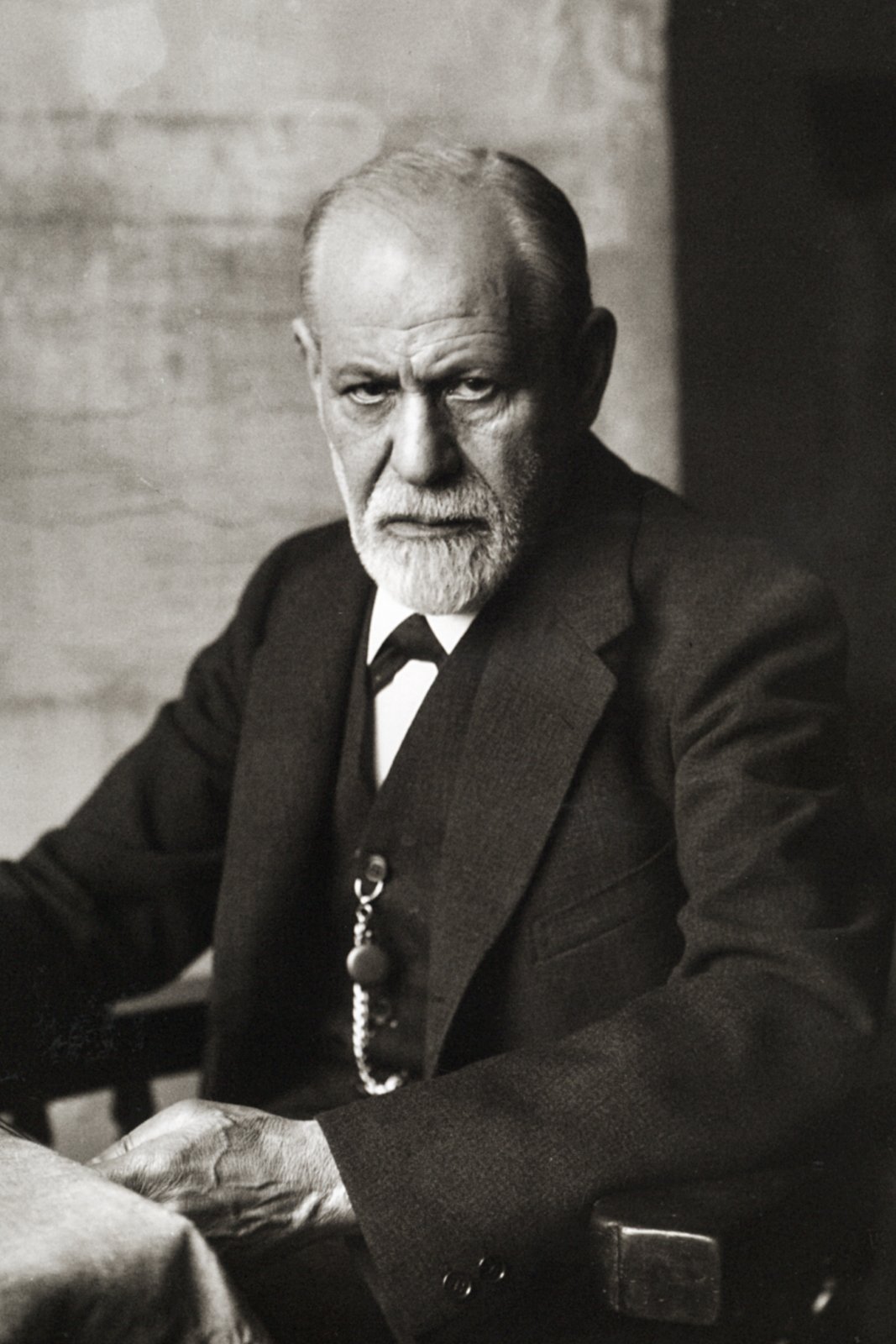
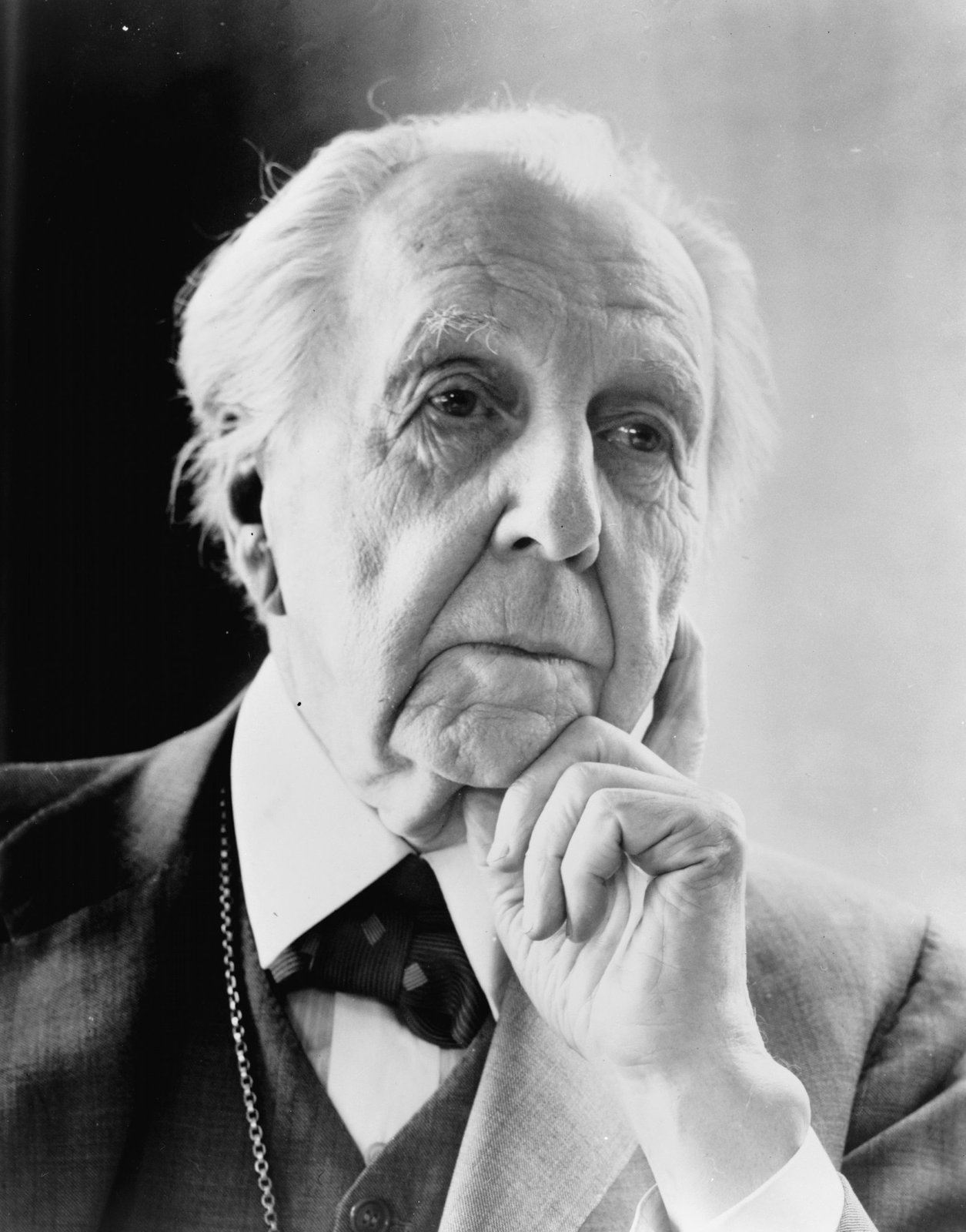

Al Ravenna, New York World-Telegram and the Sun staff photographer, 1954 (Library of Congress) · Library of Congress, New York World-Telegram and the Sun Newspaper Photograph Collection, via Wikimedia Commons · Public Domain (NYWTS collection, no known copyright restrictions)
핵심 특성
주요 업적
라이트가 설계한 일리노이주 오크파크의 유니티 템플은 1908년 10월에 완공되어 1909년 9월 26일에 봉헌식이 열렸다. 구조는 철근으로 보강한 타설 콘크리트였으며, 프랭크 로이드 라이트 트러스트의 연구 보고서는 이를 철근 콘크리트를 구조 요소로만이 아니라 건축적 표현 매체로 활용한 사례로 설명한다.
폴링워터는 라이트가 펜실베이니아주 베어 런에 에드거 카우프만 가족의 주말 별장으로 설계한 집으로, 1936년 4월부터 1937년까지 지어졌고 카우프만 가족은 그해 12월에 입주했다. 가족이 예상했던 것처럼 개울 건너편에서 폭포를 바라보는 배치가 아니라, 집이 폭포 바로 위로 캔틸레버 구조로 뻗어 나가도록 지어졌다.
뉴욕의 솔로몬 R. 구겐하임 미술관은 1943년 계약 후 약 16년이 지난 1959년 10월 21일, 그러니까 1959년 4월 라이트가 세상을 떠나고 약 6개월 뒤에 문을 열었다. 관람객은 전통적인 전시실 대신 채광 돔까지 이어지는 연속된 경사로를 따라 이동한다.
삶의 장면들
타리에신 도제였던 에드거 타펠의 회고에 따르면(카네기 매거진 게재), 1935년 9월 22일 에드거 카우프만이 밀워키에서 타리에신으로 폴링워터 도면을 보러 가는 길이라고 전화했고, 그러자 라이트는 도제들이 지켜보는 가운데 집을 그리기 시작했다. 폴링워터 웹사이트는 여러 도제의 증언을 전하며 이 설계가 몇 시간 만에 그려졌다고 소개하고, 라이트가 베어 런 부지를 처음 방문한 때가 1934년 12월이었다고 기록한다.
1936년 카우프만은 외부 엔지니어들에게 라이트의 설계를 검토하게 했고, 그들의 권고로 폴링워터 1층 캔틸레버에 철근이 추가되었다. 거푸집을 떼어낸 뒤 테라스 난간벽에 균열이 나타났는데, 라이트는 그 원인을 추가된 철근 탓으로 돌렸다. 카네기 매거진에 실린 날짜 미상의 편지에서 라이트는 카우프만의 신뢰가 없다면 이 일을 접겠다고 썼고, 카우프만도 비슷한 표현으로 답하면서 피츠버그로 와서 직접 풀자고 요청했다. 이후 1995~96년 보존협회가 의뢰한 구조 평가에서는 캔틸레버의 처짐이 계속되고 있음이 확인되었다.
이 편지 교환은 고객과의 공개적인 의견 충돌을 피하지 않는 이 프로필의 성향을 보여 주는 한 사례이다. 기록상 카우프만 역시 똑같이 직설적으로 답했고, 두 사람은 1955년 카우프만이 세상을 떠날 때까지 함께 프로젝트를 구상했다. 갈등 감내
전환점
1932년, 예순다섯 살의 라이트는 지난 5년 가까이 유급 고객 두 곳의 건물만 지은 상태였다. 그해 가을 그는 아내 올기바나와 함께 타리에신 펠로우십을 시작했고, 1932년 10월 스물세 명의 도제가 타리에신에 모여 건축을 배우면서 농사를 짓고 석재를 캐고 공동체의 숙소를 직접 지었다. 이후 선임 펠로우들이 폴링워터와 존슨 왁스 본사의 시공을 감독했고, 한 자료는 1934년 펠로우십에 합류한 에드거 카우프만 주니어가 아버지를 설득해 폴링워터 설계를 맡기게 했다고 전한다.
하나의 해석은 펠로우십이 의뢰가 줄어든 시기에 기회가 오기를 기다리기보다 스스로 기회를 만들어 내는 이 프로필의 경향을 보여 준다는 것이다. 다만 자료들은 대공황과 카우프만 가족과의 인연 같은 외부 요인도 이후의 전개에 작용했음을 시사한다. 선제적 행동력
비슷한 인물
전체적인 프로필이 이 사람과 닮은 사람들이에요.
출처
- Frank Lloyd Wright (English Wikipedia) -- orientation only: life dates and places (8 June 1867, Richland Center, Wisconsin - 9 April 1959, Phoenix, Arizona), career phases, Taliesin Fellowship 1932. Not used as sole support for any scored row.
- Frank Lloyd Wright (Q5604) -- Wikidata entity fetched live: label 'Frank Lloyd Wright', description 'American architect (1867-1959)', born 8 June 1867, died 9 April 1959, citizenship United States, image P18 'Frank Lloyd Wright LC-USZ62-36384.jpg'.
- Frank Lloyd Wright Trust, 'Unity Temple, Frank Lloyd Wright, 1906, Oak Park, Illinois' research report (Wright Plus 2017), researched and written by Mark Scott, drawing on the Unity Temple congregation archives, Oak Park library special collections and scholarship (Siry, Sokol) -- account of the 1905-06 commission, the brick-to-concrete change to fit the board's $36,200 budget, board resistance, the 1906 Oak Leaves description, Wright's mid-construction revisions (stair blocks, aggregate and finish, ceiling bands, organ screen, replaced sections), his divided attention, bids ($32,661 low) and final cost ($60,344.55 excluding lot, organ, mechanical work and fee), the October 1908 completion and September 26, 1909 dedication. PDF downloaded and the design/construction/cost sections read in full as extracted text.
- Carnegie Museums of Pittsburgh, Carnegie Magazine (Mar/Apr 1999), R. Jay Gangewere, 'Edgar J. Kaufmann and Frank Lloyd Wright' -- institutional account of the Kaufmann-Wright relationship: the September 22, 1935 phone call and apprentice Edgar Tafel's recollection of Wright drawing Fallingwater, the reproduced Wright and Kaufmann letters (the 'to hell with the whole thing' exchange), projected cost about $30,000 versus over $70,000, and Kaufmann's later Pittsburgh projects. Fetched and read directly.
- Western Pennsylvania Conservancy, eConserve (Winter 2013), 'Fallingwater Undergoing New Structural Monitoring' -- institutional account of the 1936 cracks after formwork removal, the outside engineers Kaufmann hired to review the plans and the steel added to the first-floor cantilever at their recommendation, Wright's explanation and letter, Kaufmann's monitoring 1941-1955, and the 1995-96 Silman evaluation confirming continuing deflection. Fetched and read directly (verbatim passages re-checked).
- Fallingwater (Western Pennsylvania Conservancy), 'Designing Fallingwater' -- Wright's December 1934 visit, siting cantilevered over the falls rather than across from them as the Kaufmanns expected, apprentices' accounts that the design was produced in hours, construction ended by fall 1937. Same institution family as the Conservancy source above, so not counted as a separate perspective. Fetched and read directly.
- Fallingwater (Western Pennsylvania Conservancy), Timeline 1934-1939 -- Kaufmann Jr. joins the Taliesin Fellowship (15 Oct 1934), Wright's first Bear Run site visit (18 Dec 1934), first working drawings (Jan 1936), construction begins (Apr 1936), cantilever pour (Aug 1936), construction completed and Kaufmanns move in (Dec 1937). Same institution family as the two Fallingwater/Conservancy sources; used for dates. Fetched and read directly.
- EBSCO Research Starters (Salem Press, 'Great Events from History'), Susan Benforado Bakewell, 'Wright-Designed Guggenheim Museum Opens' -- scholarly reference account of the 1943 contract, sixteen years of planning, Rebay's 1952 retirement, Guggenheim's 1949 death, financing and site difficulties, building-code battles, the 1957 artists' petition, changes by director Sweeney largely against Wright's will, the marble exterior refused, opening on October 21, 1959 (six months after Wright's death), and Wright's only museum / first major New York commission. Fetched and read in full.
- EBSCO Research Starters (Salem Press), John L. McLean, 'Wright Founds the Taliesin Fellowship' -- reference account of the 1932 founding at age 65 after only two paying clients in nearly five years, 23 fellows gathering in October 1932, the self-sufficient work community, fellows superintending Fallingwater and Johnson Wax, paid public tours, and a demonstration in which sixty tons was loaded on a Johnson Wax column before the permit was issued. Tone is admiring; only its specific facts are used. Fetched and read in full.
- Frank Lloyd Wright Foundation, 'Concerning the Solomon R. Guggenheim Museum' (21 Oct 2019) -- Foundation-authored introduction (749 drawings; design after design presented and challenged; 1943 Rebay letter) followed by Wright's own 1957 letter. Wright-affiliated institution: the introduction is used only for the drawing count; Wright's letter is self-testimony and is NOT relied on for any row. Fetched and read directly.
- Frank Lloyd Wright Foundation, 'The Taliesin Fellowship' (1 Jan 2017) -- account of the 1928 germination of the idea, the grand 'School of the Allied Arts' concept scaled back to the modest 1932 letter, nearly 30 charter applicants, tuition and self-support, daily work list, with recollections by apprentices Curtis Besinger and Yen Liang. Wright-affiliated institution; used for the founding facts only. Fetched and read directly.
- PBS / Florentine Films (Ken Burns), 'SC Johnson HQ: Exterior and Interior' (Frank Lloyd Wright film companion) -- reproduces The Milwaukee Journal, June 4, 1937: Wright superintended, with students, the on-site test of his Johnson Wax column after the Wisconsin industrial commission questioned it (24 tons of sand carried on the first day; engineer Mendel Glickman checked the figures) under the headline about the upside-down column tipping over theories. Fetched and read directly.
- PBS / Florentine Films (Ken Burns), 'Larkin: Wright at the Time' (Frank Lloyd Wright film companion) -- editorial text stating Wright built 'bootleg' houses while working for Louis Sullivan and was fired in 1893, plus an excerpt from Wright's own An Autobiography in which he concedes the outside work broke his contract (SELF-TESTIMONY, one perspective; not used as independent support). Fetched and read directly.
- Frank Lloyd Wright Foundation blog, Steve Sikora (owner of the Malcolm Willey House), 'Willey House Stories Part 20 - The Struggle' -- client-side account built on Nancy Willey's letters: Wright clientless for about three years before 1934, the Willeys' fixed budget and Wright's total redesign of the unaffordable first scheme, Wright's telegram 'impossible to cut and save the house' when asked to cut seven feet, no on-site supervisor sent. Fetched and read directly; only the Wright-behavior passages are used.
- University at Buffalo news release (21 Aug 1997) on the UB Archives exhibit 'My Dear Mr. Wright' curated by Christopher Densmore -- Darwin D. Martin House complex costs ($23,843.42 land; about $149,381 for houses, outbuildings and furnishings, 1903-05 prices), the curator's reference to the inevitable Wright cost overruns, and Martin's close monitoring. Only the cost passages are used; the release's private-life passages are deliberately not used. Fetched and read directly.
- Docomomo US Register, 'Imperial Hotel, Tokyo' -- preservation-body description: design from about 1915, construction 1919, floating foundation with reinforced-concrete cantilevered slabs described as entirely new to the Japanese, specially made brick, Oya stone ornament, delays from soil conditions, board tensions and price demands, April 1922 fire, Wright's departure three months later leaving a wing to Arata Endo and Paul Mueller. Fetched and read directly; its statements about post-1923 performance are not used.
- Chicago Patterns (Rachel Freundt), 'Louis Sullivan, Frank Lloyd Wright, and the Charnley House, Part 1' -- critical local-history essay citing Longstreth, Twombly and others: Wright's 1892-93 bootleg houses in revival styles, Sullivan firing him in 1893 (Wright said he quit), the disputed authorship of the Charnley House, and a summary of the Fallingwater drawing session. Critical tone; only its specific documented items are used, and its general remarks on Wright's candor are not scored. Fetched and read in full.
- Susie Trexler, 'Frank Lloyd Wright's Bootleg Houses' (Secret Knowledge of Spaces blog, 16 Apr 2018) -- short local-architecture blog: in 1892 Wright worked for Adler & Sullivan under a strict agreement not to take outside commissions, took three houses on the side, and the parting is told two ways (Sullivan fired; Wright quit). Lower-authority source used only as corroboration. Fetched and read directly.